Category Archives: Homer

Courage

Below is my essay on courage, first drafted in April of last year (2024). A reason to think of it now is a recent pair of essays, coming from the United States:

The latter takes up all of the virtues that Socrates does.

Plato didn’t get everything right, but he remains one of the most widely studied philosophers in western history for a reason. In Book IV of The Republic, he discusses the four cardinal virtues. Hope didn’t make the list.

Here they are:

  • Wisdom (or prudence)
  • Self-control (or temperance)
  • Fairness (or justice)
  • Fortitude (or courage)

These four virtues feed a healthy society. We’re supposed to teach them to our young and practice them every day. Hope stems from an insufficient knowledge about the world, but fortitude grows out of wisdom.

We’re long on hope, but short on fortitude.

It would be good if we had more fortitude. As Wildfire writes more recently, in “Fighting Fascism at The End of The World: What nobody wants to say” (August 20, 2025),

It’s gotten popular to tell people to physically throw themselves in front of ICE agents to stop arrests. Allow me to pose a rude question: If someone won’t even wear a piece of cloth on their face for a few hours a day, are they going to get thrown in jail to protect someone they don’t even know?

For Aristotle at least, there is a distinction between the two qualities that could be meant by fortitude and courage respectively. The distinction is a theme of my own essay below.

Aristotle, Nichomachean Ethics, Crisp translation; behind it calm water, with wooded bluffs dotted with houses beyond

Aristotle, Nicomachean Ethics
Tuesday, July 11, 2023
I usually read Rackham’s translation in the Loeb edition
sometimes along the Bosphorus, as here

Continue reading

On The Human Condition of Hannah Arendt

It could have been nice to live in a world where spending time and energy on playing chess did not seem like an unconscionable luxury.

Above, a sky partly filled with dark clouds, between which are patches of white and pink from a sun recently set behind distant mountains; below, separated by a triangle of sea, is a beach where, sitting on chairs facing west, two figures, male and female, lower their heads to contemplate glowing screens
Is it a luxury to be able to ignore the setting sun over Lesbos
in order to look at your mobile?
Photo taken September 1, 2024
on the coast of what used to be part of Lydia

I used to play chess, until I figured that when I wanted to think mathematically, there were better ways to do it.

Continue reading

Tests

This post concerns different kinds of knowledge, as for example of Achilles, or Cyrus the Great, or even oneself.

According to the last sentence of the “Findings” column in Harper’s for June, 2023,

Researchers developed a blood test for anxiety, which was found to underlie the joy of missing out.

Those researchers need a weatherman to tell which way the wind blows.

Similar research is reported in the Guardian Weekly for 9 September, 2022. The article is called “‘I’m glowing’: How an app is helping us measure the joy of trees.” The app in question does not detect your joy in the woods; it gives you a way to record your own self-assessment for later study. However, writes Patrick Barkham,

several studies suggest that more biodiversity has a bigger boost on people’s mental health, while the recording of brain activity in response to forest density found a more relaxed state and reduced tension and fatigue in forests with a lower density of trees.

Are you going to need a brain scan to tell if you are chilling out? Other people may relax among a few trees; does that mean you will?

My grandfather Kenneth Crawford described his own grandparents’ house in Wisconsin as being

innocent of plumbing, central heat or telephone. But the proportions were good and it was set in a grove of assorted trees.

I wish he had named some of the trees in the assortment. Right now I’ve got doves cooing in the umbrella pines overhead. Beneath these are oleanders and laurels and pomegranate trees.

Pine trunk next to leaves and needles of other trees; white wall below

Continue reading

Dawn (Iliad Book XXIV)

The games of Book XXIII of the Iliad have not been enough to let Achilles sleep. He tosses and turns,

yearning for the manhood and valorous might of Patroclus, thinking on all he had wrought with him and all the woes he had borne, passing through wars of men and the grievous waves. (lines 6–9)

It occurs to me to ask: Is that what we call a description? It is a “setting down in words”; however, if it is a “verbal portrait,” this only goes to show what a remarkable power we have, to know what somebody is thinking by how he looks.

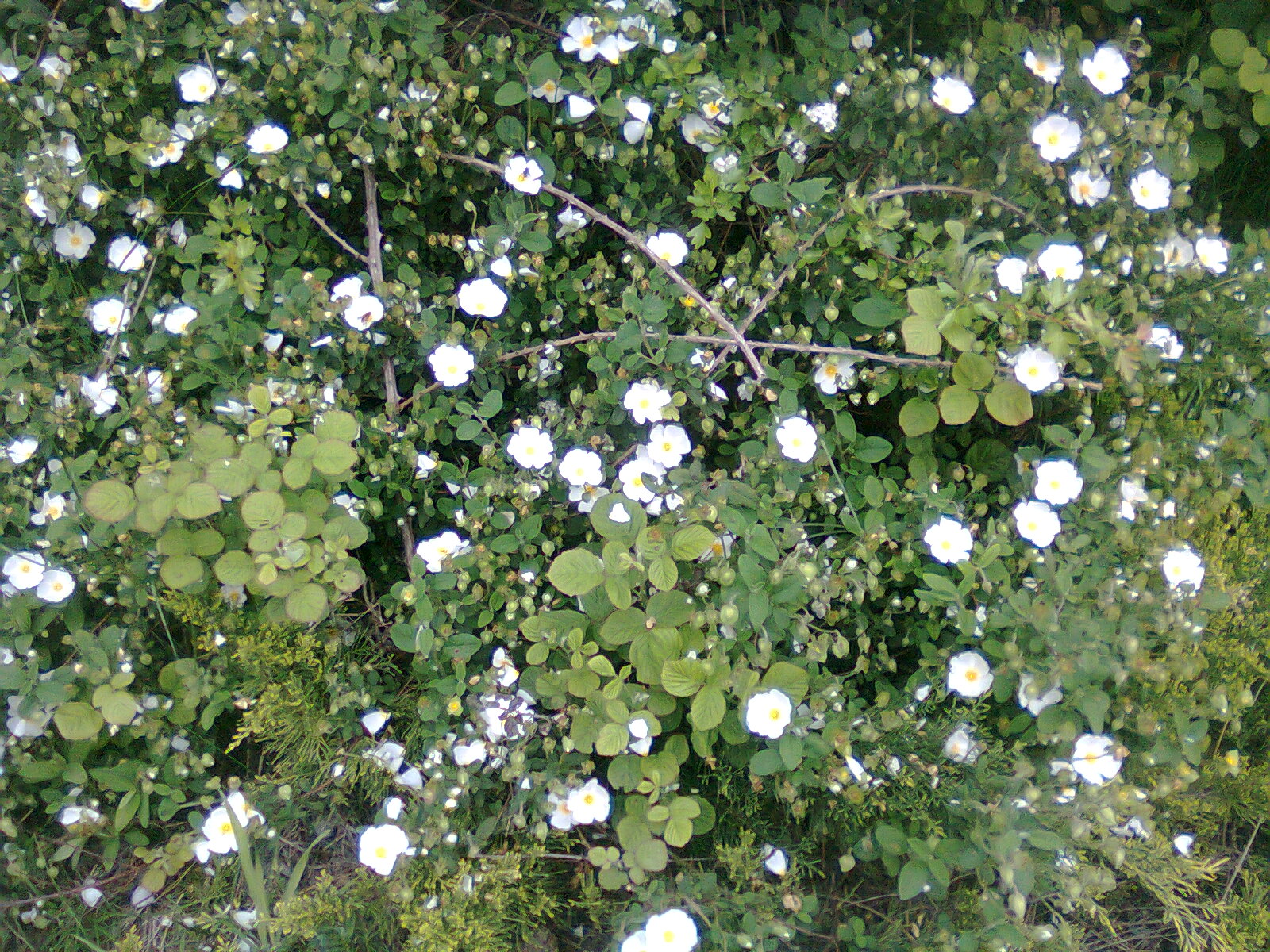
Small white flowers among leaves and vines
Atatürk Kent Ormanı
Tarabya, Sarıyer, İstanbul
May 11, 2023

Continue reading

History (Iliad Book XXIII)

Square stone column with faucet at the bottom and Ottoman writing in Arabic script at the top, below the capital; road, buildings, and trees behind

Ottoman fountain
Harbor of Tarabya (Θεραπειά) on the Bosphorus
Sarıyer, Istanbul, May Day 2023
The bay was called Φαρμακία by Medea
according to Dionysius of Byzantium (2nd century c.e.)
in his Anaplous (“sailing up”) of the Bosporos
Rough translation by Brady Kiesling:

§ 68 Immediately following is the bay call [sic] Pharmakias, from Medeia the Colchian, who deposited coffers of drugs here. It is, however, a very fine and commodious place for fishing and ideal for beaching ships. For right up to the edge of the beach it is deep and very safe from the winds. A multitude of fish are attracted here. The forest, however, is dense, with a deep wood of every species, and meadows, as if the land were competing with the sea. Its circumference is shaded by a forest overhanging the sea, through the middle of which a river descends noiselessly.

Still water below a row of small boats, one with a mast; behind them, on the far side of the harbor, three large boxy buildings, with trees around and above them

Along the coast to the left
towards the Sea of Marmara
is the Pitheci Portus
again according to Dionysius:

§ 66 Beneath this prominent coast follows a bay in which is Harbor of Pithex, whom [sic] they say was a king of the barbarians who lived here who together with his sons led Asteropaios in the crossing to Asia. From here the shore is broken and steep.

Achilles slew the ambidextrous Asteropaeus in Book XXI of the Iliad
He will be giving away the spoil now, in Book XXIII

Topographical map of a section of the Bosphorus, with many points labelled with their Greek names in Latin letters

Map source: Richard Talbert, editor
Barrington Atlas of the Greek and Roman World
Princeton University Press, 2000

Continue reading

Grief (Iliad Book XXII)

The fascinating moments in the Iliad are when somebody has to make a decision.

  • Achilles is a killing machine in Books XX and XXI; but back in Book I, enraged by his commanding officer, Achilles could nonetheless decide not to slay him.
  • At the end of Book XXI, Agenor was tempted to hide from Achilles, somewhere away from the walls of Troy; instead he served as a decoy to draw Achilles away from the city gates.
  • Now, in Book XXII, the other Trojans are running in through those gates like fawns. Hector is having trouble deciding whether to join them.

Wall assembled haphazardly of rubble, dressed stone, brick, and tile; weeds grow out here and there
Wednesday morning, April 12, 2023
Akarsu Sokağı (“Runningwater Street”)
Tarabya, Sarıyer, Istanbul

Continue reading

Fishes (Iliad Book XXI)

In Book XVII of the Iliad, Zeus pitied the immortal horses, Xanthus and Balius, as they wept for the slain Patroclus: “For in sooth there is naught, I ween, more miserable than man among all things that breathe and move upon earth.”

Stylized image of a shark on the door of a truck parked nose to nose with a taxi; foliage beyond
Monday morning, April 17, 2023
Sarıyer, Istanbul
Kefeliköy / Δικαία Πέτρα
(There exist a map and memoir of this settlement)

Continue reading

Words (Iliad Book XX)

“The feeling of helplessness and humiliation in the face of an abuse of power is an awful one.” That’s what Achilles found out, back in Book I of the Iliad; however, the words themselves, dated April 11, 2023, are by Claire Berlinski. Her Agamemnon is Elon Musk.

Two cats sit facing one another on a narrow ledge below one window and above another
“And when they were come near, as they advanced one against the other, then first unto Aeneas spake swift-footed goodly Achilles: ‘Aeneas, wherefore hast thou sallied thus far forth from the throng to stand and face me?’ ” (Iliad 20.176–9)
Kireçburnu (“Lime Point”)
Κλειδὴς καὶ κλεῖθρα τοὺ Πόντου (“Lock and Key of the Pontus”)
Sarıyer, Istanbul
Sunday morning, March 26, 2023

Continue reading

Responsibility (Iliad Book XIX)

Book XIX of the Iliad is all talk. This annoys Achilles, but is important for Agamemnon and Odysseus, and they should know better – Odysseus even says so.

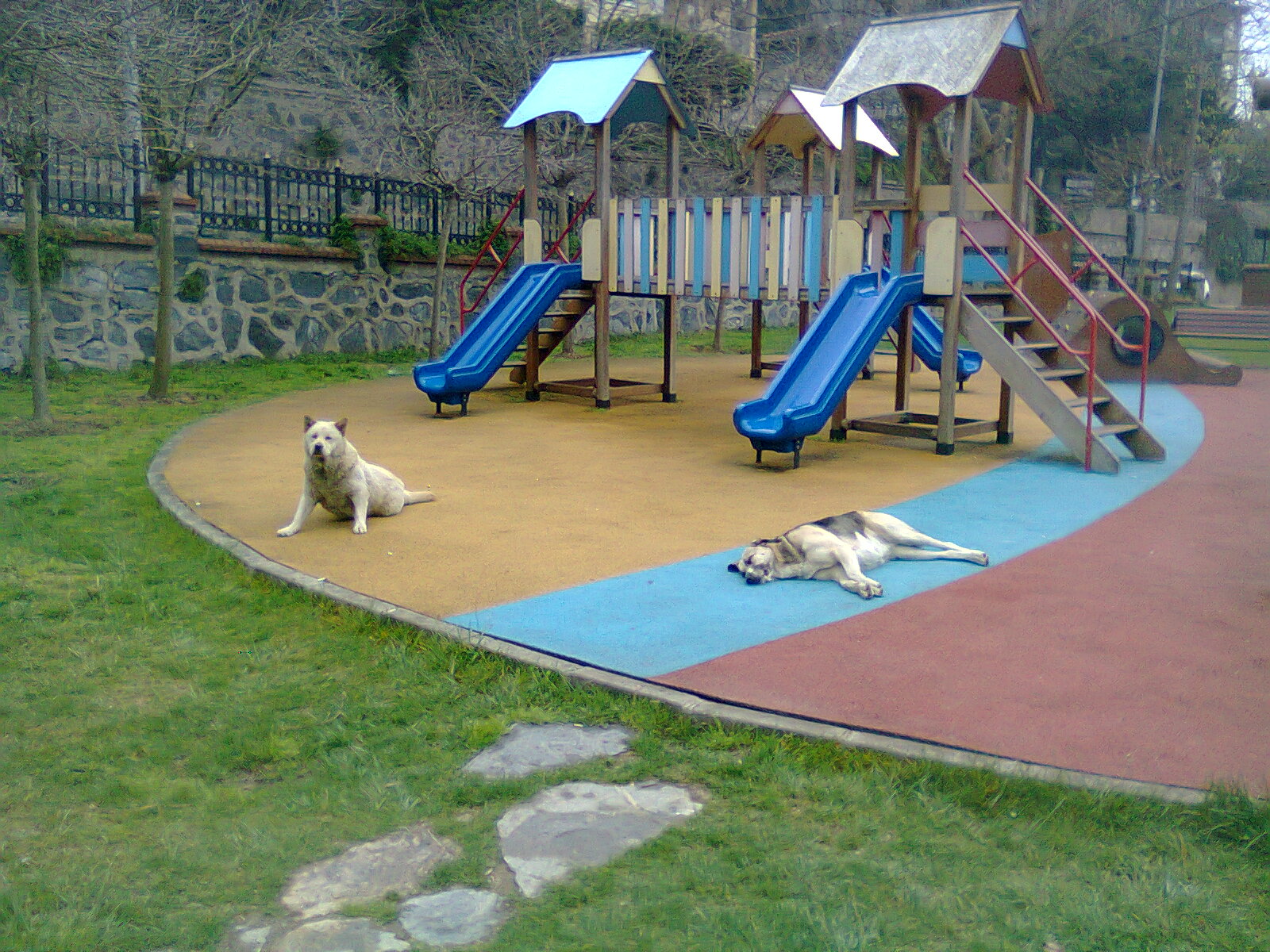
Two corpulent dogs lie at the bottom of two slides in a children’s playground; one has started to raise himself
Achilles gets ready to fight while Patroclus lies dead
(or, one of two well-fed street-dogs goes through the motions of defense)
Şalcıkır Parkı, Tarabya
Sarıyer, Istanbul
Sunday morning, March 26, 2023

Continue reading

Reflection (Iliad Book XVIII)

Twelve Trojan warriors die, merely because Achilles shouts at them across the Achaean trench. That is all Achilles does, in Book XVIII of the Iliad, and no more deaths are reported – unless we count the ones depicted around the city at war, on the shield that Hephaestus forges for Achilles at the request of Thetis. (See note 1)

A beacon stands in front of the sea at the end of a street lined with trees and a cafe. We see the beacon between two bicyclists on the road that crosses the foreground
“Achilles, dear to Zeus, roused him,
and round about his mighty shoulders Athene flung her tasselled aegis,
and around his head the fair goddess set thick a golden cloud,
and forth from the man made blaze a gleaming fire.” (Iliad 18.203–6)
Kireçburnu (“Lime Point”)
Κλειδὴς καὶ κλεῖθρα τοὺ Πόντου (“Lock and Key of the Pontus”)
Sarıyer, Istanbul
Sunday morning, March 26, 2023

Continue reading