Category Archives: Mathematicians

Nine Straight Lines

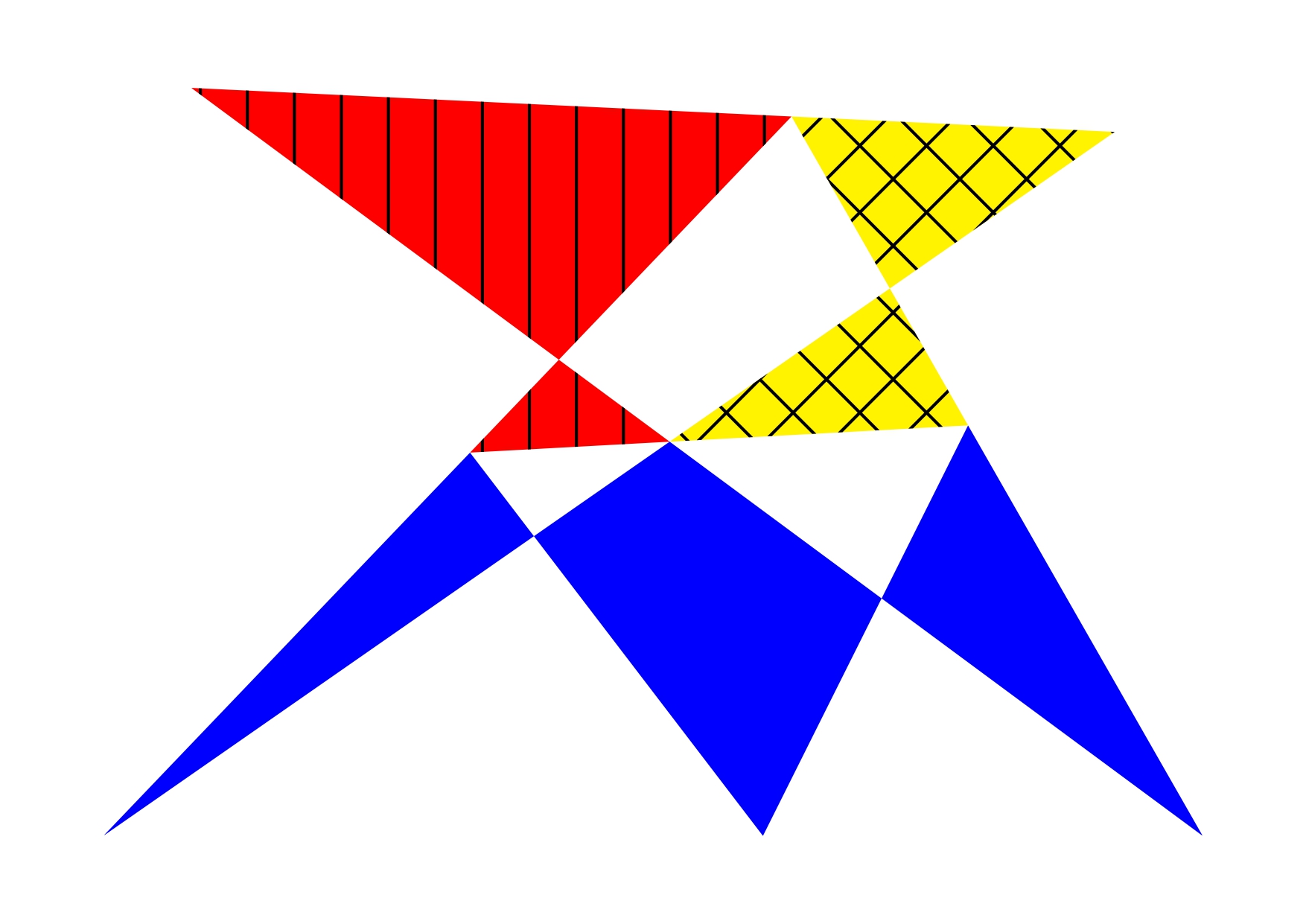
Pappus’s Hexagon Theorem is that, if six straight lines form a hexagon whose vertices lie alternately on a seventh and an eighth straight line, then the intersection points of the pairs of opposite sides of the hexagon lie on a ninth straight line. The theorem can be depicted as just below, in a way that I shall try to verbalize presently.
Fifty-Three Notes

As I understand Western music, there’s a diatonic scale, whose notes correspond to seven consecutive white keys of a piano. The eighth white key (from the left) is an octave above the first. The terminology makes some sense, since an octopus has eight arms, and an octagon has eight sides.

Between two white piano-keys that are an octave apart, there are five black keys. When their notes are added to the diatonic scale, the chromatic scale results.

Perhaps I was given some such understanding in school. It was never quite satisfactory. In part to remedy this problem, I have drafted a paper, “Numbers and Notes in Plato and Euclid,” for which this blog post is now a repository. (The pdf file just linked to has 103 pages, but they are small, size B6; the date is September 22, 2026.)

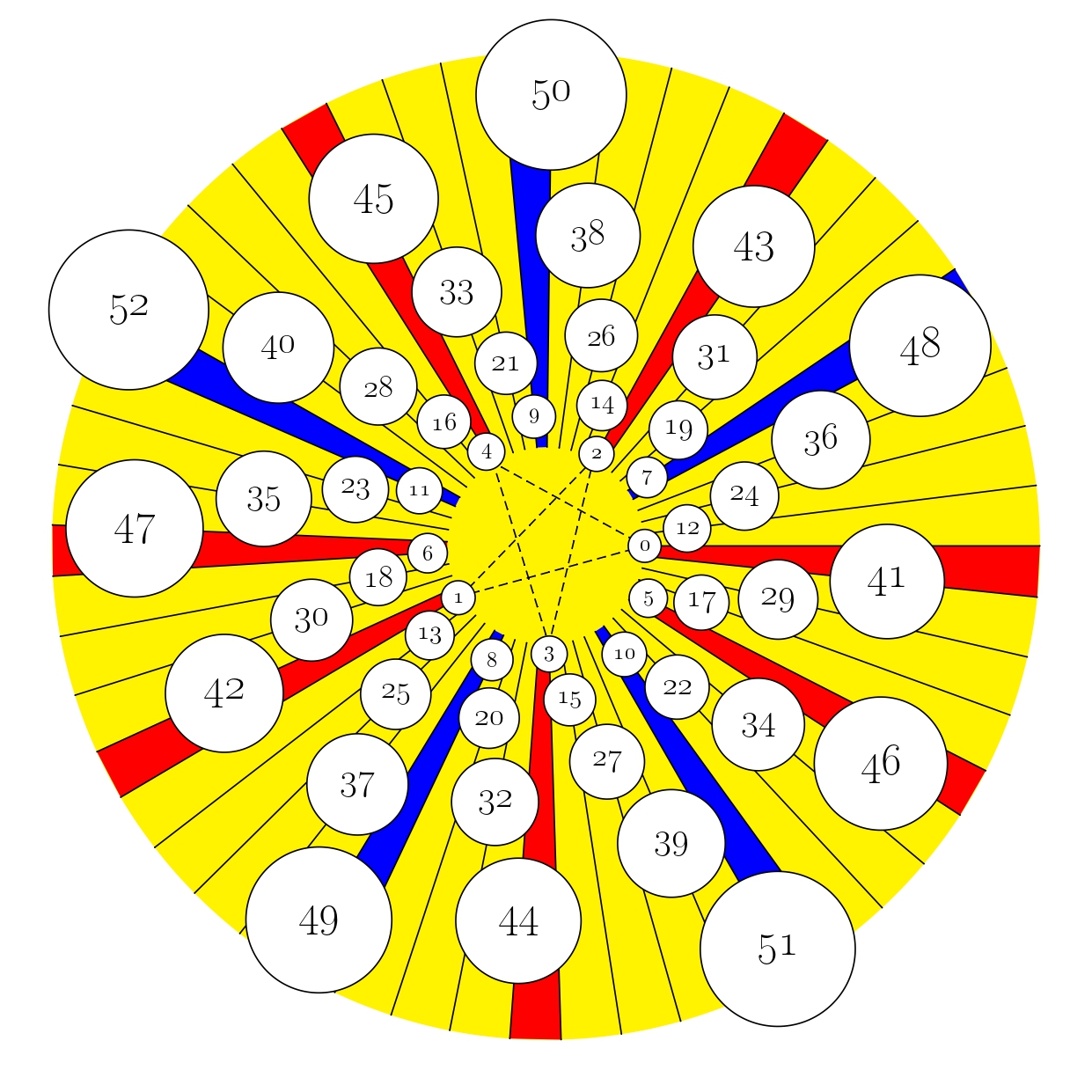
The draft paper may explain itself, sufficiently well. Its most interesting element may be a black-and-white version of the following diagram, which I am also going to say more about in this post.

Geometry and Algebra

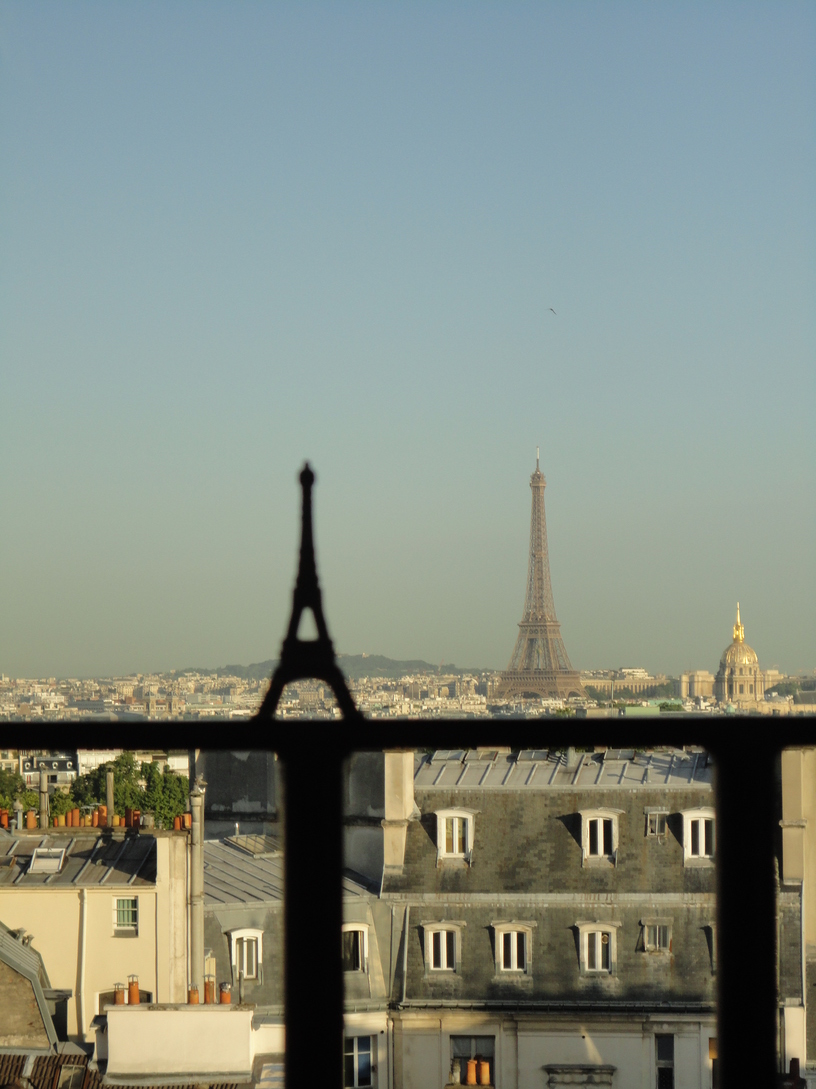
Photo: Appearing the same size are the Eiffel Tower in the distance and a model in the foreground, standing on the railing of a window that overlooks other buildings

From a flat on the rue Saint-Jacques, Paris
Thursday, June 4, 2015


What René Descartes says here does not make a lot of sense to me:

it is far better never to contemplate investigating the truth about any matter than to do so without a method. For it is quite certain that such haphazard studies and obscure reflections blur the natural light and blind our intelligence.

Continue reading →

Perception Deception


John Donne, Holy Sonnet XIX
(on the last line, “make” should be “ſhake”)

This post involves:

  • “the” philosopher –
    • Aristotle;
  • two mathematicians –
    • Euclid,
    • David Hilbert;
  • three persons associated with Black Mountain College –
    • Josef Albers,
    • Dorothea Rockburne,
    • Max Dehn;
  • one person (in addition to myself and Dehn) associated with St John’s College –
    • David Bolotin.

Continue reading →

Creativity

In the Platonic dialogues, Socrates frequently mentions τέχνη (technê), which is art in the archaic sense: skill or craft. The concern of this post is how one develops a skill, and what it means to have one in the first place.

Books quoted or mentioned in the text, by Midgley, Simone Weil, Thoreau, Amy Mandelker (on Tolstoy), Oliver Byrne (on Euclid), Wittgenstein, Arendt, and Caroline Alexander (on Homer)

Continue reading →

Mathematics and Logic

Large parts of this post are taken up with two subjects:

  1. The notion (due to Collingwood) of criteriological sciences, logic being one of them.

  2. Gödel’s theorems of completeness and incompleteness, as examples of results in the science of logic.

Like the most recent in the current spate of mathematics posts, the present one has arisen from material originally drafted for the first post in this series.

In that post, I defined mathematics as the science whose findings are proved by deduction. This definition does not say what mathematics is about. We can say however what logic is about: it is about mathematics quâ deduction, and more generally about reasoning as such. This makes logic a criteriological science, because logic seeks, examines, clarifies and limits the criteria whereby we can make deductions. As examples of this activity, Gödel’s theorems are, in a crude sense to be refined below, that

  • everything true in all possible mathematical worlds can be deduced;

  • some things true in the world of numbers can never be deduced;

  • the latter theorem is one of those things.

Continue reading →

Multiplicity of Mathematics

I continue with the recent posts about mathematics, which so far have been as follows.

  1. “What Mathematics Is”: As distinct from the natural sciences, mathematics is the science whose findings are proved by deduction. I say this myself, and I find it at least implicit in an address by Euphemia Lofton Haynes.
  2. “More of What It Is”: Some mathematicians do not distinguish mathematics from physics.
  3. “Knottedness”: Topologically speaking, there is a sphere whose outside is not that of a sphere. The example is Alexander’s Horned Sphere, but it cannot be constructed physically.
  4. “Why It Works”: Why there can be such a thing as the horned sphere.

When I first drafted the first post above, I said a lot more than I eventually posted. I saved it for later, and later is starting to come now.

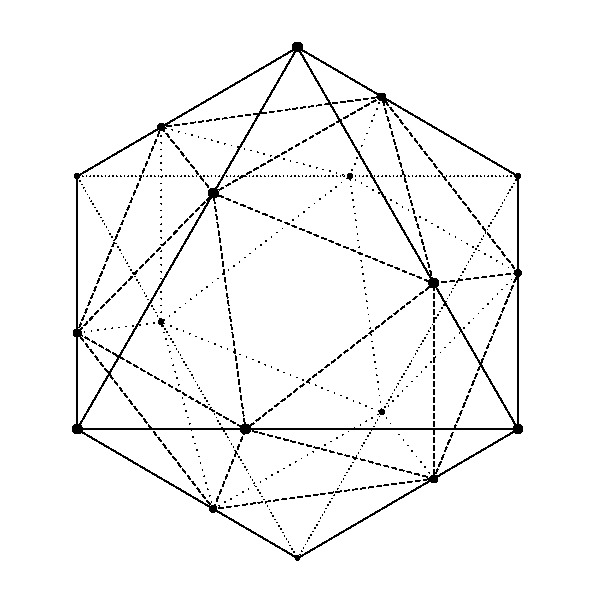
Octahedron with edges divided in the Golden Ratio by the vertices of an icosahedron

Continue reading →

More of What It Is

I say that mathematics is the deductive science; and yet there would seem to be mathematicians who disagree. I take up two cases here.

Page of Greek text with diagram
From Archimedes, De Planorum Aequilibriis,
in Heiberg’s edition (Leipzig: Teubner, 1881)

Continue reading →

Discrete Logarithms

In the fall of 2017, I created what I propose to consider as being both art and mathematics. Call the art conceptual; the mathematics, expository; here it is, as a booklet of 88 pages, size A5, in pdf format.

More precisely, the work to be considered as both art and mathematics is the middle of the three chapters that make up the booklet. The first chapter is an essay on art, ultimately considering some examples that inspire my own. The last chapter establishes the principle whereby the lists of numbers in Chapter 2 are created.

Continue reading →

Doing and Suffering

To do injustice is worse than to suffer it. Socrates proves this to Polus and Callicles in the dialogue of Plato called the Gorgias.

I wish to review the proofs, because I think they are correct, and their result is worth knowing.

Loeb Plato III cover

Or is the result already clear to everybody?

Whom would you rather be: a Muslim in India, under attack by a Hindu mob, or a member of that mob?

You would rather not be involved; but if you had to choose, which option would be less bad: to be driven to an insane murderous fury, or to be the object of that fury?

Continue reading →