Symmetry

In the account of justice – the dicaeology – that I looked at last time, equality was a nominal concern. I said it might not be what we mean today by equality before the law. We may come closer to that in the present reading, but I’m not sure.

We have reached the part of the Nicomachean Ethics that I dipped into more than six years ago, when writing what ultimately became a long mathematical and historical paper, “On Commensurability and Symmetry” (Journal of Humanistic Mathematics, Volume 7 Issue 2 [July 2017], pages 90–148, DOI). Back then, I made only a precision raid, as if by helicopter, using coordinates supplied by the LSJ lexicon for the words of interest (σύμμετρος and συμμετρία). Now, in a party, we have been working our way in on foot.

Two loaves, split lengthwise along the top, rest on two rectangular pans; behind them, a teapot
Bread: money
Two loaves: equality
The flour is siyez (einkorn)
The leaven is sourdough
Both are from İstiklal Yolu in Kastamonu

Continue reading

Dicaeology

Our topic now is justice, in two senses:

  1. Lawfulness.
  2. Equity.

That doesn’t mean we’re talking about equality before the law. Instead of lawfulness and equity, we might refer to morality and fairness. What we are really trying to do is understand what Aristotle means, when he says that “the dikaion” (τὸ δίκαιον) is one of the following:

  1. “The nomimon” (τὸ νόμιμον).
  2. “The ison” (τὸ ἴσον).

Why would we want to do understand this? Well, that last Greek word appears as a suffix in isoskeles (ἰσοσκελής), which has become our word “isosceles” for the same thing. The ison is the equal. A triangle is isosceles when two of its legs are equal. Each of those legs is a skelos (σκέλος), while the remaining side is the basis (βάσις), the base.

Two books: Zen and the Art, and the Guidebook to it, the latter featuring an image of the former on its cover; the top of a pine tree beyond, and beyond that, more trees and an apartment building

Continue reading

Truth

According to the current version of a Wikipedia article,

The Nicomachean Ethics is widely considered[according to whom?] one of the most important works of philosophy.

The superscript bracketed italicized question was added by me. I thus took the liberty to edit Wikipedia, as we all may do.

Panel with quote beneath banners and trees, people and a book display beyond
Literature festival at Kireçburnu
September 22, 2023
with displays from the Austrian Consulate
in particular, a quote from Stefan Zweig
in German and Turkish
“Some people must start peace the way they start war”

Continue reading

Coolness

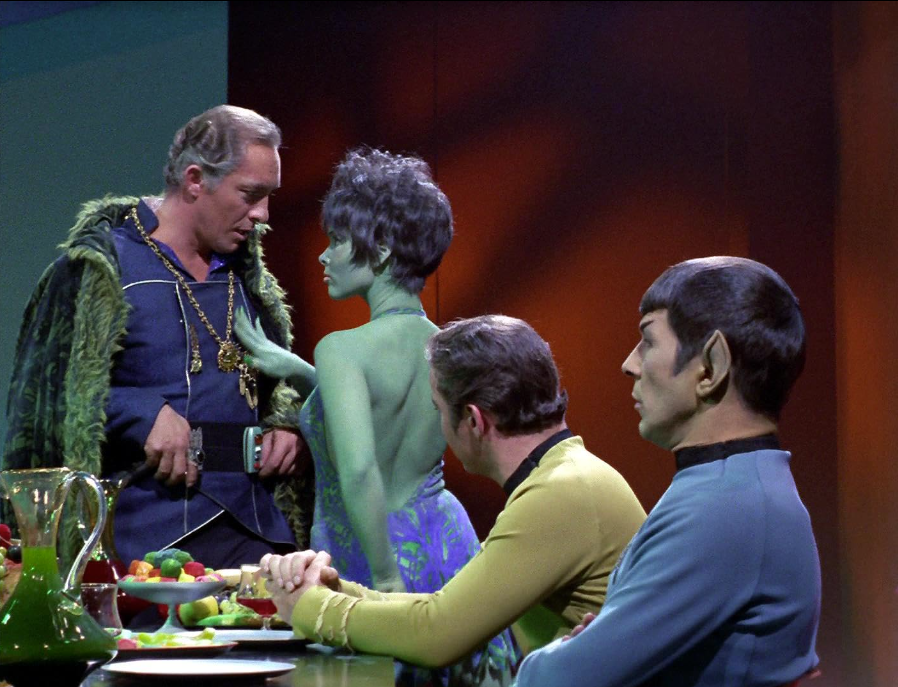
When I was ten, I learned the adjective “magnanimous” from Star Trek. I learn now from Wikipedia that the episode called “Whom Gods Destroy” was unseen in the UK until 1994, and one reason was the scene that preceded the following dialogue:

Garth of Izar
She’s yours if you wish, Captain.
Kirk
Thank you, that’s – very magnanimous of you.
Garth
You will find that I am magnanimous – to my friends, and merciless to my enemies.

The woman referred to is called Marta. Garth styles himself Lord Garth, Master of the Universe, but he is mad. For Lee Erwin then, the writer of the episode, magnanimity would seem to be generosity exhibited by the powerful, or the deserving of power, at least in their own minds. This understanding is supported by definitions in the Concise Oxford Dictionary (sixth edition, 1976):

magnanimous
Noble, generous, not petty, in feelings or conduct.
generous
Magnanimous, noble-minded; not mean or prejudiced; free in giving, munificent.

Generosity is one word for the main subject of our previous reading. Etymologically, the word refers to birth, so that generosity is literally being of good family.

Nobility, by contrast, is being “in the know”: the letters “no” show the relation, while the K of “know” corresponds to a letter missing in “noble,” but retained in “ignoble.”

In its Latin parts, “magnanimity” is being of “great soul.” The word seems to be a calque of Aristotle’s μεγαλοψυχία, which is our main subject now.
Thumbs in his belt, Garth looks down at Marta, who returns the look, her hand on his chest; seated, forearms on table, Kirk looks on, while Spock, arms crossed, looks into the distance
From “Whom Gods Destroy”
Garth, Marta, Kirk, Spock
Screenshot from IMDb
I learned Star Trek
on a black-and-white TV
The effect
of Marta’s green skin
was lost on me

Continue reading

Freeness

I write this now while many are suffering. Unfortunately that is always true.

What I am supposed to be focused on is virtue in the use of money. I shall get to this.

Toilet facility covered with the image of a forest sits in a real forest

Continue reading

Sanity

We are reading the last part of Book III of the Nicomachean Ethics of Aristotle. The subject is ἡ σωφροσύνη. This might be given various names in English, such as temperance, moderation, modesty, sobriety, sanity, prudence, continence, chastity. Our question is not so much what the best word for sôphrosyne is, but what Aristotle means by it, and how this fits with our own experience.

A grid of floors and columns rises from the ground, dwarfing the trees in front of it
Hacıosman, Sarıyer, İstanbul
September 22, 2023

Work recently began again, now under the name of Hilton, on our neighborhood’s sole skyscraper, which looms over the Hacıosman metro terminal; this is from the residential street on the other side

Like all virtues, σωφροσύνη has two attendant vices:

  • ἡ ἀκολασία, licence, licentiousness, intemperance, profligacy;
  • ἡ ἀναισθησία, “anaesthesia,” insensitivity.

Continue reading

Valor

The virtue of courage is seen most clearly

In saying this, we do not mean

  • we should all engage in such contests, or
  • any of us should, or
  • we cannot be brave without it.

Perhaps we should not be brave at all. Still, it is somehow open to us. It is better than the alternatives, but one has to work that out for oneself.

Fallen warrior on cover of Lattimore’s Iliad, lying on Crisp’s Nicomachean Ethics

Continue reading

Excuses

This post features the first five chapters of Book III of the Nicomachean Ethics of Aristotle. Those chapters take up the following subjects.

  • Chapter I. The voluntary and involuntary (ἑκούσιος and ἀκούσιος).
  • Chapter II. Choice (also called intention, preference, and rational or deliberate choice: προαίρεσις).
  • Chapter III. The deliberated (βουλευτός).
  • Chapter IV. The wished-for (βουλητός).
  • Chapter V. Vice (κακία) as being voluntary.

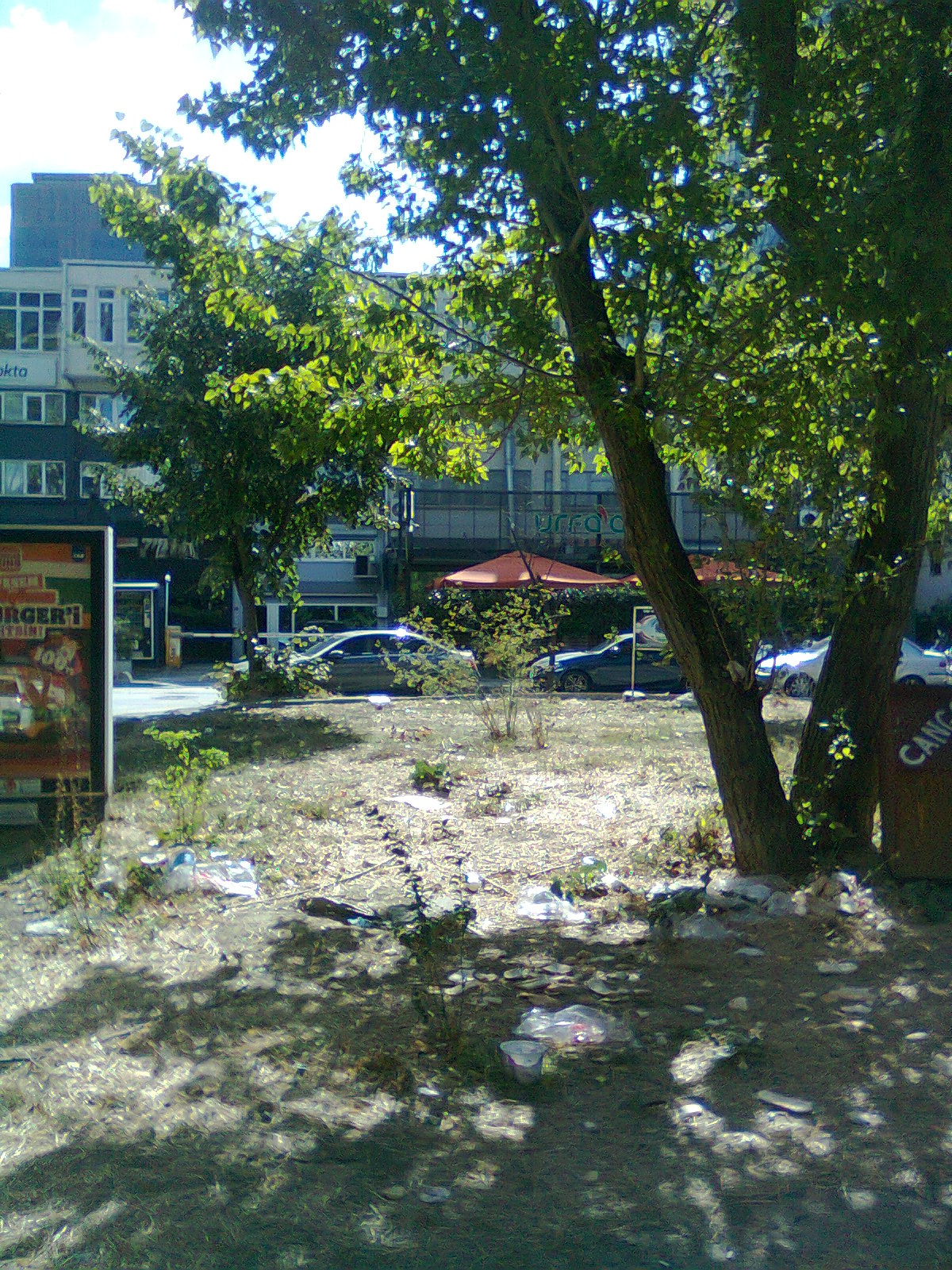
Mostly bare earth with a few weeds, some trash, a tree with two trunks, and a billboard; cars and low-rise buildings behind, on a sunny day
Public space in Maslak, Sarıyer
“One of the main business districts of Istanbul”
September 19, 2023

Continue reading

Cavafy in Istanbul

The first part of this post concerns a poem by Constantine Cavafy on accepting one’s fate. There are three parts after that:

The Cavafy poem, “The God Abandons Antony,” is based on a passage in Plutarch’s life of that person. Susan Cain wrote about the poem in a newsletter. Her book Quiet gave me a new appreciation for my parents. It so happens that my parents had me by adoption. Unfortunately other people are not happy to be in that situation.

Some people are also not happy with their sex. Cavafy’s poem could have given courage to Ms Cain during a painful birth. Courage is literally manliness in Greek. Plutarch writes of a man’s imitation of a woman in labor. Roberto Calasso’s Marriage of Cadmus and Harmony led me to the story. I talk about all of that.

I have since learned of another good essay, “Personal Integrity in the Poetry of C. P. Cavafy,” in Beshara Magazine, by Andrew Watson. A different Andrew Watson played football for Scotland in 1881, and The Guardian has an article, “‘We looked identical’: one man’s discovery of slavery, family and football” (24 December 2020), by Tusdiq Din, about Malik Al-Nasir, formerly Mark Watson, who discovered, through their physical resemblance, a family relation with Andrew.


When Ayşe and I moved from Fulya to Tarabya last October, we were coming nearer where C. P. Cavafy once lived along the Bosphorus.

Boxes packed for moving. Rolled-up carpets; bubble wrap around bookcases. Light comes from a window on the right and a glowing globe on the upper left. Two more spherical paper shades sit on boxes
Last evening in Fulya
Saturday, October 15, 2022

Continue reading

Manliness

The scholarship is uncertain, but the Greek word ἀρετή, which we translate as virtue, may not be etymologically related to either of

  • ἀνήρ, ἀνδρός, he-man;
  • Ἄρης, Ἄρεως, the god of war.

However,

  • “virtue” is related to the first part of “werewolf,” were being the old English word for a he-man (as wife was the word for a “she-man,” that is, a she-human, a woman; see “Math, Maugham, and Man”; the Wikipedia article “Indo-European vocabulary” currently gives ἱέραξ “hawk, falcon” as sharing the root of “virtue” and were, but Beekes gives a different root, uncertainly);
  • ἀνήρ yields the adjective ἀνδρεῖος, α, ον and the abstract noun ἀνδρεία (which like many abstract nouns is feminine), denoting respectively the person who has, and that which is, the virtue that in English is called bravery or courage.

This post is the sequel of the previous one, “Eudemony” (now extensively revised), which was on and of the first book of Aristotle’s Nicomachean Ethics. The present post is on and of the second book, whose theme is moral virtue in general.

I do wonder to what extent Aristotle thinks of ἀρετή as manliness. Homer may have done so in the Iliad, as in one of the passages (Book XV, lines 641–3) cited in the lexicon of Liddell, Scott, and Jones. This concerns a man slain by Hector, namely Periphetes, son of Copreus:

τοῦ γένετ᾽ ἐκ πατρὸς πολὺ χείρονος υἱὸς ἀμείνων
παντοίας ἀρετάς, ἠμὲν πόδας ἠδὲ μάχεσθαι,
καὶ νόον ἐν πρώτοισι Μυκηναίων ἐτέτυκτο.

Of him, a father baser by far, was begotten a son goodlier in all manner of excellence, both in fleetness of foot and in fight, and in mind he was among the first of the men of Mycenae.

Green cover of Nicomachean Ethics, Crisp translation, against water
Lock and Key of the Bosphorus
opening to the Black Sea
Tuesday, July 11, 2023

Continue reading