Eudemony

When I was an adolescent, I conceived a desire to know “the definition of happiness.” This was all I wanted, when a friend asked what to give me for my birthday. He took me seriously, but unfortunately I could not take his answer seriously, because what he came up with was, “A puppy.” This friend did not understand that

  • an epitome was not a definition;
  • I was a cat person.

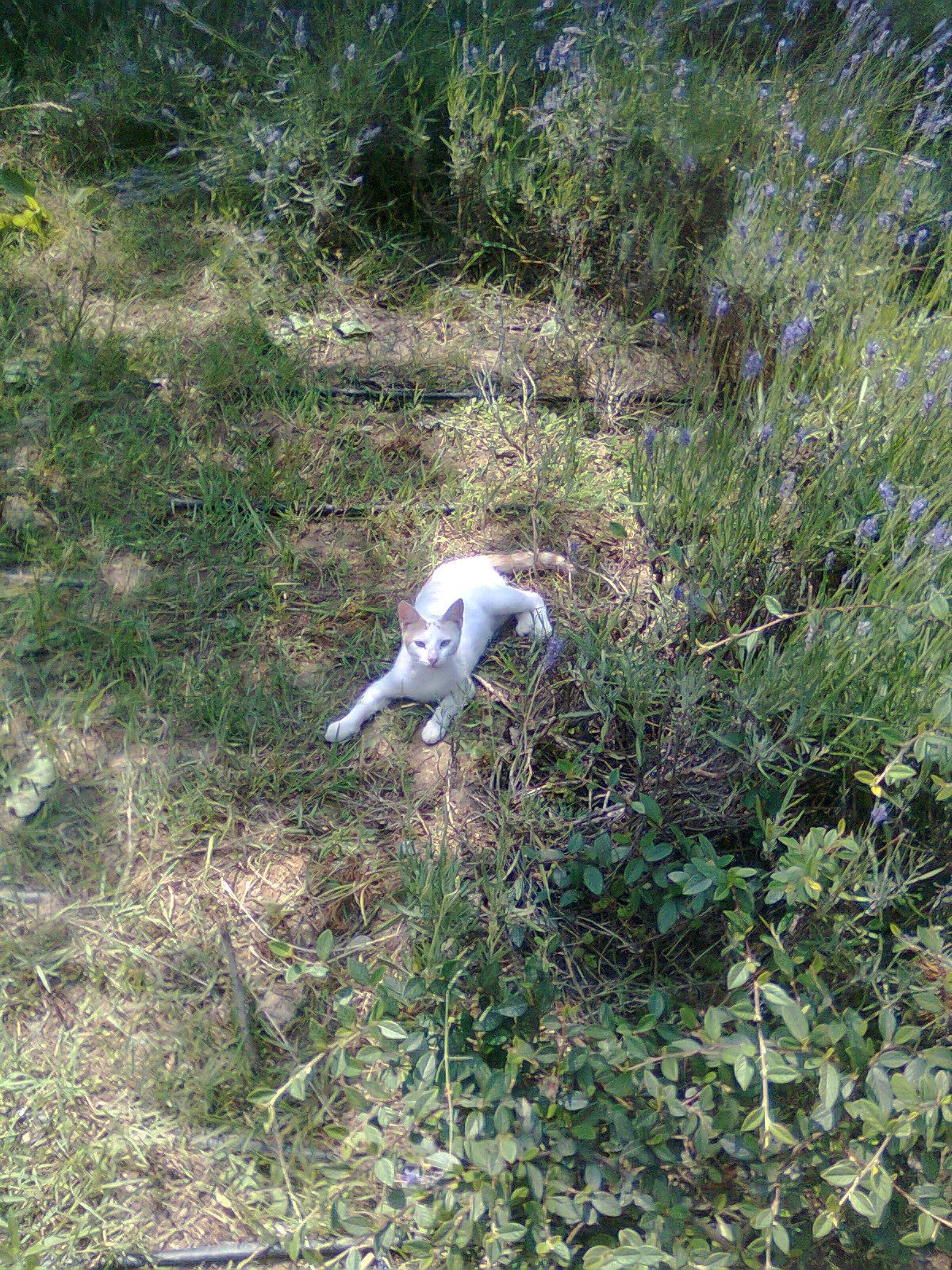
Cat roused from nap in grass next to lavender plants
Atatürk Kent Ormanı, Sarıyer, Istanbul
Friday, July 7, 2023

Continue reading

Even More on Dialectic

At the beginning of the first post “On Dialectic,” I raised the question of why I put so much into such posts. I propose now a couple of answers.

  1. I want to collect all evidence for what I am investigating – currently dialectic in Plato’s Republic. As Arthur Conan Doyle (1859–1930) has Sherlock Holmes say in A Study in Scarlet (1887; Wordsworth Classics, 2004),

    It is a capital mistake to theorize before you have all the evidence. It biases the judgment.

    And yet in Religion and Philosophy (1916), Collingwood states “the fundamental axiom of all thinking,”

    namely that whatever exists stands in some definite relation to the other things that exist.

    Thus “all the evidence” is everything in the world.

  2. I am engaged in such self-defense as a certain Islamic philosopher is, by the account of Strauss in Persecution and the Art of Writing (1952):

    Fārābī avails himself then of the specific immunity of the commentator or of the historian in order to speak his mind concerning grave matters in his “historical” works, rather than in the works in which he speaks in his own name.

Cloud with several lobes above deciduous trees in leaf
View from our balcony
Sanatçılar Sitesi, Tarabya, Istanbul
Saturday, July 8, 2023

Continue reading

More on Dialectic

In Book I of Plato’s Republic, Socrates distinguishes between two ways to respond to a disagreement. The two parties can:

  1. Have a debate, to be judged by a third party.
  2. Work with one another to resolve the disagreement.

The latter would seem to be dialectic, although Socrates does not call it that. I said this last time, when I also noted that Socrates does refer to dialectic as such in Book V; but I deferred investigation of the passage till now.

An elaborate flower
Saturday, June 24, 2022
Atatürk Kent Ormanı
Tarabya, Sarıyer, İstanbul

Continue reading

On Dialectic

This is about dialectic in Plato’s Republic and today. There’s a lot here, and in another post I may investigate why that is; meanwhile, I note words of Serge Lang (1927–2005) in the Foreward of Algebra (third edition, 1993):

Unfortunately, a book must be projected in a totally ordered way on the page axis, but that’s not the way mathematics “is”, so readers have to make choices how to reset certain topics in parallel for themselves, rather than in succession.

From socialism to liberalism and perhaps back

The word “dialectic” has the air of a technical term. It intimidated me in the eighth grade, when I chose communism as my topic for a paper in political geography, and I found myself consulting a big book on dialectical materialism. My main source ended up being the Communist Manifesto, which says nothing of dialectic as such.

The Manifesto may take up dialectic implicitly, as by saying in the beginning (with my bullets),

  • Freeman and slave,
  • patrician and plebeian,
  • lord and serf,
  • guild-master and journeyman, in a word,
  • oppressor and oppressed,

stood in constant opposition to one another, carried on an uninterrupted, now hidden, now open fight, a fight that each time ended, either in a revolutionary reconstitution of society at large, or in the common ruin of the contending classes.

Perhaps one would refer to the ongoing fight between oppressor and oppressed as dialectical. However, dialogue being conversation, I take dialectic to be the art of conversing; fighting is something else.

Two curled-up cats, one on the seat of a motorcycle parked on the sidewalk in front of two joined houses, the other on top of the low wall between the fronts of the houses
Saturday, April 16, 2022
Muvezzi Caddesi, Serencebey, Beşiktaş, İstanbul

Continue reading

Drone

I continue to review and revise some notes I made during a recent reading of Plato’s Republic. The reading was with a group of people on four continents (Africa, Asia, Europe, and North America), meeting weekly, by means of Zoom, from June, 2022, till May, 2023; I joined only in August.

Black and white cat standing on dirt path through green foliage turns head left to look at viewer
Şalcıkır Parkı, Tarabya, Istanbul
Wednesday, May 24, 2023

My last post included a summary in some detail of Books I–VII, with a terser summary of the remaining Books VIII–X. I asked what Plato hoped to accomplish with the Republic, because if he meant to inspire dictators, he seemed to have succeeded with Ruhollah Mostafavi Musavi (a.k.a. Ruhollah Khomeini, 1900–89), Saloth Sâr (a.k.a. Pol Pot, 1925–98), and the like. But then is Plato to be blamed if such men did not pay attention to Books VIII and IX, where even the best state is shown to devolve into tyranny?

Here I look at a passage in Book IX that struck me when I read it in Robin Waterfield’s 1998 translation in the Oxford World’s Classics edition. This is at 572e–3a, in the account of how the son of the democratic father becomes tyrannical:

When these black magicians, these creators of dictators, realize that there’s only one way they’re going to gain control of the young man, they arrange matters until they implant in him a particular lust, to champion the rest of his desires which are too idle to do more than share out anything that readily comes their way. And don’t you think this kind of lust is exactly like a great, winged drone?

Waterfield is interpreting, but justifiably, I think. I’ll look at the Greek later, along with a number of other translations.

Meanwhile, the passage has me thinking that desire is not normally able to satisfy itself. It is a barnacle or anemone, sitting and waiting for nutriment to come to it.

Similar cat feeding at pile of kibble
Şalcıkır Parkı again
Friday, June 2, 2023

Continue reading

Why the Polity

Why did Plato write the Republic? I give here not an answer, but elaborations on the question. I drafted these during the latter of two readings of the Republic, engaged in with two different groups of people in the last two years with the Catherine Project.

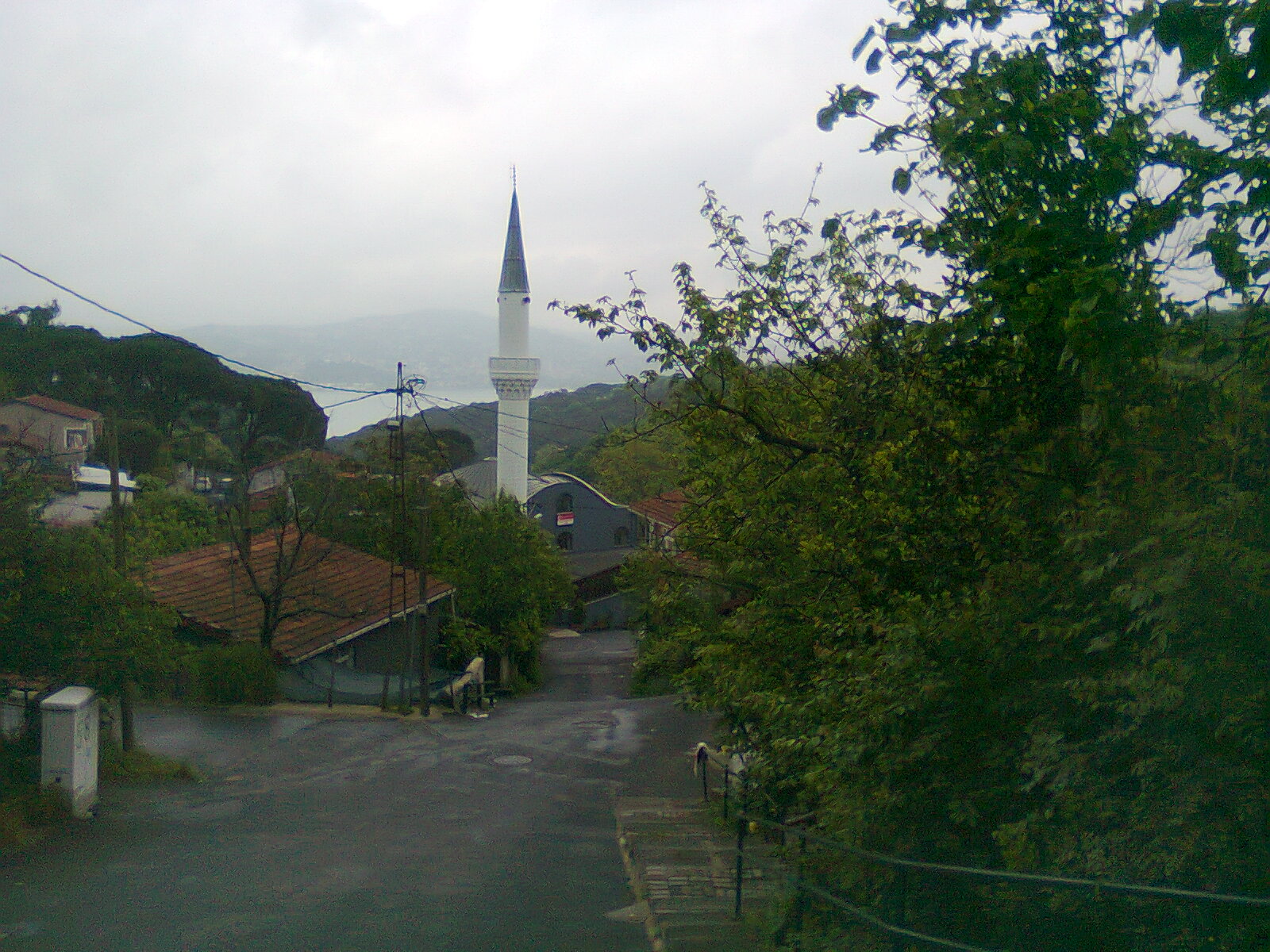
A road down to the Bosphorus past a mosque; a few roofs among trees
Village whose name I don’t know
between Yeniköy and Tarabya, Sarıyer, Istanbul
Behind me is a gated community
where every house has a swimming pool
Tuesday, May 23, 2023

Continue reading

On Religion and Philosophy

There is a lot about R. G. Collingwood on this blog. Apparently that is why I had the opportunity to write the text below. Something close to it was included in Turkish last year with the Turkish translation of R. G. Collingwood’s Religion and Philosophy.

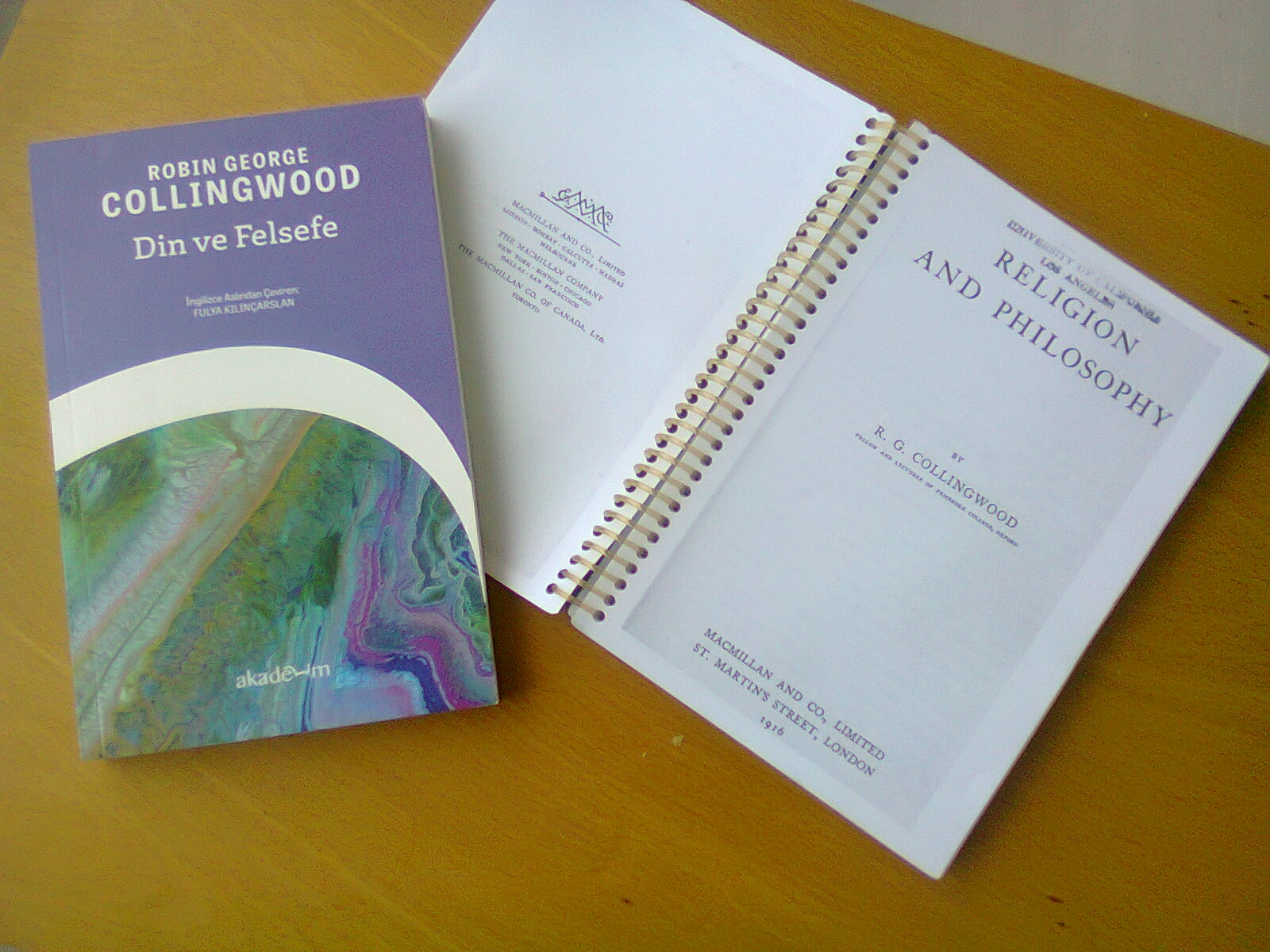
A paperback copy (bound perfectly) of Din ve Felsefe sitting on a photocopy (bound spirally) of Religion and Philosoph open to the title page

Continue reading

Seventh Hill, March, 2013

As Rome was traditionally founded on seven hills, so seven hills have been identified within the Theodosian Walls of Constantinople, New Rome.

The theme of seven hills is found in Turkish culture today, as for example in

  • the clothing company called Sevenhill,
  • the university on the Asian side of Istanbul called Yeditepe (i.e. Seven Hills).

This is about a tour in 2013, roughly following part of the chapter called “The Seventh Hill” in Sumner-Boyd and Freely, Strolling Through Istanbul (revised and updated edition, London & New York: I.B. Tauris, 2010). There are no really spectacular sites along the tour. This fact itself makes the tour remarkable: it shows how many interesting things lie beyond the main tourist centers of the city.

Here is a Google map I made of the sites visited.

I created this post originally, not long after the tour it describes; however, I posted it on my departmental website, although this blog did exist in those days too. I last edited the post on the departmental site, Monday, July 2, 2018. I return to it now because of friends’ interest in Byzantine sites in Istanbul (also I have completed the posts about the books of the Iliad that began in November).

As I said, the sites visited here are not spectacular, but they may still be remarkable. The Byzantine ones are:

See also a later post, “Samatya Tour, July, 2018,” for more in this area, including

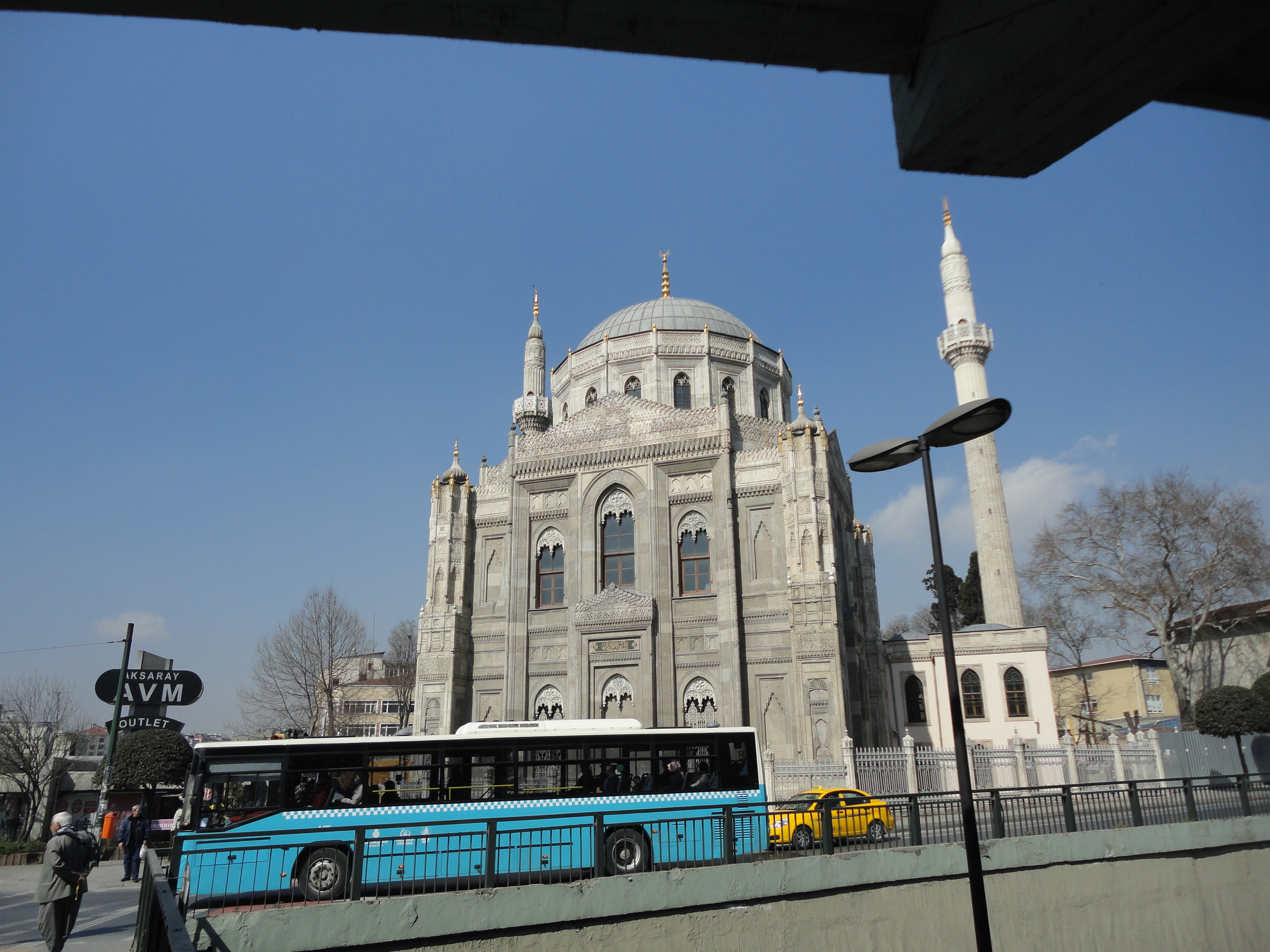
On Sunday, March 24, 2013, my friend Cédric and I took the tram to Aksaray. We passed under an elevated boulevard to reach Valide Sultan Camii, constructed in the late nineteenth century, in the twilight years of the Ottoman Empire.

Continue reading

Dawn (Iliad Book XXIV)

The games of Book XXIII of the Iliad have not been enough to let Achilles sleep. He tosses and turns,

yearning for the manhood and valorous might of Patroclus, thinking on all he had wrought with him and all the woes he had borne, passing through wars of men and the grievous waves. (lines 6–9)

It occurs to me to ask: Is that what we call a description? It is a “setting down in words”; however, if it is a “verbal portrait,” this only goes to show what a remarkable power we have, to know what somebody is thinking by how he looks.

Small white flowers among leaves and vines
Atatürk Kent Ormanı
Tarabya, Sarıyer, İstanbul
May 11, 2023

Continue reading

History (Iliad Book XXIII)

Square stone column with faucet at the bottom and Ottoman writing in Arabic script at the top, below the capital; road, buildings, and trees behind

Ottoman fountain
Harbor of Tarabya (Θεραπειά) on the Bosphorus
Sarıyer, Istanbul, May Day 2023
The bay was called Φαρμακία by Medea
according to Dionysius of Byzantium (2nd century c.e.)
in his Anaplous (“sailing up”) of the Bosporos
Rough translation by Brady Kiesling:

§ 68 Immediately following is the bay call [sic] Pharmakias, from Medeia the Colchian, who deposited coffers of drugs here. It is, however, a very fine and commodious place for fishing and ideal for beaching ships. For right up to the edge of the beach it is deep and very safe from the winds. A multitude of fish are attracted here. The forest, however, is dense, with a deep wood of every species, and meadows, as if the land were competing with the sea. Its circumference is shaded by a forest overhanging the sea, through the middle of which a river descends noiselessly.

Still water below a row of small boats, one with a mast; behind them, on the far side of the harbor, three large boxy buildings, with trees around and above them

Along the coast to the left
towards the Sea of Marmara
is the Pitheci Portus
again according to Dionysius:

§ 66 Beneath this prominent coast follows a bay in which is Harbor of Pithex, whom [sic] they say was a king of the barbarians who lived here who together with his sons led Asteropaios in the crossing to Asia. From here the shore is broken and steep.

Achilles slew the ambidextrous Asteropaeus in Book XXI of the Iliad
He will be giving away the spoil now, in Book XXIII

Topographical map of a section of the Bosphorus, with many points labelled with their Greek names in Latin letters

Map source: Richard Talbert, editor
Barrington Atlas of the Greek and Roman World
Princeton University Press, 2000

Continue reading