Tag Archives: Charlotte Bronte

Potential (Iliad Book XIII)

Let us first look at the calendar. We see the dawn of a new day in the Iliad in Book I, line 477, when the mission led by Odysseus to give Chryseis back to her father Chryses sails back to the Achaean camp at Troy.

The day before, when the mission arrived in Chryse, Thetis told Achilles that, the day before that, Zeus and the other gods had gone to visit the Ethiopians in Oceanus, but would return on the twelfth day (lines 423–5).

It is not clear to me just how the counting is done, but a twelfth dawn comes on line 493, when the gods return to Olympus, and Thetis gets the nod from Zeus that he will honor Achilles, who meanwhile has been going neither to the “place of gathering” (ἀγορή, line 490) nor to war. We are given no details, such as we now see in Book XIII, of how the war has been going.
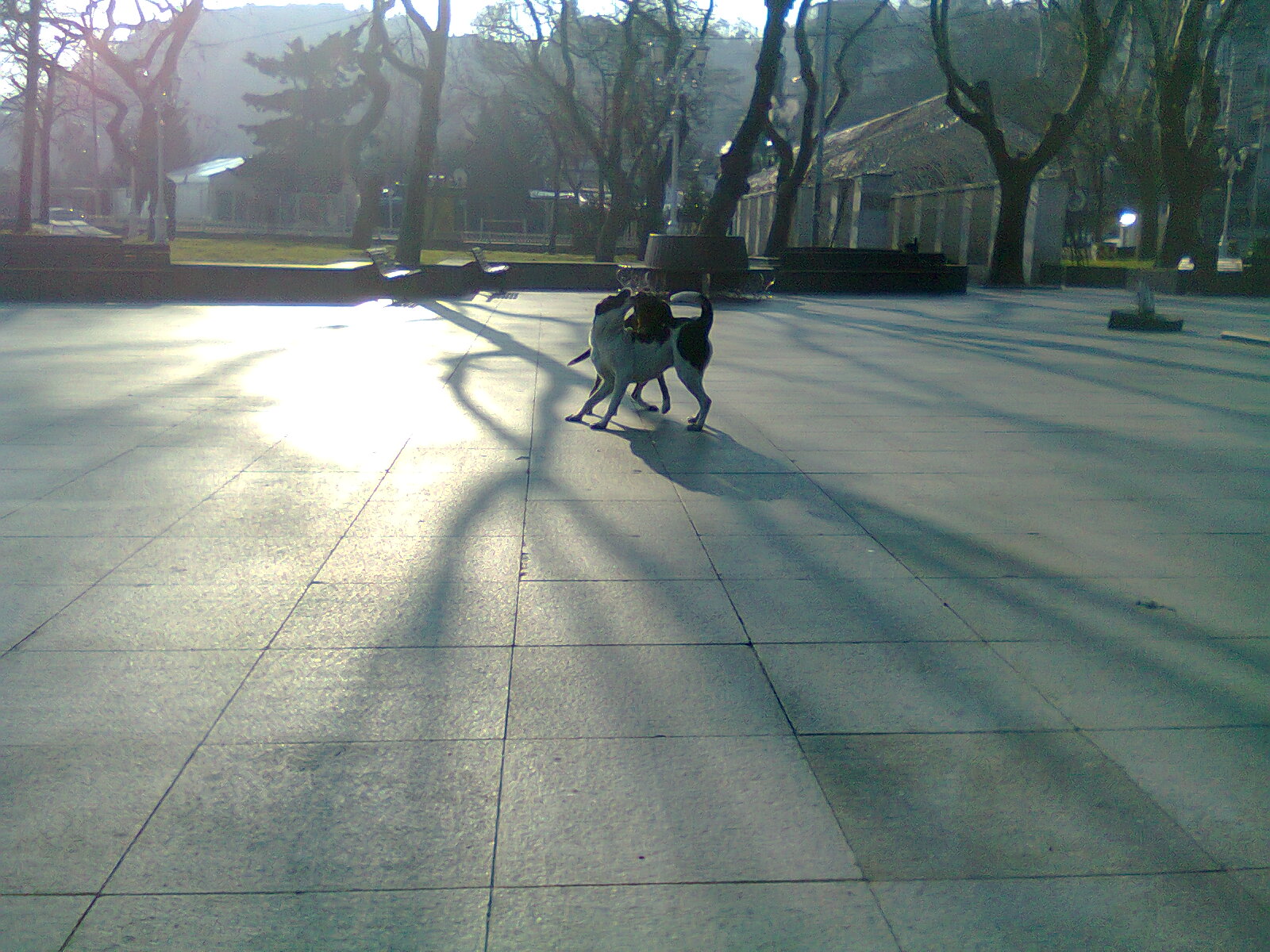
Two dogs on a stone plaza among the shadows of the bare trees that are behind them
Two dogs play-fighting
Haydar Aliyev Parkı
Kireçburnu, Sarıyer, Istanbul
Saturday morning, February 18, 2023
Continue reading

Miracles

This is inspired by Charlotte Brontë’s Villette. After reading this 1853 novel a second time in the summer of 2018, I put some passages I liked into a LaTeX file. I added some commentary and came up with a document more than 90 A5 pages long. I recently reread it and was reminded how much I had enjoyed the novel. I thought some of my commentary could be adapted to stand alone as a blog post – this one.

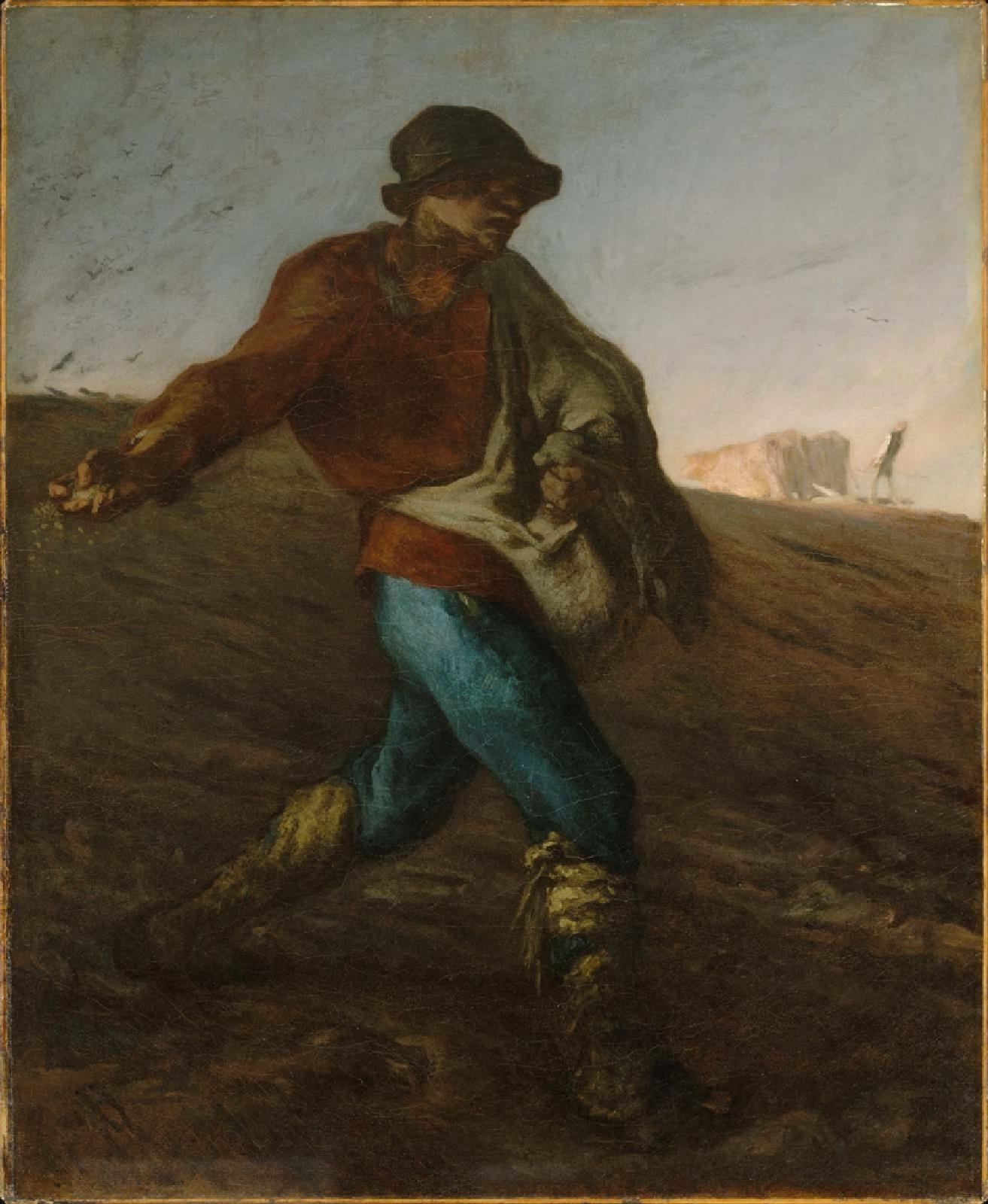
Man in a field, sack over left shoulder, casts seeds with his right hand
The Sower,” 1850
Jean-François Millet (French, 1814–1875)
Museum of Fine Arts, Boston

Continue reading

Victor Vasarely

Tophane-i Amire
Tophane-i Amire, 2017.03.25

Last week I wrote about the Turkish Impressionist Feyhaman Duran, born in 1886. Now my subject is the Hungarian-French Op Artist born twenty years later as Győző Vásárhelyi. His “Rétrospective en Turquie” is at the Tophane-i Amire Culture and Art Center in an Ottoman cannon foundry.

Vasarely show Continue reading

NL X: “Passion”

Index to this series

Passion is literally the correlate of action, as suffering is the correlate of doing. In the ordinary, vulgar sense, passion is our response to what we suffer. This is how we shall understand it.

Above, from a cross made of steel I-beams, a stone figure hangs, while others mourn at his feet; below, more stone figures, one bearing a cross, another, back to us, with robe bearing the image of a face

Sagrada Familia, Passion Façade, November, 2008

Continue reading

Thoreau by the Aegean

In a session of the 1986–7 senior laboratory at St John’s College in Santa Fe, for reasons that I do not recall, our tutor asked us students whether we had any heroes: for it was said that young people of the day no longer had heroes. None of the students at the table named a hero. I myself refrained from telling how I had once named a hero, when asked to do so in a high-school French class. This hero was the Buddha.

In recent times, I have listed my favorite writers as Somerset Maugham, Robert Pirsig, and R.G. Collingwood. I might add Charlotte Brontë and Mary Midgley to the list. I cannot add the Buddha, because he is not a writer. If my list were of writers and thinkers, I still could not add the Buddha: I cannot know him or any other thinker well enough, except through his own writing. But now I would add Henry David Thoreau. Continue reading