Tag Archives: Daniel Dennett

Excuses

This post features the first five chapters of Book III of the Nicomachean Ethics of Aristotle. Those chapters take up the following subjects.

  • Chapter I. The voluntary and involuntary (ἑκούσιος and ἀκούσιος).
  • Chapter II. Choice (also called intention, preference, and rational or deliberate choice: προαίρεσις).
  • Chapter III. The deliberated (βουλευτός).
  • Chapter IV. The wished-for (βουλητός).
  • Chapter V. Vice (κακία) as being voluntary.
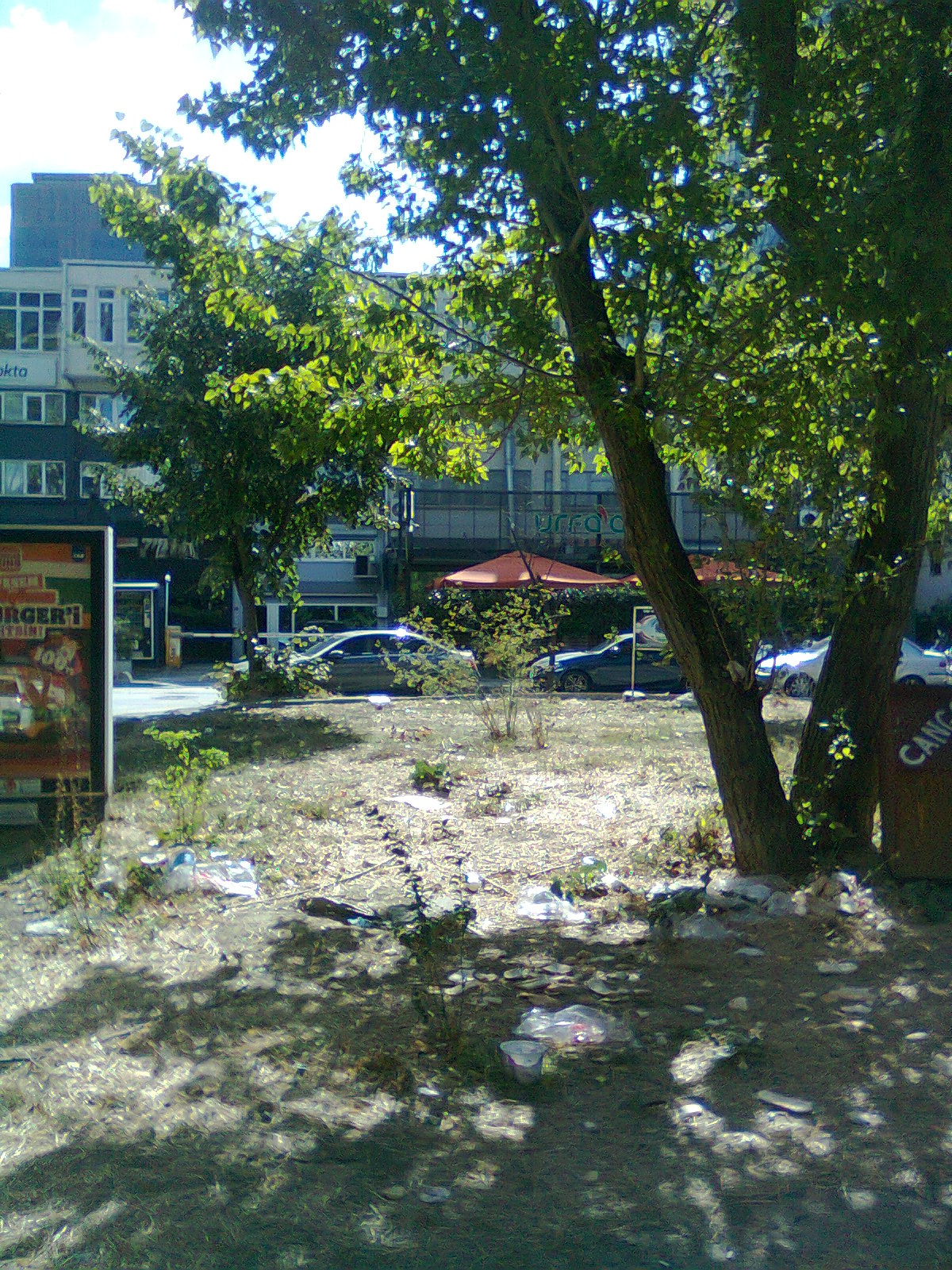
Mostly bare earth with a few weeds, some trash, a tree with two trunks, and a billboard; cars and low-rise buildings behind, on a sunny day
Public space in Maslak, Sarıyer
“One of the main business districts of Istanbul”
September 19, 2023
Continue reading

On Plato’s Republic, 7

Index to this series

(Note added October 23, 2022.) As I return to the analysis of the philosopher in the Republic, I think of two or three recent encounters with resistance to what I would call philosophical thought. See my comments added at the end. Meanwhile, here is a table contents for this post:

The Philosopher

We are going to define the lovers of knowledge or wisdom: the philosophers. Socrates’s definition is at Stephanus 480a, at the end of our seventh reading in Plato’s Republic. The reading constitutes, of Book V, the latter part, beginning at 472a. Socrates concludes,

Τοὺς αὐτὸ ἄρα ἕκαστον τὸ ὂν ἀσπαζομένους
φιλοσόφους ἀλλ’ οὐ φιλοδόξους κλητέον.

We might translate the first part word by word as follows.

τοὺς αὐτὸ ἄρα ἕκαστον τὸ ὂν ἀσπαζομένους,
those-who-are itself therefore each thing-that-is being delighting-in.

The whole sentence then is literally,

Therefore those who are delighting in each thing that is being, itself,
are to be called philosophers, but not “philodoxers.”

Here are five published translations; take your pick.

Continue reading

On Plato’s Republic, 2

Constituting the latter part of Book I, the second of the Republic readings features the only sustained contribution of Thrasymachus, who argues that, if it can be pursued perfectly, injustice is superior to justice.

According to my electronic search of Jowett’s translation, confirmed with a search of Bloom’s, Socrates will mention Thrasymachus and his argument in Books II, VI, VIII, and IX, but the man himself will speak again only near the beginning of Book V, to agree with the demand of Polemarchus, Adeimantus, and Glaucon that Socrates explain the community of women and children in the imaginary city that Socrates will have been describing.

Continue reading

Mathematics and Logic

Large parts of this post are taken up with two subjects:

  1. The notion (due to Collingwood) of criteriological sciences, logic being one of them.

  2. Gödel’s theorems of completeness and incompleteness, as examples of results in the science of logic.

Like the most recent in the current spate of mathematics posts, the present one has arisen from material originally drafted for the first post in this series.

In that post, I defined mathematics as the science whose findings are proved by deduction. This definition does not say what mathematics is about. We can say however what logic is about: it is about mathematics quâ deduction, and more generally about reasoning as such. This makes logic a criteriological science, because logic seeks, examines, clarifies and limits the criteria whereby we can make deductions. As examples of this activity, Gödel’s theorems are, in a crude sense to be refined below, that

  • everything true in all possible mathematical worlds can be deduced;

  • some things true in the world of numbers can never be deduced;

  • the latter theorem is one of those things.

Continue reading

Antitheses

This is an attempt at a dialectical understanding of freedom and responsibility, punishment and forgiveness, things like that. My text is a part of the Gospel, though I attribute no special supernatural power to this. I shall refer also to the Dialogues of Plato.