Summary. Here in Istanbul, the Turkish word kalender appears in the names of both a mosque and an officers’ club: Kalenderhane Camii and Kalender Orduevi. The mosque was earlier a house (hane) for dervishes, apparently of the Kalenderiye order; before that, a church. The officers’ club includes Kalender Kasrı, formerly a summer palace for members of the House of Osman, near where we live on the European side of the Bosphorus, halfway to the Black Sea from Seraglio Point. The palace was erected in its current form during the reign of Abdülaziz, who received there a French prince and was the first sultan to visit western Europe diplomatically. The first Ottoman palace at the site was constructed during the reign of Ahmed I (for whom also the Blue Mosque was built) by an officer called Kalender Çavuş. The location is also called Kalender, and presumably there is a connection, one way or other. Constantine Cavafy described a cafe there in “A Night Out in Kalinderi.” In Roman times, by the account of Dionysius of Byzantium, the adjacent bay was Pitheci Portus, or the Harbor of Pithex. Dionysius reported the story that Pithex had been a Barbarian king who helped a warrior cross over to Asia on his way to the Trojan War. This warrior was the ambidextrous Asteropaeus, who wielded a spear in either hand, but was nonetheless speared by Achilles. However, πίθηξ and πίθηκος can mean ape or monkey (as in Pithecanthropus, “Ape Man,” once the name of the supposed genus of the “missing link,” Java Man). Apparently the name of the bay in question has been interpreted that way.
People can walk around Istanbul without a clue as to what they are passing by. I was like that when walking past the Kalender Kasrı. As for the kalender himself, since he is a dervish, even one devoted to a particularly unconventional life, he may also be any person so devoted: a bohemian.
This blog has been around so long, I can hardly remember writing some of the posts. I look back at them sometimes, to see whether they still make sense, or whether I have been repeating myself. If I make changes to a post, I leave a note at the bottom.
I believe Thoreau kept his journal that way – albeit with a pencil, even one manufactured by the family firm. He wrote,
Contemplation of the unfinished picture may suggest its harmonious completion … Thoughts accidentally thrown together become a frame in which more may be developed and exhibited. Perhaps this is the main value of a habit of writing …
John R. Stilgoe quotes that, in his Preface for the abridgement by Damion Searls of Thoreau’s Journal: 1837–1861. I wrote about the book in “Thoreau by the Aegean,” August, 2015.
Longer than this blog has existed, I have lived in Istanbul. My wife and I came here from Ankara in August, 2011. We lived in the borough of Şişli until October, 2022. Then we moved to Sarıyer. Thus we came in sight of the third bridge over the Bosphorus Strait, where it meets the Black Sea.
⯅

We don’t actually have this view from our flat; we have a view of the ridge that has the view. I walk to the ridge in about 20 minutes, longer if I skirt the valley below it. (Photo taken October 22, 2022)

This is our view, not long after sunrise. We can see the bridge, or at least the cables that hold it up, along with one of the towers that hold these up. By day, the cables and the tower do not show up well in such photographs as I can take.

A few hours earlier, the lights on the cables come through the trees. (Both photos, Saturday morning, July 26, 2025)

The bridge stands out more clearly in winter (February 22, 2025; in the other photo, the street light must have been out)
⯆
I looked at the density of boroughs (and a lot more, including the practice of mathematics) in a 2016 post named for another one of the boroughs: “Beykoz, Istanbul.” Using figures from Wikipedia
that were said to be from 2011, I gave the densities of Şişli and Beykoz as 11,000 and 1000 respectively (that’s in a square kilometer). Sarıyer was then 1800. The figures as of the end of 2024 are 25,000, 790, and 2000. I don’t know how Şişli can have grown that much, but I can believe that Sarıyer has added almost 10% to its population. It has added us, after all.
While we were still in Şişli, the Pandemic induced me to explore my neighborhood on foot. I do the same in Sarıyer now, often visiting İstinye, Yeniköy, Tarabya, and Kireçburnu, along the Bosphorus shore. I have ordered them by proximity to Seraglio Point.
-
İstinye has a harbor and is the site of the new US consulate. The old consulate was near Taksim in the Palazzo Corpi, now leased to Soho House, an international private club of which it seems one globetrotting friend is a member, though it hasn’t been convenient for him to take me there.
⯅
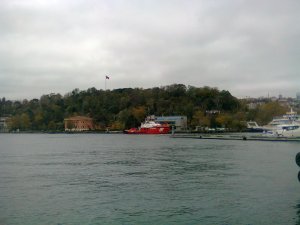
Coast guard station in İstinye, Tuesday, December 5, 2023

İstinye ferry pier, February 16, 2024

Ottoman fountain near İstinye ferry pier, Sunday, July 2, 2023
⯆
-
Yeniköy is “new village,” Νεοχώριον, Νιχώρι, where Constantine Cavafy lived, 1882–5, having fled the British bombardment of Alexandria.
⯅
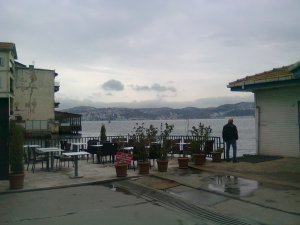
Yeniköy, Thursday, March 16, 2023
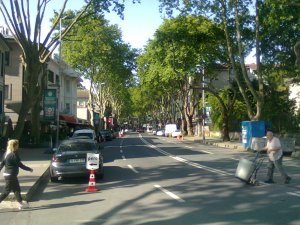
Yeniköy, Thursday, May 12, 2024

“This building is dedicated to the memory of the time when Poet Konstantinos P. Kavafis (1863–1933) lived here.” Yeniköy, June 13, 2024
⯆
-
Tarabya is “therapy” – θεραπεία, but the Greek name of the place is apparently accented as Θεραπειά. The place was formerly “pharmacy” (φαρμακεία), because Medea had left a store of drugs there. There is a harbor, this year touted as a Blue Flag Marina, so it is supposed to be clean. Outside the marina is a shallow area, opposite a church, where people bathe in summer.
⯅
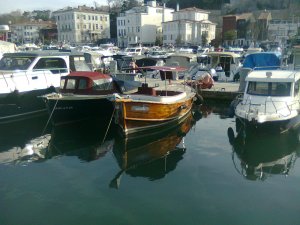
Tarabya, Friday, March 10, 2023

Tarabya, Wednesday, October 9, 2024
⯆
-
Kireçburnu, “lime point,” is apparently where the Ottomans prepared the mortar for Rumeli Hisarı, the castle that served for the conquest of Constantinople in 1453.
⯅

Kireçburnu, Sunday, January 1, 2023 (two people are swimming)

Kireçburnu, Monday, March 13, 2023

Kireçburnu, Sunday, April 2, 2023
⯆


There is a two-kilometer stretch between two streets that meet the shore road:
-
Postacı Halil Sokağı (“postman Halil street”), in Tarabya.
⯅

Postacı Halil Sokağı, Wednesday, October 25, 2023
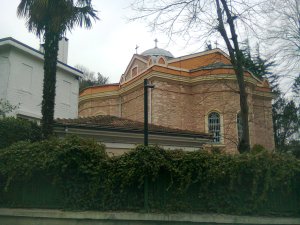
On Postacı Halil, Thursday, March 2, 2023, Tarabya Aya Paraskevi Kilisesi, dedicated to a saint who was named for her birth day, Friday, which was the death day of Jesus, as for example in Mark 15:
- Καὶ ἤδη ὀψίας γενομένης, ἐπεὶ ἦν παρασκευή, ὅ ἐστιν προσάββατον,
- ἐλθὼν Ἰωσὴφ ἀπὸ Ἁριμαθαίας εὐσχήμων βουλευτής, ὃς καὶ αὐτὸς ἦν προσδεχόμενος τὴν βασιλείαν τοῦ θεοῦ, τολμήσας εἰσῆλθεν πρὸς τὸν Πιλᾶτον καὶ ᾐτήσατο τὸ σῶμα τοῦ Ἰησοῦ.
- And now when the even was come, because it was the preparation, that is, the day before the sabbath,
- Joseph of Arimathaea, an honourable counsellor, which also waited for the kingdom of God, came, and went in boldly unto Pilate, and craved the body of Jesus.
Paraskevi was ultimately arrested, here in Tarabya, according to St. Barbara Greek Orthodox Church of Orange, Connecticut. The website cites the Synaxarion
of Hieromonk
Makarios of the Monastery of Simonos Petra in Athos. According to Sebastian Press, in Los Angeles, Ecumenical Patriarch Bartholomew congratulated the publication of this Synaxarion in English, which happened in 1998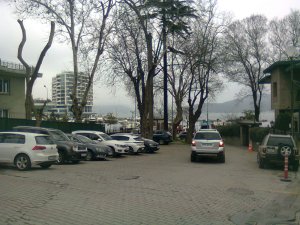
Bottom of Postacı Halil, same day, March 2, 2023

Bottom of Postacı Halil, Sunday, July 28, 2025, with the local bathing spot, next to Big Chefs
⯆
-
Kirazlı Bağlar Sokağı (“street of vineyards with cherries”), in Yeniköy.
⯅
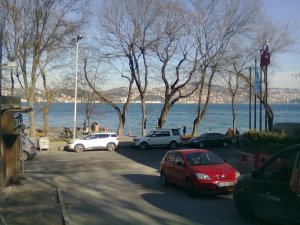
Bottom of Kirazlı Bağlar Sokağı, Tuesday, February 21, 2023
⯆


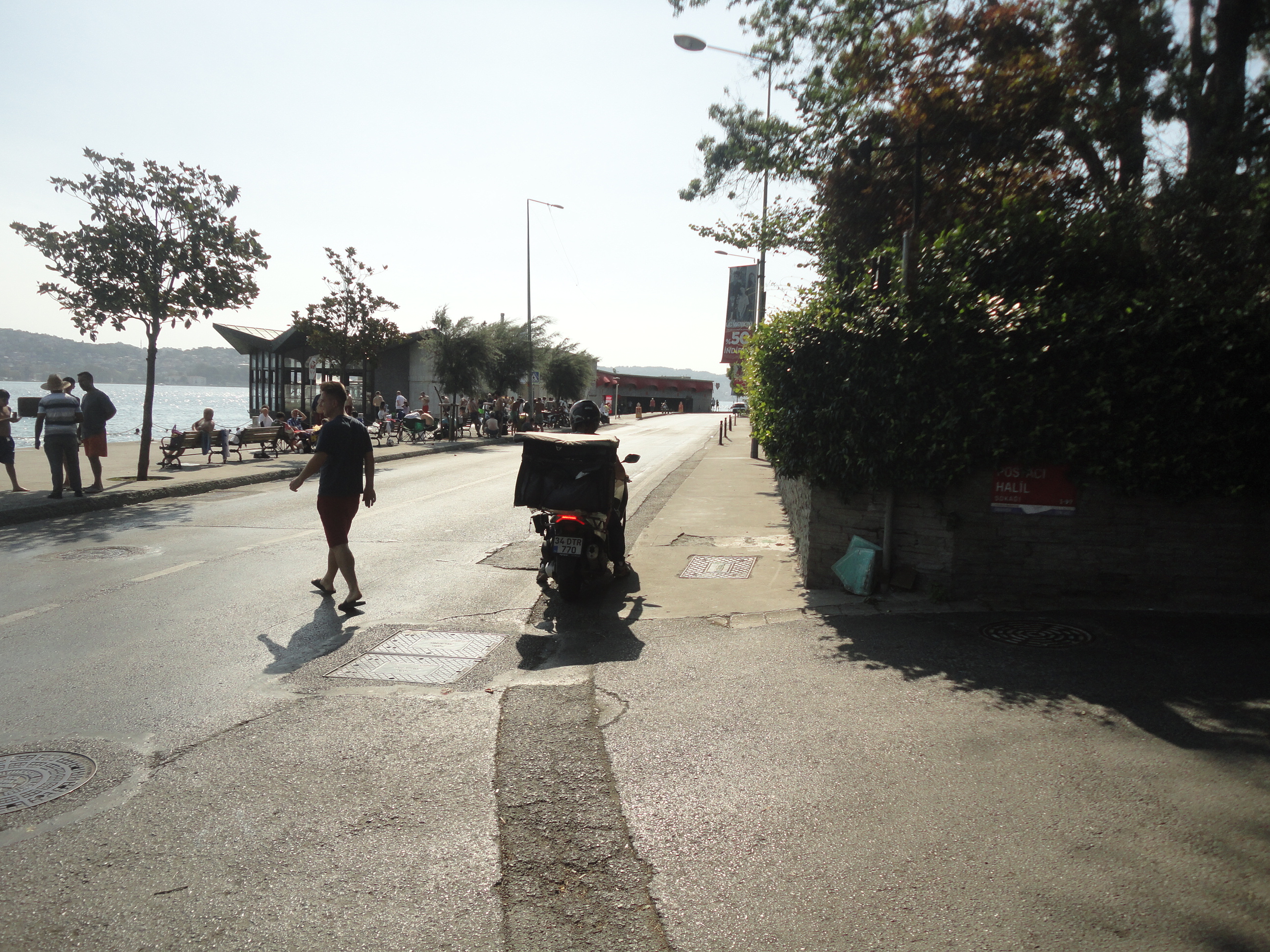

Between Postacı Halil and Kirazlı Bağlar, the only access to the sea is along a road called Kalender Caddesi. Apparently this is named for where it meets the shore road.
⯅

Top of Kalender Caddesi, Monday, May 22, 2023
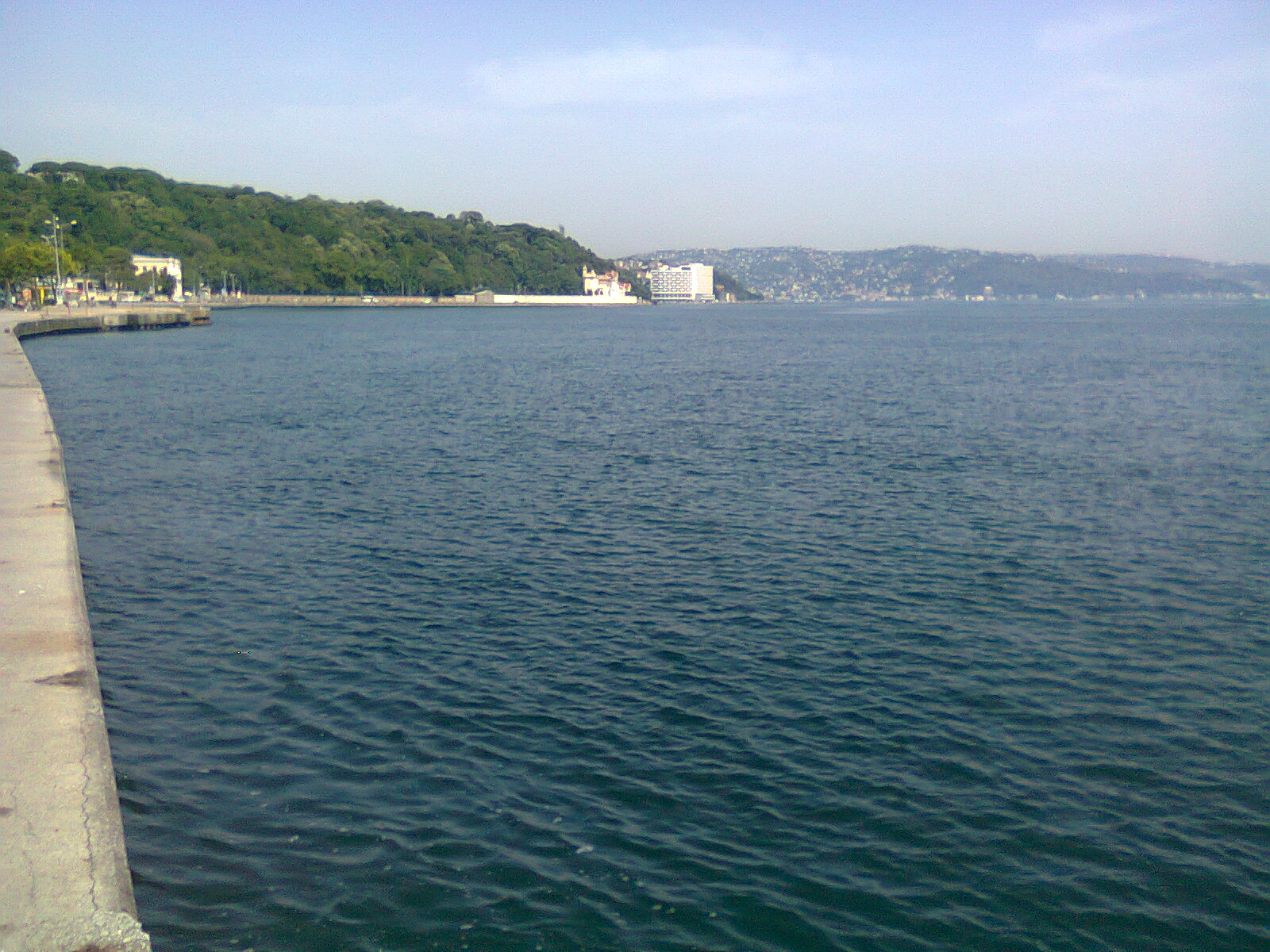
Kalender Koyu, with Kalender Kasrı and Huber Köşkü, June 13, 2024
Huber Köşkü, Thursday, May 10, 2023
⯆
The word kalender appears also in the name of the Kalenderhane Mosque, in the old city of Istanbul. In a video that I saw recently, dating from April of last year (2024), the host walks right past the mosque, even though it
- is at least eight hundred years old,
- used to be a Greek church, and
- would be a highlight of a proper visit to its neighborhood, by my way of thinking.
Like that other tourist though, I have been walking through Kalender, here on the upper Bosphorus, without looking into its history. I start correcting that fault with this post.
My eyes at least saw the history of Kalender, when I read what Dionysius of Byzantium had to say about the geography of my region, two thousand years ago. In “Cavafy in Istanbul,” I wrote about this geography. I included § 66 of the Anaplous of Dionysius (and now I correct the translator’s “whom” to “who”):
Beneath this prominent coast follows a bay in which is [the] Harbor of Pithex, who they say was a king of the barbarians who lived here who together with his sons led Asteropaios in the crossing to Asia. From here the shore is broken and steep.
The Latin name of the Harbor of Pithex is Pitheci Portus. Under that name, there is a brief Wikipedia article, and one of the references corroborates my surmise that Pitheci Portus became Kalender. (That reference is part of the Digital Atlas of the Roman Empire, by Johan Åhlfeldt.)
From a reader of a draft of the relevant part of “Cavafy in Istanbul,” the suggestion came that Constantine Cavafy had written about our stretch of the Bosphorus in his memoir, Μια νυξ στο Καλεντέρι – in English, “A Night Out in Kalinderi.” It has slowly occurred to me that Kalinderi is Kalender. This is confirmed by a Turkish translation of the memoir, discovered by my wife, called “Kalender’de Bir Gece.”
A kalender may be a qalandar: a Sufi saint, or perhaps any member of the order of Qalandariyya. After the Ottoman conquest, the Church of the Theotokos Kyriotissa – the Mostly Lordly Mother of God – became a kalenderhane – a house (hane) for the order of Qalandariyya.
A qalandar has an unconventional, “bohemian” lifestyle. Therefore, it seems, any such person might be called in Turkish a kalender. The word is Persian in origin, but its etymology beyond that is unknown, according to the Turkish etymological dictionary of Sevan Nişanyan.
The region of the Bosphorus shore where Kalender Caddesi comes through the hills: for the pleasure of the Ottoman court, a structure was built there during the reign of Ahmed I, 1603–17. The builder was an officer of the court called Kalender Çavuş. Here çavuş would seem to be a title, corresponding to sergeant. I don’t know then whether kalender is a given name or another title. Two titles together are certainly possible, as in “reverend doctor” or profesör doktor.
Kalender Çavuş is named in
- the article in Dünden Bugüne İstanbul Ansiklopedisi called “Kalender Kasrı ve Bahçesi” (there is no article on Kalender alone);
- a research article: Salim Aydın, “Kalender Kasrı: Yapımı, Tadilatı ve II. Mahmud Dönemi Askerî Üs Olma Süreci,” Dumlupınar Üniversitesi Sosyal Bilimler Dergisi (“Kalender Pavilion: Its Construction and Restoration and the Process of its Becoming a Military Base During the Period of Sultan Mahmud the Second,” Dumlupınar University Journal of Social Sciences), 2021.
For the identification of Kalender Çavuş, the latter article cites four works by three sources, one of them not actually appearing in the bibliography, but the older of the other two being Hüseyin Ayvansarayî, who died in 1787.
⯅
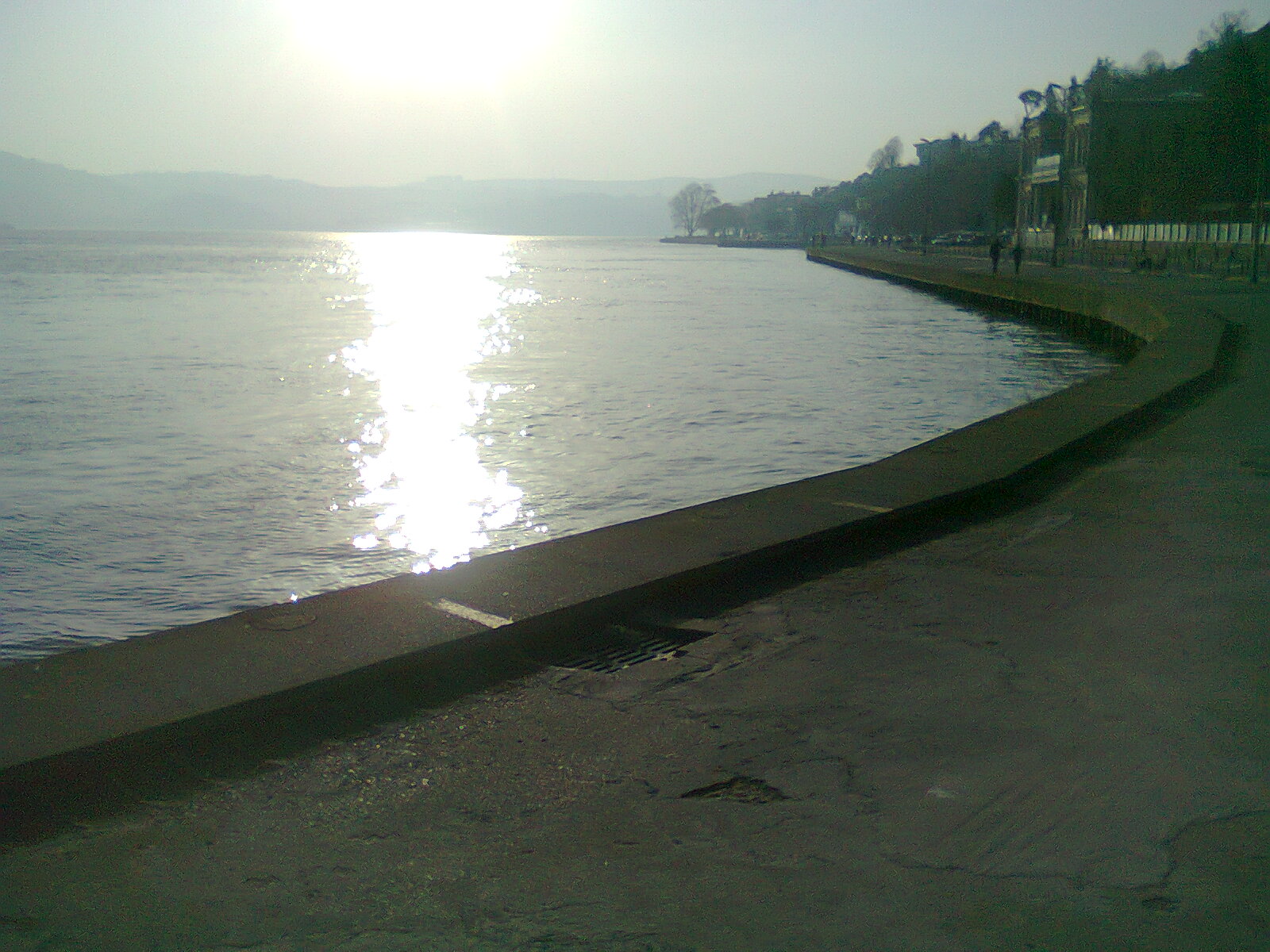
Kalender Kasrı, Saturday, February 25, 2023
⯆
There is a facility called Kalender Orduevi, evidently named for its location. Here
| ordu | = | army; |
| ev | = | house; |
| orduevi | = | officers’ club. |
The website of the club has a number of photos. Some of them are of Kalender Kasrı. Here
| kasır | = | summer palace, pavilion. |
The word is Arabic.
⯅
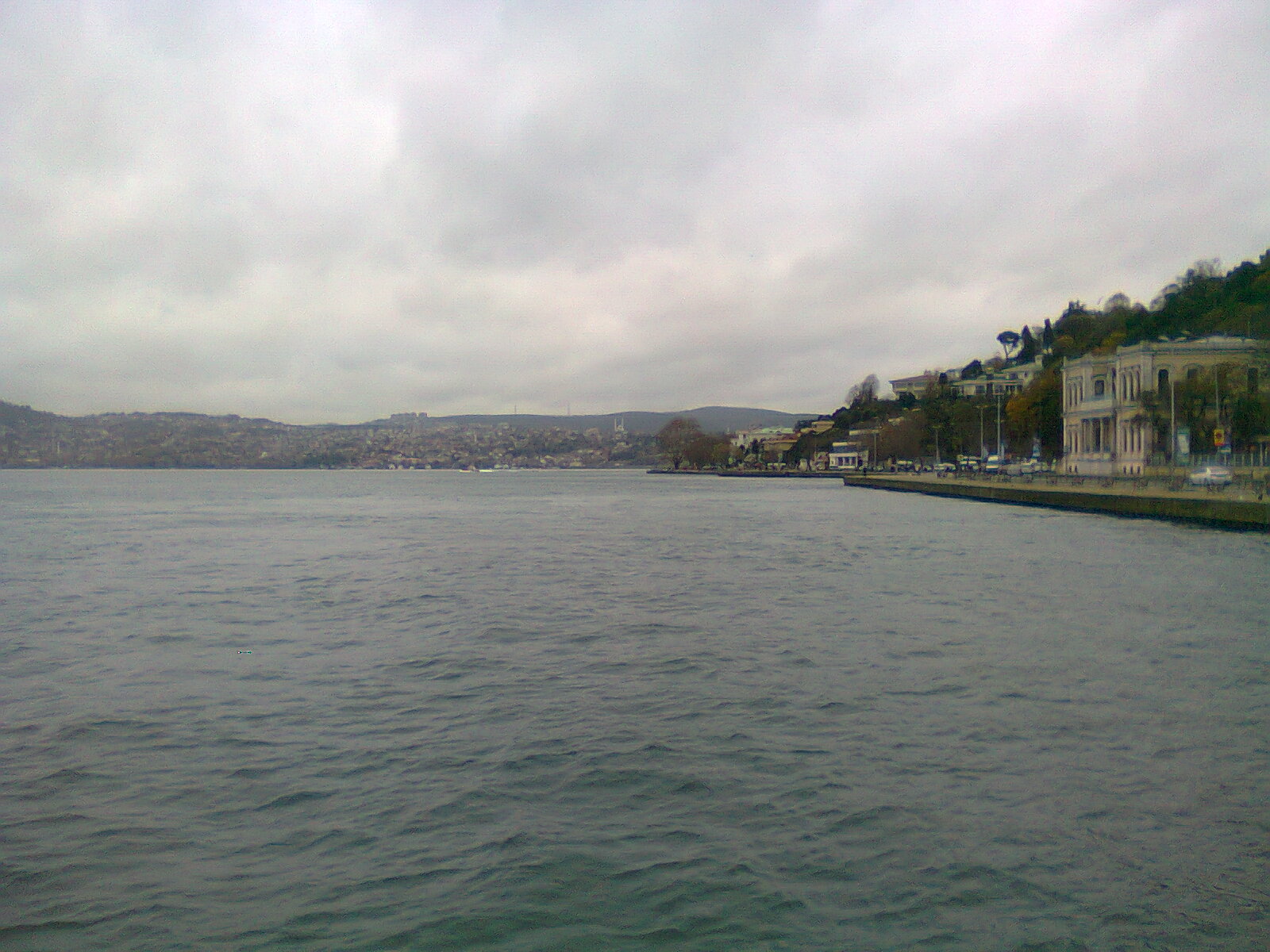
Kalender Kasrı, Tuesday, December 5, 2023
⯆
A near synonym to kasır from Persian is köşk, as for example in the name of Abdülmecid Efendi Köşkü. This was the summer palace of the man who, in 1922, after the sultanate was abolished, accepted the caliphate and served until this position too was abolished.
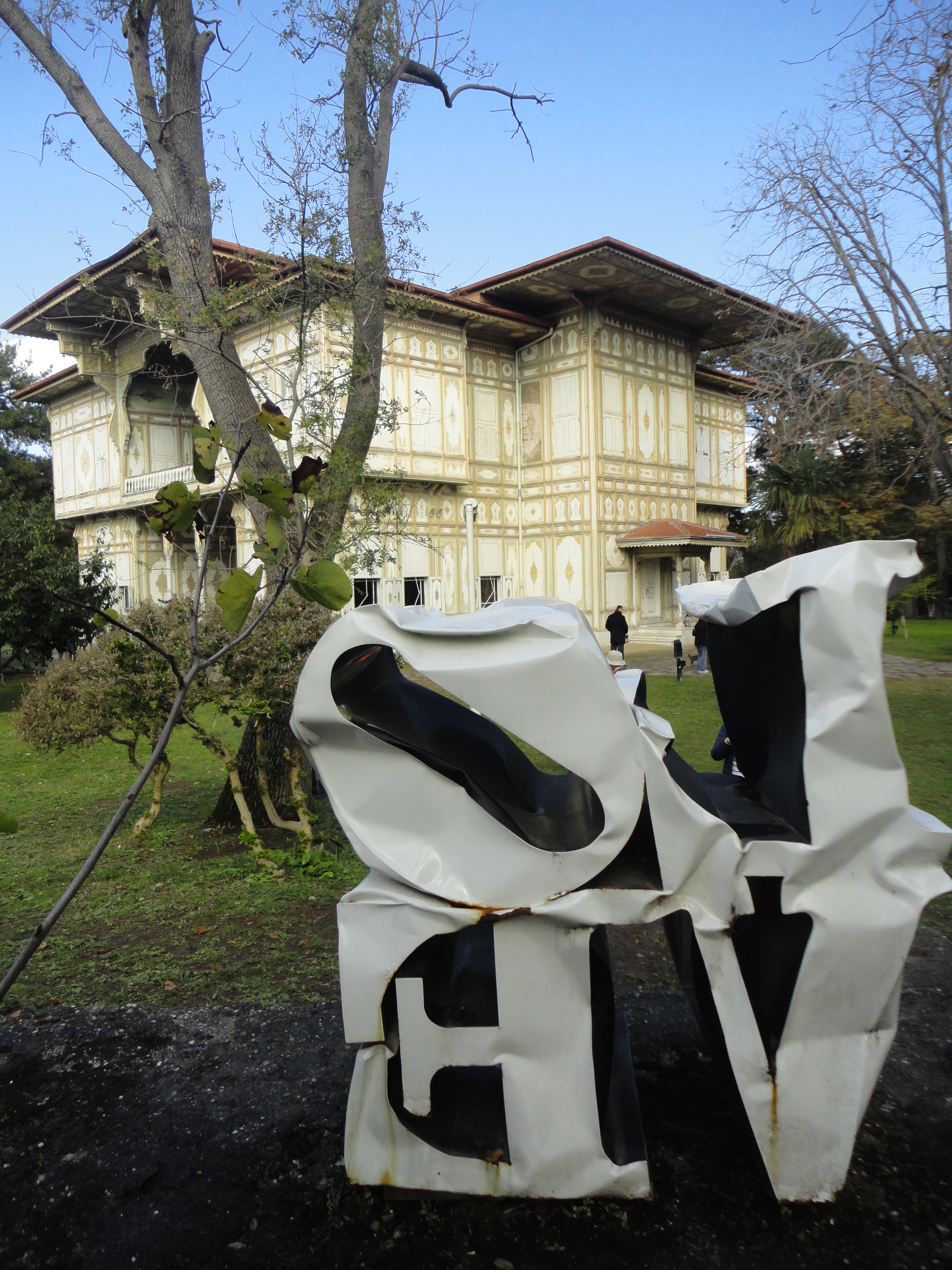
The caliph’s köşk is owned now by a “reclusive” billionaire. Ayşe and I visited the köşk, with the friend who belongs to Soho House, in 2017, to see an exhibit from the owner’s contemporary art collection. This included sculptures of a young woman in underwear with a black eye, a horse lying on its back, and a rhinoceros in harness and leg irons.
⯅
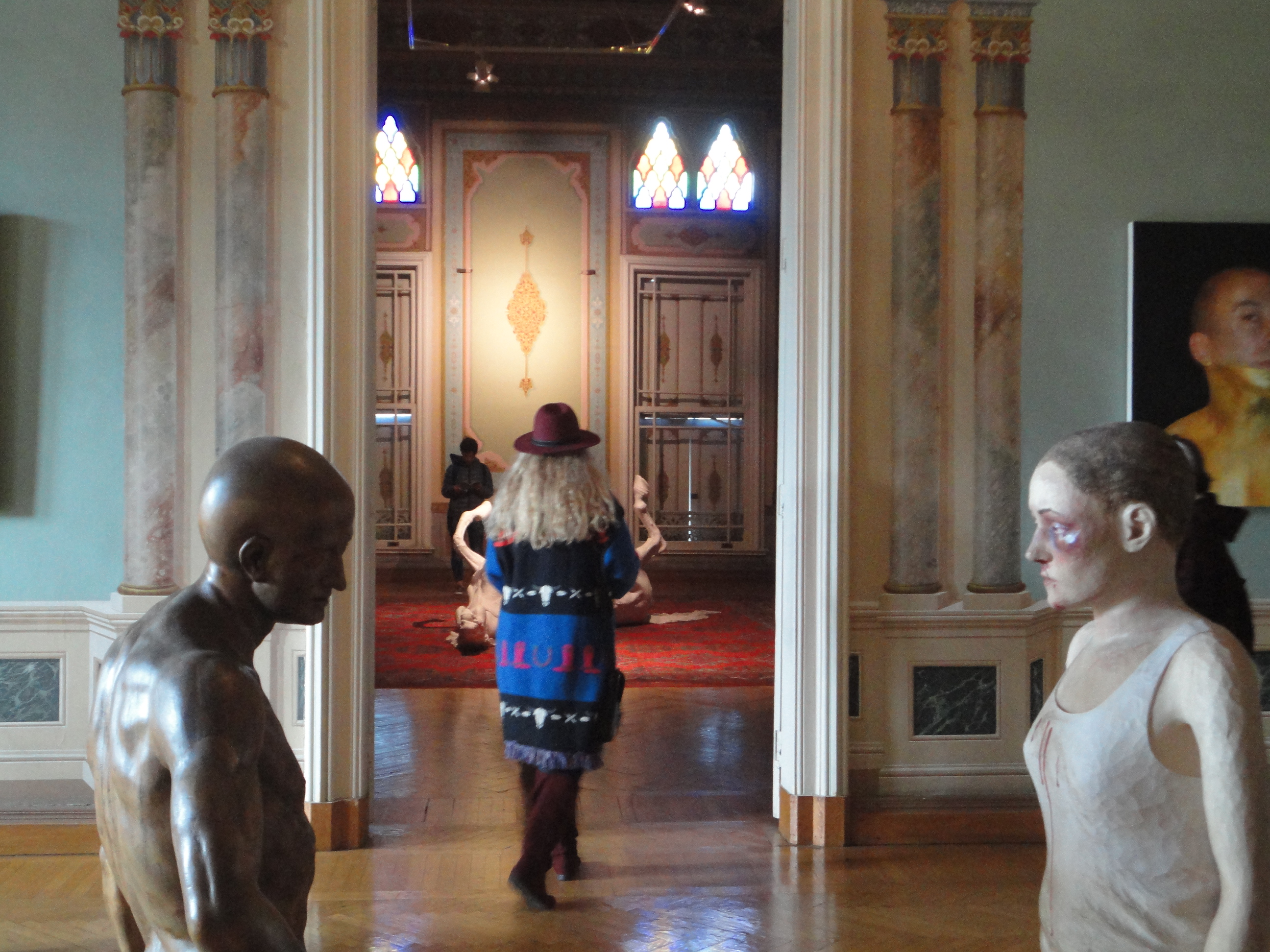


All three: Abdülmecid Efendi Köşkü, Monday, November 5, 2017
⯆
Ömer Koç has since founded in Istanbul a high-end vegan restaurant called Telezzüz. We haven’t been there. The name is from an old Ottoman word for taking pleasure. The restaurant website refers specifically to pleasure from the sense of taste; however, a dictionary allows telezzüz to refer to intellectual pleasure too. I remember the common cognate word from a promotion for M&M’s: renkli lezzet “colorful flavor.”
French borrowed the word köşk as kiosque, and English derived “kiosk” from this.
On September 17, 1864, Lucien Charles Joseph Napoléon, 3rd Prince Murat, was received at Kalender Kasrı by Abdülaziz. This sultan had had the kasır constructed by Sarkis Balyan, a member of the Armenian family of court architects.
The information here (augmented by Wikipedia) can be found at Cultural Inventory. However, the site only reproduces what is in the İstanbul Ansiklopedisi, which we have at home on paper. The website preserves an error in the original: Prince Murat is said to be of the family of Napoleon II, when surely Napoleon III is meant.
Another preserved error is locating Kalender Kasrı between Tarabya and Kireçburnu, when the latter should have been Yeniköy.
The site supplies translations into so many languages that I suppose they must be by machine; however, the English one seems good.
From Wikipedia, I learn that Sarkis Balyan designed a church in Aintab, today Gaziantep. The church was closed after the Armenian Genocide of 1915. In 1986 it was made into a mosque. The dome and minarets collapsed in the 2023 earthquakes.
⯅

Antep was the last place we visited on an organized tour of the southeast of Turkey in 2008. We did not get to see much in the city. The photo is from Saturday, October 4, 2008
⯆
In Virginia Woolf’s novel, Clarissa Dalloway thinks on how she has failed her husband, including “at Constantinople.” Apparently Woolf had visited the city in 1906, describing it as “a place of live nerves, & taut muscles.”
That information is from the edition of Mrs Dalloway
annotated by Merve Emre, a professor of English at Oxford. She was born in Turkey and (apparently) raised in the US.
Later in the novel, set in the early 1920s, Richard Dalloway is off to a committee meeting in parliament. He says the meeting concerns Armenians, or perhaps Albanians. The uncertainty is his wife’s. Emre says in her note,
Clarissa’s confusion over the Armenians and the Albanians is a more naive and ethically reprehensible version of Woolf’s own inability to imagine genocide …
There is a long explanation of the
mass deportations of more than a million Armenians … death marches across the Syrian desert, where countless men, women, and children died of starvation, exhaustion, and exposure.
Raphael Lemkin had not invented the word “genocide” then, but most historians agree it fits, as Emre reports.
I found some photos taken during a walk from Kalender to Bebek, via Rumeli Hisarı, Saturday, March 3, 2012 (total length, 9 km).
The name of the blog, Gölge Gezgin, could be the name of the blogger, but the words mean Shadow Traveller.
On a recent day, YouTube offered me a video of a walk from Kalender in the other direction. This was posted June 16, 2025 by Walkscape Tv: “Sunset Walking Tour in Istanbul | From Yeniköy to Kireçburnu Along the Bosphorus | 4K.”
I guess this belongs to a genre of silent walks. I have not watched the whole video, though I also have not made the walk in the evening. I have wanted to do so, if only to see, by lights in windows, which houses along the way are actually occupied. Some of them seem abandoned by day.
Somebody called Sly has several Istanbul videos from April of last year. He has videos from all over the world over the last seven years. I can’t tell whether the videos bring in enough income to support his travels.
One of Sly’s videos is “It was a Rough Time For Me in Istanbul Turkey,” April 21, 2024. I mentioned it above. I suppose the title is ironic. I am sorry to see him leave the Vezneciler subway station, where one used to get a view of the Kalenderhane Mosque. Now the view is blocked by kiosks. Sly doesn’t know what is behind them.
⯅
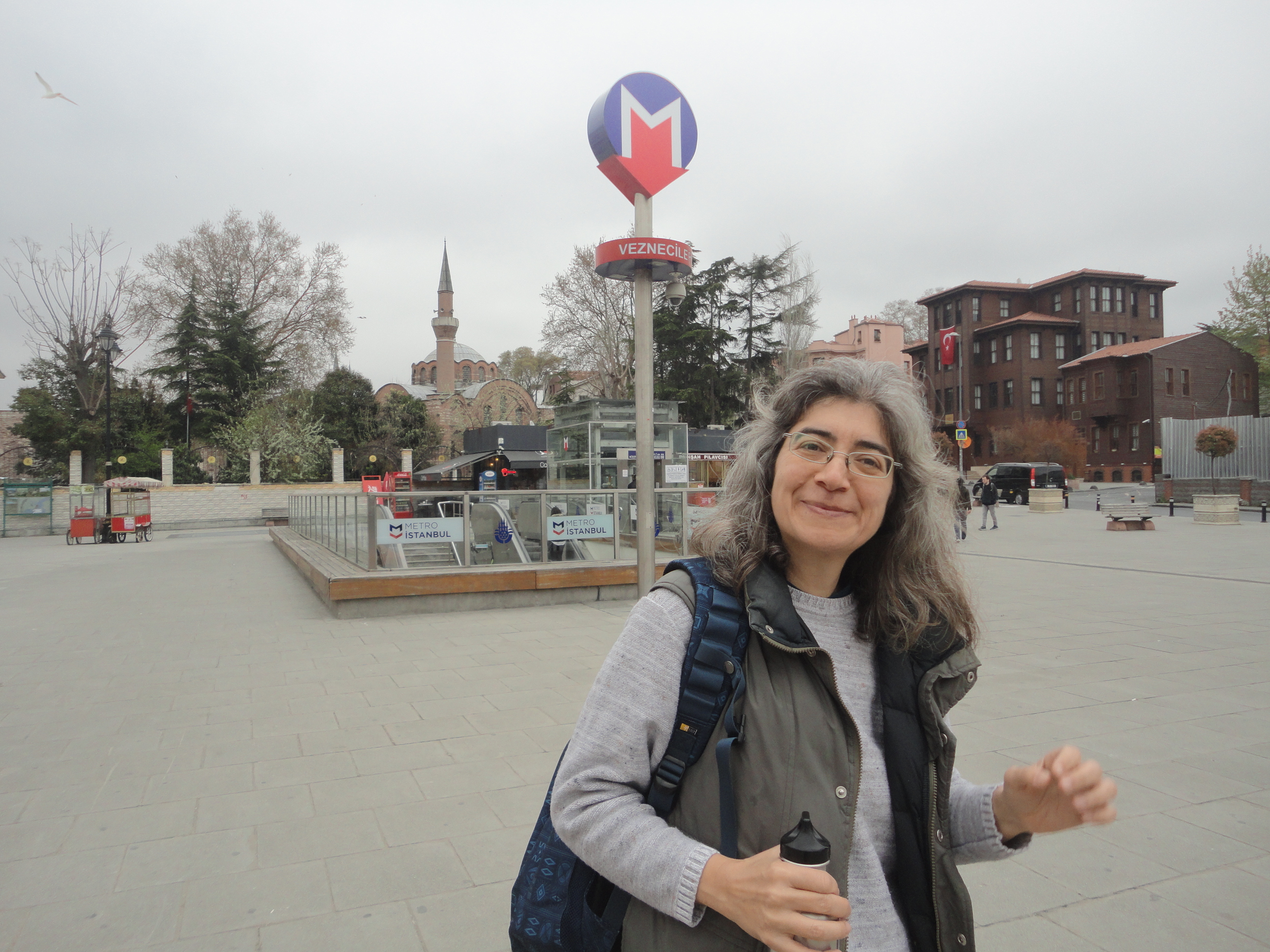
Vezneciler station, with the Kalenderhane Mosque beyond it, Sunday, April 8, 2018

Kalenderhane Mosque, Saturday, February 2, 2013
⯆
During the Latin Occupation, around 1250, the church got a fresco depicting the life of St Francis of Assisi, who had died in 1226.
Apparently the fresco is now in the Istanbul Archeological Museum, but I don’t recall seeing it there (and I have visited only once).
⯅

Istanbul Archeological Museum, Sunday, May 5, 2013
⯆
It seems Sultan Abdülaziz ordered the foundation of that museum, after he had visited the imperial museums in Paris, London, and Vienna. However, the sultan died mysteriously in 1876, and the museum came into existence in 1891.
In his video, Sly walks right past the Kalenderhane Mosque without looking, though perhaps it is not really visible from that side either.
⯅

Kalenderhane Mosque, Saturday, February 2, 2013
⯆
Ahead in Sly’s video, you can see an arch over the street; this is part of the Aqueduct of Valens, from the fourth century. I once had a little altercation with a driver there; he had honked at me from a distance to tell me to get out of the way, because there wasn’t room for both of us.
⯅
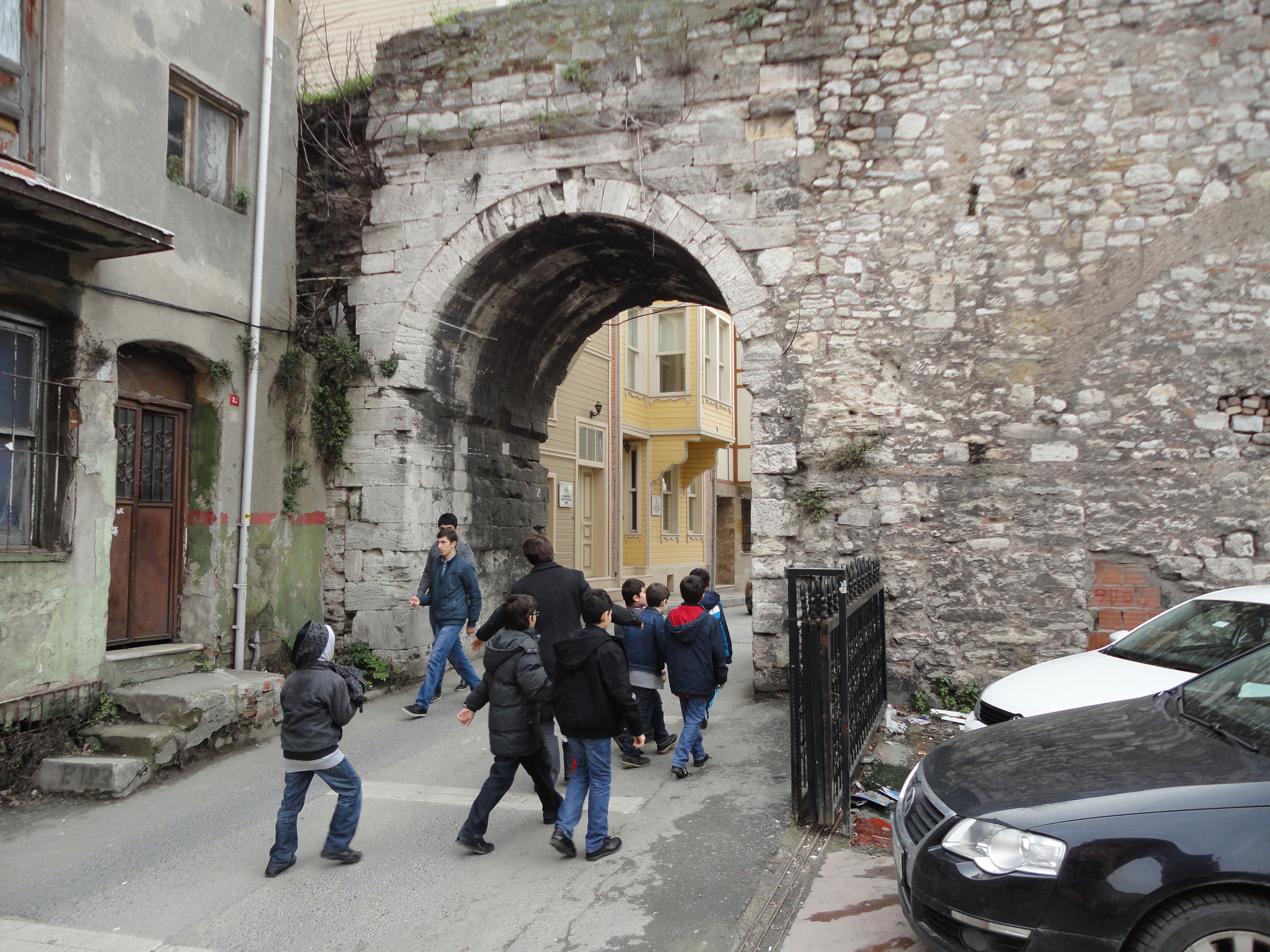
The arch under the Aqueduct of Valens, from the other side, Saturday, February 2, 2013
⯆
Sly ignores the archway. His video skips it.
I have walked that way to get to the Süleymaniye, the great imperial mosque of the maturity of Mimar Sinan. The views are spectacular, whether inside, or outside facing the mosque, or even outside facing the Bosphorus.
⯅
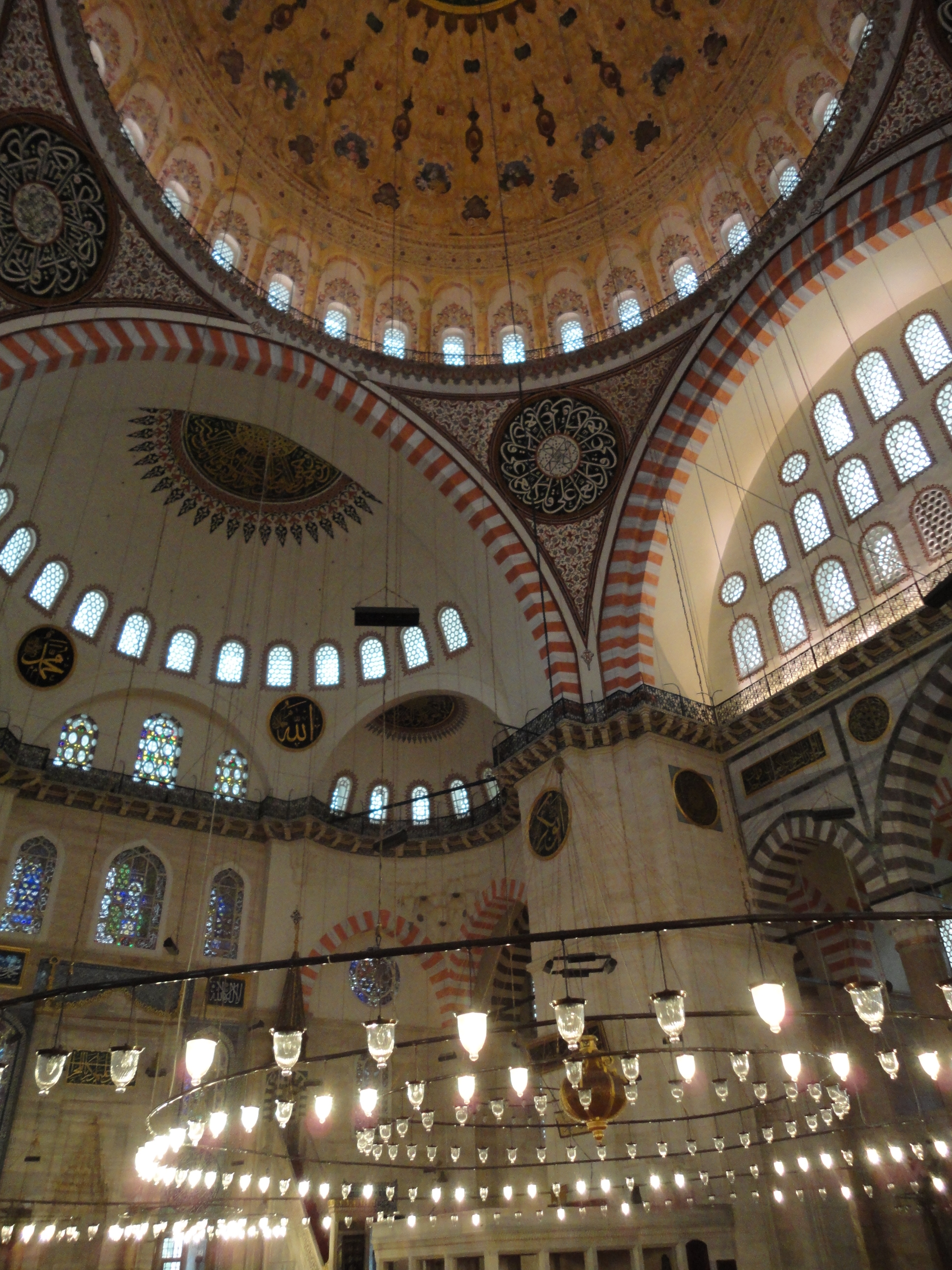

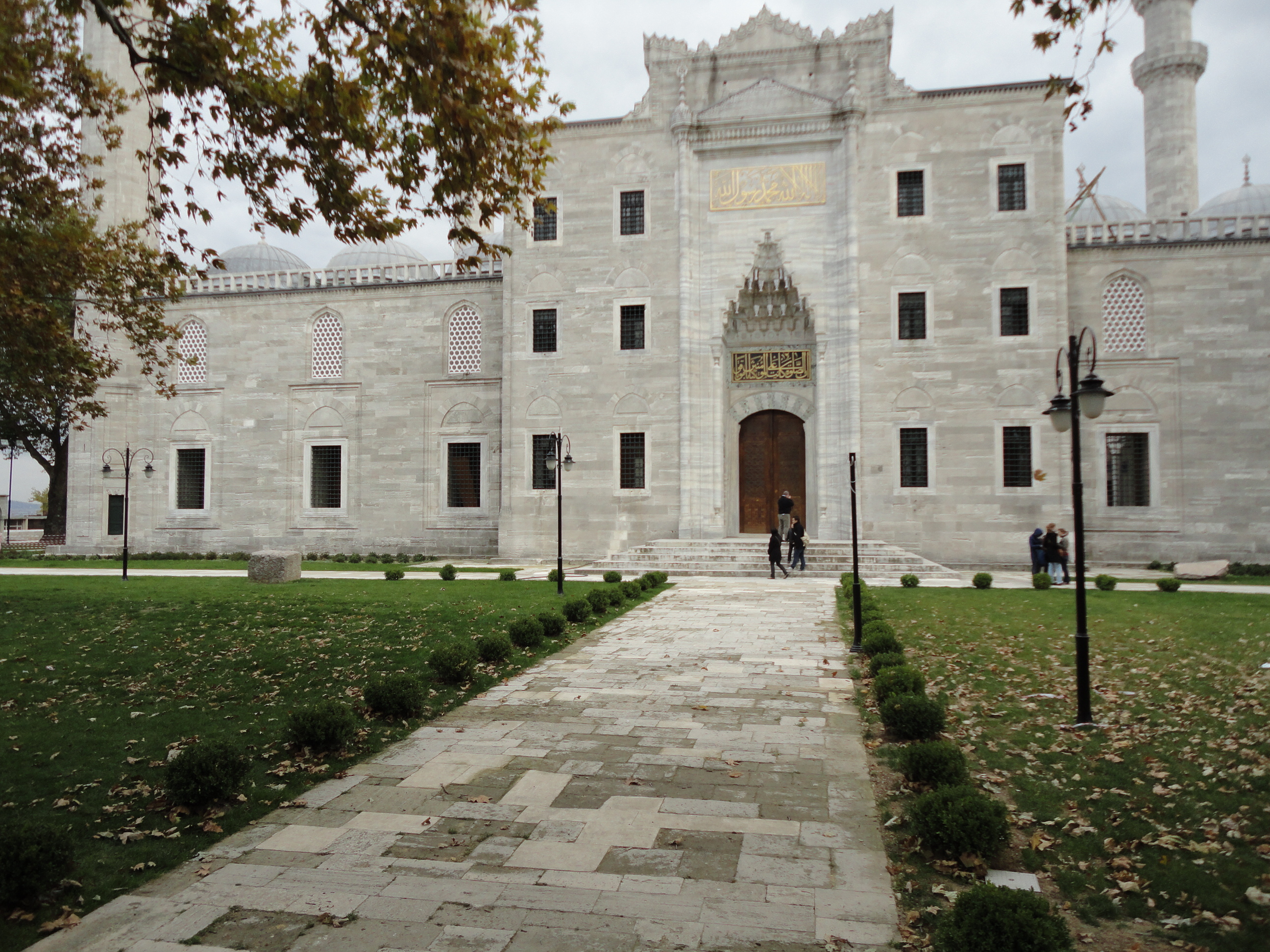

Süleymaniye, all Sunday, October 30, 2011
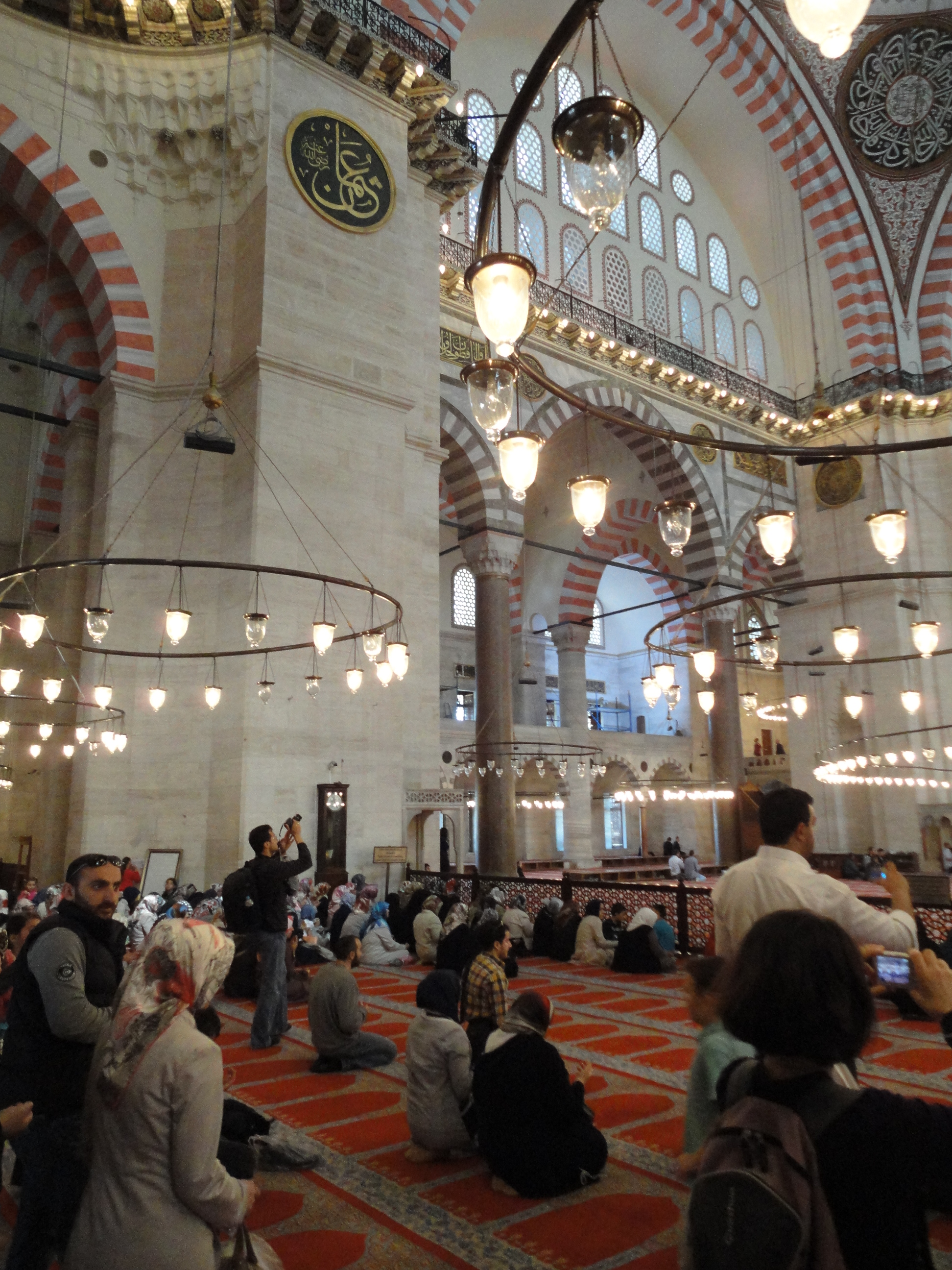
Süleymaniye, Monday, April 29, 2012
⯆
Sly ignores all of this too. His destination is not Vefa Kilise Camii, another mosque (cami) that used to be a church (kilise), this in the Vefa quarter.
⯅
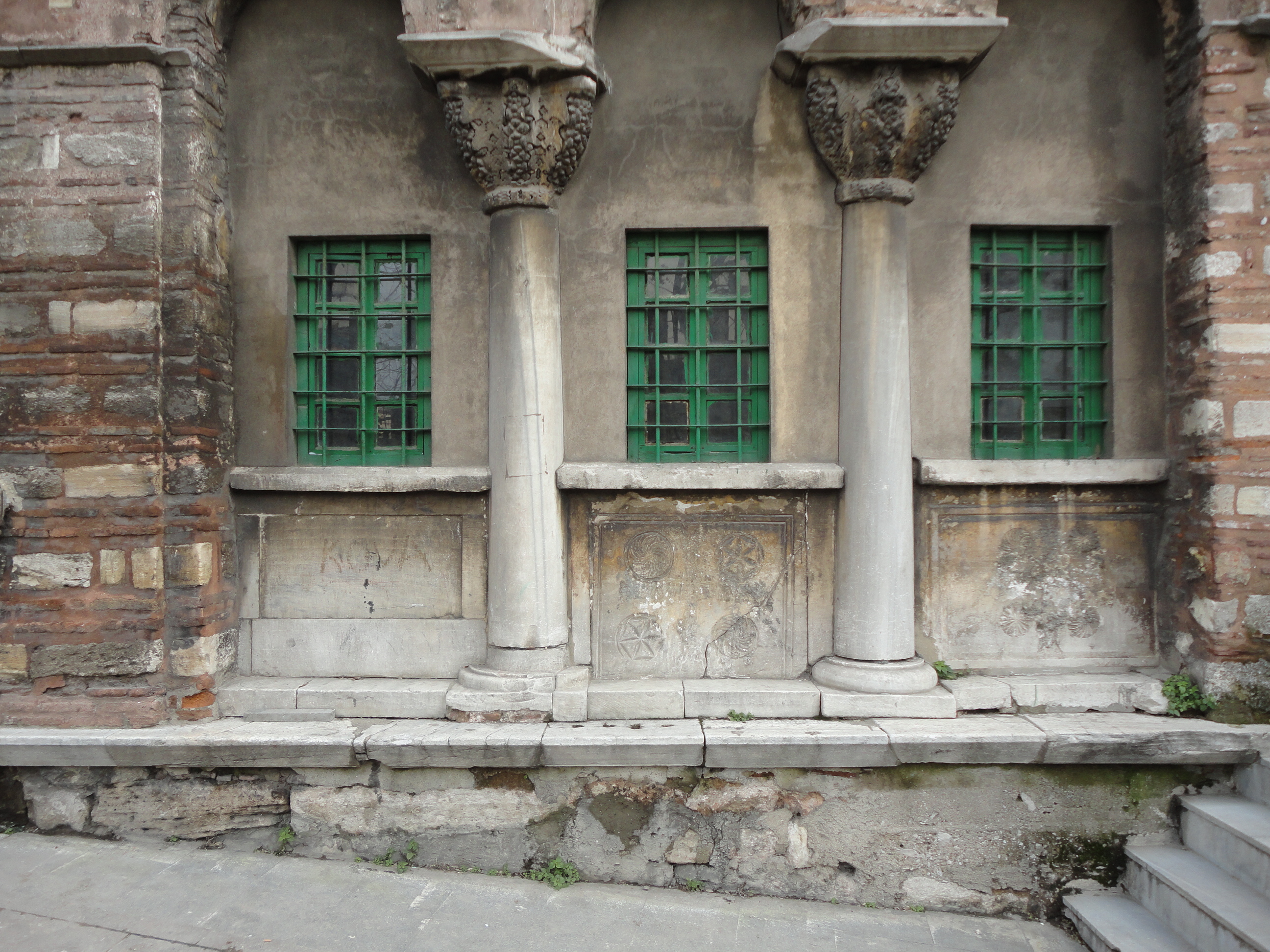
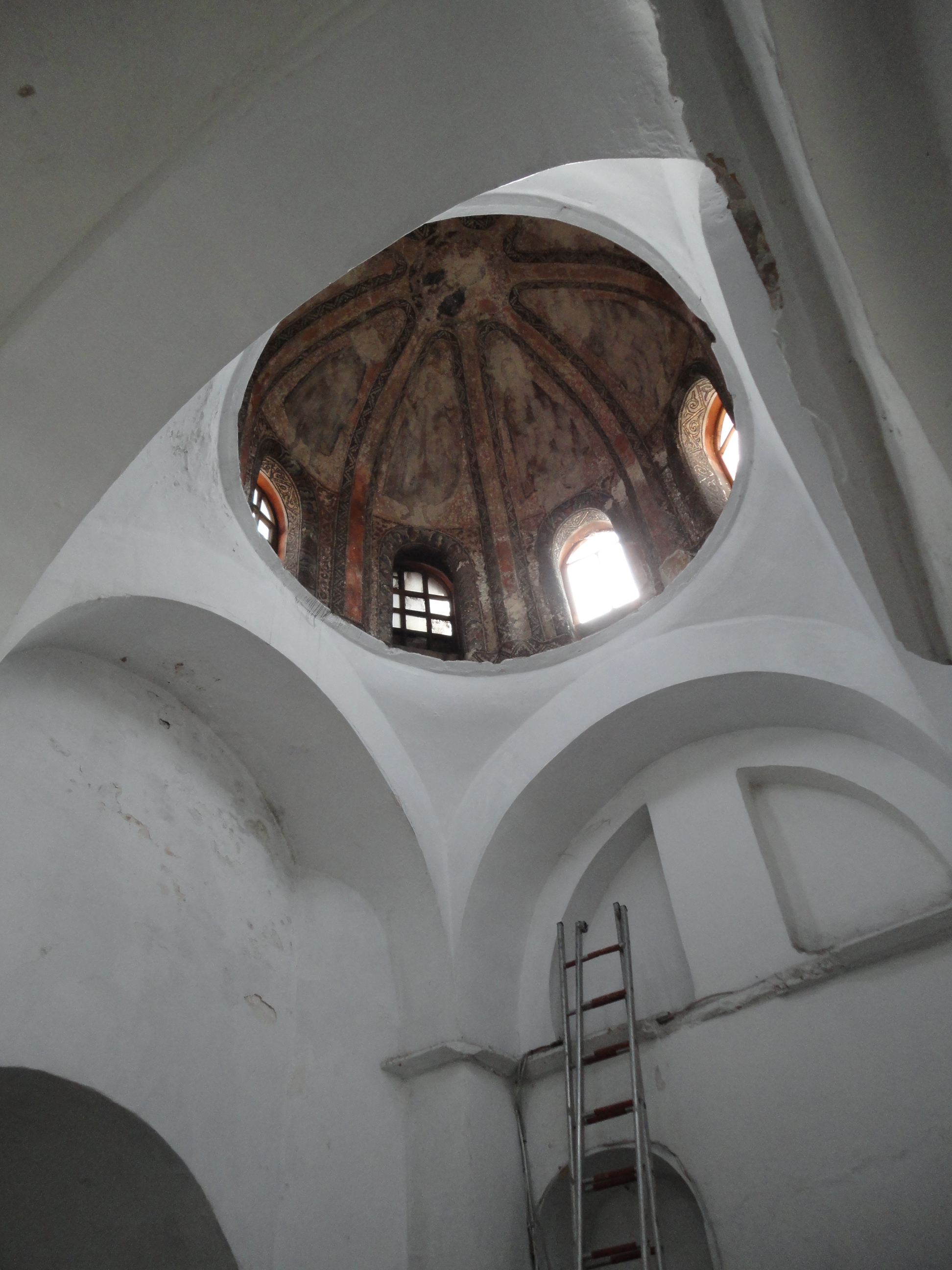
Church Mosque (also called Molla Gürani), Saturday, February 2, 2013
⯆
Sly’s destination is Vefa Bozacısı, in operation since 1876. Sly is not interested in the history; he just wants to try the boza, a thick drink of sweetened fermented grain you eat with a spoon, often with roasted chickpeas, as Sly has come prepared to do.
My recent reading of Kant is a reminder that goodness is available to everybody, without need of education or skill.
Edited July 28, 2025, mainly to add more photos. Alt text for most of the photos still needs to be added July 29
 Polytropy
One Trackback
[…] “Bohemianism” on Mrs Dalloway (briefly). […]