Trigger warnings for this post:
- Suffering and pain.
- Cessation of life.
- Mathematics.
After the post of December 9, for some reason I wanted to record here a surgical operation in 2019. Then I became preoccupied with mathematics.
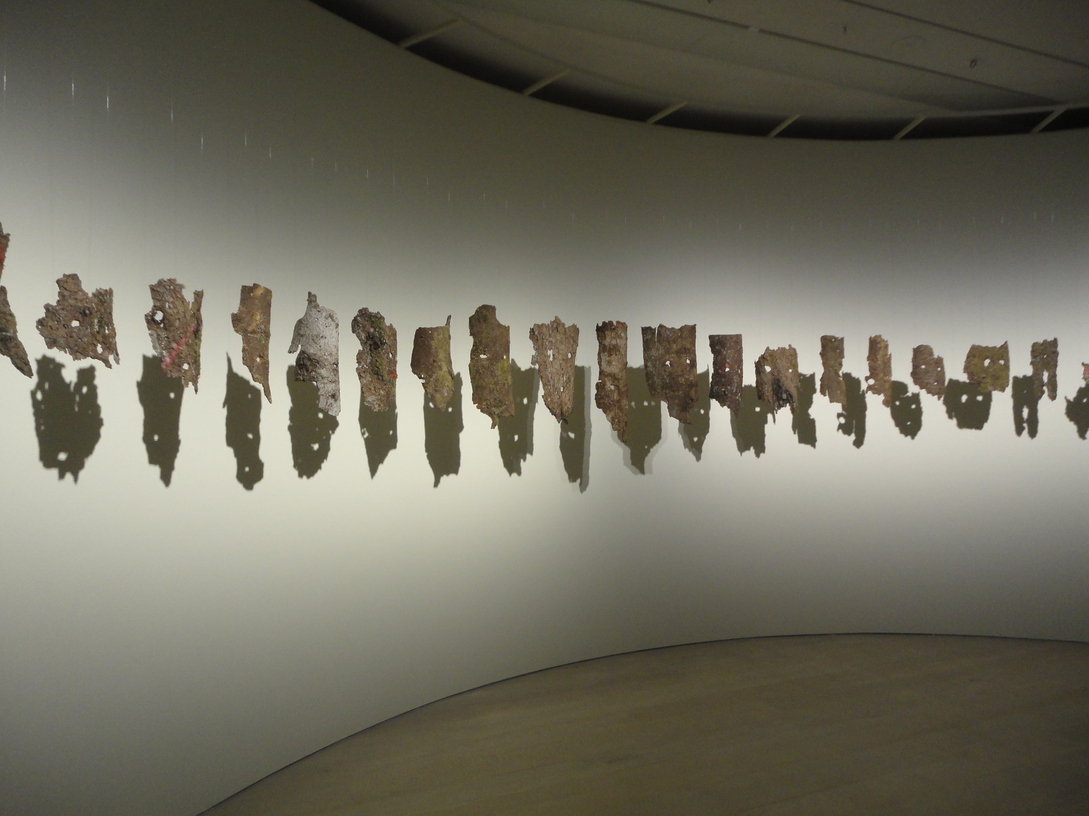
Hera Büyüktaşcıyan, “Dendrologia,” 2023; part of an exhibit called Phantom Quartet at Arter Istanbul, visited Wednesday, February 4, 2026. The bark of the masks is said to be taken from dead trees on the Isle of Vassivière in the artificial Lac de Vassivière, Limousin, France
On the subject of mathematics, let me take the opportunity to recommend “The Tool/Weapon Duality of Mathematics,” by Alexandre Borovik, recently published in the Journal of Humanistic Mathematics (volume 16, number 1, January 2026; pages 365–392). I had already made some comments on this essay, in the post called “Ethics of Mathematics” (August 27, 2025). Now I add another comment, between the next horizontal rules, before I continue towards my main purpose.
Borovik says, as I noted before, “Mathematics is morally and ethically neutral.” Part of the explanation is an analogy with what Collingwood says in The Principles of Art (1938): what makes something art is not what makes it useful. According to Sasha then,
Mathematicians, first of all, should care of cohesion, health and vitality of mathematics as a cultural system.
Mathematicians should care about something, at least: this would seem to be a moral duty! Collingwood closes his book on page 336 by saying,
Art is the community’s medicine for the worst disease of mind, the corruption of consciousness.
Mathematics is medicine against the belief that life is nothing but strife; for mathematics exists, and yet requires a conviction that agreement is possible: agreement on the truth.
Collingwood has explained corruption of consciousness on page 217:
First, we direct our attention towards a certain feeling, or become conscious of it. Then we take fright at what we have recognized: not because the feeling, as an impression, is an alarming impression, but because the idea into which we are converting it proves an alarming idea. We cannot see our way to dominate it, and shrink from persevering in the attempt. We therefore give it up, and turn our attention to something less intimidating.
I call this the ‘corruption’ of consciousness …
Having this corruption is perhaps a kind of faking or posing. There turns out to be a Wikipedia article on faking in music: pretending to play a part in an orchestra when one really isn’t playing it, perhaps because one has not practiced enough. Something like that can happen in mathematics. In any case, Collingwood continues on his next two pages:
This corruption of consciousness has already been described by psychologists in their own way. The disowning of experiences they call repression; the ascription of these to other persons, projection … Spinoza … has expounded better than any other man the conception of the truthful consciousness and its importance as a foundation for a healthy mental life. The problem of ethics, for him, is the question how man, being ridden by feelings, can so master them that his life, from being a continuous passio, an undergoing of things, can become a continuous actio, or doing of things. The answer he gives is a curiously simple one. ‘Affectus qui passio est, desinit esse passio, simulatque eius claram et distinctam formamus ideam’ (Ethics, part v, prop. 3). As soon as we form a clear and distinct idea of a passion, it ceases to be a passion.
Does everybody want to be a doer? If not, must they be a “sufferer,” an undergoer? In extreme terms, must everybody be a master or a slave? The question returns below.
My post of December 9 was called “Homicide,” because it concerned mercy-killing. The post was based on emails that took up work of Northrop Frye, a professed member of The United Church of Canada. Frye died in 1991; in 2017, his church declared,
We are not opposed in principle to the legislation allowing assistance in dying and to such assistance being the informed, free choice of terminally ill patients. There are occasions where unrelenting suffering and what we know about the effect of pain on the human body can make Medical Assistance in Dying a preferable option. However, we urge a cautious approach …
The present post too is based on emails, about the surgery in 2019 that I mentioned. I thought I should create a post out of those emails, because I had written a post about another surgery, three years earlier.
In the spring of 2016, here in Istanbul, I was recovering from hernia repair. I had undergone the operation at a hospital that dated to Ottoman times. I proceeded to write on this blog about
- the experience itself, in “Surgery & Recovery,” June 13;
- the philosophical travelogue by Robert Pirsig that I had read while recovering, in “One & Many,” June 20.
On February 19, 2019, I had an operation to treat a ruptured spinal disk. Çok şükür, thanks be, I have no more surgeries to report at the moment.
To post the articles of 2016 that I just linked to, I must have gone to the office. Except through mobile phones, we did not have internet access at home until July 15. We bought a wireless modem then. We happened to be visiting Ayvalık, a seaside town that has an international ferry connection to Mytilene. I can remember the day, because the coup attempt happened that night.
I wrote about it next day in “War Continues.” My title alluded to “Life in Wartime,” posted on June 29, the day after a bombing at Atatürk Airport. I mentioned the hernia operation as having been as dangerous for me personally as the bombing.
I found reason to quote Thoreau on how the worst enslavement was to ourselves. Thoreau used the second person, not the first; however, I have lately been driving myself to write an article about Pappus’s Hexagon Theorem. This is to please myself, but I do hope the article can be published elsewhere than my own blog. The work has kept me from doing things like completing this post. In a broader sense, I have been doing the work since 2013. Elaboration on this comes between the next two horizontal rules.
I had drafted the article on Pappus’s Theorem over a year ago, while leading a section of my department’s introductory geometry course. The text for the course is Book I of Euclid’s Elements. In the fall of 2024, I wanted to review for myself how, back in the fourth century – a long time ago, but six centuries after Euclid – Pappus had proved the theorem named for him by means of a theory of proportion. I had learned that such a theory could be established without the “Archimedean” postulate that Euclid uses in Book V of the Elements. The “parallel” case of Desargues’s Theorem from the seventeenth century was enough, because it allowed the enunciation of Thales’s Theorem to be used as a definition of proportion. The parallel case of Desargues’s Theorem could in turn be obtained from the parallel case of Pappus’s Theorem, as Hessenberg had discovered in 1905. That parallel case was, for Pappus, an application of the theory of areas that Euclid had worked out in Book I of the Elements.
In short, everything could be worked out from the book that my students were reading. Hilbert had discovered this, at the end of the nineteenth century. Artin gave a more streamlined approach in 1940. This work somehow completed what had been done by Desargues’s better-known contemporary and compatriot, Descartes. Still, lots of details have been worked out in the twentieth and now twenty-first centuries: a review article by Pambuccian and Schacht called “The Axiomatic Destiny of the Theorems of Pappus and Desargues” (2019) has 278 references.
Nonetheless, as far as I can tell, few people pay any attention to what Pappus himself actually did. A sign of this is that, when they do mention Pappus, they trace the Hexagon Theorem to only four of the lemmas that Pappus wrote for the reader of the now-lost Porisms of Euclid.
That is what I too did, when, to the Wikipedia article on Pappus’s Hexagon Theorem, I added the section called “Origins.” This was back in 2013. Two years earlier, I had moved with my wife from Ankara to Istanbul, and one reason for me to do that was to be able to create a course where students read Euclid. In teaching the course, I had noticed that the theorems of Pappus and Desargues could be stated in terms of Book I of the Elements. I could not tell how to prove them from that book alone. Wanting to see what Pappus himself had done, I got no help from the Wikipedia article just linked to: not as it was then. Neither had I discovered Jones’s translation of the relevant book, number VII, of Pappus’s Collection.
I had a pdf of the Greek text, but I could not just page through it, looking for the Hexagon Theorem. I tracked down one proposition number in Kline, Mathematical Thought From Ancient to Modern Times (1972) – a book I had chosen for a prize in high school. In A History of Greek Mathematics (1921), Heath named four propositions as constituting the Hexagon Theorem. I read them in Greek, and I summarized them for Wikipedia. They established the “intersecting” case of the Theorem; the parallel case was in a fifth lemma, unmentioned by Heath.
Heath was making use of Chasles, Les trois livres de porismes d’Euclide (1860). Chasles mentions that fifth lemma, but not in connection with the other four. Neither does anybody else that I know, besides Jones. Now the Wikipedia article makes the connection, since my addition of a few days ago.
So I have been working on Pappus’s Hexagon Theorem since 2013. In 2016, I did manage to publish a relevant article, “Thales and the Nine-point Conic,” in an outlet created by Sasha Borovik in fact: The De Morgan Gazette (volume 8, number 4, 2016; pages 27–78).
Also in 2016, while convalescing from the hernia operation, I started preparing the talk that I would give on September 24 at the “Thales Meeting” (Thales Buluşması), in the ruins of the Roman theater of Thales’s hometown of Miletus. I talked about symmetry, which seemed to have been a theme of Thales’s mathematical work. He had supposedly shown that a diameter divided a circle into two equal halves. I talked about this equality and about equality before the law.
Heather Cox Richardson has just been talking about the latter equality too, in her newsletter dated February 11, 2026:
In the 1850s, on a fragment of paper, Lincoln figured out the logic of a world that permitted the law to sort people into different places in a hierarchy, applying the reasoning he heard around him. “If A. can prove, however conclusively, that he may, of right, enslave B. – why may not B. snatch the same argument, and prove equally, that he may enslave A?” Lincoln wrote. “You say A. is white, and B. is black. It is color, then; the lighter, having the right to enslave the darker? Take care. By this rule, you are to be slave to the first man you meet, with a fairer skin than your own. You do not mean color exactly? – You mean the whites are intellectually the superiors of the blacks, and, therefore have the right to enslave them? Take care again. By this rule, you are to be slave to the first man you meet, with an intellect superior to your own. But, say you, it is a question of interest; and, if you can make it your interest, you have the right to enslave another. Very well. And if he can make it his interest, he has the right to enslave you.”
We might go back before Lincoln, to Plato. According to the Noble Lie that he has Socrates tell in the Republic, we were formed underground of different metals, which give us different capacities. The falsehood here would seem to be that we were literally so formed. Still, we are different, right? Perhaps so, but there is no telling how we are different until the differences are manifest.
I see the idea in “Beyond Nature and Nurture” (January 9, 2025), where David Bessis argues that our abilities, at least in mathematics, are from what his title says. There is more on Bessis’s essay in my page called “Feeling of Learning Double Vision,” which actually consists of the emails of which “Homicide” contains a summary.
In “The Real College Scandal” (The Point, August 15, 2021), Agnes Callard argues that universities are not for making (1) a ruling class, (2) social justice, (3) money, (4) better citizens, or (5) happiness. Rather,
a university is a place where people help each other access the highest intellectual goods. A university is a place of heterodidacticism.
An autodidact is someone who learns best on their own, by teaching themselves things. “Heterodidact” is a word I made up to describe the rest of us, for whom learning and knowing is a social activity.
I took up Callard’s essay in writing on Book II of the Republic. I expressed some doubts when actually writing on Book III, where the Noble Lie appears. As Callard points out, universities are not the only place for learning:
One is not prevented from coming to the intellectual life on one’s own, nor is there some obstacle blocking intellectual communities from arising in any place and time. But that does not mean that there is any reason that the former will actually happen, or that the latter, when they do, will have any stability to them.
The Catherine Project was just getting started then; it continues to grow. Meanwhile, for Callard,
Universities, especially elite universities, stand as our symbols of the idea of stable intellectual community.
Universities are a symbol of intellectual community. That they do not do their work automatically is pointed out by Daniel Walden in “The Leftist Case for Great Books,” in the same magazine (The Point, February 1, 2016):
Our elite colleges have already perfected the formula for confidence and polish: it’s not hard to produce people who think that the world is their oyster and might be able to dash off a few choice lines from Homer or Montaigne at a party, and if that’s all someone wants from an education, there is no way to compel them to do more.
In “Thales of Miletus” (December 24, 2016), I reported on my talk.
The first post of this blog was on May 29, 2012. In November, 2025, I went back to the post of June 25, 2013, called “Books Hung Out With.” One of the books I had hung out with was Zen and the Art of Motorcycle Maintenance, the one I would write about also in “One & Many”; so I added a link to that post.
I have now linked to every earlier post that mentions my hernia operation, along with a few others.
In that way, I use this blog as the protagonist uses tattoos and polaroids in Memento (Christopher Nolan, 2000). Lenny is supposed to have anterograde amnesia, as distinct from retrograde amnesia. According to the Oxford English Dictionary, the prefix “antero-” is the
stem of presumed L. *anterus, positive of Anterior; used in Eng. as comb. form of the latter in modern technical adjectives = Front, fore …
“Anterograde” is not one of the ensuing examples.
Lenny has his old memories, but cannot form new ones. I can form new memories, but writing them down is a help. So is reading what I have written.
I can imagine I am somehow realizing the verses of the Parmenides fragment that for Laks and Most is D10 (where D stands for doctrine), but B4 in their reference edition of Diels and Kranz; apparently the fragment is B2 in at least one other edition of DK, used for the Scaife Viewer:
λεῦσσε δ’ ὅμως ἀπεόντα νόωι παρεόντα βεβαίως·
οὐ γὰρ ἀποτμήξει τὸ ἐὸν τοῦ ἐόντος ἔχεσθαι
οὔτε σκιδνάμενον πάντηι πάντως κατὰ κόσμον
οὔτε συνιστάμενον.Behold what, though remote to thought, are firmly present:
Not indeed will you cut off the being from the being,
neither what is dispersed everywhere completely in the world,
nor what is gathered together.
The translation is mine. The word γάρ on the second line is usually translated as “for,” but the Greek word is used postpositively, and “for” is not, while “indeed” can be.
Be it from fifty years ago, or ten years, or yesterday, a memory still happens now. Its strength need not be commensurate with its nominal age. Strength is also not an inevitable sign of truth. Writing down a memory may even increase the possibility of misinterpretation – this is a theme of Memento.
I liked what I read on January 15 in “Remembering Lewis H. Lapham” (Harper’s, November, 2024). I am bolding the key part:
Last year, Lewis wrote what was, to my knowledge, his final essay, the Preamble for the Energy issue of Lapham’s Quarterly. I was, somehow, his editor, and I could see him at work all summer inside his glass-walled office overlooking Union Square. On one such day in June, as forest fires raged in Quebec, the smoke outside darkened the Manhattan sky, which turned orange in the afternoon; the building smelled of campfire. Lewis kept writing at his desk, as he always did. On his way out that evening, he offered me a drink – “in consolation,” Lewis said, because his essay was late.
In the fall, I visited Lewis several times on the Upper East Side, picking up the day’s newspaper and a coffee on the way. He was rereading Moby-Dick, a novel he had loved since childhood. Lewis appeared to me oddly youthful, as though the reading itself had turned the clock back by half a century. “I have swam through libraries and sailed through oceans,” Melville wrote, and so had Lewis. I thought he might live forever. Perhaps the rules had been suspended and invincibility attained.
Lewis had been a hero of mine since I was a teenager in North Carolina, and I remember the first time I met him, many years later, for a job interview at Tarallucci e Vino, around the corner from the Quarterly’s office. We discussed, among other things, his view of time and space, which Lewis summed up in a simple way: “It’s all one place.” That is: all the world’s history, as disparate as it may seem, exists together, in “one place,” one conversation among voices in time – or at least the Quarterly made it so. I believe that it was this grand sense of the immediacy of the past and the freedom of imagination it allowed that motivated Lewis to keep reading, writing, editing – to keep making magazines – for as long as he could.
– Will Augerot
Time and space may indeed be all one place. This doesn’t mean we automatically understand what is in them.
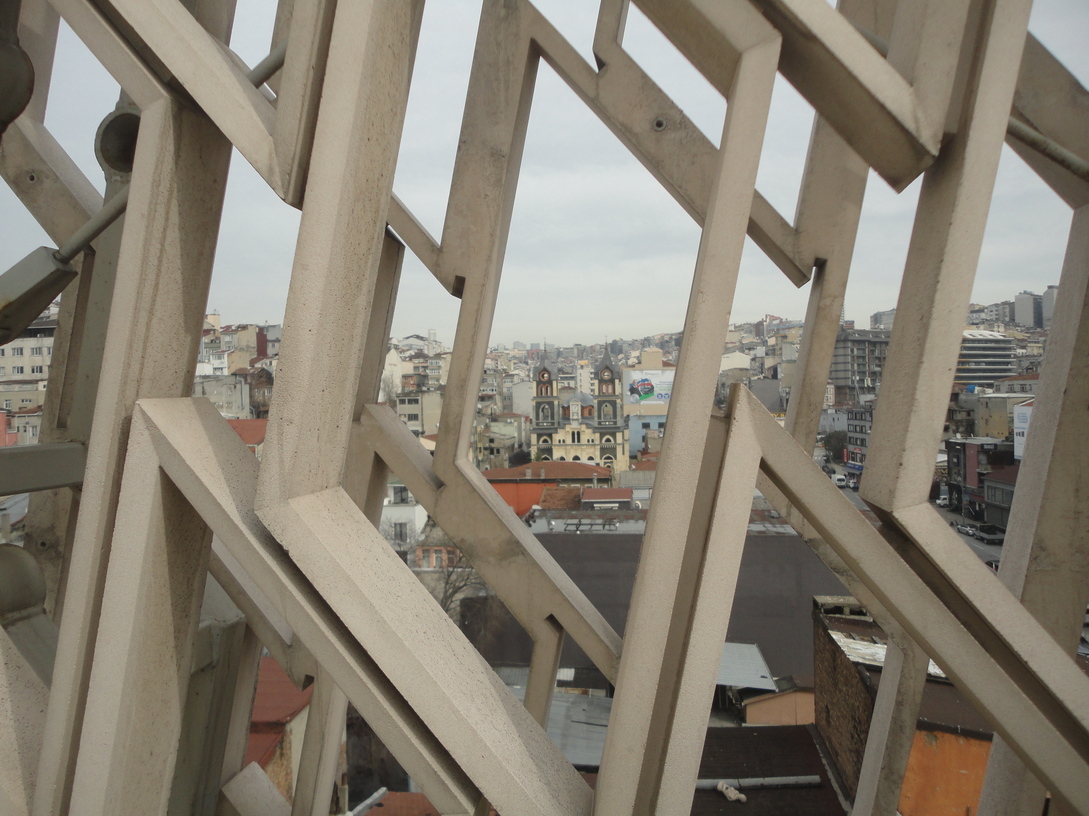
From the terrace of Arter. An old church, restored in recent years, is visible through the lattice
I take my title, “Organ Recital,” from what my friend Jill wrote me on December 18, 2016:
Not to give an organ recital but I’ve had a serious rotator cuff injury this fall, and I don’t even know how it happened.
An email that I wrote Jill on March 11, 2017, records some information about my own health:
Let me call your attention to [my blog post of February 26] called “Freedom to Listen,” if only to note that, after the talk described there, on the way home by subway, I stumbled as I passed somebody while walking up an escalator, and I cut my thumb on the stair. I decided finally that I ought to get a tetanus shot, after 17 years. I did this easily enough next morning, at the emergency room of the local public hospital where I had had my hernia repaired at state expense.
Those seventeen years earlier, while moving from Canada to Turkey, I was in the United States. Riding my bicycle down a road in West Virginia, I was chased by a dog, who drew some blood from my leg through my tights. I drove a car to the hospital in Romney. I received a tetanus shot, along with a prescription for antibiotics that I did not fill, even though, as the dog catcher told me, “These dogs don’t brush after they eat.” He caught the dog, which ended up “with Baby Jesus.” It had not had rabies, so I got no shots for that.
I had had the rabies shots in 1994, after waking up with a bloody finger in a camping shelter at Sky Meadows State Park in the Blue Ridge Mountains of Virginia. It was Sunday, June 19, and I was on a weekend bicycle trip with the gang from Auto Free DC.
Earlier in the month, I had made a solo trip to the western terminus of the Chesapeake and Ohio Canal. I wrote about the experience in “Cumberland Tour 1994,” using notes I had kept at the time. The same log book does not say much about the trip to Sky Meadows, except:
The days were quite hot, and 20 ounces of orange soda in Purcellville made me ill, but otherwise I survived well. It was good to ride with others, and I worried about loneliness on my upcoming trip. But it is a trip I must take.
That is interesting. Was I enslaving myself, as Thoreau warned? Some day I may blog about the trip in question, as I did the one to Cumberland. I imagine I was trying to get free: free to travel without a car or a place to stay.
Meanwhile, in Sky Meadows, on Saturday night, we had brownies for dessert. In the morning, I figured a mouse had found a trace of chocolate on my finger. On June 27, a week from the next day, I headed off alone by bicycle to Michigan via Ontario. On the shore of Lake Huron, in the public library of Harbor Beach, I read a magazine article about rabies. The virus could travel a centimeter a day, and if it reached your brain, you were dead. I thought about the length of my arm. Back home in Maryland, I got the rabies shots. I carried them from the hospital to the doctor’s office in a styrofoam cooler strapped to my bicycle.
The magazine I read in Harbor Beach was probably Outside. Maybe it said the rabies virus travelled an inch a day. Now I find a report on Science Daily from 2014 that 3 inches are possible. In any case, I survived, but only after I had a vision of dying from my own foolishness.
As for my 2017 tetanus shot, after stumbling on the subway escalator, the precise date, along with that of my wife’s shot from the following year, was recorded in her email of December 22, 2018:
Tetanoz aşılarımız
David 17 Feb 2017
Ayşe 30 Aug 2018
Because of my shot, I opted not to get another one, five or six years later, when I scraped my ankle-bone on a bicycle chain. Later still, I did get a shot, as I recorded in an email of the same day. I was replying to my wife’s email, just quoted:
17 Mayιs 2024 gününde toprak ile çalıştıktan sonra David tetanus aşısını aldı
I had forgotten about this, till finding Ayşe’s email reminded me. I had somehow scraped my hand while potting a plant. Next day, I think it was, on the way home from the university, I got off the subway one stop early, to visit the emergency room of our nearest hospital. There didn’t seem to be anybody else waiting. I was asked whether I had a specific reason for the shot. Apparently my reason was enough for the shot to be free. They didn’t want to see my insurance card. We were in a private hospital, but I suppose the state reimbursed them. I guess now I can go on doing gardening and stuff for a few more years without worry.
I walked home from the hospital through the Atatürk City Forest. I continue to get a thrill out of being able to say that.
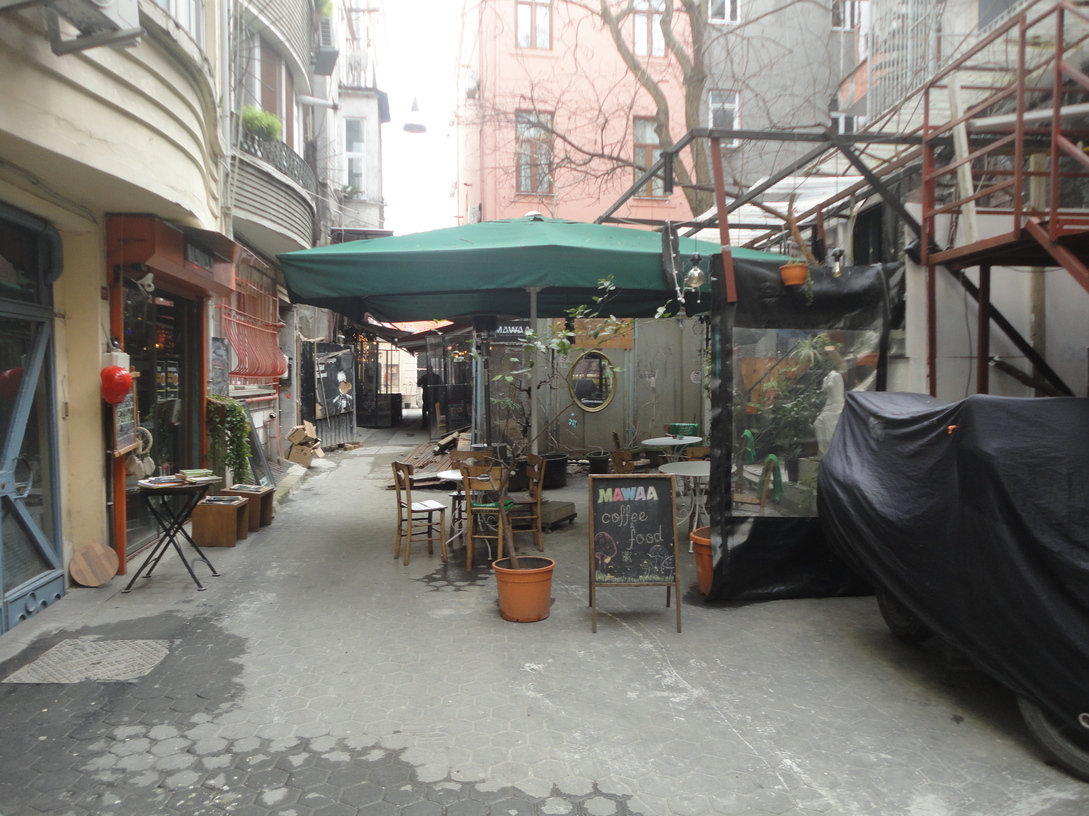
Mawaa Cafe, not in Sarıyer or Şişli, but Beyoğlu, near Taksim. We had felafel, hummus, and tabouli there after visiting Arter. They offer free soup to university students
We live in the borough of Sarıyer. In 2017, we were still in Şişli. My email to Jill from March of that year continued as follows, alluding to the song by Madonna that Weird Al Yankovic parodies in “Like a Surgeon.” I hardly remember the illness described:
That afternoon, my lungs started feeling week, as they had a couple of weeks earlier, when I had the flu. The internet said the tetanus vaccine could raise a fever. But my fever continued for several days. Doctors at the public hospital had no slots immediately available, so I went to a private hospital. As expected, it was a completely different experience: plenty of space, everything like a virgin (shiny and new), the people looking bourgeois, unlike the peasants at the public hospital. The doctor said I had the flu again, and he didn’t think it had anything to do with the tetanus shot. Lots of people were getting the flu.
That was the first week of the spring semester. I stayed home all week, but Ayşe met some of my classes. I met them all in the ensuing two weeks, though I still do not feel entirely well. Perhaps I am getting old. That’s my organ recital, I suppose.
When I wrote Jill on January 28, 2019, my spinal surgery was about to be needed:
I’m in the Math Village now, while Ayşe is in Ankara …
It was last summer in the Math Village when I started having pain in my left heel after an hour or two of hiking. Apparently it was, and is, plantar fasciitis, and the X-ray shows also a bone spur. Dunno how much it would have helped to see a doctor sooner, but the prescription is calf stretches and silicone insoles, and they do seem to help. I did my first hike here this morning without much trouble.
Meanwhile, I also apparently have sciatica on my left side, but the podiatrist didn’t seem too concerned. The hiking last summer helped this problem, even if it created another.
Finally, I slipped on some ice a couple of weeks ago (a rarity in Istanbul, but freezing does happen sometimes). The twisted left ankle has added to my woes, but seems mostly recovered.
So that’s my own organ recital, such as it is.
On February 18, 2019, the surgery was in the past. Maybe I didn’t say quite clearly that the sciatic pain had been worst when I was sitting:
My own organ recital continues. Ayşe came to the Math Village for a few days at the end of my stay. By way of a different sort of holiday, we stayed in Izmir two nights. But the sciatica I mentioned became worse on our first full day there, and for a while I didn’t know how I could get back to Istanbul, unless we hired somebody with a van I could lie down in.
The sleeper train doesn’t go all the way. As it was, we were flying, and I managed to do that, standing up on the train to the airport, and then in flight when I could.
A week later I had surgery, not for the pain, but because a doctor detected loss of muscle control in my left leg (particularly my toes), and an MRI then showed a ruptured disc.
The surgery was fine, I had it in the morning and walked home in the afternoon. I could have stayed the night in the hospital, my insurance was covering it, but the surgeon gave me the option of going home, so I did (about 20 minutes).
That was 10 days ago, and I seem pretty normal now, but I’m not supposed to sit much, and not more than half an hour at a time. I have an official excuse not to work for three weeks, but maybe I can teach next Friday. Meanwhile, I see the surgeon on Wednesday.
He claims only 1.5% of his patients have needed surgery again, and he seems to think this is only because they didn’t follow the rules on back treatment.
Above I mentioned the 2000 film Memento. Apparently it is based on a story called “Memento Mori” by the director’s brother, Christopher Nolan. Here is a memento mori – Jill’s last email to me, March 10, 2021:
I’ve been really sick and it’s the cancer. I have just a couple hours in the morning where I’m able to get out of bed easily. Otherwise I sleep most of the day.
I am giving up chemotherapy and going into palliative care. There will be a palliative care nurse coming to my apartment regularly. I don’t know the details yet because I just had the doctors appointment yesterday. (On zoom.) The social worker will be calling me soon.
The palliative care leads directly into hospice, so it’s not looking good. Although I am in good spirits, etc. Not in any pain, just super tired and running a fever.
I was up to page 400 of Middlemarch but I can’t read easily now. Tried audio book for the first time and that’s not working either. Just too tired. I was aiming to finish up by your birthday and then send you a “Happy Middlemarch” message.
But since I didn’t finish, I’ll just say “happy birthday” in advance.
My birthday was on the Ides. Jill died on the 11th of the following month, as her companion reported.
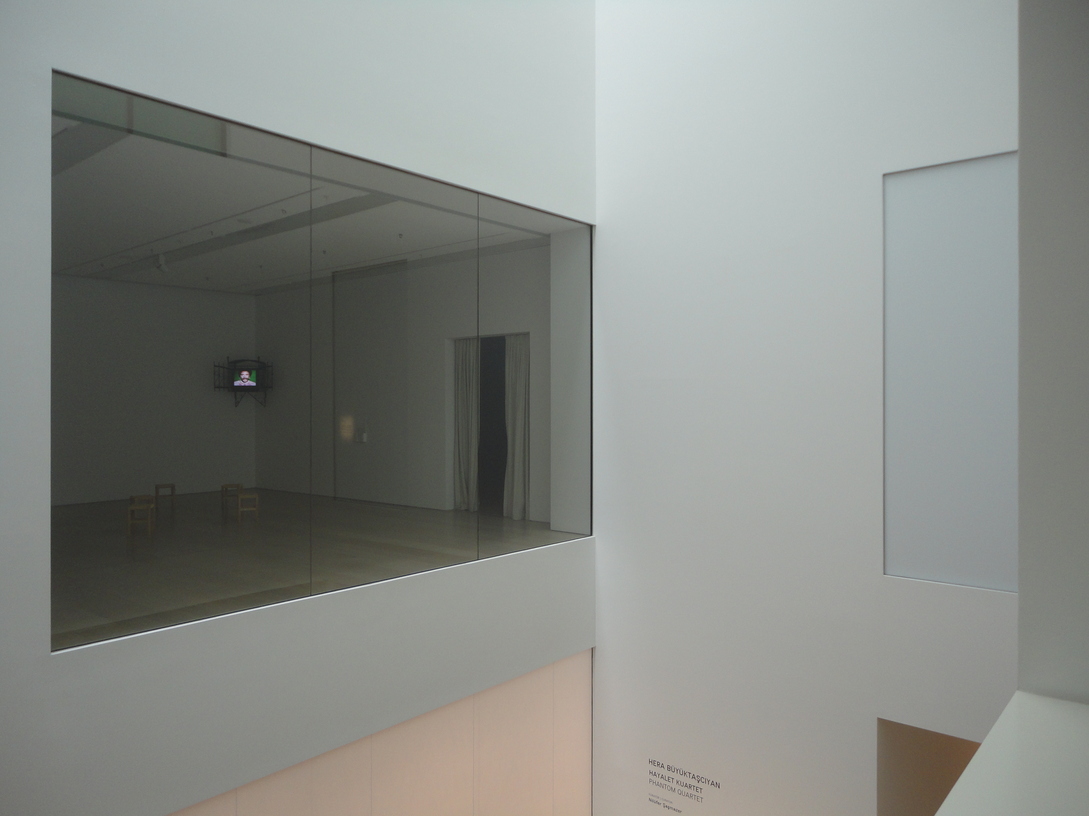
Atrium in Arter
Here, finally, are edited emails, addressed originally to a list of St John’s College alumni, that I wrote about the sciatica and surgery. Several people had useful and supportive responses, but I shall keep those in my own files. Plato, Oliver Burkeman, Chomsky, and Collingwood come up.
Wed, Feb 13, 2019 at 6:40 AM
Of those who have experienced sciatica, everybody will be different. My own pain is concentrated deep in my left buttock. Maybe this makes it piriformis syndrome. In an acute attack recently, I also had numb left toes.
The attack began on Monday morning, and in the evening I almost wished it would kill me.
Months ago, maybe even a year or more, I started being annoyed by pains in my left leg, usually in the morning. They were not a big deal, though apparently I did enough web research to figure they were sciatica. I noticed that they went away last summer in the Math Village, where I would go hiking most days, up and down through the olive groves.
I can hike up and down in Istanbul too. Maybe this has helped. We have plenty of hills. In the Old City, on the other side of the Golden Horn, seven hills were identified, to justify calling the city Second Rome. Apparently Third Rome also has seven hills: that’s Moscow.
Last summer in the Math Village, towards the ends of my hikes, I started feeling a pain in my left heel. I was able to live with this pain for weeks, but it never really went away. Eventually I did some research and figured I had plantar fasciitis. I went to an orthopedist, who confirmed my diagnosis. He showed me a heel spur in an X-ray, and he prescribed stretching. I mentioned the sciatica, but the doc did not seem concerned. I guess he could not detect a problem through the straight-leg-raising test.
Stretching has helped the heel. Perhaps I should have been stretching all along. In any case, during my recent time in the Math Village, I went hiking most days, no problem. Ayşe came on Thursday of last week, my second week in the Village. Having caught the flu during her only other winter visit, she had not wanted to come back to teach for a week; but she would come for a few days. For a holiday, or another holiday, we would spend a couple of nights in Izmir on the way back to Istanbul.
We took the train to Izmir from Selçuk, late Sunday morning. On Monday morning, late in my usual pre-dawn computer ritual (I was editing the notes of my Math Village course), I started feeling that sciatic pain. It seemed to be worse than I had known. During our walk to the archeological musuem, I had to go slow. Sitting didn’t seem to help, and it could even make the pain worse. In the evening, in our room, I didn’t know how I could sit on the airplane back to Istanbul the next day. At least we were not taking an overnight bus, my usual preference.
Could we take a sleeper train? This went only as far as Eskişehir; then we would sit on the fast train to Istanbul. Should we hire a driver with a van where I could lie down? In our room in Izmir, even lying on my back was not painless. Lying on either side was worse, but I had to keep trying it, searching for the best position, which I could never find. I took some paracetamol (called Parol here), but it made no obvious difference.
A few hours later, when I could take some more pills, I didn’t bother. Maybe the pain was easing anyway. I must have had some snatches of sleep. In the morning I could stand easily; I could sit, less easily, but still I could pack my things. I stood on the train to the airport. There I lay down across empty seats, or walked around, till it was time for boarding. On the plane, I stood when I could. We were on a Boeing 737-800 flown by Anadolu Jet, Turkish Airlines’ domestic budget brand. No business class, no front toilet, no video screens, but we were given a snack (a little cheese sandwich with lettuce and green pepper, or a packaged slice of cake) and tea or coffee. I stood up after the food cart passed.
After an hour, we landed at Sabiha Gökçen Airport, named for Atatürk’s adopted daughter. She may have been Armenian, though you will annoy Turkish nationalists for saying so. She became a fighter pilot, supposedly the world’s first woman to do so, and she bombed Kurds during the Dersim uprising. In the Ankara neighborhood where we used to live, there was a plaque on the apartment building where she had lived.
Ayşe and I had not used the Sabiha Gökçen Airport before, since it was way out on the Asian side of the city, and we live in Europe. But flights there are cheaper, and this seemed a good time to try out the facilities. The decision was made before the sciatica flare-up, but still it may have been for the best. The bus to the European side was roomier than the airplane, traffic was light, and I could stand comfortably.
Now, at home, I seem to have had a good night’s sleep. I stand while writing this, but sometimes I go lie on my back for a while. I have nothing in particular to do, this week and next, till our spring semester starts.
I learned the term “organ recital” from the friend back in DC who recently had a tumor, a hysterectomy, a diagnosis of cancer, and then chemotherapy. My own recital becomes trivial next to this, even if I mention last fall’s sinobronchitis, or the mild cold I caught at the Math Village, or the twisting of my left ankle that happened when I slipped on some ice on one of this winter’s only freezing days in Istanbul.
The Committee on Human Rights of Mathematicians of the American Mathematical Society have issued a statement of concern for Ayşe and other academics in Turkey charged with thought-crime. They first checked with Ayşe and asked whom to send the statement to; her lawyer had some suggestions.
Another Peace Academic was going to fly back to Istanbul from the Math Village to appear in court; but then she found out that her lawyer could take care of the courtroom business this time. She was relieved; she had been feeling under pressure to make a statement that would match up to Ayşe’s.
Thu, Feb 14, 2019 at 6:26 AM
My problem seems trivial now, though of course for some hours at least it wasn’t. I had had back pain, two or three times, that kept me from doing much of anything; but the sciatica was worse. Now it seems almost gone, though I have an appointment with an orthopedist today.
I gather a neurologist would also have been an option. All the docs are in the private hospital that is a few minutes by foot from our flat. My visits are covered mostly by my private insurance, which itself seems cheap, especially compared with what I hear about costs in the US.
I met some young Americans, in a vegan restaurant here in Istanbul not long ago, who talked about having all of their healthcare needs taken care of in Turkey. One of them was pleased with his recent root-canal operation in Antalya. We may take you to court here, or even jail you, for criticizing the government or insulting the president, but at least we give value for money in healthcare.
Healthcare is available free to everybody here, although this means hospitals are crowded and consultations short. I did have a hernia repair done at a public hospital dating from Ottoman times (one that it seems the authorities want to move out of town, so the land can be used for something more profitable); I wrote about the “fascinating” experience then.
Thu, Feb 14, 2019 at 4:26 PM
I saw a specialist in sports medicine, who tested my muscles. In several ways I had lost strength on my left side, both in twisting the foot and in pushing the whole leg to the side. An MRI showed a big glob dripping out, as it were, from between vertebrae (L4–5). So the doc recommended surgery.
“But my friend was in more pain than I,” I said, “and he didn’t need surgery!”
The surgery would not be for pain, said my doc: that could be dealt with other ways. The surgery would be for the loss of strength. If I were incontinent, surgery would be urgent; as it was, there was no hurry.
If I didn’t want the surgery, I should lie down for five days, then have an EMG for legal reasons. (Something like that.) He did believe in conservative treatment. He was not a surgeon himself; somebody else would do the job.
According to the surgeon’s website, he does microsurgery.
Now Ayşe’s family connections come into play. The doc I was actually given an appointment with today was a hand doctor; he could examine me, he said, but the insurance company might not like his ordering an MRI. He called up the sports doc in what turned out to be the next office, and we waited for him to be free. Ayşe named her maternal aunt’s late husband, from whom the first doc turned out to have taken a course at the best medical school in Turkey.
That won’t make a difference to my treatment; but Ayşe’s cousin works at the same medical school in Ankara, and she will show my MRI to her cousin there, a neurosurgeon, for a second opinion.
Undergoing the MRI made me think I could tolerate being an astronaut after all. I hadn’t expected all of the different rhythmic sounds, which were vaguely musical, like, say, the opening notes of Led Zeppelin’s “Communication Breakdown.”
Fri, Feb 15, 2019 at 11:24 AM
If a body part feels numb, normally the problem lies in that part, because it is not getting enough blood. This is why Socrates rubs his legs when their fetters are removed, just before Phaedo and others visit him in prison on his last day (Phaedo 59e–60b).
In my own current condition though, if my left toes feel numb, apparently this is not from blood loss there, but from a distortion of nerve signals, between the L4 and L5 vertebrae, into a form that would normally suggest blood loss.
To speak of nerve “signals,” as if they were sent by a conscious being, is to use the metaphor of Socrates, when he suggests, later on that last day, that if his body had its way, “these bones and sinews of mine would have been in Megara or Boeotia long ago, carried thither by an opinion of what was best” (99a).
If we allow the body to have opinions, then they can be wrong, and we may have to override them. This is why medicine is a normative science: it imposes a standard, a norm, that is external to the body itself, if we anthropomorphize the body in the sense of allowing it to have opinions.
Logic is not normative in this sense, I believe, though others seem to think it is. Those others include a Guardian writer whose work I normally admire, Oliver Burkeman. In “What problem?” he says,
people judge the seriousness of a social problem, it’s been found, partly based on how appetising or displeasing they find the proposed solution. Obviously, that’s illogical: the fact that you might hate paying more tax to keep the NHS afloat has no bearing on whether or not the NHS is in crisis.
Sorry, that’s not illogical. [I would be making this point in “Motivated Reasoning in the Cyropaedia of Xenophon,” September 20, 2024.] We cannot be illogical in our moral reasoning, any more than we can be ungrammatical in our own language.
We can be illogical or ungrammatical by some other person’s standards. As far as language is concerned, the point is made by Chomsky in a video from 1989, tweeted last December 18 (2018) by Black Socialists of America, who selected the quote,
When people say they want English to be pure, what are they talking about? … Black English is considered not quite proper English … If Blacks happened to have all the power & all the corporations & whites were working for them, it’d be the other way around.
There is more to say though. The “other person,” whose standards we may not meet, can be the ideal person whom we ourselves have undertaken to emulate. We can thus make mistakes by our own standards.
Here is where logic, grammar, and other such sciences come in, aiming to give an account of our standards, a logos of our criteria.
These sciences are not normative, or “criterial,” but criteriological, in Collingwood’s term. I have talked about this here, but most carefully so far in a blog article of last July.
I tried to put some of these things into a thread of three tweets addressed to Burkeman. He did not respond, though he has responded to some of my tweets in the past, at least by “liking” those that promoted his articles.
If social media are designed to keep your attention by giving you the occasional unpredictable thrill, I get a thrill from knowing that some writer knows that I have read and liked his or her work.
I would rather have a critique of the opinions I have expressed; but the professional writer, at least, has to stay focussed on getting out next week’s column.
Meanwhile, one of the tweets was liked by a student of anthropology who had somehow found me and had apparently started reading Collingwood because of me; so that was a thrill.
Sun, Feb 17, 2019 at 4:18 AM
The neurosurgeon with whom I have an appointment with tomorrow touts a thousand surgeries for lumbar disc herniation. According to his own website, he developed his microsurgical technique after studies in Zurich with compatriot Gazi Yaşargil, who in turn (according to Wikipedia) had developed microneurosurgery in Vermont with Raymond M. P. Donaghy.
Sun, Feb 17, 2019 at 5:21 AM
If I interpret his website correctly, the surgeon claims 1.5% of his patients had recurrence of herniation. However, I see no ratio for how many patients were not cured of what had brought them to surgery in the first place. The doc just says,
we saw that we have – almost ideally – achieved targets aimed in surgeries.
Patients returned to their regular routines and contributed to economy …
I’m annoyed by that last reference. It reminds me of working on a farm after college, and cutting my finger on the jar that broke in my hand when I was trying to dislodge the beans stuck in the bottom. The doc in the emergency room asked what work I did, and I realized how essentially my current livelihood depended on my body. My farm comrades later heard our boss wondering whether to give me a “vacation,” which would presumably mean laying me off.
Tue, Feb 19, 2019 at 6:21 AM
Off to surgery. I’m supposed to be able to walk home later in the day.
The limping young woman who saw the neurosurgeon before me yesterday said she had already been operated on 3 times. “I don’t know why I didn’t come to this doctor first!” she said.
As on Seinfeld, everyone says of the doc, “He’s the best!”
Tue, Feb 19, 2019 at 6:00 PM
The doc’s website is also in Russian & he may get many healthcare tourists.
The excitement (= adrenalin) of the day may give me an edge that will fade tomorrow; but I have now walked home (20 min uphill).
Wed, Feb 20, 2019 at 7:02 AM
That’s me, who once bicycled half an hour in the snow to see a doctor about an inflamed uvula, because I had moved my residence (from Greenbelt to DC), but not my primary care provider.
Ayşe’s maternal aunt berated Ayşe’s mother for not going to have her stage IV lung cancer treated in the United States. (She survived for eleven years anyway.) The aunt knows that we came home last night, but not that it was by walking. Squeezing into a taxi would have been unpleasant if not painful. In the 19th century, the walk would have been along the Linden Stream, which flowed past the baroque Linden Pavilions, built for when the Sultan wanted to relax after a day in the country. I described the topography at the beginning of one of my first blog articles.
As for when and how to go home yesterday, the neurosurgeon gave the option to me. He would allow his patients to stay in hospital overnight if they wanted to, but he did not think it necessary. This was the sense of Ayşe and me. According to the surgeon and his assistant, the main concern is not to sit for too long: no more than 20 minutes the first week, half an hour the second week. Standing is unlimited. After sitting, one should stand before lying down.
When I first stood up after the operation, two nurses came to help.
They told me to look straight ahead, and they asked whether I had any dizziness. I had none. I was also without the limp with which I had walked to the hospital in the morning. Mashallah!
I am standing now, at the the standing desk that I construct by putting a Rubbermaid Roughneck storage bin on a table. I have a tabletop cut to fit the top of the bin. My only discomfort is a slight ache from where my back was cut into. I was given a prescription for some kind of NSAID, presumably for any recurrence of the sciatic pain; but Inshallah I shall not be filling that prescription. The operation was not for pain anyway, but to restore full nervous control of the muscles of my left leg. So far so good.
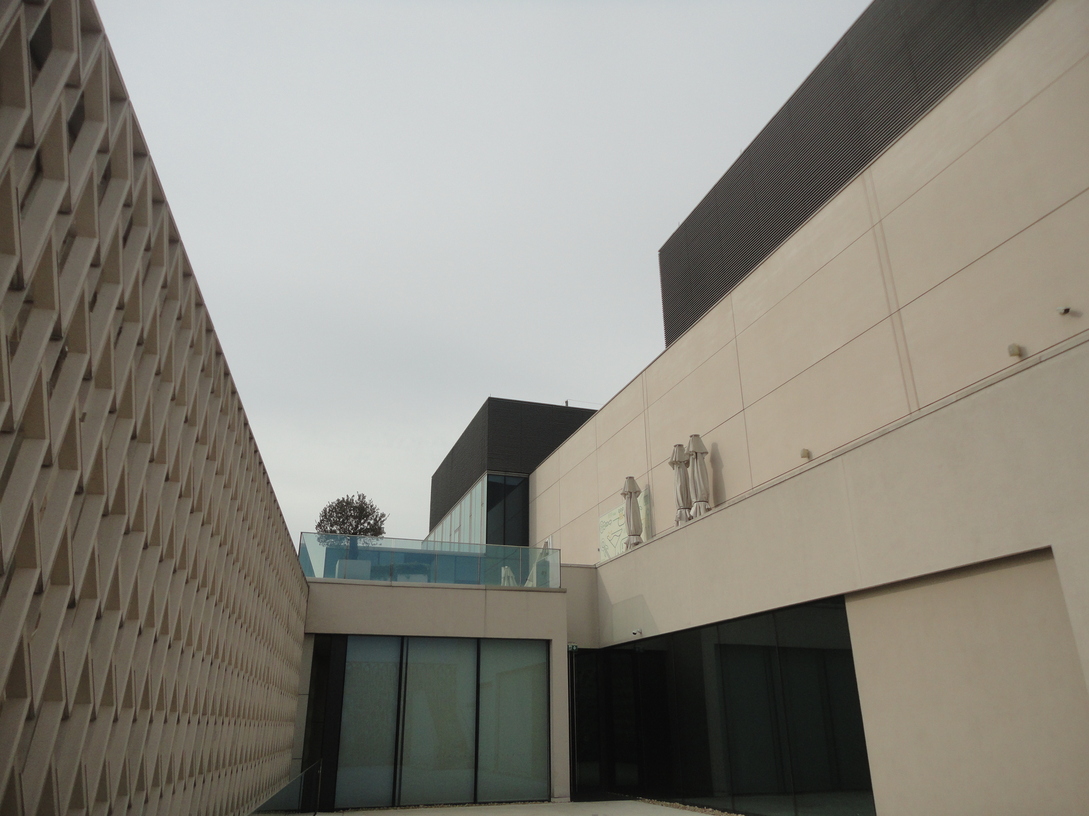
Arter terrace
I continue to do the prescribed back exercises.
 Polytropy
One Trackback
[…] February 14, 2025, after making a post, “Organ Recital,” of which memory was a theme; I had forgotten about this […]