Tag Archives: 2026

An Antithesis

A text for this post is from Wendell Berry:

Justice is a rational procedure. Mercy is not a procedure and it is not rational. It is a kind of freedom that comes from sympathy, which is to say imagination – the felt knowledge of what it is to be another person or another creature. It is free because it does not have to be just. Justice is desirable, of course, but it is virtually the opposite of mercy. Mercy, says the Epistle of James, “rejoiceth against judgment.”

That is from an essay published originally in Citizenship Papers (2003); I am reading it in Essays 1993–2017 (Library of America, 2019). The quoted essay is called “Two Minds”: those minds are rational and sympathetic respectively. Although Berry does not use the term here, I would say that those two minds are in antithesis.


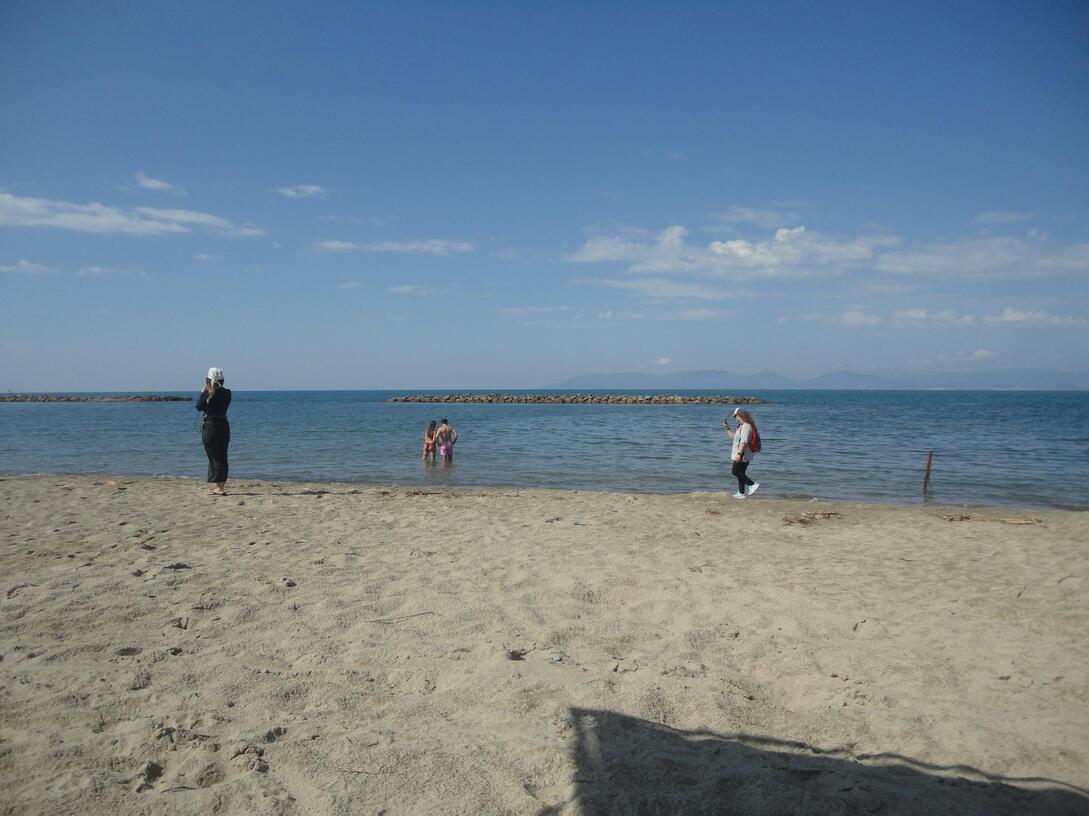
Seen from a beach, two fully clothed woman stand against the sea, holding up mobiles, one facing the sea obliquely, the other walking along the shore; in the sea, a woman and man stand together, in bikini and trunks respectively. Beyond them all, two breakwaters in line, parallel to the shore, made of rubble

I often read Berry at a beach that is in antithesis to Lesbos. Continue reading

Geometry and Algebra

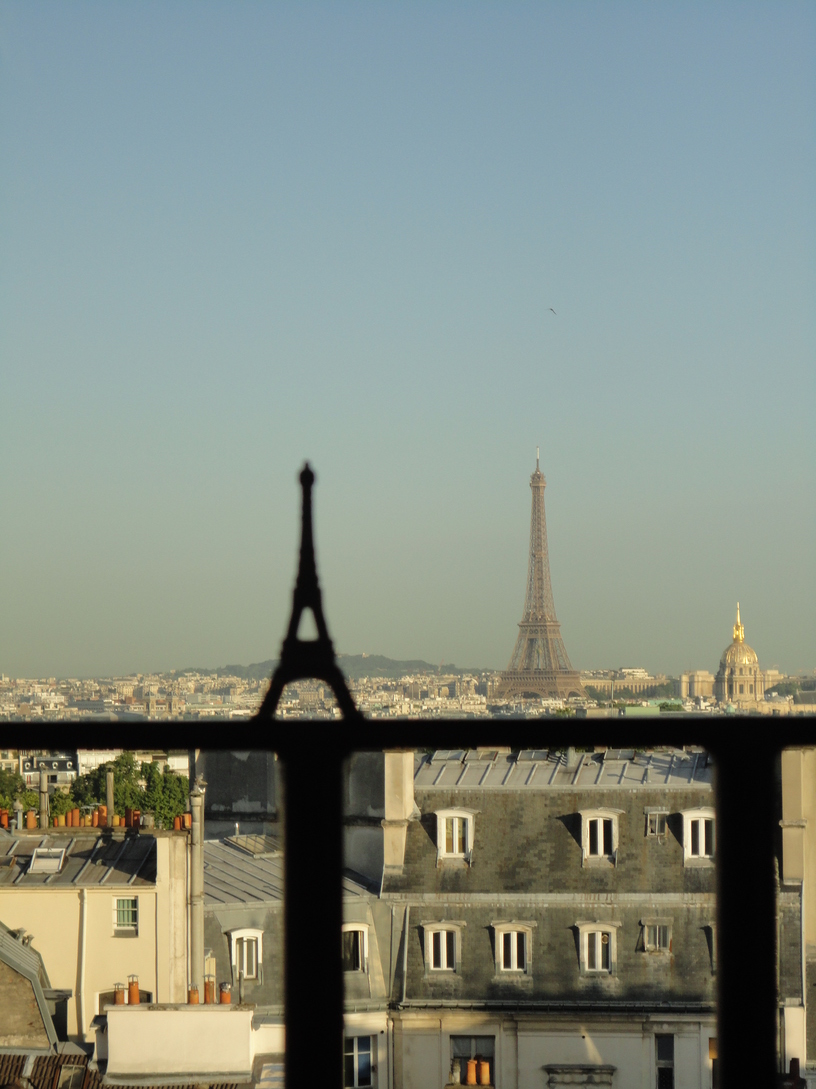
Photo: Appearing the same size are the Eiffel Tower in the distance and a model in the foreground, standing on the railing of a window that overlooks other buildings

From a flat on the rue Saint-Jacques, Paris
Thursday, June 4, 2015


What René Descartes says here does not make a lot of sense to me:

it is far better never to contemplate investigating the truth about any matter than to do so without a method. For it is quite certain that such haphazard studies and obscure reflections blur the natural light and blind our intelligence.

Continue reading

Ars Longa

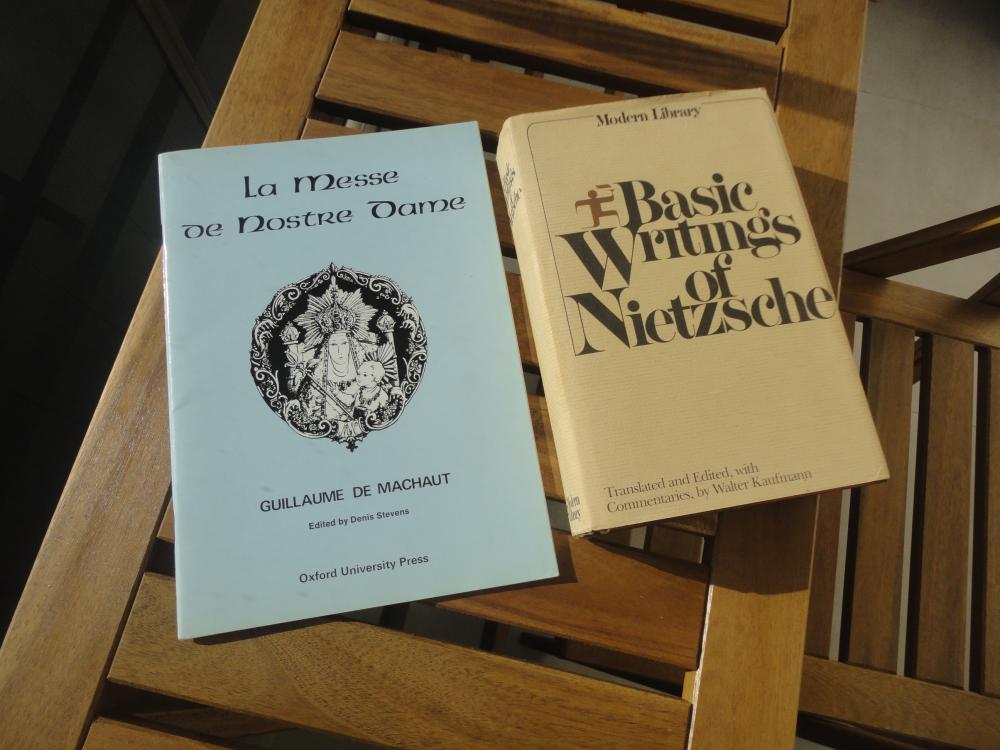
The extant works of Hippocrates take up ten volumes of the Loeb Classical Library. I’ve got the fourth of those volumes, because it contains also the extant fragments of Heraclitus, collected under the title ΠΕΡΙ ΤΟΥ ΠΑΝΤΟΣ, On the Universe. [See the footnote on this title.]

I am going to look here at some aphorisms of Heraclitus, Parmenides, Turkish folklore, Zen, and Erich Segal – also of Hippocrates, who seems to be the source of our word “aphorism.” He wrote ΑΦΟΡΙΣΜΟΙ, and they turn out be in the same Loeb volume with Heraclitus.

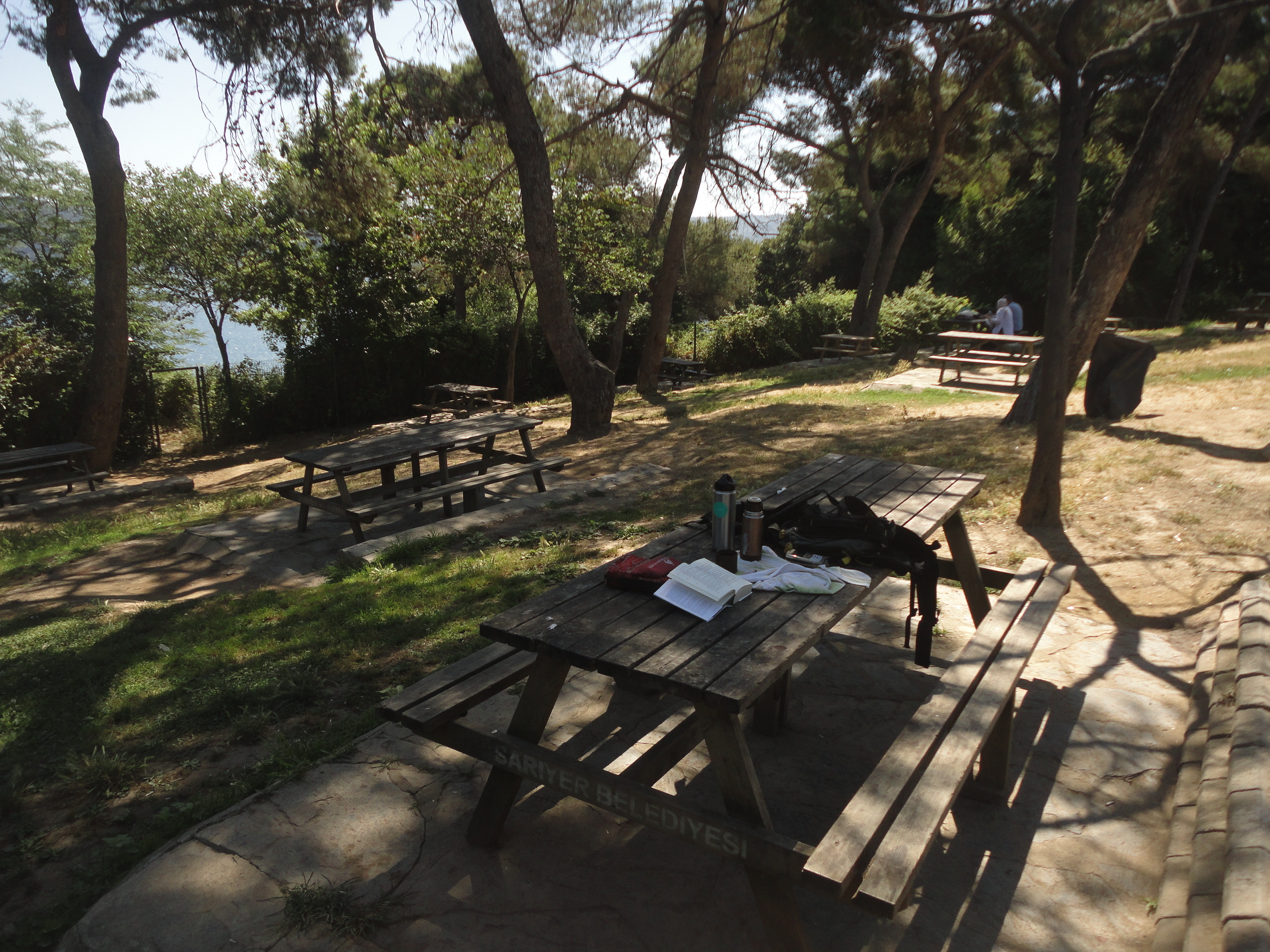
Book and paraphernalia lie on one picnic table among several. Two people sit at a table in the distance. The tables are partially shaded by trees, and a bit of sea is visible through other trees

I was reading Parmenides
in Kireçburnu Çamlık Parkı
Erguvantepe, Sarıyer, Istanbul
July 6, 2025

Continue reading

Contradiction in Terms

Somebody else can amuse us or frighten us. They might put us to sleep with an injection, or perhaps keep us awake. They cannot make us rational. They cannot make us think. Thinking is up to us.


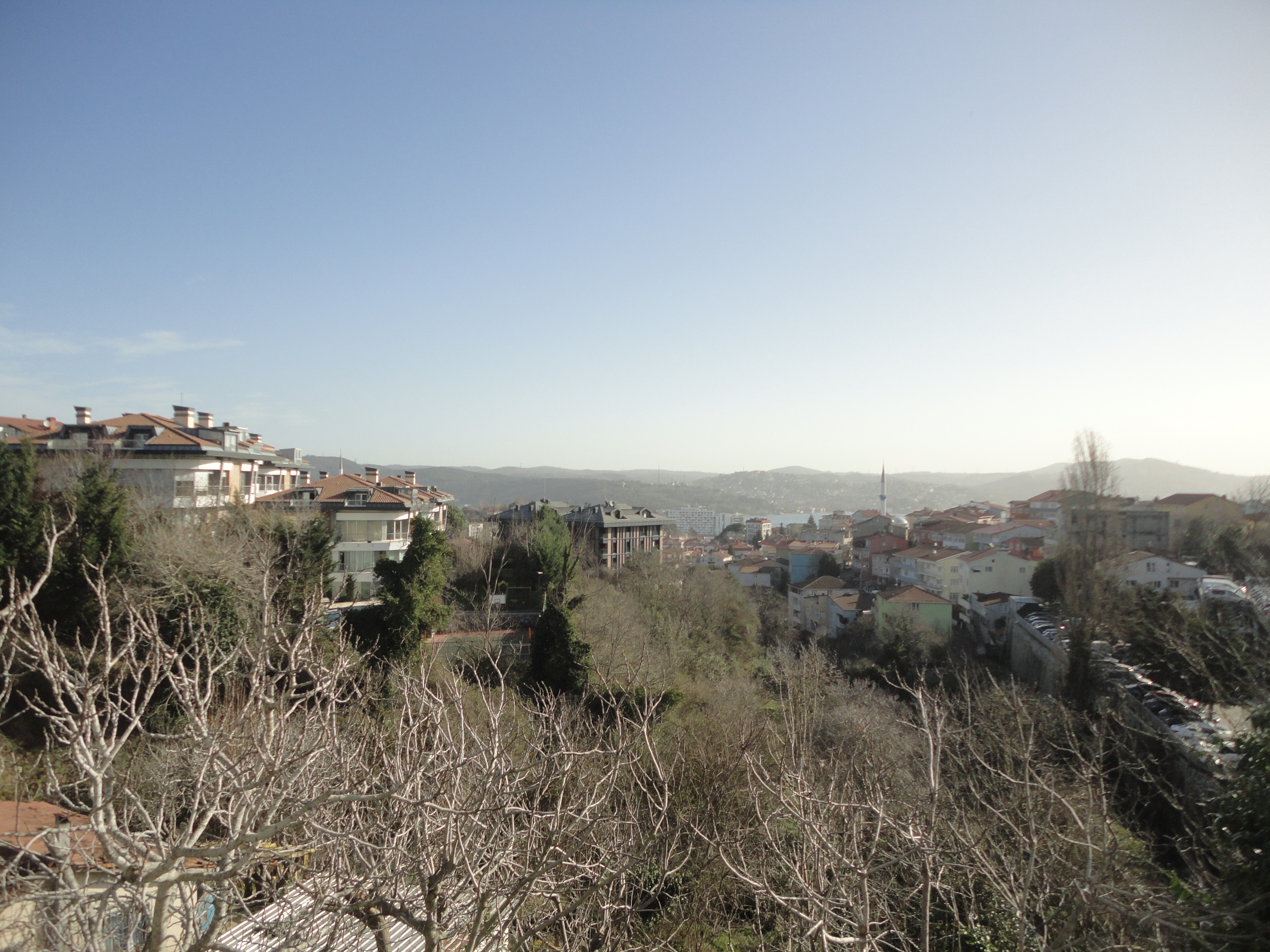
View down a shallow valley of trees and apartment buildings towards water and hills beyond; clear sky above
Our Bosphorus view
from a local mosque, Ecdat Cami
Tarabya, Sarıyer, Istanbul
Monday, February 16, 2026


Continue reading

Organ Recital

Trigger warnings for this post:

  1. Suffering and pain.
  2. Cessation of life.
  3. Mathematics.

After the post of December 9, for some reason I wanted to record here a surgical operation in 2019. Then I became preoccupied with mathematics.


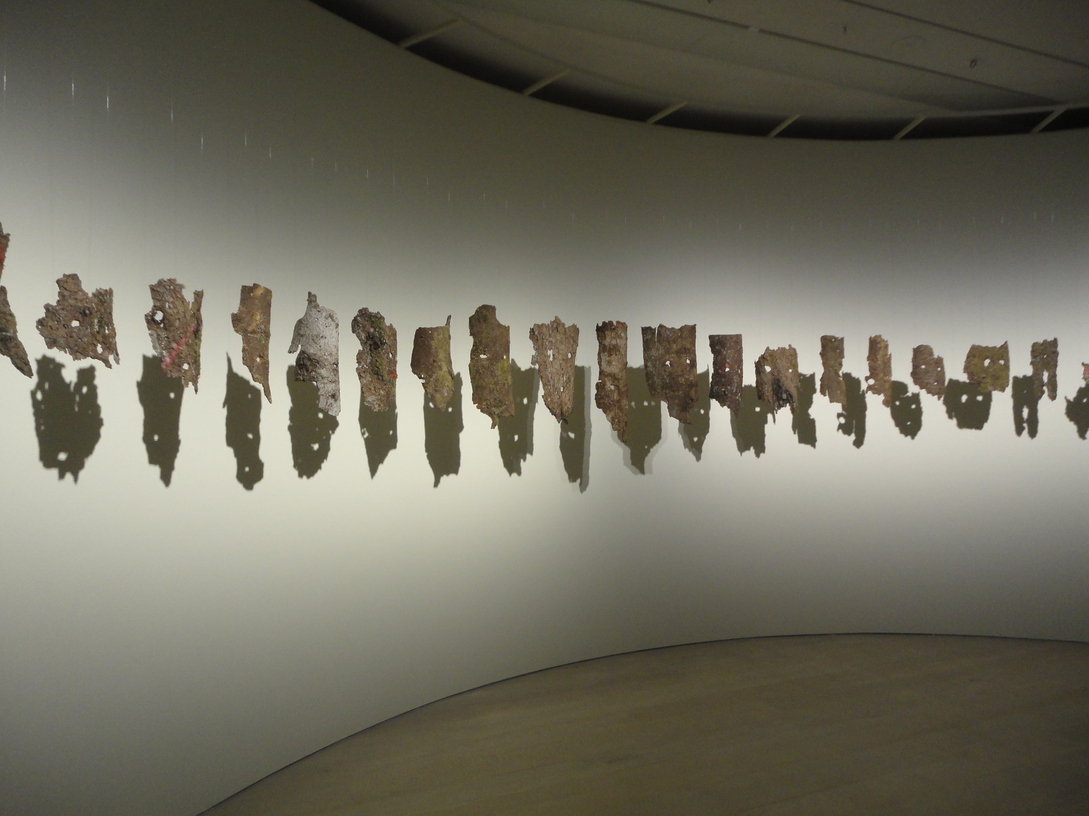
Against a concave white wall, a line of rough masks, two eye-holes each, made of tree bark
Hera Büyüktaşcıyan, “Dendrologia,” 2023; part of an exhibit called Phantom Quartet at Arter Istanbul, visited Wednesday, February 4, 2026. The bark of the masks is said to be taken from dead trees on the Isle of Vassivière in the artificial Lac de Vassivière, Limousin, France


On the subject of mathematics, let me take the opportunity to recommend “The Tool/Weapon Duality of Mathematics,” by Alexandre Borovik, recently published in the Journal of Humanistic Mathematics (volume 16, number 1, January 2026; pages 365–392). Continue reading