Category Archives: dialectic

NL XXXI: Classical Physics and Classical Politics

Index to this series

As my beach holiday winds down, so perhaps does the current spate of blog posts. Here is one more. Setting aside Homer, I continue immediately with Collingwood, in part because, in the 2000 paperback impression of the 1992 Revised Edition of the New Leviathan that I take to the shore, I have now also read the Editor’s Introduction by David Boucher. (Back at the cottage, I have to type out the quotes from this that I make below; for quotes of Collingwood himself, I cut and paste from a scan of the 1947 corrected reprint of the 1942 First Edition.)

As I could infer from my pencil-marks, I had read Boucher’s introduction some time before; but I could remember little of it. I think it is aimed at professional philosophers, rather than at anybody who would admire Collingwood for saying, as he does in An Autobiography (page 6), when he describes getting prepared to go to Rugby School,

The ghost of a silly seventeenth-century squabble still haunts our classrooms, infecting teachers and pupils with the lunatic idea that studies must be either ‘classical’ or ‘modern’. I was equally well fitted to specialize in Greek and Latin, or in modern history and languages (I spoke and read French and German almost as easily as English), or in the natural sciences; and nothing would have afforded my mind its proper nourishment except to study equally all three.
Continue reading

NL XXX: War As the Breakdown of Policy

Index to this series

By the account of Chapter XXX, called “War as the Breakdown of Policy,” of Collingwood’s New Leviathan (1942), humans have not always made war (30. 1). Why then do we make it now? People say war is a continuation of policy (30. 14); but as Collingwood cleverly points out (30. 15), the original saying, which is due to Clausewitz (30. 69), is ambiguous: a continuation could be an extension or a breakdown (30. 16–17).


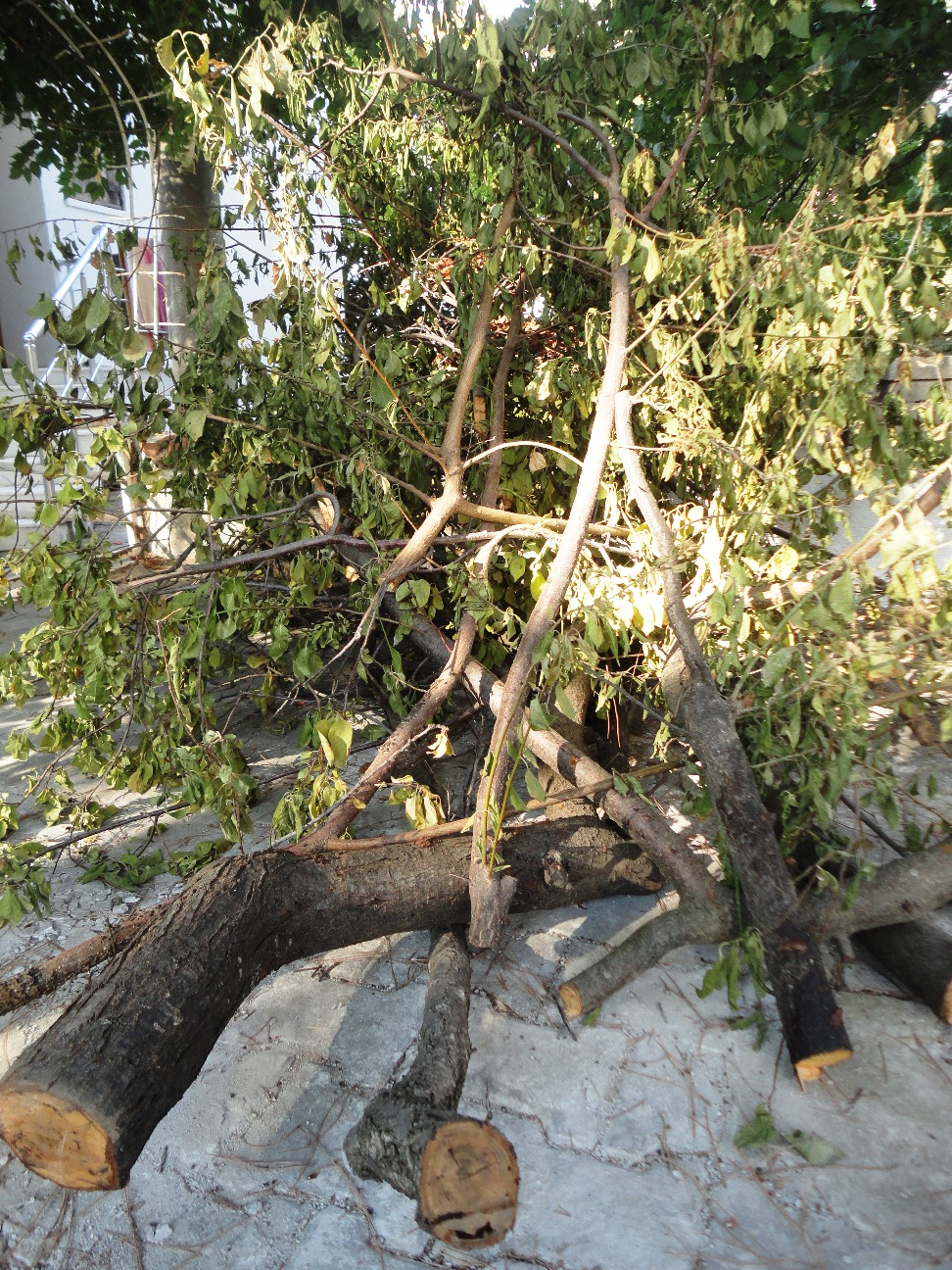
Photos taken September 6, 2018
around our cottage
and of the wood that I cut there
in Profesörler Sitesi
Altınova, Balıkesir, Türkiye

Continue reading

NL XXIX: External Politics

Index to this series

Executive summary (added September 13, 2018, edited July 19, 2019): Dealing with other bodies politic is the third stage of political life, after societies’

  • formation (as if by marriage),

  • dominion over non-social communities (as if by having children).

Having been used in the first two stages, dialectic can be used in the third. Being the eristic of external politics, war has no psychological cause. War is a state of mind, which does not think non-agreement can become agreement. Pacifism has this state of mind.


External politics are international relations. These represent the third of the “stages” in political life (29. 1), which we enumerate:

  1. The joining of wills into a society, which rules itself (29. 11).

  2. Such a society’s ruling over a non-social community in a body politic (29. 12).

  3. Dealing with other bodies politic (29. 13).

Continue reading

NL XXVII: Force in Politics

Index to this series

Executive summary (added September 12, 2018): When persons cannot rule themselves, they are ruled by force, as a duty, by other persons, for the benefit and pleasure of all. Force includes fraud and deceit; but their use must be limited, if those persons who are being ruled by force now will one day join the ruling class themselves. If a liberal and a conservative party take up respectively the ideals of democracy and aristocracy discussed in the last chapter, the parties must understand that each needs the other, in order to engage in the dialectic that aims for the best society. If somebody thinks the two parties waste energy, either in pretending to be in opposition to one another, or in actually being opposed, then that person is effectively wishing for tyranny.


In my last post on the New Leviathan (which was my first for this year), I said Collingwood would discuss the British parliament in Chapter XXVII. That chapter is now my subject.

The ruling class must incorporate new members from time to time, whether anybody thinks about it or not (27. 75). Anybody who does think about it may take up one of two goals (27. 77).

27. 79. To hasten the percolation of liberty throughout every part of the body politic was the avowed aim of the Liberal party; to retard it was the avowed aim of the Conservative party.

27. 8. The relation between them was consciously dialectical. They were not fundamentally in disagreement. Both held it as an axiom that the process of percolation must go on. Both held that given certain circumstances, which might very well change from time to time, there was an optimum rate for it, discoverable within a reasonable margin of error by experiment.

Continue reading

NL XXIV: The Body Politic, Social and Non-Social

Index to this series

Executive summary (added September 11, 2018): The subject of political theory is the kind of community called a body politic. For the Ancients, this is a society, composed of, for example, the citizens of Athens, excluding women, children, slaves, and foreigners. In medieval times, all human beings in the community compose a body politic, which is thus non-social, though having within it the societies called estates; sovereigns rule by force (e.g. by the bribery called the granting of liberties), but may in turn be ruled, as is the husband, sovereign of the wife. For Hobbes, a sovereign can also rule by authority. An eristic argument would insist that only one of these accounts of the body politic is correct; but the world is in the flux described by Heraclitus, and the way to come to terms with it is not eristic, but dialectic, as described in the Meno of Plato.


Dialectic is the way to come to terms with a world of constant change. On the internet in particular, too many persons engage in eristic, staking out a position like the Greeks at Troy, who built a wall around their ships on the shore and tried to defend it against all comers.

Dogs stake out their positions in the shade,
2017.09.14

In the argument of the New Leviathan, we pass from the family to the state, which Collingwood calls the body politic. This is what political theory must give a scientific account of (24. 1). We consider three phases of political theory:

  1. ancient,
  2. medieval, and
  3. modern.

Continue reading

NL I: “Body and Mind”

Index to this series. See also a later, shorter article on this chapter

The Chapter in Isolation

“Body and Mind” is the opening chapter of Collingwood’s New Leviathan. The chapter is a fine work of rhetoric that could stand on its own, though it invites further reading. In these respects it resembles the first of the ten traditional books of Plato’s Republic, or even the first of the thirteen books of Euclid’s Elements. The analogy with Euclid becomes a bit tighter when we consider that each chapter of The New Leviathan is divided into short paragraphs, which are numbered sequentially for ease of reference.

Continue reading

A personal overview of Collingwood’s New Leviathan

These are the notes of an amateur of the work of the philosopher R. G. Collingwood.

Published in 1942, The New Leviathan was the last book that Collingwood wrote. He finished it in some haste, because he knew he was dying—albeit of a condition brought on or at least exacerbated by overwork in the first place. He did die in 1943. Having been born in 1889, he was not so old as Socrates at death; but like Socrates, he had a babe in arms. Continue reading

The Tradition of Western Philosophy

Note added October 16, 2018: Here I compare two projects of re-examining the philosophical tradition named in my title. The projects are those of

  • R. G. Collingwood in An Essay on Philosophical Method (Oxford, 1933);

  • Stringfellow Barr and Scott Buchanan at St John’s College in Annapolis, Maryland, beginning in 1937.

I review

  • how I ended up as a student at St John’s;

  • how Collingwood has been read (or not read) by myself and others, notably Simon Blackburn;

  • how Collingwood’s Essay is based on the hypothesis of the “overlap of classes.”

Continue reading