Category Archives: Freedom

Concerning freedom of speech, in theory and practice (it can be restricted by law or by oneself)

NL XIV: “Reason”

Index to this series

Summary added January 29, 2019, revised May 8, 2019. Practical reason is the support of one intention by another; theoretical, one proposition by another. Reasoning is thus always “motivated reasoning”: we engage in it to relieve the distress of uncertainty. Reason is primarily practical, only secondarily theoretical; and the reason for saying this is the persistence of anthropomorphism in theoretical reasoning: by the Law of Primitive Survivals in Chapter IX, we tend to think even of inanimate objects as forming intentions the way we do.

Reasons for adding this summary of Chapter XIV of Collingwood’s New Leviathan include

  • the tortuousness of the following post on the chapter,
  • the provocation of a Guardian column by Oliver Burkeman on motivated reasoning.

Says Burkeman, whose “problem” is apparently motivated reasoning itself,

One of the sneakier forms of the problem, highlighted in a recent essay by the American ethicist Jennifer Zamzow, is “solution aversion”: people judge the seriousness of a social problem, it’s been found, partly based on how appetising or displeasing they find the proposed solution. Obviously, that’s illogical …

On the contrary, how we reason cannot be “illogical,” any more than how we speak can be “ungrammatical.” Logic is an account, or an analysis, of how we do actually reason; grammar, of how we speak. Of course we may make errors, by our own standards.

Rogier van der Weyden (Netherlandish, 1399/1400-1464), Portrait of a Lady, c. 1460, oil on panel, Andrew W. Mellon Collection
Rogier van der Weyden (Netherlandish, 1399/1400–1464),
Portrait of a Lady, c. 1460, oil on panel
National Gallery of Art, Washington; Andrew W. Mellon Collection

Context

There was a rumor that Collingwood had become a communist. According to David Boucher, editor of the revised (1992) edition of The New Leviathan, the rumor was one of the “many reasons why [that book] failed to attract the acclaim which had been afforded Collingwood’s other major works.” Continue reading
Thales of Miletus

This is about Thales of Miletus and what it means to study him. I am moved to ask what history is in the first place. It is a study of the freedom in which we face our conditions. Thales had his way of understanding the world, and we may benefit from trying to learn it.

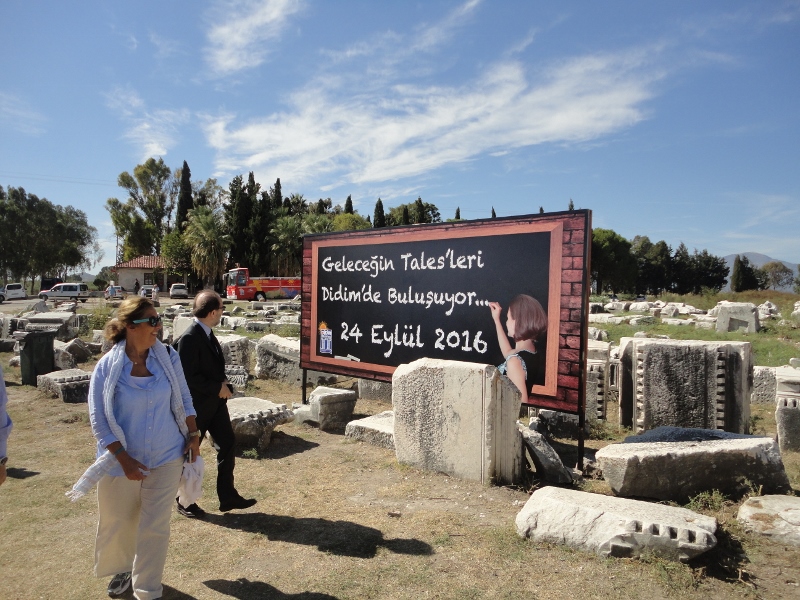
“The Thaleses of the future are meeting in Didim, September 24, 2016”

“The Thaleses of the future are meeting in Didim,
September 24, 2016”

Continue reading

35th Istanbul Film Festival, 2016, part 3

Part 1 | Part 2

Between the composing of parts 1 and 2 of this account came the death of Prince, whose work had inspired Rain the Color of Blue with a Little Red in It. Between the composing of parts 2 and 3 came the release of the four Turkish peace activists, whose imprisonment had given poignancy to The Demons and The Music of Strangers. There is a certain absurdity associated with each event.

Photo of book, Shakyamuni Buddha

Nikkyô Niwano, Shakyamuni Buddha: A Narrative Biography
(Tokyo: Kôsei Publishing Co., 1980; fifth printing, 1989)

On the cover, a modern copy by Ryûsen Miyahara,
owned by Risshô Kôsei-kai, of
“The Nirvana of the Buddha,”
painted in 1086 and owned by temple Kongôbu-ji,
Wakayama Prefecture, Japan

Continue reading

Free Sevan Nişanyan

Note added July 17, 2018: Sevan Nişanyan is now free, in the sense of having escaped from prison—an open prison—and from Turkey. The story is told well in an article by Lauren Frayer on NPR, September 28, 2017. Alev Scott visited Sevan on the Greek island of Samos and wrote about it in the Times Literary Supplement, July 4, 2018; the article is behind a paywall, but there’s a free version. The friends and colleagues mentioned at the beginning of my own essay are not currently under detention, though trials of them and others continue. My essay remains as an expression of the value of freedom of speech.

We want freedom for our friends and colleagues who are being held in pre-trial detention for their supposed support of terrorism through advocating peace.

İlyastepe, Şirince, May 2013

İlyastepe, Şirince, May 2013

Continue reading

On trial for pacifism

This is about the 1918 trial of American radical political cartoonist Art Young and others for conspiracy and interfering with enlistment. Most of the article is a quotation of Young’s own words. The words provide some perspective on today’s struggle for freedom of speech.

Capitalism, Art Young, private collection (reproduced in Harper's, Jan 2016, p. 64)

Capitalism, Art Young, private collection (reproduced in Harper’s, Jan 2016, p. 64)

Continue reading

Academic Freedom

(See also other articles in the Freedom category.)

Yesterday (March 24, 2016) was the first day of the sixth Models and Groups Istanbul meeting. There were participants from the Middle East, Europe, and America. Kıvanç Ersoy was to speak about his own mathematics. He could not speak, because he was in prison. He, Esra Mungan, and Muzaffer Kaya were in prison, because the three of them had publicly insisted that the government of Turkey make peace in the southeast of the country. Absurd, but true. Continue reading

Kıvanç fêted in absentia

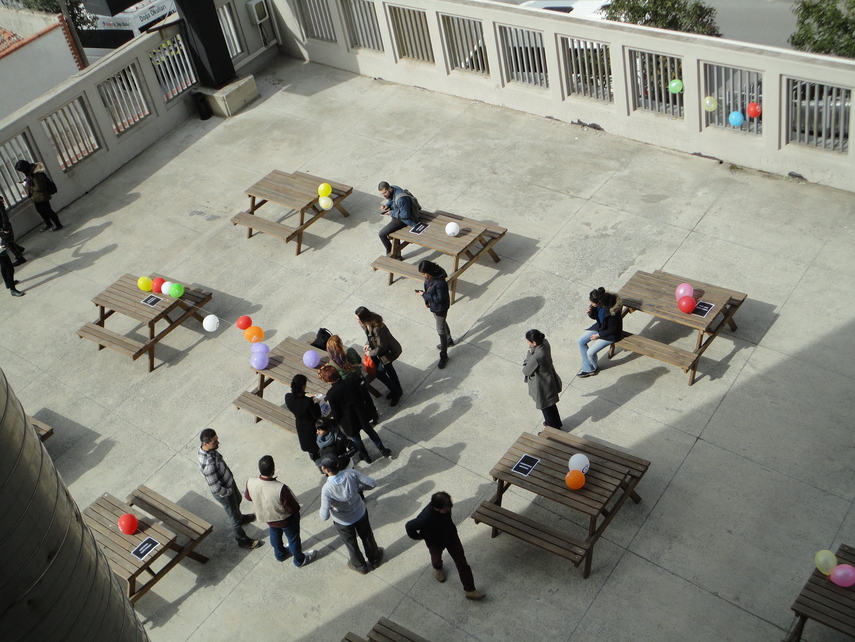
The birthday of one of our departmental colleagues was celebrated today, March 22, 2016. We were a day late, and the principal was away. His parents were present, but he himself had been imprisoned without bail since March 14.

MSGSÜ garden, 2016.03.22

The charge against Kıvanç and two others is spreading terrorist propaganda, as reported by Academic Freedom Monitor, Human Rights Watch and Nature. Continue reading

Liberation

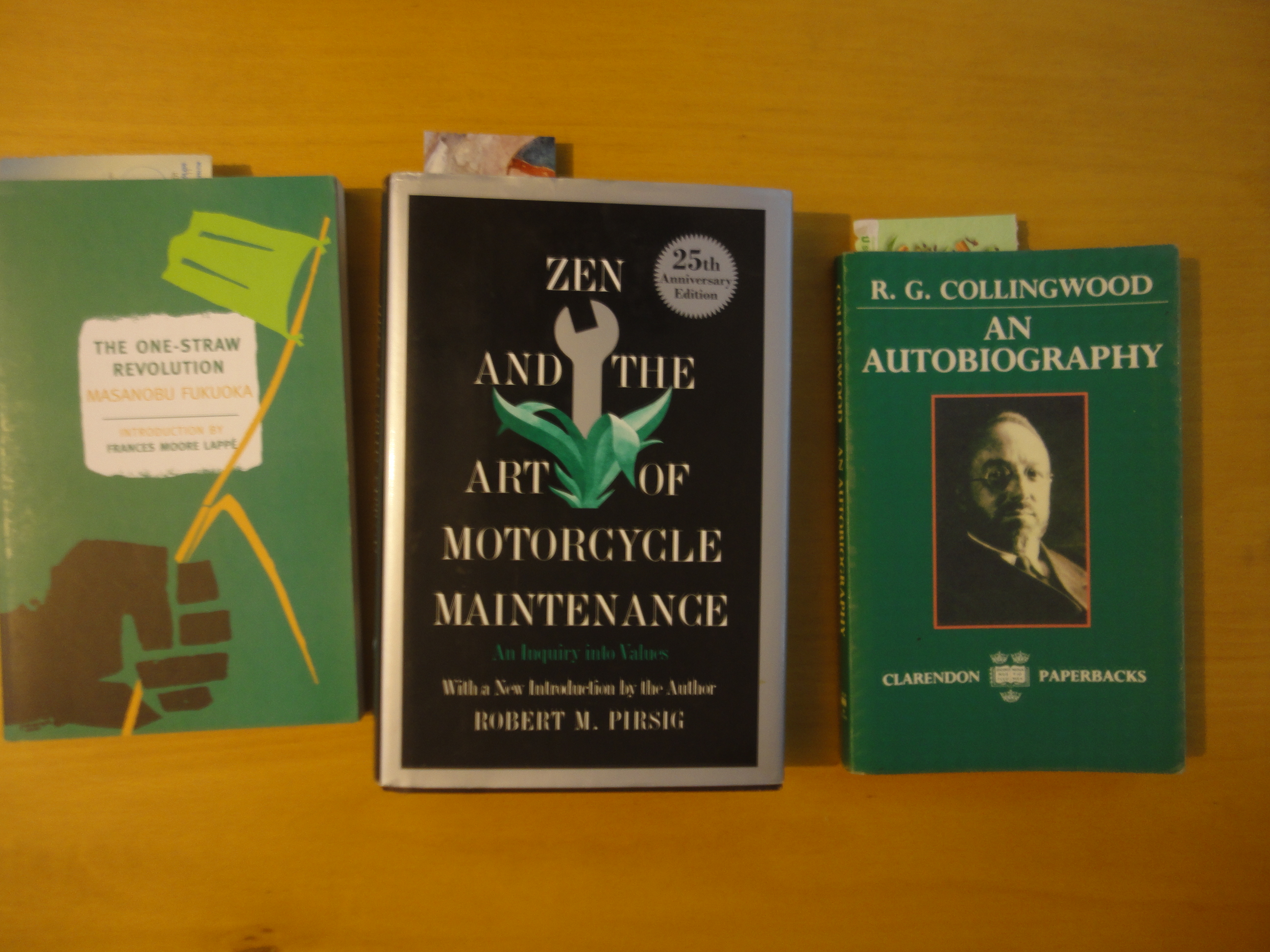
This article is based on quotations from three writers, of three different nationalities, who share a spirit with which I am in sympathy:

Fukuoka
“The ultimate goal of farming is not the growing of crops, but the cultivation and perfection of human beings.”
Pirsig
“The real cycle you’re working on is the cycle called ‘yourself.’ ”
Collingwood
“I thought that the democratic system was not only a form of government but a school of political experience coextensive with the nation.”

The books quoted here: The One-Straw Revolution, Zen and the Art of Motorcycle Maintenance, and An Autobiography. They all have on their covers a similar forest green, along with black

Continue reading

Body and Mind

Does consciousness have a “physical basis” or “material basis”? I am provoked by the suggestion that it does; for the question itself is misleading, if not simply meaningless.

In the September, 2014, issue of Harper’s magazine, Edward O. Wilson begins an essay called “On Free Will” with the following paragraph.

Continue reading

Inurement

This is about getting used to things, and things one should not get used to.

There is a free-speech crisis in Turkey now, brought on in part, but not exclusively, by the murders at the Charlie Hebdo offices in Paris. See an editorial of the Platform for Independent Journalism (P24) for a list of issues.

Continue reading