Category Archives: Science

NL XIX: Two Senses of the Word “Society”

Executive summary (below) | Index to this series

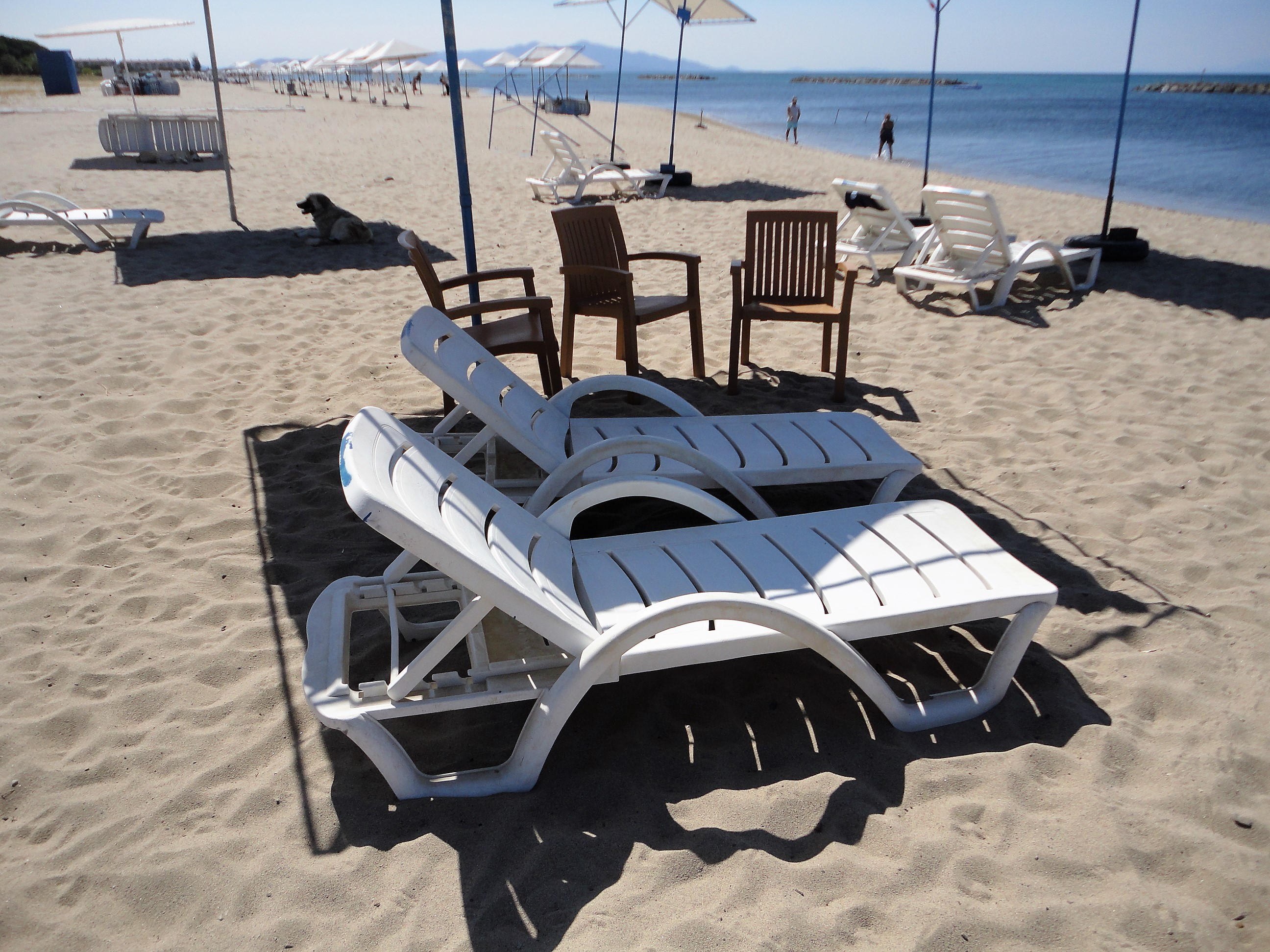
After a break of half a year, I return to reading Collingwood’s New Leviathan. Being on holiday at an Aegean beach gives me the opportunity. While here, I may also return to Chapman’s Homer’s Iliad. Last winter I finished Part I of the New Leviathan, the part called “Man.” Here I continue with the first chapter of “Society.” I have reason to look at what Mary Midgley and Albert Einstein say about science. Collingwood’s investigation suggests a way of thinking about prejudice and discrimination.

Part II of the New Leviathan is “Society,” and the first two chapters of this, XIX and XX, concern the distinction between society proper and two more general notions. In Chapter XX, the more general notion will be community. In Chapter XIX, the more general notion has not got its own proper name, and so Collingwood denotes it by writing “society,” in quotation marks.

A “society” of chairs at the beach (Altınova 2017.08.31)

Continue reading

Duty to Nature

Index to this series

Summary and update (added October 14, 2018): When we do something, or propose to do something, we may explain it or justify it—give a reason for it—as being useful, right, or dutiful. Such is the theory of Collingwood, analyzed here, especially with regard to a question that has increasing urgency: have we a duty, not only to one another, but to nature?

When I originally composed this post, in February of 2017, I had recently analyzed several relevant chapters of Collingwood’s New Leviathan:

Those chapters are the last in the book’s Part I, called “Man.” Collingwood returns to the same ideas in Part II, “Society,” and specifically in Chapter XXVIII, “The Forms of Political Action.” I went on analyze this chapter, 18 months later; it discusses an abuse of the concept of duty by the German political theorist Treitschke.

By one interpretation of a passage in Herodotus, the ancient Persians perceived a duty to nature, through a teaching now attributed to Zoroaster. His teachings influenced Manichaeism, and thus in turn the “Albigensian heresy,” the subject of Chapter XLIII of the New Leviathan.

A theme of Collingwood is that we tend to explain what happens in the world the way we explain what we ourselves do. If our ethics are utilitarian, then, like the ancient Greeks, we may see things in nature too as serving purposes. If we govern our own behavior by laws, then we may also seek laws of nature, as physicists do now.

Since utility and law are general in form, they provide incomplete accounts of exactly what we do. Utility tells us that some kind of thing is useful for some other kind; law keeps us within some bounds, but leaves us free within those bounds. By contrast, duty is to be conceived as providing a complete account of what we do. Conscience tells us that we have a duty; then we have to reason out what it is. The corresponding science of the world is history, which studies us as free agents. Collingwood does not describe a corresponding science of nature as such, at least not in the New Leviathan; but at the end of his first book, Religion and Philosophy, he concluded that everything that happened must be an act of will. This was in the chapter called “Miracle,” which I looked at especially in “Effectiveness.”

It may be hard to distinguish lawful action from dutiful action. In the present post, I look at the examples of

  • paying off a student loan;
  • smoking cigarettes, when rules restrict it;
  • collecting armaments, because, at the Last Supper, by the account in Luke, Jesus recommended buying swords;
  • Islam, as a rule-bound religion;
  • Christian denigrators of Islam, who find in it rules that they think believers must be bound by, even as some Muslims find inspiration in the teachings of Prophet Jesus.

I conclude with the example of an Episcopal priest called Stephen Blackmer, for whom nature is a church and a member of his congregation.


This is a synthesis of some ideas from a recent spate of posts in this blog. A theme is the question of why we do what we do, and whether we can change what we do, especially to Nature.
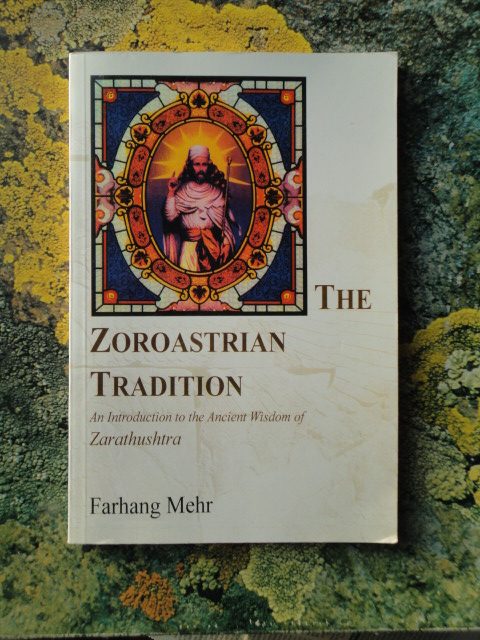
Book cover with image of a bearded man in white robes with a cap or turban, long flowing hair below this, a staff in his left hand, index finger raised on his right hand
Farhang Mehr, The Zoroastrian Tradition.
I bought the book in Yazd, Iran, in 2012

Continue reading

NL XVIII: Theoretical Reason

Index to this series

Reason is primarily practical: it explains why we do what we do. Secondarily, reason explains why others do what they do (18. 1): this makes reason theoretical, though not entirely so, since questions about others arise from, and are answered by, our relations with those others (18. 11). The experimental method involves such relations: we do something to the world, to see how it will respond (18. 12).

Continue reading

NL XIII: “Choice”

Index to this series

Adolph Gottlieb, “Centrifugal,” gouache on paperboard, 1961 (National Gallery of Art, Washington; gift of the Woodward Foundation)

Adolph Gottlieb, “Centrifugal,” 1961 (National Gallery of Art, Washington; gift of the Woodward Foundation)

The key idea of Chapter XIII of New Leviathan is the correct statement of the “problem of free will”:

Continue reading

Happiness

If only tangentially sometimes, this is about living in Turkey, especially under the ongoing official state of emergency.

Aristotle, Marx & Engels, and Collingwood

A blog article on Medium recently struck me for its treatment of science. Dated October 3, the article is called “The Purpose Of Life Is Not Happiness: It’s Usefulness,” and its opening section is as follows.

Continue reading

Beykoz, Istanbul

After five years in Istanbul, we continue to learn how much there is still to discover here. Now we have been to the Asian borough of Beykoz. Much of what we saw there was rural, and the topography and flora reminded me of Appalachia. I have nothing to say about the poverty and ignorance that might be suggested by this term; for me, Appalachia was always a locus for holidays, mostly at my late uncle’s place in West Virginia, but also in the form of bicycle tours. Travelling now to Beykoz, “Country roads,” I could think, “take me home, to the place I belong!” We got there by public bus from our European borough of Şişli.

Polonezköy, Beykoz, 2016.08.14

Polonezköy, Beykoz, 2016.08.14

Continue reading

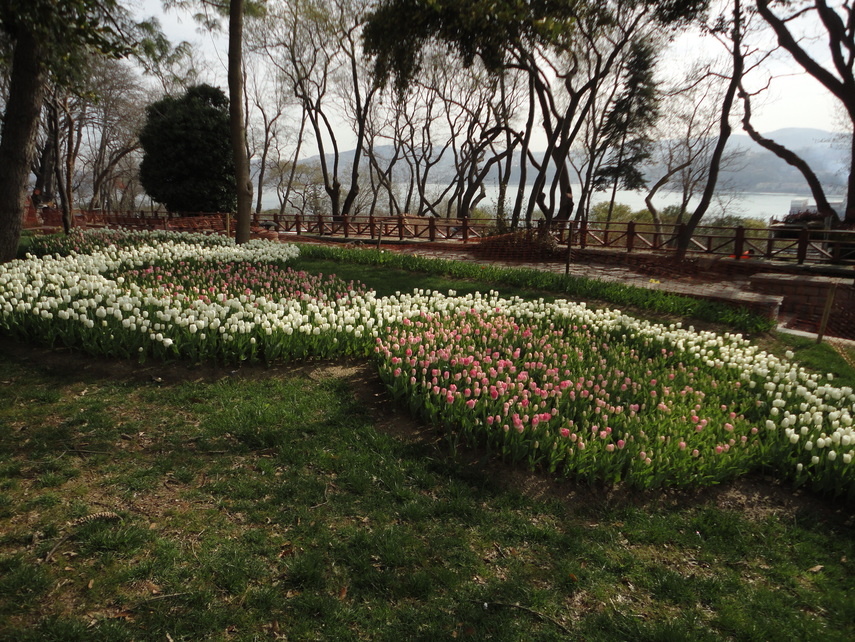
Early Tulips

Emirgan Korusu, 2016.03.12

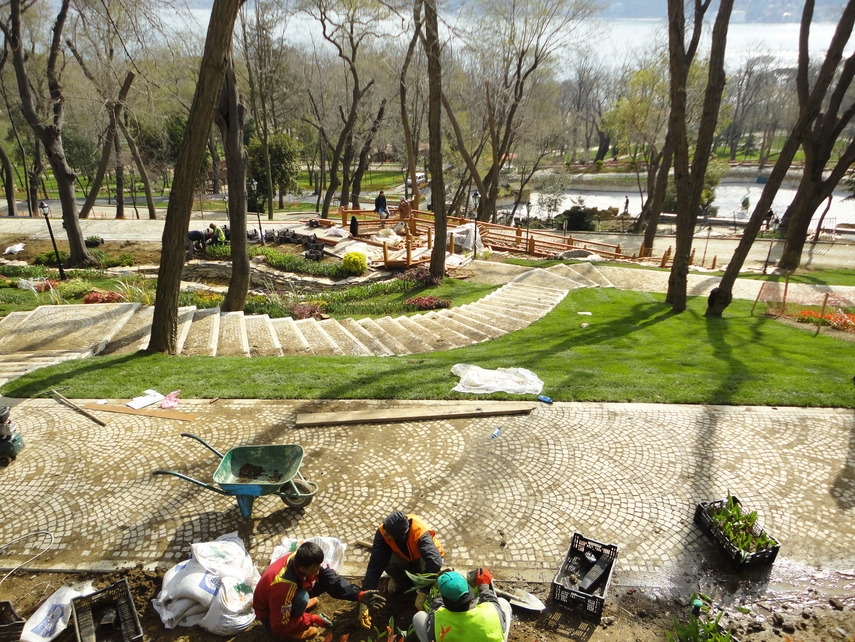
Ayşe was still in Ankara, but I had seen rumors on Twitter that tulips were already blooming in Emirgan Korusu. The bulbs were being dowsed with ice water, lest the flowers be overblown for the Tulip Festival in April. Anyway, I wanted to get away from the crowds of Şişli and Beyoğlu. The morning was mostly sunny. Thus on Saturday, March 12, 2016, I headed out to Emirgan, repeating the trip that we had made the previous April.

Emirgan Korusu, 2016.03.12

Continue reading

Nicole at the Golden Horn

The setting was gorgeous. We were atop a hotel (and former convent) opposite the compound of the Italian Consulate—the Italian Embassy, in Ottoman times, before Mustafa Kemal founded the Turkish Republic and moved the capital to Ankara. We looked out over old trees. The street just below us was closed to cars; off to the right it became a stairway and a narrow passage up to İstiklâl Caddesi. Beyond the trees of the Consulate were the Golden Horn and Seraglio Point, with the Bosphorus and the Sea of Marmara beyond. As night fell, electric lights illuminated the Seraglio itself—Topkapı Palace—along with the Hagia Sophia.
Continue reading

Equality Is Not Identity

I want to record here an account by Collingwood of Aristotle’s theory of knowledge. The passages quoted below are relevant, both to something I have learned from reading Euclid with students, and to the considerations of consciousness that led to my recent article “Body and Mind.”

Continue reading

Body and Mind

Does consciousness have a “physical basis” or “material basis”? I am provoked by the suggestion that it does; for the question itself is misleading, if not simply meaningless.

In the September, 2014, issue of Harper’s magazine, Edward O. Wilson begins an essay called “On Free Will” with the following paragraph.

Continue reading