Grief (Iliad Book XXII)

The fascinating moments in the Iliad are when somebody has to make a decision.

  • Achilles is a killing machine in Books XX and XXI; but back in Book I, enraged by his commanding officer, Achilles could nonetheless decide not to slay him.
  • At the end of Book XXI, Agenor was tempted to hide from Achilles, somewhere away from the walls of Troy; instead he served as a decoy to draw Achilles away from the city gates.
  • Now, in Book XXII, the other Trojans are running in through those gates like fawns. Hector is having trouble deciding whether to join them.

Wall assembled haphazardly of rubble, dressed stone, brick, and tile; weeds grow out here and there
Wednesday morning, April 12, 2023
Akarsu Sokağı (“Runningwater Street”)
Tarabya, Sarıyer, Istanbul

Continue reading

Fishes (Iliad Book XXI)

In Book XVII of the Iliad, Zeus pitied the immortal horses, Xanthus and Balius, as they wept for the slain Patroclus: “For in sooth there is naught, I ween, more miserable than man among all things that breathe and move upon earth.”

Stylized image of a shark on the door of a truck parked nose to nose with a taxi; foliage beyond
Monday morning, April 17, 2023
Sarıyer, Istanbul
Kefeliköy / Δικαία Πέτρα
(There exist a map and memoir of this settlement)

Continue reading

Words (Iliad Book XX)

“The feeling of helplessness and humiliation in the face of an abuse of power is an awful one.” That’s what Achilles found out, back in Book I of the Iliad; however, the words themselves, dated April 11, 2023, are by Claire Berlinski. Her Agamemnon is Elon Musk.

Two cats sit facing one another on a narrow ledge below one window and above another
“And when they were come near, as they advanced one against the other, then first unto Aeneas spake swift-footed goodly Achilles: ‘Aeneas, wherefore hast thou sallied thus far forth from the throng to stand and face me?’ ” (Iliad 20.176–9)
Kireçburnu (“Lime Point”)
Κλειδὴς καὶ κλεῖθρα τοὺ Πόντου (“Lock and Key of the Pontus”)
Sarıyer, Istanbul
Sunday morning, March 26, 2023

Continue reading

Responsibility (Iliad Book XIX)

Book XIX of the Iliad is all talk. This annoys Achilles, but is important for Agamemnon and Odysseus, and they should know better – Odysseus even says so.

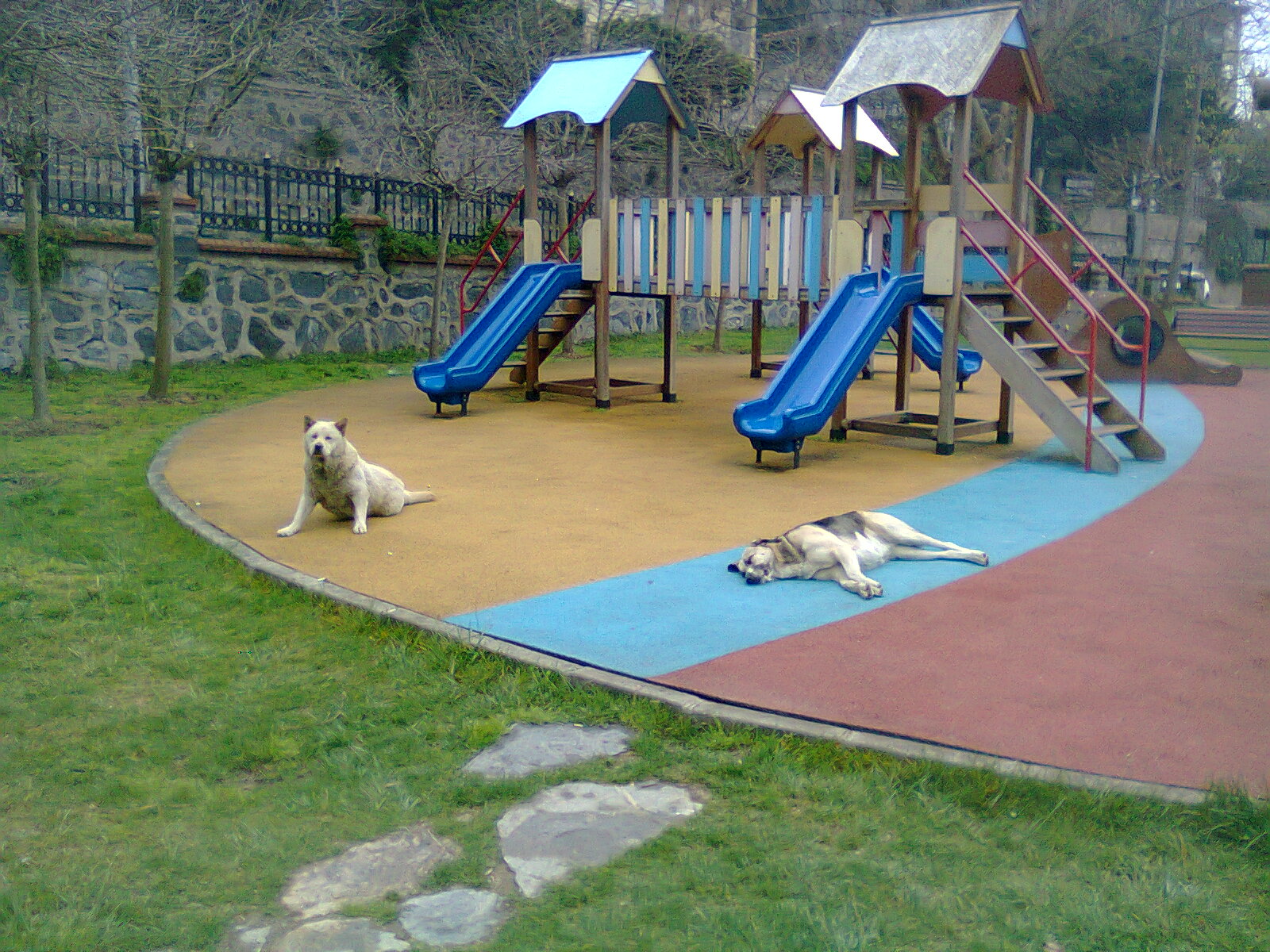
Two corpulent dogs lie at the bottom of two slides in a children’s playground; one has started to raise himself
Achilles gets ready to fight while Patroclus lies dead
(or, one of two well-fed street-dogs goes through the motions of defense)
Şalcıkır Parkı, Tarabya
Sarıyer, Istanbul
Sunday morning, March 26, 2023

Continue reading

Reflection (Iliad Book XVIII)

Twelve Trojan warriors die, merely because Achilles shouts at them across the Achaean trench. That is all Achilles does, in Book XVIII of the Iliad, and no more deaths are reported – unless we count the ones depicted around the city at war, on the shield that Hephaestus forges for Achilles at the request of Thetis. (See note 1)

A beacon stands in front of the sea at the end of a street lined with trees and a cafe. We see the beacon between two bicyclists on the road that crosses the foreground
“Achilles, dear to Zeus, roused him,
and round about his mighty shoulders Athene flung her tasselled aegis,
and around his head the fair goddess set thick a golden cloud,
and forth from the man made blaze a gleaming fire.” (Iliad 18.203–6)
Kireçburnu (“Lime Point”)
Κλειδὴς καὶ κλεῖθρα τοὺ Πόντου (“Lock and Key of the Pontus”)
Sarıyer, Istanbul
Sunday morning, March 26, 2023

Continue reading

Mind (Iliad Book XVII)

At the end of Book XVI of the Iliad, Hector

  • pulled his spear from the body of Patroclus,
  • took off in pursuit of Automedon, his victim’s charioteer, who was being drawn by Achilles’s immortal horses.

Around the mossy trunk of a plane tree, four chickens—two white, one brown, one black—scratch in the little dirt that has been left uncovered by the setts that pave a road through a settlement
Postacı Halil Sokağı (Street of Halil the Postman)
Tarabya (Θεραπειά), Sarıyer, Istanbul
Thursday morning, March 2, 2023

Continue reading

Focus (Iliad Book XVI)

Book XVI of the Iliad is where Patroclus

  • comes out to fight in Achilles’s armor,
  • kills Zeus’s son Sarpedon,
  • pushes on to the walls of Troy,
  • is killed by Hector.

In 2019, I gave a fair summary of the book, saying the story was that of Icarus. This time, I shall look at some other details:

  • Achilles continues his struggle for equality.
  • His mother sent him off with a chest of warm clothes.
  • Boys have always taunted wasps.
  • As if he were a boy, Hera tells Zeus, “What if everybody else did the same thing?” when he considers saving his son.
  • Automedon’s response to a problem is not autonomic, but autonomous.
  • Glaucus has a personal relationship with God.
  • It is Zeus’s mind that takes our own off things we mean to do.

A squatting man aims his mobile at several crows who are confronting a cat on a concrete wharf. Beyond them is the Bosphorus, leading out to the Black Sea beneath a suspension bridge between Europe and Asia
Kireçburnu, Sarıyer, Istanbul, Friday, March 10, 2023
The cat whom the crows were harrassing soon walked off

Continue reading

Masculinity (Iliad Book XV)

In Book XIV of the Iliad, Hera distracted Zeus while Poseidon helped the Achaeans fight off the Trojans. Now, in Book XV, Zeus takes control again. He tells Apollo to let the Trojans, under the leadership of Hector, come to the point of burning the Achaean ships.

On a billboard by the sea, a young man with bare shoulders thrusts at us a dark blue bottle of shampoo and shower gel. The background of the advertisement is black.
Sarıyer, European Istanbul, March 6, 2023

Continue reading

Femininity (Iliad Book XIV)

An editor of the Iliad might remove Book XIII, as I said last time; however, the book has

  • its own intrinsic interest, in its portrait of the two brothers, Hector and Paris;
  • a function in Homer’s main story, by showing that Achilles’s labor strike can fail.

The strike can fail through the prowess of scabs. Poseidon encourages crossing the picket line. In Book XIV,

  • Agamemnon worries that not enough men are crossing the line;
  • Hera uses her feminine wiles against the virility of her husband;
  • her brother can now pursue strike-breaking more openly.

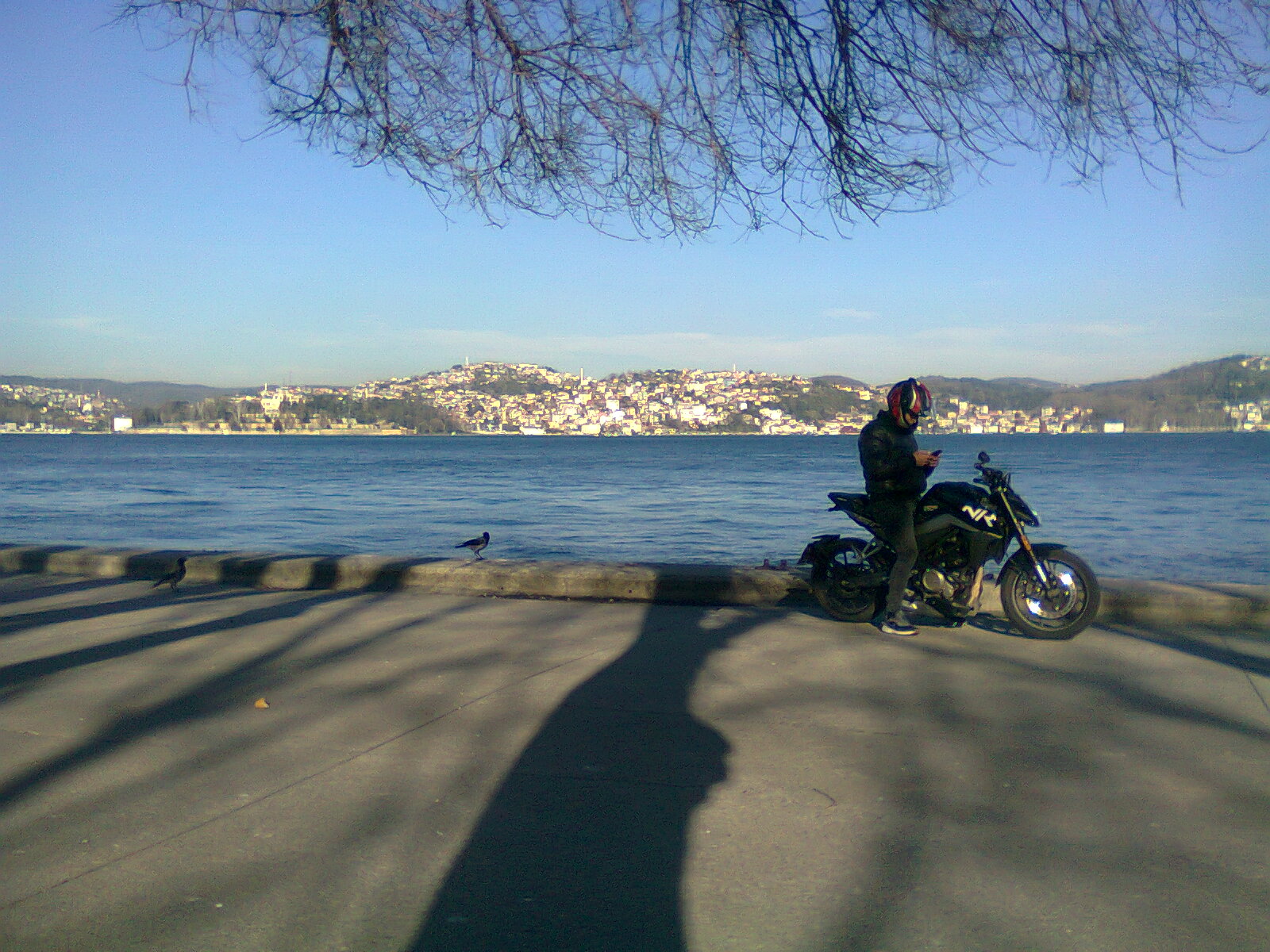
A crow behind him, a helmeted man sits on motorcycle contemplating his mobile while the Bosphorus, and Asia beyond, is to his left At the edge of the Bosphorus, a woman squats to photograph a gull with her mobile

Yeniköy (Νεοχώριον), Sarıyer, Istanbul
Tuesday afternoon, February 21, 2023

Continue reading

Potential (Iliad Book XIII)

Let us first look at the calendar. We see the dawn of a new day in the Iliad in Book I, line 477, when the mission led by Odysseus to give Chryseis back to her father Chryses sails back to the Achaean camp at Troy.

The day before, when the mission arrived in Chryse, Thetis told Achilles that, the day before that, Zeus and the other gods had gone to visit the Ethiopians in Oceanus, but would return on the twelfth day (lines 423–5).

It is not clear to me just how the counting is done, but a twelfth dawn comes on line 493, when the gods return to Olympus, and Thetis gets the nod from Zeus that he will honor Achilles, who meanwhile has been going neither to the “place of gathering” (ἀγορή, line 490) nor to war. We are given no details, such as we now see in Book XIII, of how the war has been going.

Two dogs on a stone plaza among the shadows of the bare trees that are behind them
Two dogs play-fighting
Haydar Aliyev Parkı
Kireçburnu, Sarıyer, Istanbul
Saturday morning, February 18, 2023

Continue reading