Tag Archives: Douglas Rushkoff

On Plato’s Republic, 13

Index to this series

We reviewed the five kinds of polity and soul in Book VIII of Plato’s Republic, but we didn’t get to the tyrannical soul. We take that up now in Book IX (Stephanus 571–92). We also make three arguments for why the tyrant has the least pleasant life. Finally, in order to pursuade Thrasymachus that indeed injustice is never profitable, we introduce a new chimerical image of the soul.
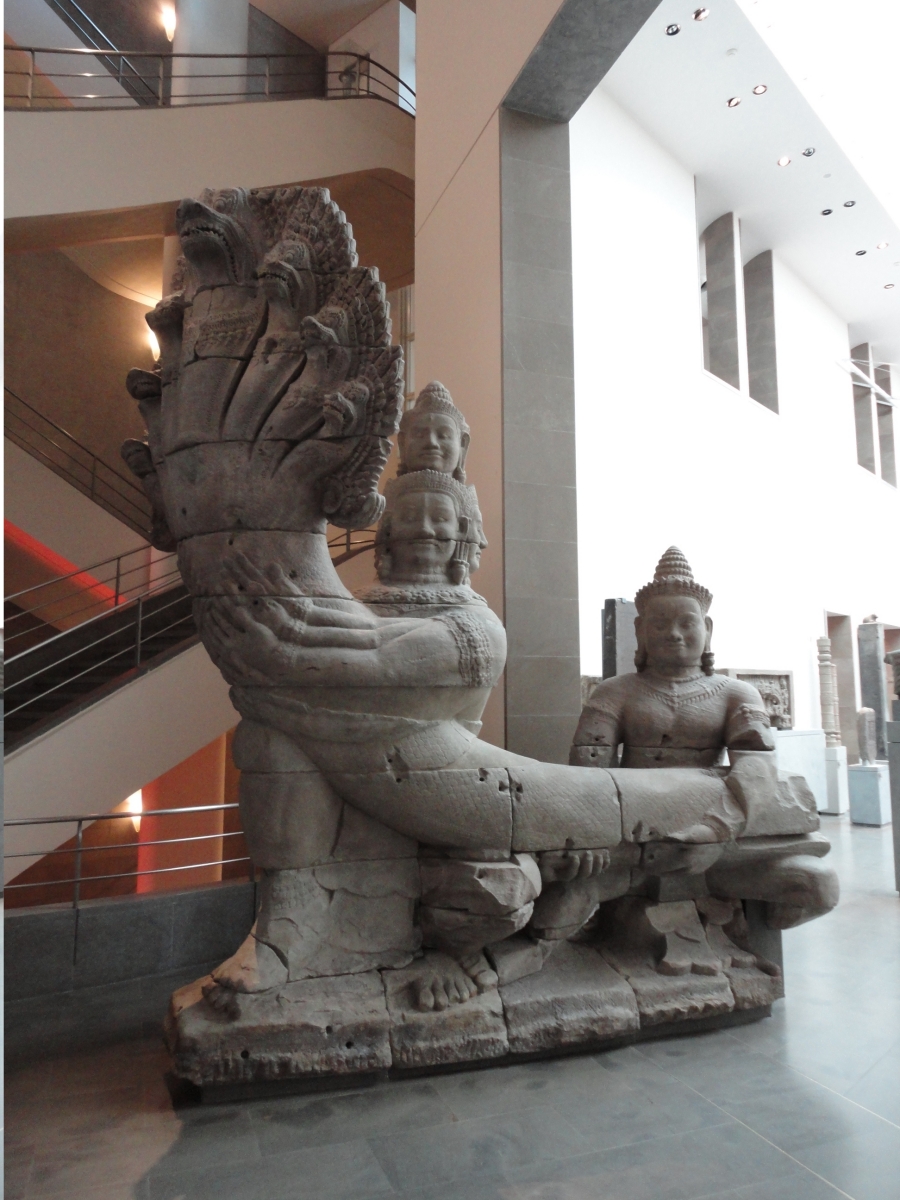
Many-headed man and and another man hold a many-headed serpent
« Chaussée des géants »
Cambodge, Preah Khan, Angkor (province de Siem Reap)
fin du 12e siècle – début du 13e siècle
Musée Guimet, Paris
June 4, 2011

Continue reading

NL XLI: What Barbarism Is

Index to this series

Civilization being agreement, barbarism has no chance in the long run (41. 67):

41. 76. For barbarism implies not only a quarrel between any barbarist and any civilized man; it also implies a quarrel between anyone barbarist and any other; and that any state of harmony between them is merely this quarrel suspended.

The barbarist is somebody “who imitates the conditions of an uncivilized world” (41. 53); but an actual attempt to bring about those conditions will need cooperation, and this will be a step towards civility. Here perhaps we should distinguish cooperation from the kind of coerced organization seen in a fascist state. Specific examples will be considered in the later chapters of Part IV of the New Leviathan. We are now considering “What Barbarism Is,” in general terms.

Continue reading