Tag Archives: James Connelly

Ars Longa

The extant works of Hippocrates take up ten volumes of the Loeb Classical Library. I’ve got the fourth of those volumes, because it contains also the extant fragments of Heraclitus, collected under the title ΠΕΡΙ ΤΟΥ ΠΑΝΤΟΣ, On the Universe. [See the footnote on this title.]

I am going to look here at some aphorisms of Heraclitus, Parmenides, Turkish folklore, Zen, and Erich Segal – also of Hippocrates, who seems to be the source of our word “aphorism.” He wrote ΑΦΟΡΙΣΜΟΙ, and they turn out be in the same Loeb volume with Heraclitus.
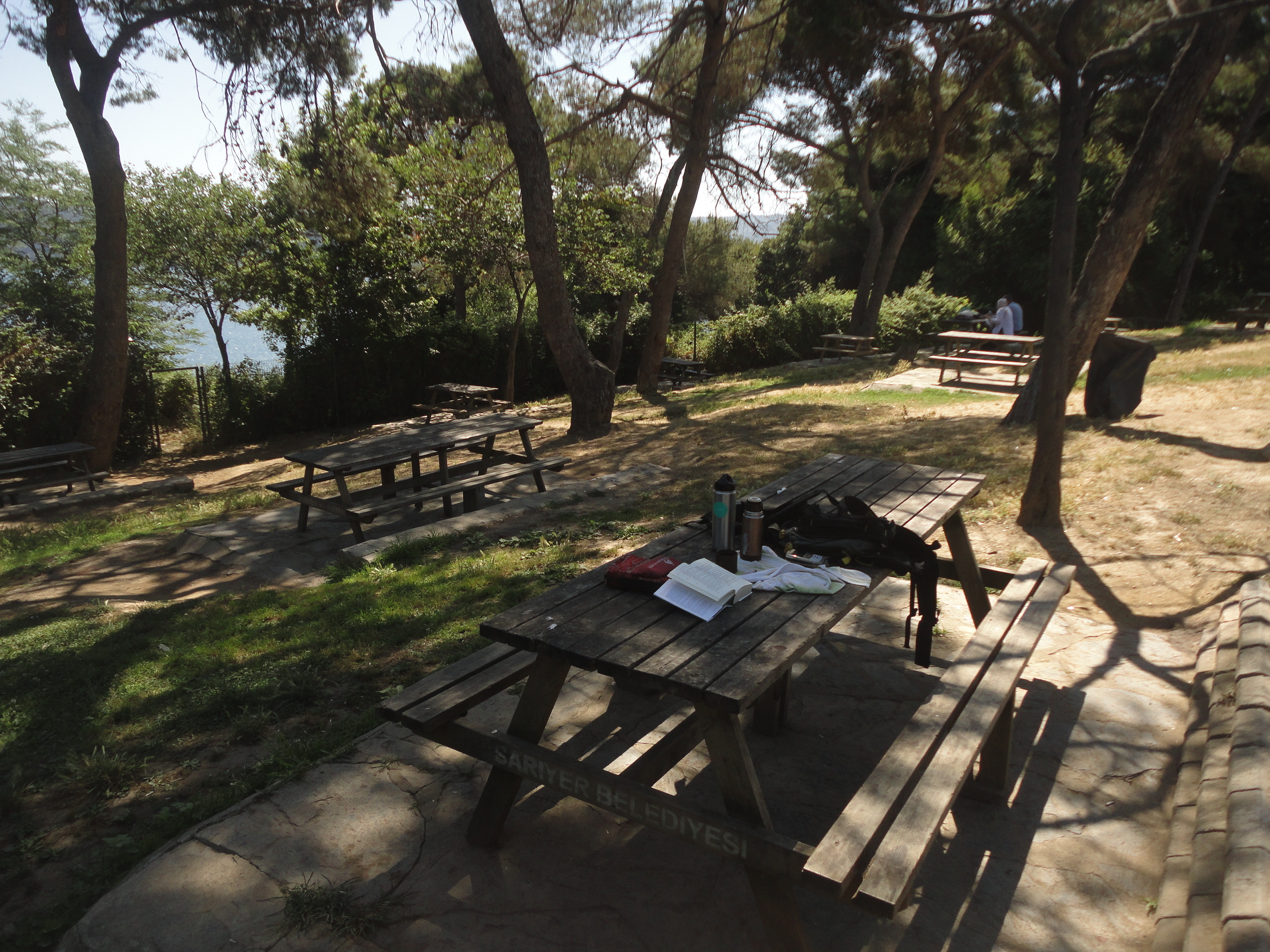
Book and paraphernalia lie on one picnic table among several. Two people sit at a table in the distance. The tables are partially shaded by trees, and a bit of sea is visible through other trees

I was reading Parmenides
in Kireçburnu Çamlık Parkı
Erguvantepe, Sarıyer, Istanbul
July 6, 2025

Continue reading

NL XLI: What Barbarism Is

Index to this series

Civilization being agreement, barbarism has no chance in the long run (41. 67):

41. 76. For barbarism implies not only a quarrel between any barbarist and any civilized man; it also implies a quarrel between anyone barbarist and any other; and that any state of harmony between them is merely this quarrel suspended.

The barbarist is somebody “who imitates the conditions of an uncivilized world” (41. 53); but an actual attempt to bring about those conditions will need cooperation, and this will be a step towards civility. Here perhaps we should distinguish cooperation from the kind of coerced organization seen in a fascist state. Specific examples will be considered in the later chapters of Part IV of the New Leviathan. We are now considering “What Barbarism Is,” in general terms.

Continue reading

NL XXXVII: Civilization As Education

Index to this series

Knowing, from the previous chapter, what civilization is, we ask: How do we bring it about? Collingwood’s answer is to homeschool our children.

This is the New Leviathan’s first detailed piece of positive advice, and it may sound crazy. Rather than list reasons why, I want to see what sense can be made of the ideas.

Civility is respect (37. 15). To respect another person is to recognize their freedom (37. 14). To do this, one needs self-respect (37. 13).

Instead of respect, we may approach another person with servility, namely “the demeanour of a man lacking self-respect towards one whom he fears” (37. 17). The will to barbarism is just the will to servility (37. 19).


Mary Cassatt (American, 1844-1926)
The Boating Party, 1893/1894, oil on canvas
Chester Dale Collection, National Gallery of Art Continue reading