At the end of Book XVI of the Iliad, Hector
- pulled his spear from the body of Patroclus,
- took off in pursuit of Automedon, his victim’s charioteer, who was being drawn by Achilles’s immortal horses.
At the end of Book XVI of the Iliad, Hector
On the day recounted in Book VIII of the Iliad,
I wrote a fuller summary in 2017. Because I was reading it, I also talked about Huysmans, Against Nature, and the belief of the main character that the prose poem could
contain within its small compass, like beef essence, the power of a novel, while eliminating its tedious analyses and superfluous descriptions.
Now I shall find reason to bring up Herodotus, Plato, Aristotle, Thoreau, and Freud, and especially William James and Collingwood on the subject of emotion.
Our fifth scheduled reading in the Republic is Book IV (Stephanus pages 419–45). Socrates speaks
This is a preliminary report on two recent films:
The report is preliminary, not because there is going to be another, but because I have seen each film only once, and I may see one of them again.
I remember that François Truffaut liked to see films at least twice. I believe I read this in The Washington Post, and I might have guessed it was in an appreciation published when Truffaut died; however, he died on October 21, 1984, during the first semester of my sophomore year at St John’s College in Santa Fe, and I would not have been reading the Post then.
While in college, I did enjoy seeing some films twice, or a second time; Truffaut’s own 400 Coups was an example, a French teacher having shown it to us in high school.
The two films that I am reviewing now concern young adults trying to find their own way in the world, in defiance of their elders. We all have to do this. In every generation, some will do it more defiantly than others. Heraclitus can be defiant, he of Ephesus and thus one of the Ionian philosophers, whose spirit I imagine to haunt the Nesin Mathematics Village. A further reason to bring up Heraclitus will be a theme that is explicit in Pear Tree, implicit (or metaphorical) in Coyotes: gold.

A copy of The Logos of Heraclitus,
by Eva Brann,
on Marmara Island, July, 2012
Turning now to Part III of Collingwood’s New Leviathan (1942), we take up civilization, a topic of utmost importance, featuring as it does, for example, in the controversial hypothesis of the “Clash of Civilizations,” and generally being something that reactionaries say they want to defend.
Civilization is something that happens to a community (34. 4). We studied communities as such in Part II, and their members individually in Part I.
Civilization is a “process of approximation to an ideal state” (34. 5). That is the gist of Chapter XXXIV, “What ‘Civilization’ Means: Generically.” There will be a lot to spell out.

We have returned to Istanbul. Below are
sunset photos from our last night on the Aegean coast
Summary and update (added October 14, 2018): When we do something, or propose to do something, we may explain it or justify it—give a reason for it—as being useful, right, or dutiful. Such is the theory of Collingwood, analyzed here, especially with regard to a question that has increasing urgency: have we a duty, not only to one another, but to nature?
When I originally composed this post, in February of 2017, I had recently analyzed several relevant chapters of Collingwood’s New Leviathan:
Those chapters are the last in the book’s Part I, called “Man.” Collingwood returns to the same ideas in Part II, “Society,” and specifically in Chapter XXVIII, “The Forms of Political Action.” I went on analyze this chapter, 18 months later; it discusses an abuse of the concept of duty by the German political theorist Treitschke.
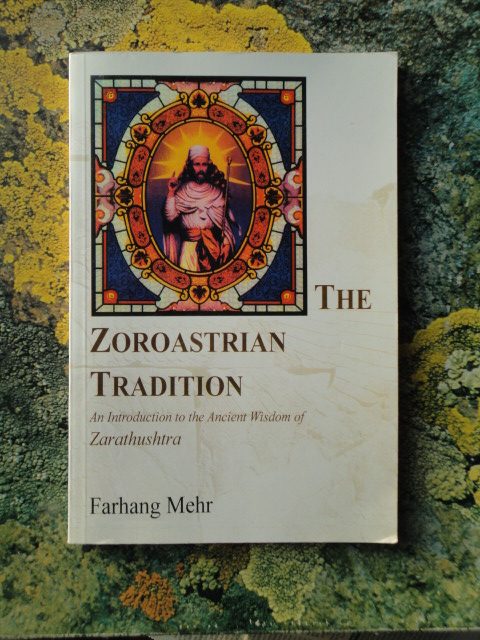
By one interpretation of a passage in Herodotus, the ancient Persians perceived a duty to nature, through a teaching now attributed to Zoroaster. His teachings influenced Manichaeism, and thus in turn the “Albigensian heresy,” the subject of Chapter XLIII of the New Leviathan.
A theme of Collingwood is that we tend to explain what happens in the world the way we explain what we ourselves do. If our ethics are utilitarian, then, like the ancient Greeks, we may see things in nature too as serving purposes. If we govern our own behavior by laws, then we may also seek laws of nature, as physicists do now.
Since utility and law are general in form, they provide incomplete accounts of exactly what we do. Utility tells us that some kind of thing is useful for some other kind; law keeps us within some bounds, but leaves us free within those bounds. By contrast, duty is to be conceived as providing a complete account of what we do. Conscience tells us that we have a duty; then we have to reason out what it is. The corresponding science of the world is history, which studies us as free agents. Collingwood does not describe a corresponding science of nature as such, at least not in the New Leviathan; but at the end of his first book, Religion and Philosophy, he concluded that everything that happened must be an act of will. This was in the chapter called “Miracle,” which I looked at especially in “Effectiveness.”
It may be hard to distinguish lawful action from dutiful action. In the present post, I look at the examples of
I conclude with the example of an Episcopal priest called Stephen Blackmer, for whom nature is a church and a member of his congregation.
This is a synthesis of some ideas from a recent spate of posts in this blog. A theme is the question of why we do what we do, and whether we can change what we do, especially to Nature.
Preface (January 17–18, 2019). This essay is built around two extended quotations from Collingwood:
The quotations pertain to the title subject of psychology for the following reasons.
Psychological experiments can tell us about what we do, only when we presuppose the general applicability of their findings. This is true for any descriptive science. Philosophy demands more. A philosophical science like logic is categorical, in the sense of the second listed quotation, because it is what Collingwood will later call criteriological. I go on to discuss criteriological sciences as such in “A New Kind of Science,” but not here.

The Lady and the Unicorn
(image from Wikimedia)