Tag Archives: Hesiod

Order from Chaos

From The Relevance of Science by C. F. von Weizsäcker, here is Chapter 2, “Cosmogonical Myths.” The subject is stories of how we got here – stories from Babylon, Greece, and Scandinavia, stories more “primitive” than the Biblical account.


Terra cotta figure gazing upward, holding right hand to head, left hand to penis (now broken off)
Although a nearby freestanding sign likened it to Rodin’s sculpture, this figure in the National Archeological Museum, Athens, was six millenia older. The English label below the figure read,

The ‘Thinker’. Large solid clay figurine of a seated man from the area of Karditsa in Thessaly. Final Neolithic period (4500–3300 BC)

The museum website has a better picture. Later in the day of our visit, which was Tuesday, July 11, 2017, we travelled to Delphi for the meeting that occasioned “Hypomnesis.” More photos from the trip ended up in the post “On Knowing Ourselves.”


Continue reading

Reflection (Iliad Book XVIII)

Twelve Trojan warriors die, merely because Achilles shouts at them across the Achaean trench. That is all Achilles does, in Book XVIII of the Iliad, and no more deaths are reported – unless we count the ones depicted around the city at war, on the shield that Hephaestus forges for Achilles at the request of Thetis. (See note 1)

A beacon stands in front of the sea at the end of a street lined with trees and a cafe. We see the beacon between two bicyclists on the road that crosses the foreground
“Achilles, dear to Zeus, roused him,
and round about his mighty shoulders Athene flung her tasselled aegis,
and around his head the fair goddess set thick a golden cloud,
and forth from the man made blaze a gleaming fire.” (Iliad 18.203–6)
Kireçburnu (“Lime Point”)
Κλειδὴς καὶ κλεῖθρα τοὺ Πόντου (“Lock and Key of the Pontus”)
Sarıyer, Istanbul
Sunday morning, March 26, 2023

Continue reading

On Plato’s Republic, 3

Index to this series

We are reading now Book II of Plato’s Republic, Stephanus pages 357–83, covering:

  1. The conventional arguments in favor of injustice and justice, reviewed by Plato’s brothers Glaucon and Adeimantus respectively.
  2. The beginning of the construction of the city in speech, wherein the advent of justice is to be discerned; the guardians of the city are to be like dogs and to be given a traditional education, although with none of the traditional stories, since they talk about things like parricide and bad luck.

A book next to a dog lying on the beach

Dog with copy of Alain Badiou, Plato’s Republic:
A Dialogue in Sixteen Chapters, with a Prologue and an Epilogue, 2012
Profesörler Sitesi, Altınova, Balıkesir, Turkey, September 2, 2021

Continue reading

Piety

The post below is a way to record a passage in the Euthyphro where Socrates says something true and important about mathematics.

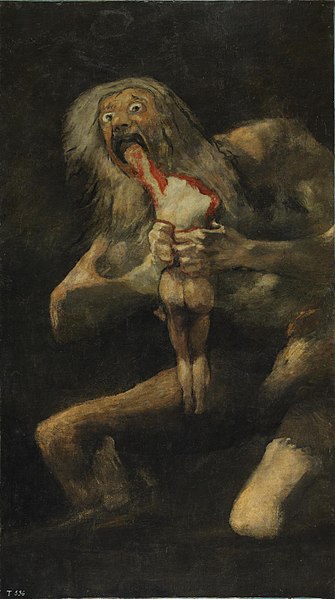
Crude depiction of bug-eyed figure grasping the torso of, and putting into his mouth the arm of, a smaller figure
Goya, [Cronus] Devouring His Son
(see below)

The passage is on a list of Platonic passages that I recently found, having written it in a notebook on May 23, 2018. The other passages are in the Republic; here they are, for the record, with some indication of why they are worth noting (translations are Shorey’s, originally from 1930 and 1935 in the old Loeb edition):

Continue reading

On Chapman’s Homer’s Iliad, Book III

Index | Text

The Iliad is about the feud between Achilles and Agamemnon, a feud that occurs during the Trojan War. Book III of the Iliad has nothing to do with Achilles, a little to do with Agamemnon, and everything to do with why the whole war is happening at all.

Note added August 19, 2024: The war is happening because Paris is God’s gift to women. By his own account, he is excellent in the “gifts of peace,” and these are “as little to be scorn’d, / As to be wonne with strength, wealth, state …” It is good to recognize that some things cannot be obtained by “strength” or force. Achilles recognizes this in Book I when he refrains from killing Agamemnon. However, Paris scorns not only strength, but also wealth and state. I suppose it is “state” that lets Hector and Agamemnon come to an agreement about a duel between Paris and Menelaus that will end the war. Paris breaks the agreement by running away to visit the prize of his excellence, namely Helen. Homer has Venus spirit Paris away, but I take this to be a poetic embellishment, agreeing with Eva Brann in Homeric Moments: Clues to Delight in Reading the Odyssey and the Iliad (Paul Dry Books, 2002; pages 41–3):

But the gods’ face-off effects nothing; at least nothing happens that could not happen without them. And so it is always; Zeus himself disclaims responsibility for human fate right at the beginning of the Odyssey


To be sure, as I said above, nothing is ever done that could not have been done by the humans themselves …

Photo of the tower of books used for this article

Continue reading