Tag Archives: Oliver Burkeman

Organ Recital

Trigger warnings for this post:

  1. Suffering and pain.
  2. Cessation of life.
  3. Mathematics.

After the post of December 9, for some reason I wanted to record here a surgical operation in 2019. Then I became preoccupied with mathematics.


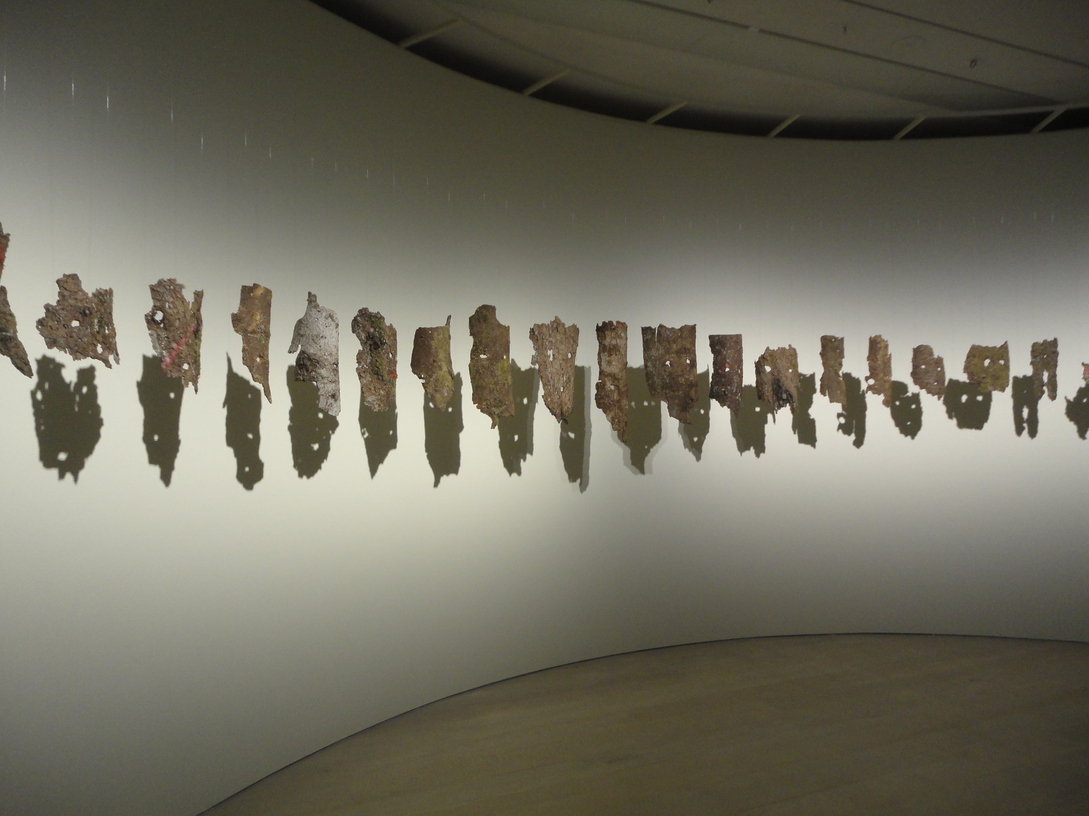
Against a concave white wall, a line of rough masks, two eye-holes each, made of tree bark
Hera Büyüktaşcıyan, “Dendrologia,” 2023; part of an exhibit called Phantom Quartet at Arter Istanbul, visited Wednesday, February 4, 2026. The bark of the masks is said to be taken from dead trees on the Isle of Vassivière in the artificial Lac de Vassivière, Limousin, France


On the subject of mathematics, let me take the opportunity to recommend “The Tool/Weapon Duality of Mathematics,” by Alexandre Borovik, recently published in the Journal of Humanistic Mathematics (volume 16, number 1, January 2026; pages 365–392). Continue reading

Motivated Reasoning in the Cyropaedia of Xenophon

The son of the king of Persia wants to press the advantage, after the combined forces of Media, Persia, Armenia, and Chaldaea have

  • killed the Assyrian king, along with most of his best men, and
  • driven the rest of the Assyrian army from their fortifications.

The king of Media is of another mind: he would rather quit while he is ahead. He has an argument for standing pat, by the account of Xenophon in the Cyropaedia (IV.i.11–18).

One may consider the argument of Cyaxares as an example of “motivated reasoning.” I think it is a specious argument: attractive, but ultimately unsound. Perhaps I say that, only because the king’s nephew Cyrus rejects the argument, but is nonetheless successful in what he goes on to do. With his Persian troops and as many Medians as wish to join them, along with the Hyrcanians, who have defected from Assyria, Cyrus pursues and defeats again the Assyrian army. He kills the kings of Cappadocia and Arabia, and he puts to flight both the king of Phrygia and Croesus, king of Lydia (IV.ii.28–31). Of course, this is not the end of the story; history never ends.

I have been reading and discussing the eight books of the Cyropaedia with a Catherine Project group, at the rate of half a book a week, since July 8 of this year (2024). Thus we shall have completed the sixth book (called “On the Eve of the Great Battle” in the Loeb edition) on September 23. It has astonished me that some of my fellow readers think well of the argument for taking it easy, even as they acknowledge that the man who makes it may be a fool. The argument does not seem to me like one that a king such as Cyaxares can afford to make.

Possibly Xenophon has an esoteric message, as Plato is thought to have. However, although these two writers had a common teacher in Socrates, he never went far from Athens. Xenophon helped lead a stranded army of ten thousand Greek mercenaries, from Babylon north to the Black Sea, after the failure of the coup for which they had been hired by Cyrus the Younger. Xenophon admires a practical man who can actually get things done. This being what Cyrus the Elder is, he is the hero of the Cyropaedia. I shall review my textual reasons for saying this. First I shall look at “motivated reasoning” today, along with the idea that we could have “evolved” to use it. (In short, the rest of this post has the three parts just linked to.)

Pine bough above; bushes below; blue sky, sparkling water, and sand in between

Photo taken September 17, 2024, of Lesbos over the sea, from a beach in Lydia. Of this country, Chrysantas says to Cyrus, after the latter has pursued the Assyrians over the objections of his uncle Cyaxares (Cyropaedia VI.ii.21),

since it now appears that Syria is not to be the only prize – though there is much to be got in Syria, flocks and herds and corn and palm-trees yielding fruit – but Lydia as well, Lydia the land of wine and oil and fig-trees, Lydia, to whose shores the sea brings more good things than eyes can feast on, I say that once we realise this we can mope no longer, our spirits will rise apace, and we shall hasten to lay our hands on the Lydian wealth without delay.

This is in response to the suggestion of Cyrus that his army are intimidated by the alliance that Assyria has formed with Lydia.

Continue reading

Şirince January 2018

In the Nesin Mathematics Village recently, I was joined at breakfast one morning by a journalist called Jérémie Berlioux. He knew Clément Girardot, the journalist whom I had met in the Village in the summer of 2016. This was before the coup attempt of July 15, but after the terror attack at Atatürk Airport on June 28. I wrote about this attack the next day in “Life in Wartime” on this blog. Then I headed off to Şirince to join a “research group.” My wife and colleague came along, though not to be part of the group; afterwards we headed up the coast for a beach holiday. We were at the beach when the coup attempt happened, as I wrote in my next blog article, “War Continues.” I contrasted politics with mathematics, which was an inherently nonviolent struggle. This was the kind of struggle engaged in by the research group in the Math Village.

Large clay pot against dark vines

Outside the Nişanyan Library

Continue reading

36th Istanbul Film Festival, 2017

This is about seeing six films in the Istanbul Film Festival, which began this year (2017) on Wednesday, April 5.

Oblique gray square against a lighter square ground
Kazimer Malevich, Suprematist Composition: White on White, 1918 (MoMA)

Continue reading

NL XIV: “Reason”

Index to this series

Summary added January 29, 2019, revised May 8, 2019. Practical reason is the support of one intention by another; theoretical, one proposition by another. Reasoning is thus always “motivated reasoning”: we engage in it to relieve the distress of uncertainty. Reason is primarily practical, only secondarily theoretical; and the reason for saying this is the persistence of anthropomorphism in theoretical reasoning: by the Law of Primitive Survivals in Chapter IX, we tend to think even of inanimate objects as forming intentions the way we do.

Reasons for adding this summary of Chapter XIV of Collingwood’s New Leviathan include

  • the tortuousness of the following post on the chapter,
  • the provocation of a Guardian column by Oliver Burkeman on motivated reasoning.

Says Burkeman, whose “problem” is apparently motivated reasoning itself,

One of the sneakier forms of the problem, highlighted in a recent essay by the American ethicist Jennifer Zamzow, is “solution aversion”: people judge the seriousness of a social problem, it’s been found, partly based on how appetising or displeasing they find the proposed solution. Obviously, that’s illogical …

On the contrary, how we reason cannot be “illogical,” any more than how we speak can be “ungrammatical.” Logic is an account, or an analysis, of how we do actually reason; grammar, of how we speak. Of course we may make errors, by our own standards.

Rogier van der Weyden (Netherlandish, 1399/1400-1464), Portrait of a Lady, c. 1460, oil on panel, Andrew W. Mellon Collection
Rogier van der Weyden (Netherlandish, 1399/1400–1464),
Portrait of a Lady, c. 1460, oil on panel
National Gallery of Art, Washington; Andrew W. Mellon Collection

Context

There was a rumor that Collingwood had become a communist. According to David Boucher, editor of the revised (1992) edition of The New Leviathan, the rumor was one of the “many reasons why [that book] failed to attract the acclaim which had been afforded Collingwood’s other major works.” Continue reading