Tag Archives: Phaedrus

Cavafy in Istanbul

The first part of this post concerns a poem by Constantine Cavafy on accepting one’s fate. There are three parts after that:

The Cavafy poem, “The God Abandons Antony,” is based on a passage in Plutarch’s life of that person. Susan Cain wrote about the poem in a newsletter. Her book Quiet gave me a new appreciation for my parents. It so happens that my parents had me by adoption. Unfortunately other people are not happy to be in that situation.

Some people are also not happy with their sex. Cavafy’s poem could have given courage to Ms Cain during a painful birth. Courage is literally manliness in Greek. Plutarch writes of a man’s imitation of a woman in labor. Roberto Calasso’s Marriage of Cadmus and Harmony led me to the story. I talk about all of that.

I have since learned of another good essay, “Personal Integrity in the Poetry of C. P. Cavafy,” in Beshara Magazine, by Andrew Watson. A different Andrew Watson played football for Scotland in 1881, and The Guardian has an article, “‘We looked identical’: one man’s discovery of slavery, family and football” (24 December 2020), by Tusdiq Din, about Malik Al-Nasir, formerly Mark Watson, who discovered, through their physical resemblance, a family relation with Andrew.


When Ayşe and I moved from Fulya to Tarabya last October, we were coming nearer where C. P. Cavafy once lived along the Bosphorus.

Boxes packed for moving. Rolled-up carpets; bubble wrap around bookcases. Light comes from a window on the right and a glowing globe on the upper left. Two more spherical paper shades sit on boxes
Last evening in Fulya
Saturday, October 15, 2022

Continue reading

Pascal, Pensées, S 115–182

This document contains fragments

  • 80–149 of the Lafuma,
  • 115–182 of the Sellier

edition of Pascal’s Pensées, in modernized French and the following sections:

  • Raisons des Effets
  • Grandeur
  • Contrariétés
  • Divertissements
  • Philosophes
  • Le Souverain Bien
  • A [Port-Royal]

Continue reading

Antitheses

This is an attempt at a dialectical understanding of freedom and responsibility, punishment and forgiveness, things like that. My text is a part of the Gospel, though I attribute no special supernatural power to this. I shall refer also to the Dialogues of Plato.

NL XLIII: The Second Barbarism: The ‘Albigensian Heresy’

Index to this series

Summary. Suppose your society has certain rites and customs, perceived as essential to its functioning. When some persons among you reject those rites and customs, what are you going to do? Persecution would be the normal response of a society that aimed to preserve itself. In the example to be considered here, the society is medieval Christendom, where

  • buildings called churches were customarily the abode of friendly spirits, and
  • the rite of swearing an oath was a sign of special commitment.

Oaths and churches were rejected by persons called Paulicians, or Bogomils, or Albigensians. Their beliefs were Manichaean. These persons were persecuted so successfully that we do not understand them very well. Therefore we must leave open the question of whether they were barbarists.

Here I am going to review, among other things,

  • what it means to fight barbarism;
  • the response to German bombardment described in Goodbye, Mr. Chips;
  • what Jesus Christ says about swearing;
  • how the United States accommodates various beliefs (as by allowing affirming instead of swearing, or allowing Muslims to swear on a Quran);
  • the threat of a lying President;
  • the threat of ignoring climate change;
  • the etymology of heresy;
  • the discussion of mythos and logos in Pirsig.

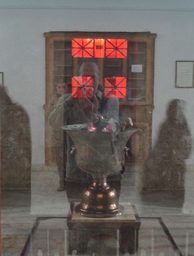
Fire temple, Yazd, Iran, September 2012. See “Duty to Nature

Continue reading

On Knowing Ourselves

In a 2012 post in this blog, I criticized a 2009 essay called “50 Years of Stupid Grammar Advice.” The putative advice was that of Strunk and White. However, what these two had written was not the elements of grammar, but The Elements of Style. They gave style advice by precept and example. The advice is good, if well understood. The critic should recognize that, as I wrote, “Rules of style are supposed to induce thinking, not obedience.”

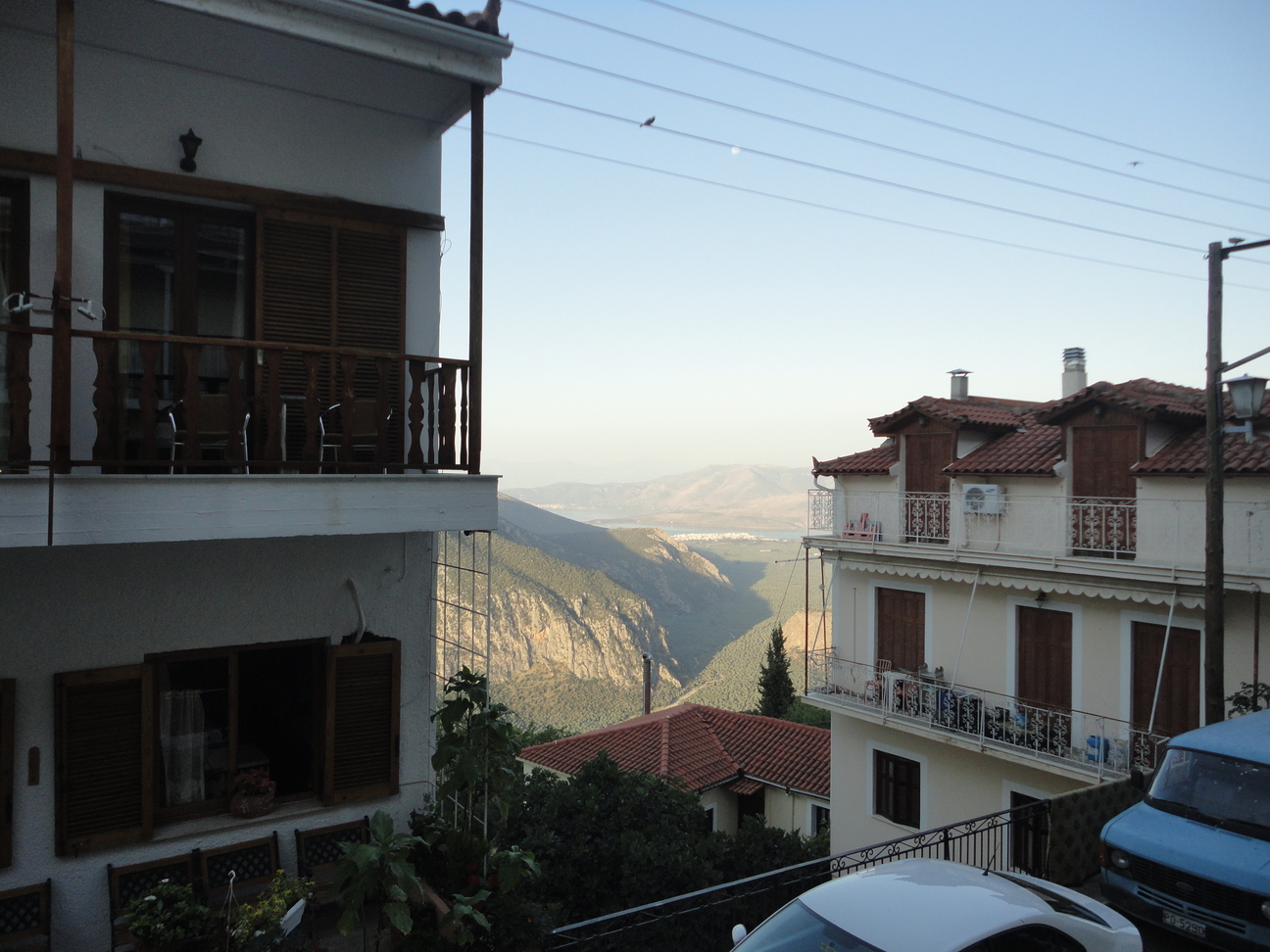
View between two hotel buildings from one mountainside to another, with a bit of the sea beyond
All photos taken in Delphi, July 12–14, 2017

Continue reading

NL XXIV: The Body Politic, Social and Non-Social

Index to this series

Executive summary (added September 11, 2018): The subject of political theory is the kind of community called a body politic. For the Ancients, this is a society, composed of, for example, the citizens of Athens, excluding women, children, slaves, and foreigners. In medieval times, all human beings in the community compose a body politic, which is thus non-social, though having within it the societies called estates; sovereigns rule by force (e.g. by the bribery called the granting of liberties), but may in turn be ruled, as is the husband, sovereign of the wife. For Hobbes, a sovereign can also rule by authority. An eristic argument would insist that only one of these accounts of the body politic is correct; but the world is in the flux described by Heraclitus, and the way to come to terms with it is not eristic, but dialectic, as described in the Meno of Plato.


Dialectic is the way to come to terms with a world of constant change. On the internet in particular, too many persons engage in eristic, staking out a position like the Greeks at Troy, who built a wall around their ships on the shore and tried to defend it against all comers.

Dogs stake out their positions in the shade,
2017.09.14

In the argument of the New Leviathan, we pass from the family to the state, which Collingwood calls the body politic. This is what political theory must give a scientific account of (24. 1). We consider three phases of political theory:

  1. ancient,
  2. medieval, and
  3. modern.

Continue reading

Hypomnesis

When is a help a hindrance? The Muses have provoked this question. They did this through their agents, the cicadas, who sang around the European Cultural Center of Delphi, during the 11th Panhellenic Logic Symposium, July 12–5, 2017.

     Cicada, European Cultural Center of Delphi, 2017.07.15     

Cicada, European Cultural Center of Delphi, 2017.07.15

My question has two particular instances.

  1. At a mathematical conference, can theorems “speak for themselves,” or should their presenters be at pains to help the listener appreciate the results?

  2. When the conference is in Greece, even at one of the country’s greatest archeological sites, does this enhance the reading of ancient Greek texts, or is it only a distraction?

Continue reading

On Chapman’s Homer’s Iliad, Book III

Index | Text

The Iliad is about the feud between Achilles and Agamemnon, a feud that occurs during the Trojan War. Book III of the Iliad has nothing to do with Achilles, a little to do with Agamemnon, and everything to do with why the whole war is happening at all.

Note added August 19, 2024: The war is happening because Paris is God’s gift to women. By his own account, he is excellent in the “gifts of peace,” and these are “as little to be scorn’d, / As to be wonne with strength, wealth, state …” It is good to recognize that some things cannot be obtained by “strength” or force. Achilles recognizes this in Book I when he refrains from killing Agamemnon. However, Paris scorns not only strength, but also wealth and state. I suppose it is “state” that lets Hector and Agamemnon come to an agreement about a duel between Paris and Menelaus that will end the war. Paris breaks the agreement by running away to visit the prize of his excellence, namely Helen. Homer has Venus spirit Paris away, but I take this to be a poetic embellishment, agreeing with Eva Brann in Homeric Moments: Clues to Delight in Reading the Odyssey and the Iliad (Paul Dry Books, 2002; pages 41–3):

But the gods’ face-off effects nothing; at least nothing happens that could not happen without them. And so it is always; Zeus himself disclaims responsibility for human fate right at the beginning of the Odyssey


To be sure, as I said above, nothing is ever done that could not have been done by the humans themselves …

Photo of the tower of books used for this article

Continue reading

NL VI: “Language,” again

Index to this series

This is about language: language the concept, and “Language,” the sixth chapter of Collingwood’s New Leviathan. We shall consider language in a very basic way, not as a means of communicating what we know, but as the way we come to know things in the first place.
Continue reading