Tag Archives: Robert Wright

Politics

Index to this series

This is mostly about avoiding things. An early theme of Plato’s Republic is avoiding the deprivations of solitary life through politics. Some of us would rather just avoid politics. Such persons include Henry David Thoreau, Gilbert Ryle, and the inventor of the h-index (he is a physicist called Jorge E. Hirsch, but I know nothing else about him). I mentioned these persons in my last Plato post, “Badiou, Bloom, Ryle, Shorey.” I have some more to say about them here. In “Civil Disobedience” (1848), for example, Thoreau writes, “it is, after all, with men and not with parchment that I quarrel”; but measures like the h-index are used to hide the human factor in the equations used to judge us.
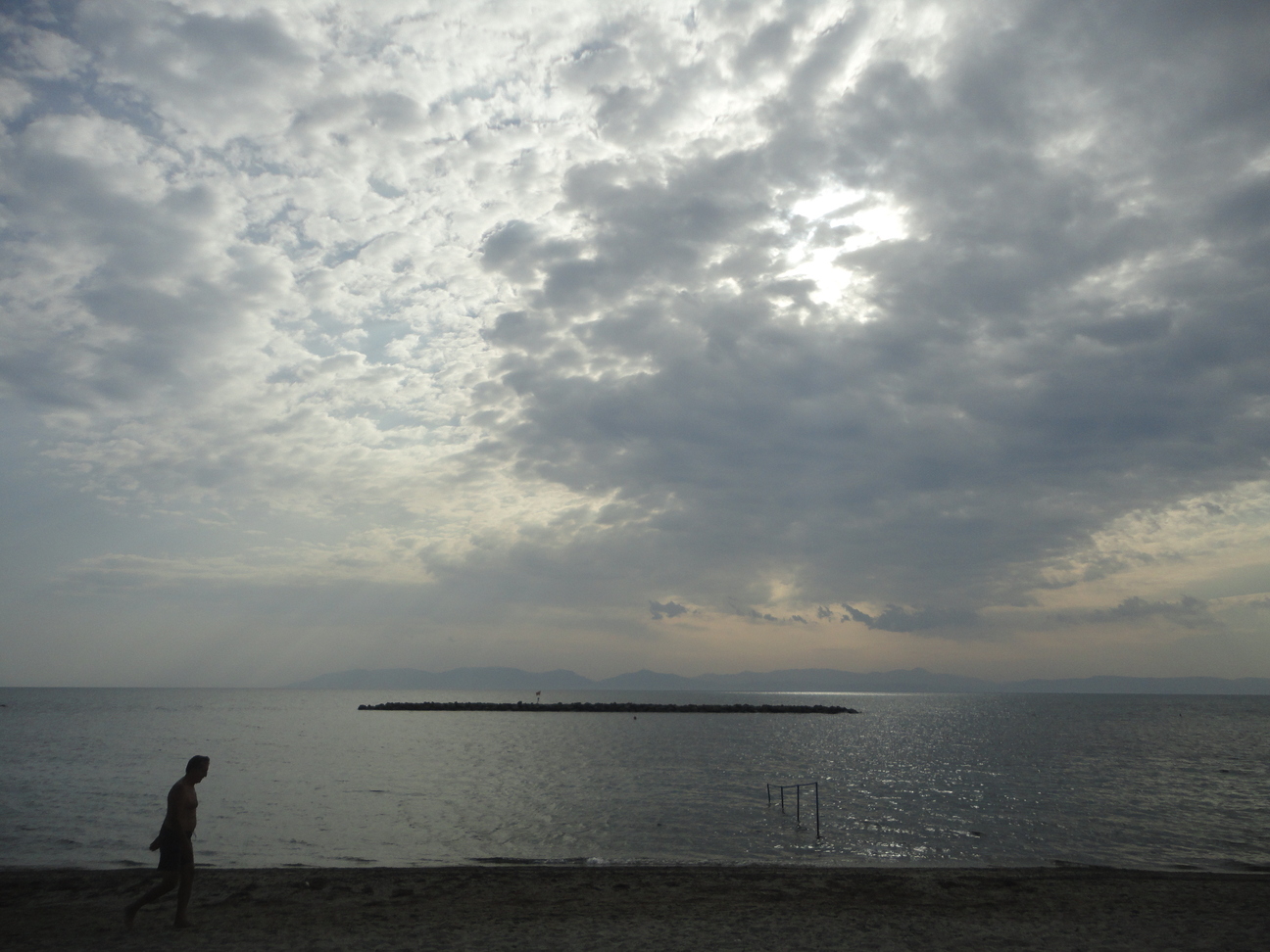
Lone man walks by sea with mountains beyond and under a cloudy sky
All photos are from Profesörler Sitesi, Altınova, Balıkesir, Turkey
September 21–3, 2021
Continue reading

Salvation

Because Herman Wouk was going to put physicists in a novel, Richard Feynman advised him to learn calculus: “It’s the language God talks.” I think I know what Feynman meant. Calculus is the means by which we express the laws of the physical universe. This is the universe that, according to the mythology, God brought into existence with such commands as, “Let there be light.” Calculus has allowed us to refine those words of creation from the Biblical account. Credited as a discover of calculus, as well as of physical laws, Isaac Newton was given an epitaph (ultimately not used) by Alexander Pope:

Nature and Nature’s laws lay hid in night:
God said, Let Newton be! and all was light.

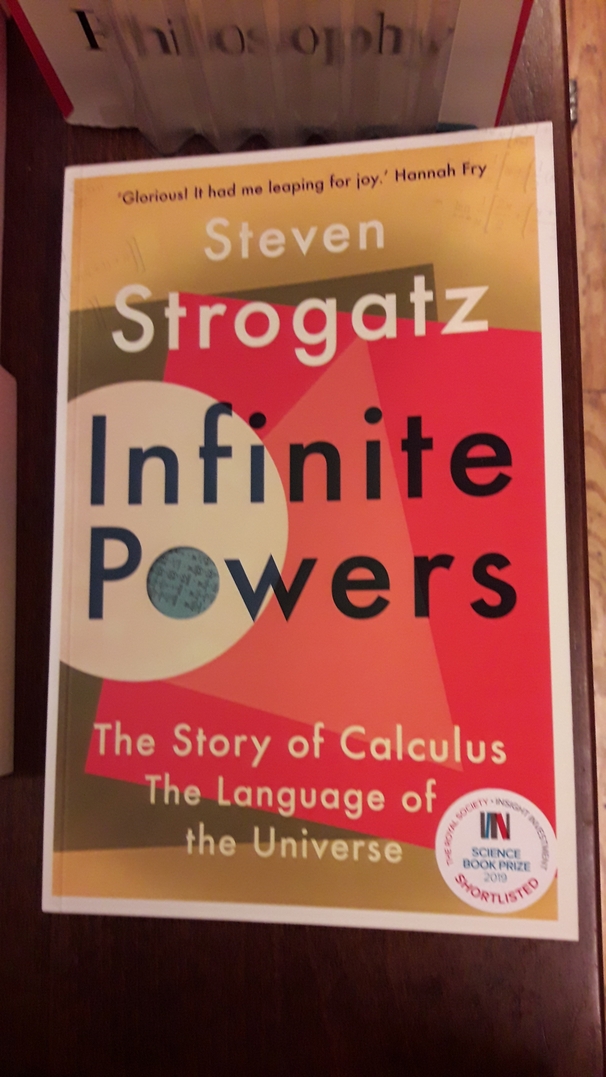
I don’t know, but maybe Steven Strogatz quotes Pope’s words in his 2019 book, Infinite Powers: How Calculus Reveals the Secrets of the Universe. This is where I found out about Wouk’s visit with Feynman. I saw the book recently (Saturday, February 22, 2020) in Pandora Kitabevi here in Istanbul. I looked in the book for a certain topic that was of interest to me, but did not find it; then I found a serious misunderstanding.

book cover: Steven Strogatz, Infinite Powers

Continue reading

Evolution of Reality

I enjoy and recommend Robert Wright’s Nonzero Newsletter, which presents thought on both American politics and thought itself.

Tiny green plants on red tile roof, cloudy day

In a 2017 post of this blog, I quoted Wright’s 1988 article in The Atlantic Monthly about Edward Fredkin. Somewhat differently from Fredkin, I spelled out my title, “What Philosophy Is,” without actually being a professional philosopher. I touched on a theme that I shall take up now: that thinkers today could benefit from knowing the thought of R. G. Collingwood.

Continue reading

What Philosophy Is

With my presumptuous title, I imitate Arthur Danto’s What Art Is (2013), mentioned in my last post, “Some Say Poetry.” The book is fine, and I have learned from it; but Danto could have learned from Collingwood’s Principles of Art.

Picasso, The Tragedy (1903), National Gallery of Art, Washington Continue reading