Tag Archives: Yuval Noah Harari

Artificial Language

TL;DR: AI writing is like human writing. Of course it is, since its model is human writing. But then what AI produces is like bad human writing.

My sources include Plato, Wendell Berry, George Orwell, E. B. White, William Deresiewicz, Hadley Freeman, Andrew Kay, Kenneth G. Crawford, Hollis Robbins, Yuval Noah Harari, William Egginton, Megan Fritts, and Vi Hart.


About preparing certain seeds for human consumption in an infusion:

For sensory attributes, I’m admittedly Platonic and believe that since coffee is a fruit, it should taste something like a fruit. (And it’s not just any fruit – it’s a cherry!) My roasting philosophy comes from the same conviction. Generally, I’m after bright, juicy, fruity, syrupy goodness.

Thus Caleb Bilgen, founder of Ánimo Coffee Roasters in Asheville, North Carolina.

          ⯅          
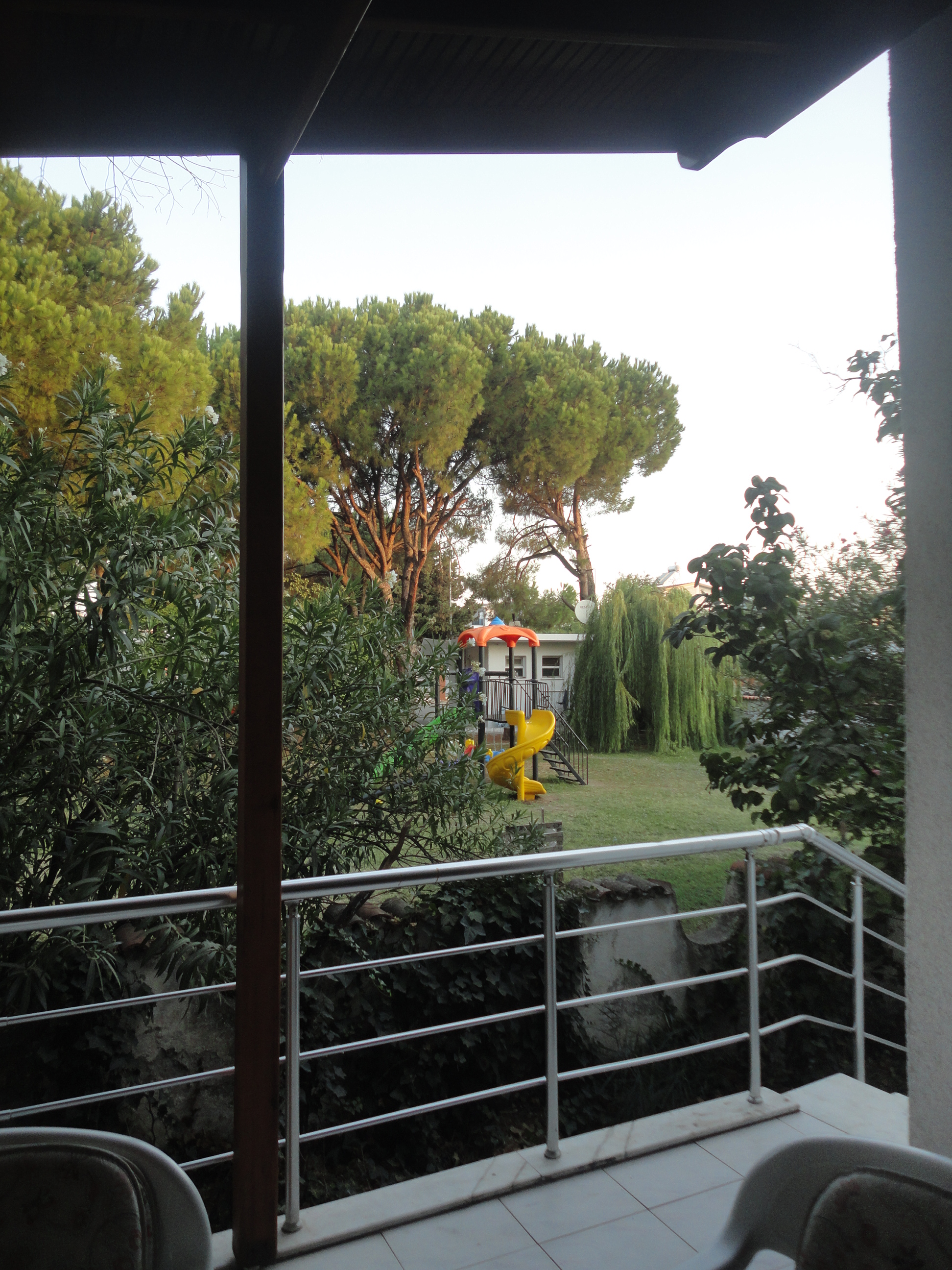
From a terrace beneath an awning, a low wall obscured by ivy, oleander, and quince; on the other side, a lawn with a jungle gym; beyond this, a weeping willow and a small white house beneath umbrella pines

What I see as the sun rises
Altınova, Ayvalik, Balıkesir
September 5, 2025

          ⯆          

Continue reading

Prairie Life

I’m going to make some comparisons here, even some likenings, mainly between

  • Robert Pirsig, Zen and the Art of Motorcycle Maintenance (1974), especially chapter 2, and
  • Wendell Berry, “Conservation is Good Work” (Sex, Economy, Freedom & Community, 1993; reprinted in Essays 1993–2017, Library of America, 2019).

Pirsig recounts a motorcycle trip west from Minnesota across the prairie. The riders pass through Yellowstone National Park, but Pirsig does not like it. At least his former self did not like it. This is in chapter 12 of ZAMM:

The guided-tour attitude of the rangers angered him. The Bronx Zoo attitudes of the tourists disgusted him even more … It seemed an enormous museum with exhibits carefully manicured to give the illusion of reality, but nicely chained off so that children would not injure them.

For Berry, such parks set the wrong standard for what should be conserved:

Right at the heart of American conservation, from the beginning, has been the preservation of spectacular places. The typical American park is in a place that is “breathtakingly” beautiful or wonderful and of little apparent economic value. Mountains, canyons, deserts, spectacular landforms, geysers, waterfalls – these are the stuff of parks. There is, significantly, no prairie national park.

I do see that Tallgrass Prairie National Preserve was created in Kansas in 1996.

A number of roses in three groups on canes sharing a root, against ground covered with pine needles; the shadow of a tree trunk divides the scene diagonally

Roses in the garden
Altınova, Ayvalik, Balıkesir
September 2, 2025

Continue reading

Truth

According to the current version of a Wikipedia article,

The Nicomachean Ethics is widely considered[according to whom?] one of the most important works of philosophy.

The superscript bracketed italicized question was added by me. I thus took the liberty to edit Wikipedia, as we all may do.

Panel with quote beneath banners and trees, people and a book display beyond
Literature festival at Kireçburnu
September 22, 2023
with displays from the Austrian Consulate
in particular, a quote from Stefan Zweig
in German and Turkish
“Some people must start peace the way they start war”

Continue reading

“It Was Good”

In the first creation myth in the first book of the Hebrew Bible, God is always looking back at what he has been doing, to see whether it is any good. It always is, but he cannot have known in advance that it was going to be, and this is why he has to check his work.

So it seems to me. In any case, when we create things, part of the job is checking our work.

Book showing its front cover, reading “Robin George / Collingwood / Din ve Felsefe / İngilizce aslından çeviren: / Fulya Kılınçarslan / akademim,” resting against the spines of other books on a shelf
The new Turkish translation of Collingwood’s Religion and Philosophy
with introduction by yours truly

Continue reading

On Being Human in the Age of Humanity

This is about an essay called “Agency in the Anthropocene: How much choice do you actually have?” (Daily Philosophy, August 4, 2021). I fall in the gap in age between the author and Jeff Bezos, who (the author says) is three years her senior.

Continue reading

Chaucer, CT, Prologue

Below is a text (in black) of the Prologue of the Canterbury Tales of Geoffrey Chaucer, with

  • my comments in blue (as now),
  • my highlighting in yellow.

The Prologue tells the frame story of a pilgrimage from London to the shrine of the “holy blissful martyr” at Canterbury; along the way, the pilgrims will tell the tales that make up the rest of the collection.

Chaucer was born around 1340; the dramatic date of his Prologue may be 1387. The martyr in Canterbury is Thomas Becket, assassinated in the cathedral there in 1170 by agents of King Henry II of England.

The Black Death was 1346–53.

Reasons to read Chaucer include testing Collingwood’s assertion in the Prologue of Speculum Mentis (1924),

Chaucer and Dante are no shallow optimists, but their tragedies are discords perpetually resolved in the harmony of a celestial music. The fundamental thing in Chaucer is the ‘mery tale’ of human life as a heartening and lovely pageant … The medieval mind feels itself surrounded, beyond the sphere of trial and danger, by a great peace, an infinite happiness.

Those clauses are from this paragraph, elaborating on medieval happiness:

Continue reading

Pascal, Pensées, S 651–679

Index for this series

Simon Stevin, “La Spartostatique”
Les Œuvres Mathematiques (1634)
See S 667 below

The reading is Sellier 651–79, which is Lafuma 432, 504–14, and 799–829, thus:

Labels are

Sellier–La Guern–Lafuma–Brunschvicg.

Themes

Persuasion

How does one come to believe or understand?

655–664–808–245

Il y a trois moyens de croire :

  1. la raison,
  2. la coutume,
  3. l’inspiration la révélation.

La religion chrétienne, qui seule a la raison, n’admet point pour ses vrais enfants ceux qui croient sans inspiration

Continue reading

Law and History

I learned about Peter Turchin recently through his profile in the Atlantic by Graeme Wood. I had learned about the Atlantic article from historians on Twitter such as James Ryan, who does “Turkish history and other stuff,” according to his own Twitter profile, and who tweeted in response to Wood’s article,

This is really interesting research, but, uh, it is only history in the way that a particle physicist does history.

In response to that, a thread began:

Needless to say, no historian would find this “approach” acceptable. There’s a reason we spend so much time on historiography when new historians are trained; we have complex, rich debates that have continued for longer than any field except philosophy on how to approach history.

That was by Axel Çorlu, living in the US, but “Born in Izmir, Turkey, to a Levantine (Italian/Greek/French/Armenian) family” according to his Academia page.

Continue reading