Category Archives: Art

Imitation Limitation

I alluded to this post in my last one, “Perception Deception.” There I questioned the gnomic assertion of its title.

The questioning then consisted of little more than quoting De Anima, where Aristotle points out that a sense cannot be deceived by its proper object. In particular, sight detects color infallibly.


Can of Coca-Cola held in a hand
I do not recall the source of this particular image, which I saved on March 29, 2024. The concept, at least, is apparently due to Akiyoshi Kitaoka.


If you see red in the image above, you are not mistaken, even if none of the pixels is of a kind called red.

Continue reading

Visibility

I was nine when I first read the following, and I read it many times after that:

Book opened to the quoted text. In the drawing on the left page, workers are fitting glass between tall mullions. On the right, an octagonal maze in the floor

While the windows were being installed, plasterers covered the underside of the vault and painted red lines on it to give the impression that all the stones of the web were exactly the same size. They were eager for the web to appear perfect even if no one could see the lines from the ground.

Continue reading

Found Poetry

This is adapted from emails I wrote in 2022 (on February 10 and July 16 and 17). I post them now, because I have been updating the “Directory” of documents that I have saved on this blog, other than as posts. I could not remember why I had saved an “Annotation” from Harper’s, until I found the reason below. I take up poetry by T. S. Eliot, E. McKim, and Robinson Jeffers, in addition to the one I first quote.


An email friend shared a poem called “Merrymakers” (from “Four Poems,” London Review of Books, 9 May 2013), by Charles Simic:

A troop of late night revellers,
most likely shown the door
at some after-hours club
or a party in the neighbourhood,
still whooping it up
as they stagger down the street
with a girl in a wedding dress
walking pigeon-toed far behind them,
and calling out in distress:
‘Hey, you! Where the fuck
do you think you’re going?’

The poets sets us up, sort of the way young Eliot does in “Prufrock”:

Let us go then, you and I,
When the evening is spread out against the sky
Like a patient etherised upon a table …

The shock from Simic is not in image, but in meter, which one might have expected to continue iambically:

A troop of late night revellers,
  most likely shown the door
at some old after-hours club,
  continued with their roar,
forgetting sensibilities …

As it is, the poem gets prosy. The lines are pretty much just units of speech, “end-stopped,” never “emjambed,” at least until the end.

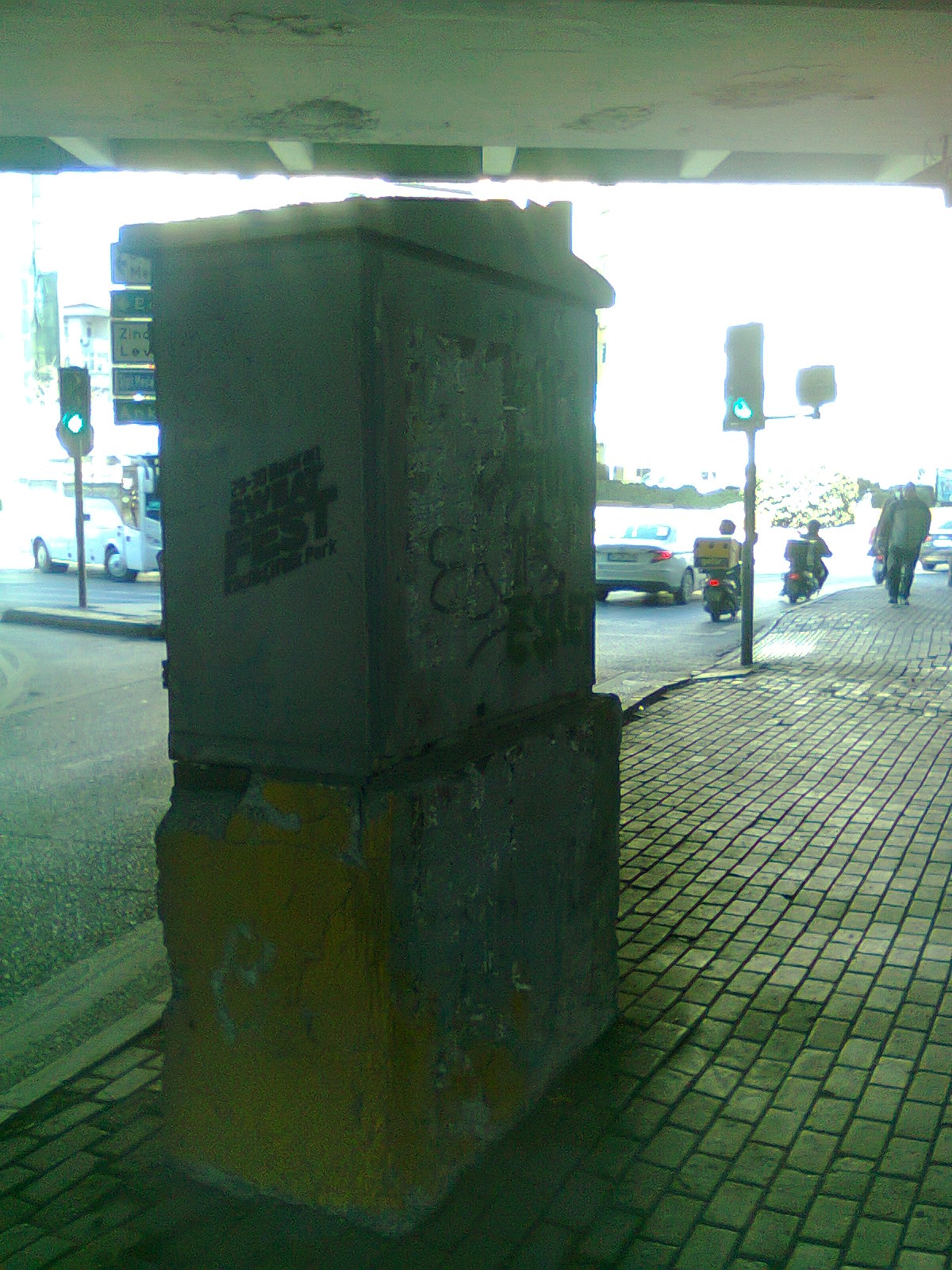
Just printing the vignette as poetry makes us pay attention in a certain way. Art is everywhere, if we know how to see it. The other day I was walking by an ugly old electrical box on the street, covered with remains of old posters, and I thought it could be spruced up with a small brass plaque, as if it were a sculpture.

Resurrection

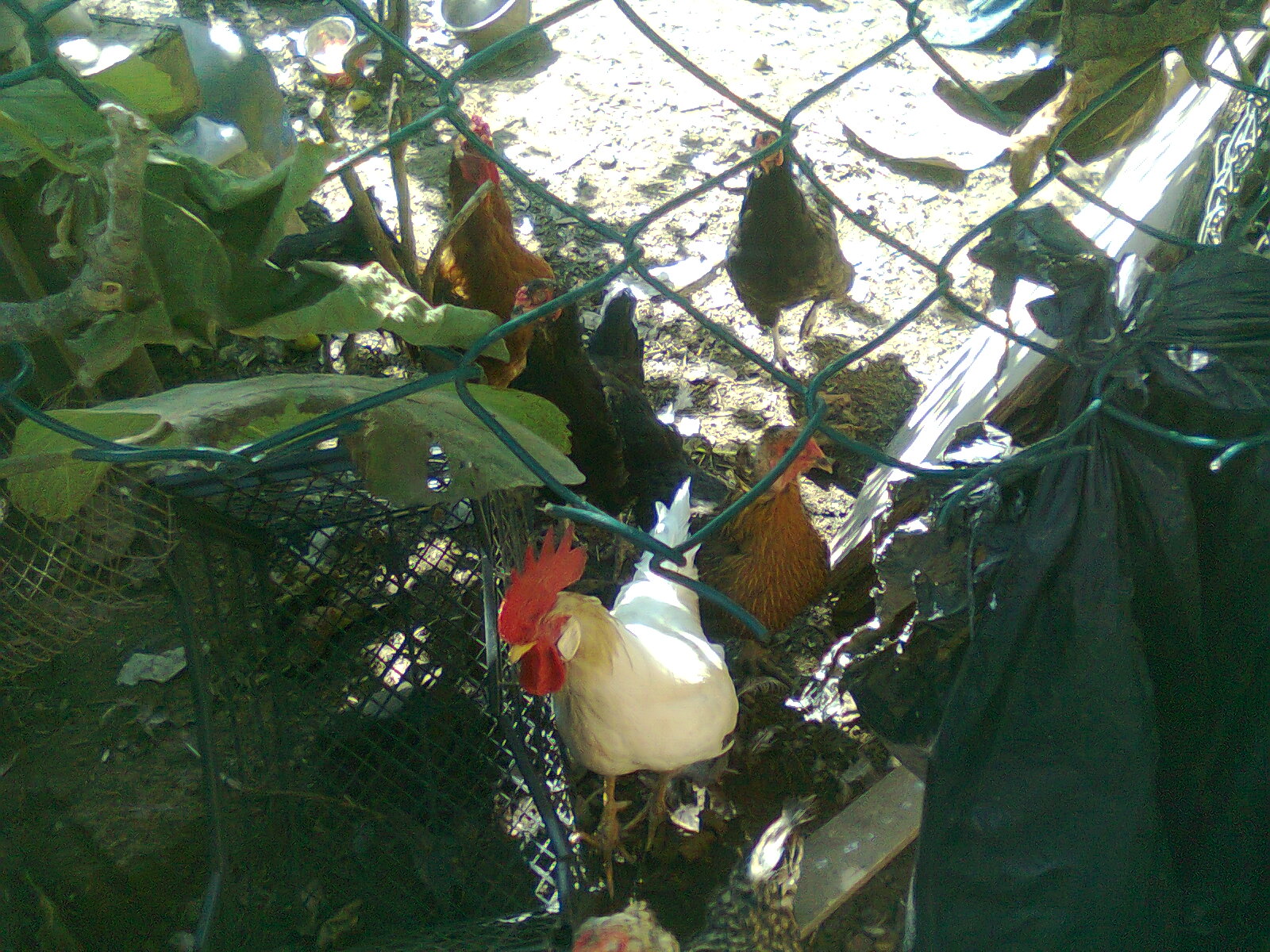
White rooster, brown chickens, behind a chain-link fence
From a walk around the neighborhood
Tarabya, Istanbul, Wednesday, October 9, 2024

There were a couple of tweets on the eve of Easter:

Just a reminder to make sure that you preach a doctrine of the resurrection tomorrow that is not reducible to that of the old IWW song “Joe Hill”


It’s a good song! I find it moving! But if that’s all we have to say about the resurrection (and I have heard many sermons that suggest that it is) – well, we should all be doing something else with our lives.

Fortunately, of course, it’s not all we have to say.

Continue reading

Motivated Reasoning in the Cyropaedia of Xenophon

The son of the king of Persia wants to press the advantage, after the combined forces of Media, Persia, Armenia, and Chaldaea have

  • killed the Assyrian king, along with most of his best men, and
  • driven the rest of the Assyrian army from their fortifications.

The king of Media is of another mind: he would rather quit while he is ahead. He has an argument for standing pat, by the account of Xenophon in the Cyropaedia (IV.i.11–18).

One may consider the argument of Cyaxares as an example of “motivated reasoning.” I think it is a specious argument: attractive, but ultimately unsound. Perhaps I say that, only because the king’s nephew Cyrus rejects the argument, but is nonetheless successful in what he goes on to do. With his Persian troops and as many Medians as wish to join them, along with the Hyrcanians, who have defected from Assyria, Cyrus pursues and defeats again the Assyrian army. He kills the kings of Cappadocia and Arabia, and he puts to flight both the king of Phrygia and Croesus, king of Lydia (IV.ii.28–31). Of course, this is not the end of the story; history never ends.

I have been reading and discussing the eight books of the Cyropaedia with a Catherine Project group, at the rate of half a book a week, since July 8 of this year (2024). Thus we shall have completed the sixth book (called “On the Eve of the Great Battle” in the Loeb edition) on September 23. It has astonished me that some of my fellow readers think well of the argument for taking it easy, even as they acknowledge that the man who makes it may be a fool. The argument does not seem to me like one that a king such as Cyaxares can afford to make.

Possibly Xenophon has an esoteric message, as Plato is thought to have. However, although these two writers had a common teacher in Socrates, he never went far from Athens. Xenophon helped lead a stranded army of ten thousand Greek mercenaries, from Babylon north to the Black Sea, after the failure of the coup for which they had been hired by Cyrus the Younger. Xenophon admires a practical man who can actually get things done. This being what Cyrus the Elder is, he is the hero of the Cyropaedia. I shall review my textual reasons for saying this. First I shall look at “motivated reasoning” today, along with the idea that we could have “evolved” to use it. (In short, the rest of this post has the three parts just linked to.)

Pine bough above; bushes below; blue sky, sparkling water, and sand in between

Photo taken September 17, 2024, of Lesbos over the sea, from a beach in Lydia. Of this country, Chrysantas says to Cyrus, after the latter has pursued the Assyrians over the objections of his uncle Cyaxares (Cyropaedia VI.ii.21),

since it now appears that Syria is not to be the only prize – though there is much to be got in Syria, flocks and herds and corn and palm-trees yielding fruit – but Lydia as well, Lydia the land of wine and oil and fig-trees, Lydia, to whose shores the sea brings more good things than eyes can feast on, I say that once we realise this we can mope no longer, our spirits will rise apace, and we shall hasten to lay our hands on the Lydian wealth without delay.

This is in response to the suggestion of Cyrus that his army are intimidated by the alliance that Assyria has formed with Lydia.

Continue reading

On The Human Condition of Hannah Arendt

It could have been nice to live in a world where spending time and energy on playing chess did not seem like an unconscionable luxury.

Above, a sky partly filled with dark clouds, between which are patches of white and pink from a sun recently set behind distant mountains; below, separated by a triangle of sea, is a beach where, sitting on chairs facing west, two figures, male and female, lower their heads to contemplate glowing screens
Is it a luxury to be able to ignore the setting sun over Lesbos
in order to look at your mobile?
Photo taken September 1, 2024
on the coast of what used to be part of Lydia

I used to play chess, until I figured that when I wanted to think mathematically, there were better ways to do it.

Continue reading

Tests

This post concerns different kinds of knowledge, as for example of Achilles, or Cyrus the Great, or even oneself.

According to the last sentence of the “Findings” column in Harper’s for June, 2023,

Researchers developed a blood test for anxiety, which was found to underlie the joy of missing out.

Those researchers need a weatherman to tell which way the wind blows.

Similar research is reported in the Guardian Weekly for 9 September, 2022. The article is called “‘I’m glowing’: How an app is helping us measure the joy of trees.” The app in question does not detect your joy in the woods; it gives you a way to record your own self-assessment for later study. However, writes Patrick Barkham,

several studies suggest that more biodiversity has a bigger boost on people’s mental health, while the recording of brain activity in response to forest density found a more relaxed state and reduced tension and fatigue in forests with a lower density of trees.

Are you going to need a brain scan to tell if you are chilling out? Other people may relax among a few trees; does that mean you will?

My grandfather Kenneth Crawford described his own grandparents’ house in Wisconsin as being

innocent of plumbing, central heat or telephone. But the proportions were good and it was set in a grove of assorted trees.

I wish he had named some of the trees in the assortment. Right now I’ve got doves cooing in the umbrella pines overhead. Beneath these are oleanders and laurels and pomegranate trees.

Pine trunk next to leaves and needles of other trees; white wall below

Continue reading

Equality

Amity is equality, as Rackham translates it:

ΦΙΛΟΤΗΣ ΙΣΟΤΗΣ.

That’s what they say, anyway (§ v.5). Aristotle only refines it (§ viii.5):

ἡ δ᾽ ἰσότης καὶ ὁμοιότης φιλότης.
equality and similarity is amity.

Of eight readings on amity, or friendship, or love, or philia, we are in our second, comprising chapters v–viii of Book VIII of the Nicomachean Ethics.

Sun through mist above, reflection in water below, boats in between
Tarabya Marina
Sunday, March 10, 2024

Continue reading

Affiliation

Friendship is natural to most animals, especially human beings, and that’s why we praise the philanthropist. You will see, if you travel, that all of us are family and even friends.

Something like that is what Aristotle says, in this first of eight readings on friendship. I have trouble imagining where the Philosopher is going to go with his subject; or perhaps I am troubled to imagine what may be in store.

Blurry white disk in a gray sky above black, bird-shaped dots in the highest branches of the foremost of a line of bare trees; several human silouettes below
Crows in a tree
in the morning mist by the Bosphorus
Kireçburnu, Sarıyer, İstanbul
Sunday, March 10, 2024

Continue reading

Tulips of Istanbul

This post about flowers on the Bosphorus originated in 2015, when I created it as a webpage on my part of my department’s website. A follow-up the next year did become a blog post, “Early Tulips.” Since we moved to Sarıyer in 2022, it turns out we can walk to the Emirgan Korusu in an hour. This is

  • what I have done a couple of times in the last week,
  • why I put this old post here, below the following new photos, from Saturday, February 24, 2024 (made with my old mobile, unlike the old photos!).


I started out in Atatürk City Forest, following the trails down to the lake


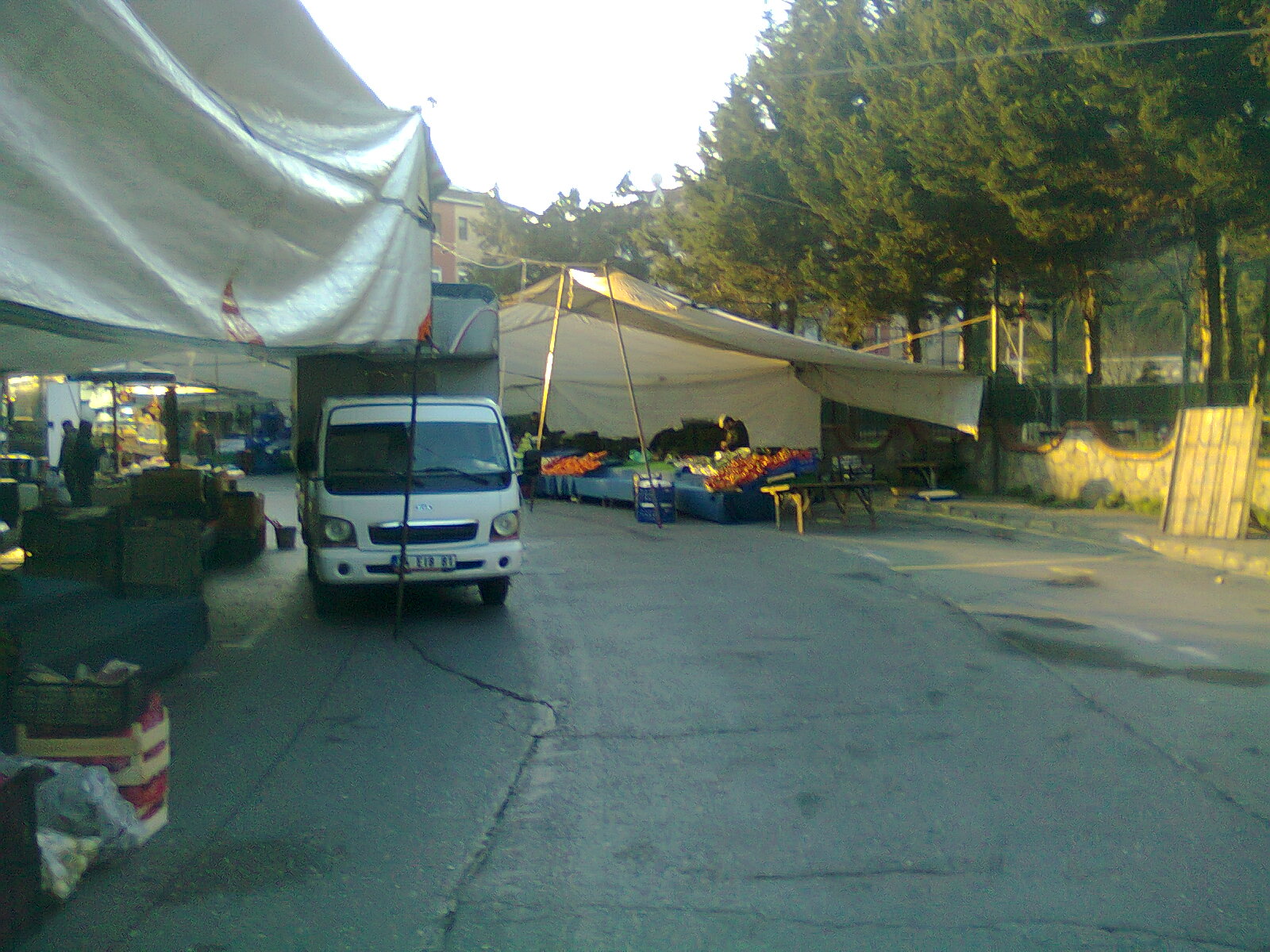
On Saturdays, the old road through the stream valley below the lake hosts a bazaar

Continue reading