Category Archives: Poetry

Homicide

I understand homicide to be the killing of a human being, be it in murder, warfare, punishment, accident, euthanasia, or suicide.


Sculpture of seated female nude, from the front, head turned left, arms draped over raised left knee, right leg crossing underneath

Sculpture by Iraida Barry (born 1899, Sevastopol; died 1981, Istanbul) at the Istanbul Museum of Painting and Sculpture, connected with Mimar Sinan Fine Arts University (where I have been working); visited December 2, 2025


Continue reading

Reading and Talking

Reading a book as if it had “no introduction, no notes, no aids or guides, no nothing but the naked text” (as William Deresiewicz puts it): such a reading seemed to need a defense. Here is my elaborate one, which seemed in the end to fall into nine sections as summarized below.

Let me note first that searching on “ahistorical reading” led me to a textbook chapter called “What Is Ahistorical Reading?” (in Intro to Poetry, by Alan Lindsay and Candace Bergstrom). The chapter seems to say well what every high-school graduate ought to know, though unfortunately they may not in fact. If you don’t want to slog through what I wrote, read that.

1. Some Novels and Novelists.
These may be read in school or for pleasure – mine, or that of writer and blogger Hai Di Nguyen. There can be epics such as War and Peace, Moby-Dick, and Zen and the Art of Motorcycle Maintenance. George Steiner finds the last two comparable. There can be an unreliable narrator.
2. Reading Comprehension.
This may be challenged by some poetry, such as Wordsworth’s, and annotations may not help.
3. Reading Without Preconceptions.
St John’s College accustomed me to this.
4. Reading Groups.
There are many that (thanks to the Catherine Project) I have been able to join and enjoy, all pursued in the St-John’s way as I understand it.
5. Story.
Mythos or logos. We inevitably tell it in our own words (unless perhaps somebody else has fed us the words).
6. Giving What Is Wanted.
“Ask me no questions, and I’ll tell you no fibs.” (To Goldsmith’s comedy She Stoops to Conquer, the saying is traced by Grammarist, which however has “lies” for “fibs”; Wikipedia currently repeats this apparent misquotation, citing Grammarist.) People are trained now to give most of their attention to their mobiles; in school we may be trained to supply what teachers want to hear.
7. Historicism.
I continue not to understand the objection of Leo Strauss to the “historicism” of R. G. Collingwood, but I agree with such ahistorical reading as is practiced at St John’s and was defended in my day (as I recall) by Strauss’s student and my teacher, David Bolotin.
8. The Classics.
There is something to be said for being assigned to read what one might not otherwise. My example is John Donne.
9. Re-Enactment.
Collingwood came to understand history as the re-enactment of thought, but this can be misunderstood, either when reading a poet such as John Donne, or when thinking of a certain major general who happened to read poetry while getting ready for battle.

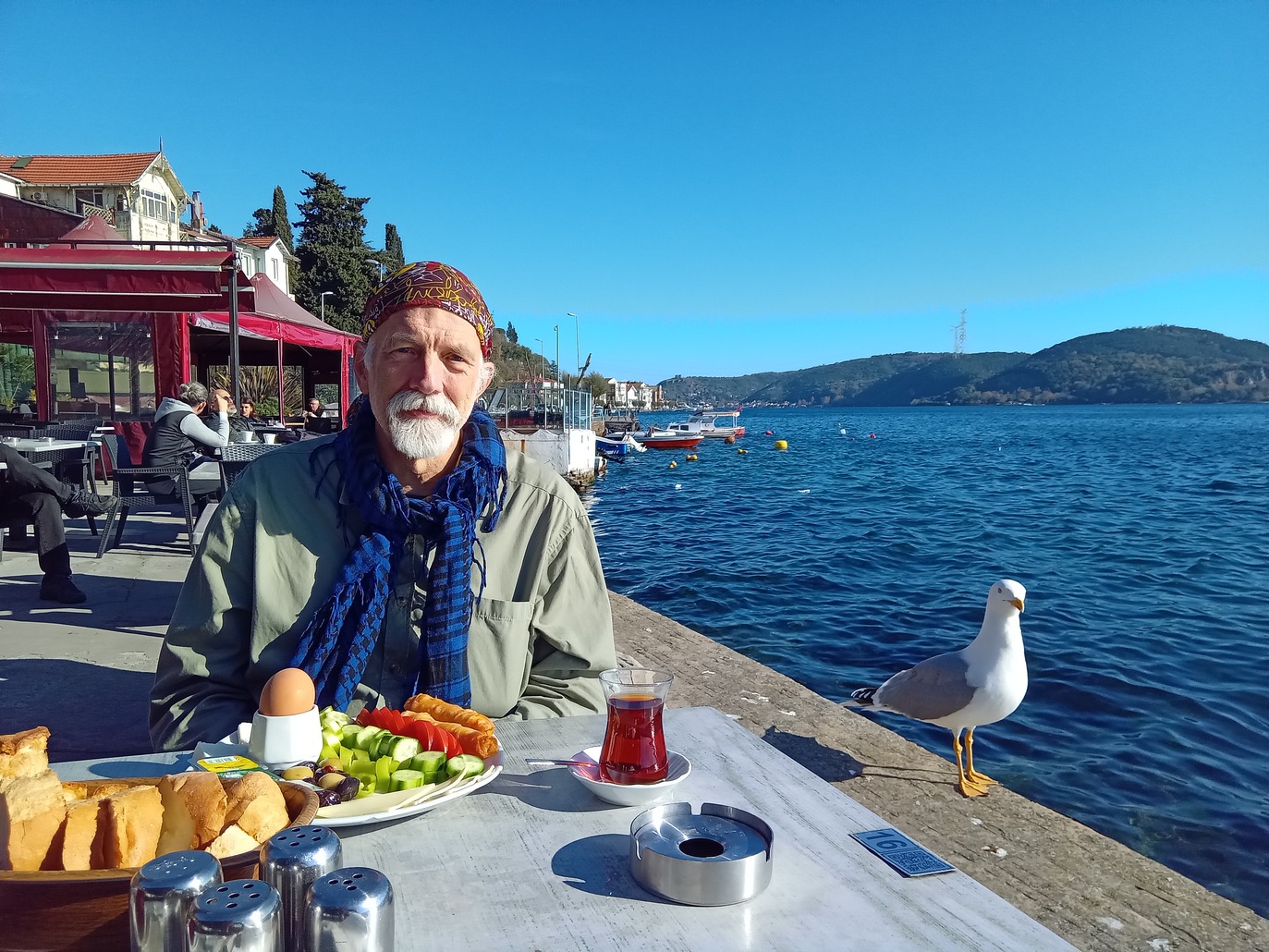
Seaside on a sunny day. Seagull, and human with tea and breakfast plate in front of him

Beyazpark Liseliler Kafe
Sarıyer, Istanbul
November 25, 2025

Continue reading

Motion and Rest

This is mostly about Goethe’s Faust, but it was not going to be. Faust says he never wants to sit still. It doesn’t seem like a great idea.

Parthenon

Athens, Monday, July 10, 2017

If, as Wikipedia now mentions, and John Warner discusses in the fittingly titled “That’s Not What Lolita Is About” (November 16, 2025) – if Elisa New recommended that Jeffrey Epstein read Lolita (which I have read) and My Antonia (which I haven’t), why not Faust?

Continue reading

Reading and Writing

Suppose you are reading a book of poetry; it could be the one published anonymously, in 1798, as Lyrical Ballads, With a Few Other Poems. You have somehow accepted that the book is worth reading. Do you care about any of the following?

  1. What is or is not on the title page.
  2. What is in the Advertisement that precedes the poems themselves.
  3. What order the poems were printed in.
  4. What meter or rhyme scheme they have.
  5. What was happening in the world in the year of publication.

You may care. You should not feel that you ought to care, if you are reading the poems in school.

That is the thesis of this post. I have learned that it may not be accepted.

I would seem to be defending the practice that I learned as an undergraduate at St John’s College. However, most of that defense will come in a later post. I drafted it earlier, but then it seemed as if there was a lot more to say, or acknowledge, or recognize. That more is here.


Three bananas, mostly black with some white foam, lie on paper bags on a counter among assorted jars

Would you accept a black banana? We learned this year (on Monday, September 22, 2025) that leaving bananas at home for a month need not be a disaster (except for not getting to eat the bananas)

Continue reading

Craft and Craftiness

Craft is what in Greek is τέχνη: skill. One can refer to technical skill, for emphasis, or to allude to the Greek word; however, perhaps there is no skill that is not technical, and nothing technical that is not related to a skill. In that case, “technical” is just an adjective form of “skill,” and the phrase “technical skill” is a kind of polyptoton. (See footnote 1.)

In the translation by David Grene of the Philoctetes of Sophocles, “craft” is used in the pejorative sense of craftiness. The Greek is δόλος, not τέχνη; however, the latter too can have the same pejorative sense.

Books referred to here: (1) Sophocles II; (2) Sophoclis Fabulae; (3) Sophocles’ Dramas; (4) Goethe’s Faust; (5) A Dictionary of Modern English Usage, second edition; (6) Modern English Usage. In each row of three, the first book is paperback; the second, hardback with jacket; the third, hardback without jacket, but tilted so the spine can be read

Continue reading

Courage

Below is my essay on courage, first drafted in April of last year (2024). A reason to think of it now is a recent pair of essays, coming from the United States:

The latter takes up all of the virtues that Socrates does.

Plato didn’t get everything right, but he remains one of the most widely studied philosophers in western history for a reason. In Book IV of The Republic, he discusses the four cardinal virtues. Hope didn’t make the list.

Here they are:

  • Wisdom (or prudence)
  • Self-control (or temperance)
  • Fairness (or justice)
  • Fortitude (or courage)

These four virtues feed a healthy society. We’re supposed to teach them to our young and practice them every day. Hope stems from an insufficient knowledge about the world, but fortitude grows out of wisdom.

We’re long on hope, but short on fortitude.

It would be good if we had more fortitude. As Wildfire writes more recently, in “Fighting Fascism at The End of The World: What nobody wants to say” (August 20, 2025),

It’s gotten popular to tell people to physically throw themselves in front of ICE agents to stop arrests. Allow me to pose a rude question: If someone won’t even wear a piece of cloth on their face for a few hours a day, are they going to get thrown in jail to protect someone they don’t even know?

For Aristotle at least, there is a distinction between the two qualities that could be meant by fortitude and courage respectively. The distinction is a theme of my own essay below.

Aristotle, Nichomachean Ethics, Crisp translation; behind it calm water, with wooded bluffs dotted with houses beyond

Aristotle, Nicomachean Ethics
Tuesday, July 11, 2023
I usually read Rackham’s translation in the Loeb edition
sometimes along the Bosphorus, as here

Continue reading

Visibility

I was nine when I first read the following, and I read it many times after that:

Book opened to the quoted text. In the drawing on the left page, workers are fitting glass between tall mullions. On the right, an octagonal maze in the floor

While the windows were being installed, plasterers covered the underside of the vault and painted red lines on it to give the impression that all the stones of the web were exactly the same size. They were eager for the web to appear perfect even if no one could see the lines from the ground.

Continue reading

Found Poetry

This is adapted from emails I wrote in 2022 (on February 10 and July 16 and 17). I post them now, because I have been updating the “Directory” of documents that I have saved on this blog, other than as posts. I could not remember why I had saved an “Annotation” from Harper’s, until I found the reason below. I take up poetry by T. S. Eliot, E. McKim, and Robinson Jeffers, in addition to the one I first quote.


An email friend shared a poem called “Merrymakers” (from “Four Poems,” London Review of Books, 9 May 2013), by Charles Simic:

A troop of late night revellers,
most likely shown the door
at some after-hours club
or a party in the neighbourhood,
still whooping it up
as they stagger down the street
with a girl in a wedding dress
walking pigeon-toed far behind them,
and calling out in distress:
‘Hey, you! Where the fuck
do you think you’re going?’

The poets sets us up, sort of the way young Eliot does in “Prufrock”:

Let us go then, you and I,
When the evening is spread out against the sky
Like a patient etherised upon a table …

The shock from Simic is not in image, but in meter, which one might have expected to continue iambically:

A troop of late night revellers,
  most likely shown the door
at some old after-hours club,
  continued with their roar,
forgetting sensibilities …

As it is, the poem gets prosy. The lines are pretty much just units of speech, “end-stopped,” never “emjambed,” at least until the end.

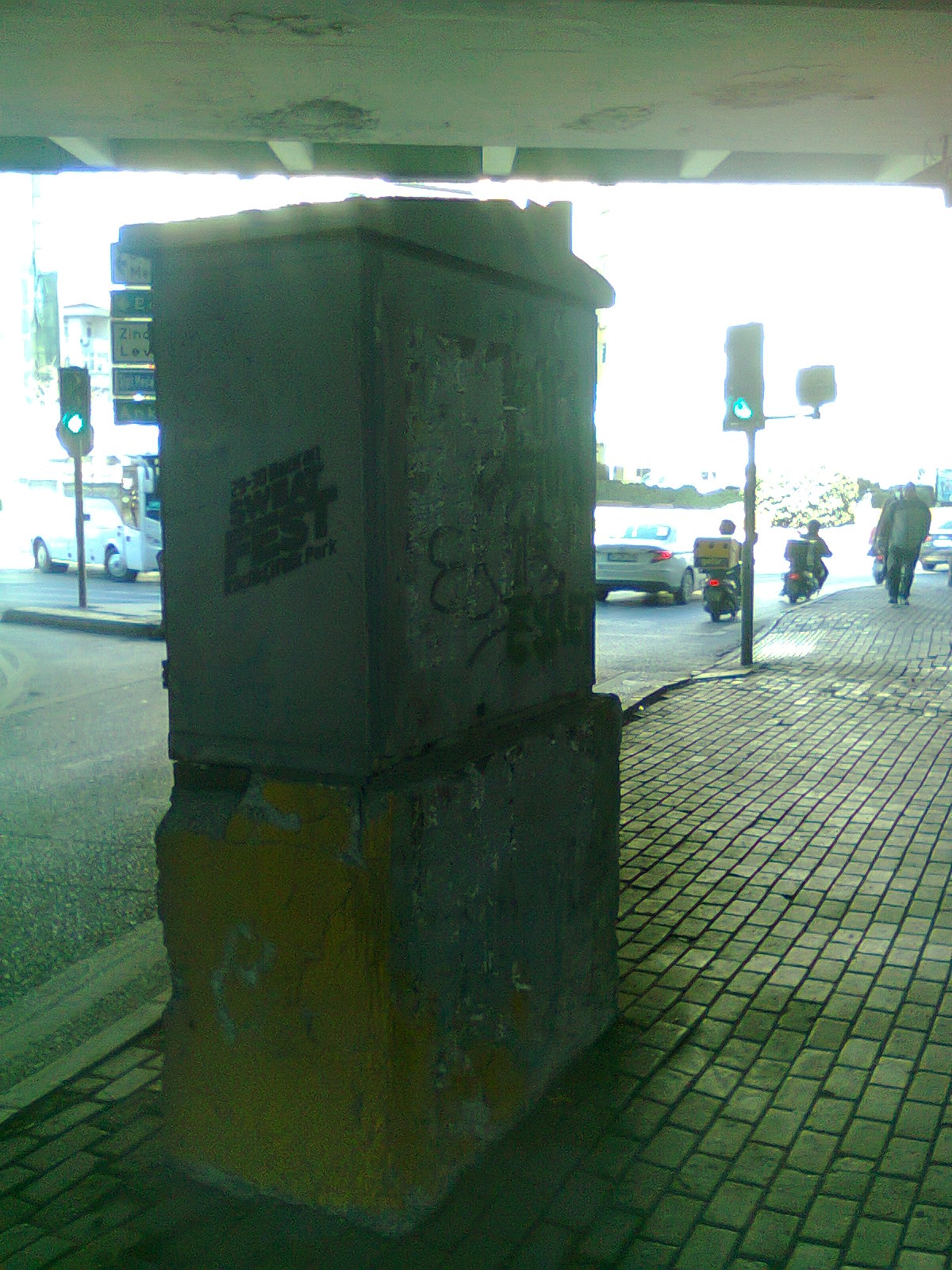
Just printing the vignette as poetry makes us pay attention in a certain way. Art is everywhere, if we know how to see it. The other day I was walking by an ugly old electrical box on the street, covered with remains of old posters, and I thought it could be spruced up with a small brass plaque, as if it were a sculpture.

On The Human Condition of Hannah Arendt

It could have been nice to live in a world where spending time and energy on playing chess did not seem like an unconscionable luxury.

Above, a sky partly filled with dark clouds, between which are patches of white and pink from a sun recently set behind distant mountains; below, separated by a triangle of sea, is a beach where, sitting on chairs facing west, two figures, male and female, lower their heads to contemplate glowing screens
Is it a luxury to be able to ignore the setting sun over Lesbos
in order to look at your mobile?
Photo taken September 1, 2024
on the coast of what used to be part of Lydia

I used to play chess, until I figured that when I wanted to think mathematically, there were better ways to do it.

Continue reading

Tests

This post concerns different kinds of knowledge, as for example of Achilles, or Cyrus the Great, or even oneself.

According to the last sentence of the “Findings” column in Harper’s for June, 2023,

Researchers developed a blood test for anxiety, which was found to underlie the joy of missing out.

Those researchers need a weatherman to tell which way the wind blows.

Similar research is reported in the Guardian Weekly for 9 September, 2022. The article is called “‘I’m glowing’: How an app is helping us measure the joy of trees.” The app in question does not detect your joy in the woods; it gives you a way to record your own self-assessment for later study. However, writes Patrick Barkham,

several studies suggest that more biodiversity has a bigger boost on people’s mental health, while the recording of brain activity in response to forest density found a more relaxed state and reduced tension and fatigue in forests with a lower density of trees.

Are you going to need a brain scan to tell if you are chilling out? Other people may relax among a few trees; does that mean you will?

My grandfather Kenneth Crawford described his own grandparents’ house in Wisconsin as being

innocent of plumbing, central heat or telephone. But the proportions were good and it was set in a grove of assorted trees.

I wish he had named some of the trees in the assortment. Right now I’ve got doves cooing in the umbrella pines overhead. Beneath these are oleanders and laurels and pomegranate trees.

Pine trunk next to leaves and needles of other trees; white wall below

Continue reading