Category Archives: Homer

On Chapman’s Homer’s Iliad, Book IX

Index to this series | Text of Chapman’s Homer’s Iliad

Note added August 25; edited and augmented, August 27; 2024: In my view, the key events of the Iliad are Achilles’s holding back from

  1. killing Agamemnon in Book I;
  2. fighting on Agamemnon’s side in Book IX.

The latter case of self-restraint may be a disaster for Achilles, not to mention Patroclus and the other Greeks who die as a result; but it is also somehow a result of the former case. Not killing on impulse is probably a good thing; otherwise you have the situation of Njal’s Saga, which I took up in writing “On Homer’s Iliad Book I” (November 29, 2022).

Continue reading

On Chapman’s Homer’s Iliad, Book VIII

Index to this series | Text of Chapman’s Homer’s Iliad

In the eighth of the twenty-four books of the Iliad, the battle is even all morning, until Jove weighs out the fates of the two sides. The fate of the Greeks is heavier. They are driven back to the wall around their ships. Juno and Pallas try to help them, until warned off by Jove. The Trojans camp outside the Greek wall, lighting fires, at Hector’s command, so that they can see through the night whether the Greeks are trying to escape.

Sea sparkling in the sun
Altınova 2017.09.13

Continue reading

On Chapman’s Homer’s Iliad, Book VII

Index to this series | Text of Chapman’s Homer’s Iliad

On the recommendation of his brother Helenus, Hector invites any one of the Greeks to single combat – as his brother Paris did, though this is not recollected. The proposed combat will not resolve the war, but may remove from one side, by death, its best man. No Greek takes the challenge until Menelaus offers to. Agamemnon stops him, since he is not good enough. Nestor chides the Greeks, recalling how he once took the challenge of fighting Ereuthalion and won. Nine Greeks now come forward. A lot being picked from Agamemnon’s helmet, Ajax Telemon recognizes it as his own. His combat with Hector ends not with death, but with night and exchange of gifts. In Troy, Paris rejects a suggestion that he return Helen to Menelaus, but he is willing to return her property, and more. This offer is rejected, but not an offer of a truce for burial of the dead. The Greeks build a wall around their burial site and themselves, offending Neptune by not making due sacrifices first. Jove says Neptune may raze the wall when the Greeks go back home. Meanwhile the Greeks enjoy wine purchased from a merchant fleet of Lemnos.

Continue reading

On Chapman’s Homer’s Iliad, Book VI

Index to this series | Text of Chapman’s Homer’s Iliad

Book VI of the Iliad may illustrate or test what I have also been reading, whose second title is Man, Society, Civilization and Barbarism. For the Greeks, the Trojan war is a fight for civilization, against the barbarism of stealing the wife of the man who has played host to you. In Book VI is the great exemplar of civilization: the meeting of Diomedes with Glaucus. Discovering that the grandfather of his Trojan enemy had once been a guest of his own grandfather, Diomedes urges that he and Glaucus must exchange gifts, be friends, and avoid meeting on the battlefield; and Glaucus agrees.


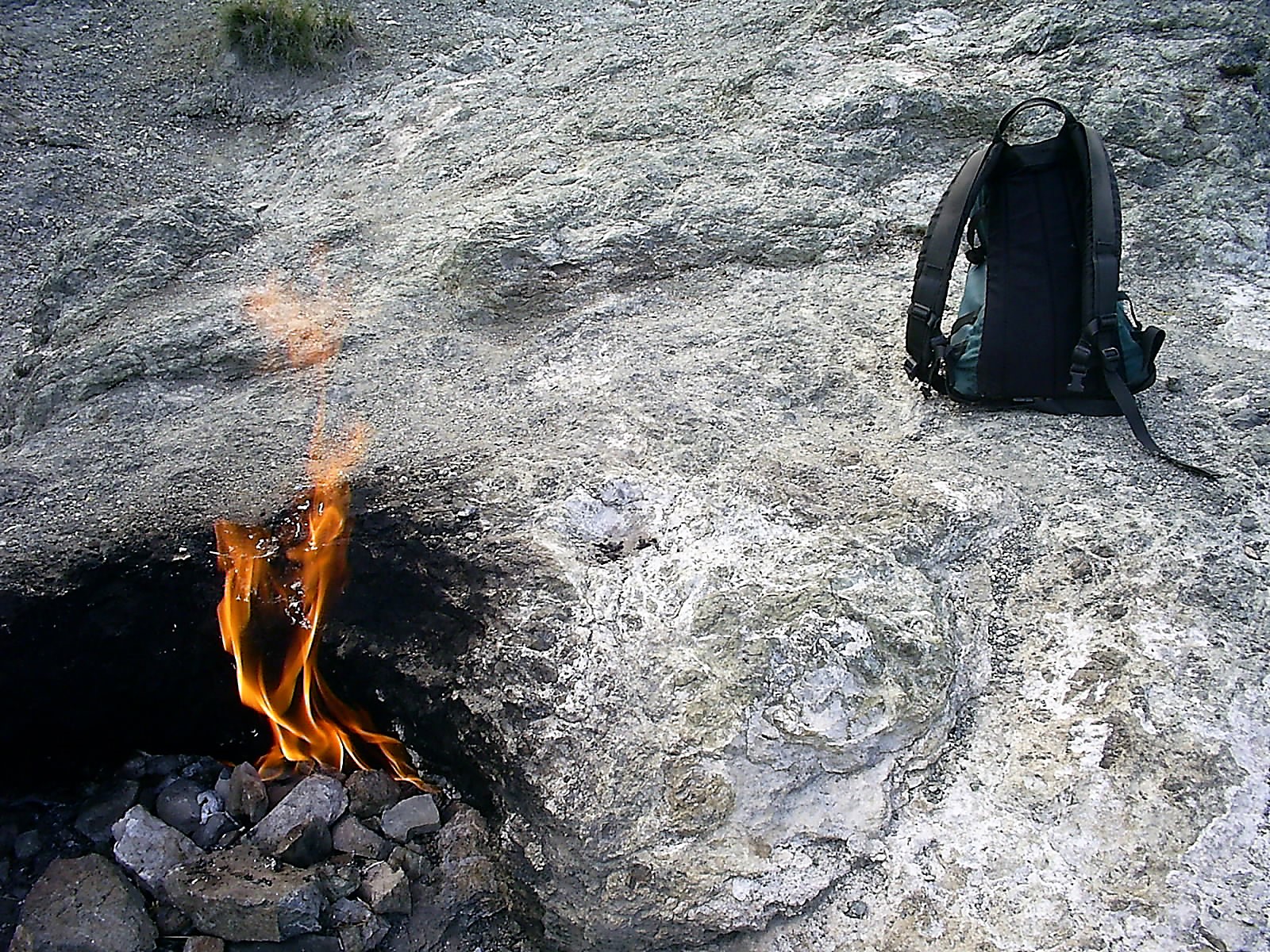
One flame of the Chimera, with my backpack, 2009

Continue reading

On Chapman’s Homer’s Iliad, Book V

Index to this series | Text of Chapman’s Homer’s Iliad

Book V of the Iliad is long and rich, with lots of characters like War and Peace, and stories within stories. The main story is of Tydeus’s son Diomedes, who with Pallas’s help is able to wound both Venus and Mars – I follow Chapman in using the Roman names.

  • Mars agrees with Minerva not to interfere with the war, but she immediately breaks the agreement.
  • A skilled hunter is successfully hunted down.
  • An oracle is mentioned that the Trojans should not go to sea; the master builder of Paris’s ships is slain.
  • A man who can read the future in dreams is bereft of the sons he let go to war.
  • An old man loses his only sons, the offspring of his old age.
  • Having broken the truce and shot Menelaus, Pandarus turns out to have left his horses in Lycia, because he didn’t think they would eat well in Troy.
  • The story is mentioned twice of the horses of Aeneas, offspring of the horses of Jove.
  • Pandarus thinks he cannot command the horses of Aeneas better than Aeneas.
  • Venus is not the first deity to have been injured by a mortal, and her mother Dione advises patience.
  • “He that fights with heaven hath never long to live,” or perhaps to have a faithful wife, she says.
  • She can cure a wound without balm.
  • “The race of gods is far above men creeping here below,” says Apollo to Diomedes.
  • Sarpedon discusses justice and sets an example of it.
  • “Strength is but strength of will,” says Agamemnon.
  • To have self-confidence may be good, but not to tempt fate.
  • Pallas has a theory of just war.

Continue reading

On Chapman’s Homer’s Iliad, Book IV

Index | Text

The gods confer. The humans can make war or peace; which shall it be? Juno insists on war, so that Troy can be punished. When Jove objects, Juno offers up her most beloved Greek cities in return.

  • Mycenae,
  • Argos,
  • Sparta

– let Jove destroy them at will, if only Pallas be sent to induce one of the Trojans to break the truce.

Dog in the square shadow of an umbrella on a beach where there are other umbrellas, but no humans
Altınova (Golden Plain), Balıkesir (Paleocastron), 2017.08.31

Continue reading

On Chapman’s Homer’s Iliad, Book III

Index | Text

The Iliad is about the feud between Achilles and Agamemnon, a feud that occurs during the Trojan War. Book III of the Iliad has nothing to do with Achilles, a little to do with Agamemnon, and everything to do with why the whole war is happening at all.

Note added August 19, 2024: The war is happening because Paris is God’s gift to women. By his own account, he is excellent in the “gifts of peace,” and these are “as little to be scorn’d, / As to be wonne with strength, wealth, state …” It is good to recognize that some things cannot be obtained by “strength” or force. Achilles recognizes this in Book I when he refrains from killing Agamemnon. However, Paris scorns not only strength, but also wealth and state. I suppose it is “state” that lets Hector and Agamemnon come to an agreement about a duel between Paris and Menelaus that will end the war. Paris breaks the agreement by running away to visit the prize of his excellence, namely Helen. Homer has Venus spirit Paris away, but I take this to be a poetic embellishment, agreeing with Eva Brann in Homeric Moments: Clues to Delight in Reading the Odyssey and the Iliad (Paul Dry Books, 2002; pages 41–3):

But the gods’ face-off effects nothing; at least nothing happens that could not happen without them. And so it is always; Zeus himself disclaims responsibility for human fate right at the beginning of the Odyssey


To be sure, as I said above, nothing is ever done that could not have been done by the humans themselves …

Photo of the tower of books used for this article

Continue reading

On Chapman’s Homer’s Iliad, Book II

Index | Text

Even gods must sleep; but under the weight of his responsibility to Thetis, Zeus cannot. As Achilles pointed out in Book I, “dreams are often sent from Jove”; now we shall have a case in point (Chapman’s lines 4–7).

… Al waies cast; this coūsel seru’d his mind
With most allowance: to dispatch, a harmefull dreame to greet
The king of men; and gaue this charge: Go, to the Achiue fleet,
(Pernicious dreame) …

Continue reading

On Chapman’s Homer’s Iliad, Book I

This post, originally of April 14, 2017, is the first of twenty-four, one on each book of Homer’s Iliad in Chapman’s translation.

A later series began on November 29, 2022. Again there was a post on each book of the Iliad, but now I was reading Murray’s translation in the Loeb Classical Library.

Achilles banefull wrath” is to be resounded by the Goddess, whom the poet invokes.

Strife between Achilles and Agamemnon is the story of the Iliad. It begins with Apollo, who has plagued the Greek army.

Homer denies no human responsibility. Apollo has plagued the army, because Agamemnon insists on keeping a man’s daughter as his slave. The woman’s father is a priest of Apollo called Chryses; we shall come to know the daughter’s name only as Chryseis. She has been taken in a Greek raid on her home town, which will be called Chrysa. We shall hear more about the raid later in Book I, when Achilles tells the story to his mother.

Thus Homer’s narrative is not sequential. In a technique that will become standard in literature, we start in medias res.

Continue reading

Homer for the Civilian

The sources of this essay (originally posted April 8, 2017) are an earlier one, written as an email in 2009, and a conversation that ensued it, on the theme of what Homer may mean in one’s life, and whether an application to one’s life involves an abuse of the original text. I wrote on this blog, in July 2016, on analogies in Homer and elsewhere, in “Thinking & Feeling.” My last post considered an apparent instance of abuse of the Hebrew Bible.

At the end of the Iliad, to retrieve the body of Hector from its killer, King Priam of Troy visits Achilles in his tent in the evening, in the camp of the hostile Greeks. The scene may recall two political enemies from the 1980s, President Ronald Reagan and Congressman Thomas O’Neill, Speaker of the House: these two were able to be on friendly terms “after 6 PM.”

Homer, Iliad, Wordworth edition
Aleksandr Andreevich Ivanov
“King Priam begging Achilles for the Return of Hector’s Body,” 1824
Tretyakov Gallery, Moscow

Continue reading