Category Archives: T. S. Eliot

Reading and Writing

Suppose you are reading a book of poetry; it could be the one published anonymously, in 1798, as Lyrical Ballads, With a Few Other Poems. You have somehow accepted that the book is worth reading. Do you care about any of the following?

  1. What is or is not on the title page.
  2. What is in the Advertisement that precedes the poems themselves.
  3. What order the poems were printed in.
  4. What meter or rhyme scheme they have.
  5. What was happening in the world in the year of publication.

You may care. You should not feel that you ought to care, if you are reading the poems in school.

That is the thesis of this post. I have learned that it may not be accepted.

I would seem to be defending the practice that I learned as an undergraduate at St John’s College. However, most of that defense will come in a later post. I drafted it earlier, but then it seemed as if there was a lot more to say, or acknowledge, or recognize. That more is here.


Three bananas, mostly black with some white foam, lie on paper bags on a counter among assorted jars

Would you accept a black banana? We learned this year (on Monday, September 22, 2025) that leaving bananas at home for a month need not be a disaster (except for not getting to eat the bananas)

Continue reading

Words (Iliad Book XX)

“The feeling of helplessness and humiliation in the face of an abuse of power is an awful one.” That’s what Achilles found out, back in Book I of the Iliad; however, the words themselves, dated April 11, 2023, are by Claire Berlinski. Her Agamemnon is Elon Musk.

Two cats sit facing one another on a narrow ledge below one window and above another
“And when they were come near, as they advanced one against the other, then first unto Aeneas spake swift-footed goodly Achilles: ‘Aeneas, wherefore hast thou sallied thus far forth from the throng to stand and face me?’ ” (Iliad 20.176–9)
Kireçburnu (“Lime Point”)
Κλειδὴς καὶ κλεῖθρα τοὺ Πόντου (“Lock and Key of the Pontus”)
Sarıyer, Istanbul
Sunday morning, March 26, 2023

Continue reading

Mind (Iliad Book XVII)

At the end of Book XVI of the Iliad, Hector

  • pulled his spear from the body of Patroclus,
  • took off in pursuit of Automedon, his victim’s charioteer, who was being drawn by Achilles’s immortal horses.

Around the mossy trunk of a plane tree, four chickens—two white, one brown, one black—scratch in the little dirt that has been left uncovered by the setts that pave a road through a settlement
Postacı Halil Sokağı (Street of Halil the Postman)
Tarabya (Θεραπειά), Sarıyer, Istanbul
Thursday morning, March 2, 2023

Continue reading

Anthropology of Mathematics

This essay was long when originally published; now, on November 30, 2019, I have made it longer, in an attempt to clarify some points.

The essay begins with two brief quotations, from Collingwood and Pirsig respectively, about what it takes to know people.

  • The Pirsig quote is from Lila, which is somewhat interesting as a novel, but naive about metaphysics; it might have benefited from an understanding of Collingwood’s Essay on Metaphysics.

  • A recent article by Ray Monk in Prospect seems to justify my interest in Collingwood; eventually I have a look at the article.

Ideas that come up along the way include the following.

  1. For C. S. Lewis, the reality of moral truth shows there is something beyond the scope of natural science.

  2. I say the same for mathematical truth.

  3. Truths we learn as children are open to question. In their educational childhoods, mathematicians have often learned wrongly the techniques of induction and recursion.

  4. The philosophical thesis of physicalism is of doubtful value.

  5. Mathematicians and philosophers who ape them (as in a particular definition of physicalism) use “iff” needlessly.

  6. A pair of mathematicians who use “iff” needlessly seem also to misunderstand induction and recursion.

  7. Their work is nonetheless admirable, like the famous expression of universal equality by the slave-driving Thomas Jefferson.

  8. Mathematical truth is discovered and confirmed by thought.

  9. Truth is a product of every kind of science; it is not an object of natural science.

  10. The distinction between thinking and feeling is a theme of Collingwood.

  11. In particular, thought is self-critical: it judges whether itself is going well.

  12. Students of mathematics must learn their right to judge what is correct, along with their responsibility to reach agreement with others about what is correct. I say this.

  13. Students of English must learn not only to judge their own work, but even that they can judge it. Pirsig says this.

  14. For Monk, Collingwood’s demise has meant Ryle’s rise: unfortunately so since, for one thing, Ryle has no interest in the past.

  15. In a metaphor developed by Matthew Arnold, Collingwood and Pirsig are two of my touchstones.

  16. Thoreau is another. He affects indifference to the past, but his real views are more subtle.

  17. According to Monk, Collingwood could have been a professional violinist; Ryle had “no ear for tunes.”

  18. For Collingwood, Victoria’s memorial to Albert was hideous; for Pirsig, Victorian America was the same.

  19. Again according to Monk, some persons might mistake Collingwood for Wittgenstein.

  20. My method of gathering together ideas, as outlined above, resembles Pirsig’s method, described in Lila, of collecting ideas on index cards.

  21. Our problems are not vague, but precise.


When Donald Trump won the 2016 U.S. Presidential election, which opinion polls had said he would lose, I wrote a post here called “How To Learn about People.” I thought for example that just calling people up and asking whom they would vote for was not a great way to learn about them, even if all you wanted to know was whom they would vote for. Why should people tell you the truth?

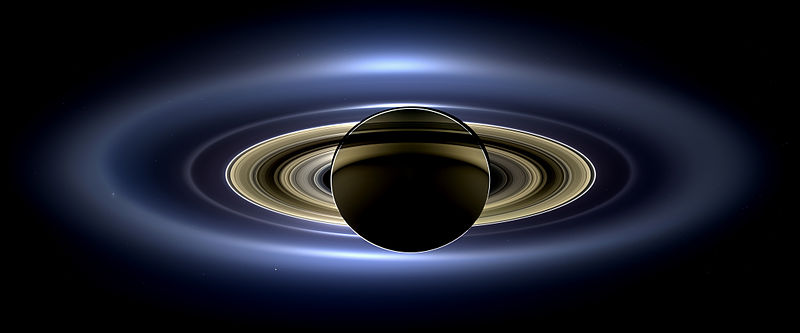
Saturn eclipse mosaic from Cassini

Continue reading

On Chapman’s Homer’s Iliad, Book XI

Index to this series | Text of Chapman’s Homer’s Iliad

After the active night of Book X comes the dawn of a thrilling day (lines 1 & 2).

AVrora, out of restfull bed, did from bright Tython rise,
To bring each deathlesse essence light, and vse, to mortall eyes.

The deathless essence called Jove sends Discord to the Greeks. She lights on the ship of Ulysses, in the middle of the fleet, so all can hear as she belts out her “Orthian song” (lines 13 & 14).

And presently was bitter warre, more sweet a thousand times
Then any choice in hollow keeles, to greet their natiu climes.

Continue reading

Re-enactment

Two whiteboards, one above the other, with geometrical diagrams and equations
My whiteboards from Tuesday, November 3, 2015,
concerning Pappus of Alexandria,
in the course “Geometriler


Executive summary (added October 6, 2018). Historian Niall Ferguson praises Collingwood as a philosopher of history, while showing no sign of understanding Collingwood’s actual philosophy. This provokes me. My comments are in the following sections.

Continue reading

Effectiveness

Preface

First posted May 17, 2018, this essay concerns Eugene Wigner’s 1960 article “The Unreasonable Effectiveness of Mathematics in the Natural Sciences.” I wrote a lot, which I now propose to summarize by section. (The meditations also continue in the next article.)

  • Some things are miraculous. Among Wigner’s examples are

    • that mathematics is possible at all, and
    • that “regularities” in the physical world can be discovered, as by Galileo and Newton.

    For Wigner, we should be grateful for the undeserved gift of a mathematial formulation of the laws of physics. This makes no sense theologically – and here I agree with the character Larry Darrell in Somerset Maugham’s novel The Razor’s Edge. Wigner’s idea that our mathematical reasoning power has been brought to perfection makes no sense to me either.

  • Everything is miraculous. Here I agree with Collingwood in Religion and Philosophy. A miracle cannot be the breaking of a natural law, since such a thing cannot be broken. A great artist like Beethoven follows no rules in the first place, or makes them up as he goes along; and he is like God in this way.

  • Natural law. That it cannot be broken is part of the very concept of natural law. Quantum phenomena and the theory of relativity have not in fact been brought under a single law; for Wigner, it may not be possible.

  • Mystery. Not only can we not define miracles, but (as we should have observed in the first place) we cannot even say when they happen. If like Wigner we call something miraculous, this means it cleanses our own doors of perception, in the sense of William Blake.

  • Definitions. In his treatment of miracle in Religion and Philosophy, Collingwood shows the futility of trying to define a term when you are not sure how to use it. He makes this futility explicit in The Principles of Art. If we are going to think about the use of mathematics in natural science, this means we ought to be mathematician, natural scientist, and philosopher; and not just “natural scientist,” but physicist and biologist, since if mathematics is effective in physics, it would seem to be ineffective in biology.

  • Being a philosopher. We are all philosophers, in the sense that Maugham describes in the story “Appearance and Reality,” if only we think. All thought is for the sake of action. This does not mean that thought occurs separately from an action and is to be judged by the action. We may value “pure” thought, such as doing mathematics or making music or living the contemplative life of a monk. This however moves me to a give a thought to the disaster of contemporary politics.

  • Philosophizing about science. For present purposes, compart­ment­al­ization of knowledge is a problem. So is the dominance of analytic philosophy, for suggesting (as one cited person seems to think) that big problems can be broken into little ones and solved independently. In mathematics, students should learn their right to question somebody else’s solutions to problems. In philosophy, the problems themselves will be our own. Philosophy as such cannot decide what the problems of physics or biology are, though it may help to understand the “absolute presuppositions” that underlie the problems. Philosophers quâ metaphysicians cannot determine once for all what the general structure of the universe is. This does not mean they should do “experimental philosophy,” taking opinion polls about supposedly philosophical questions. What matters is not what people say, but what they mean and are trying to mean. As Collingwood observes, metaphysics is an historical science.

For more on the last points, see a more recent article, “Re-enactment.” (This Preface added June 3, 2018.)


I am writing from the Math Village, and here I happen to have read that Abraham Lincoln kept no known diary as such, but noted his thoughts on loose slips of paper. Admired because he “could simply sit down and write another of his eloquent public letters,”

Lincoln demurred. “I had it nearly all in there,” he said, pointing to an open desk drawer. “It was in disconnected thoughts, which I had jotted down from time to time on separate scraps of paper.” This was how he worked, the president explained. It was on such scraps of paper, accumulating over the years into a diaristic density, that Lincoln saved and assembled what he described to the visitor as his “best thoughts on the subject.”

Thus Ronald C. White, “Notes to Self,” Harper’s, February 2018. My own notes to self are normally in bound notebooks, and perhaps later in blog articles such as the present one, which is inspired by the 1960 article called “The Unreasonable Effectiveness of Mathematics in the Natural Sciences,” by Eugene Wigner.

Papers on a table with a view of trees and a distant hill between stone columns

Continue reading

The Tree of Life

My two recent courses at the Nesin Mathematics Village had a common theme. I want to describe the theme here, as simply as I can—I mean, by using as little technical knowledge of mathematics as I can. But I shall talk also about related poetry and philosophy, of T. S. Eliot and R. G. Collingwood respectively.


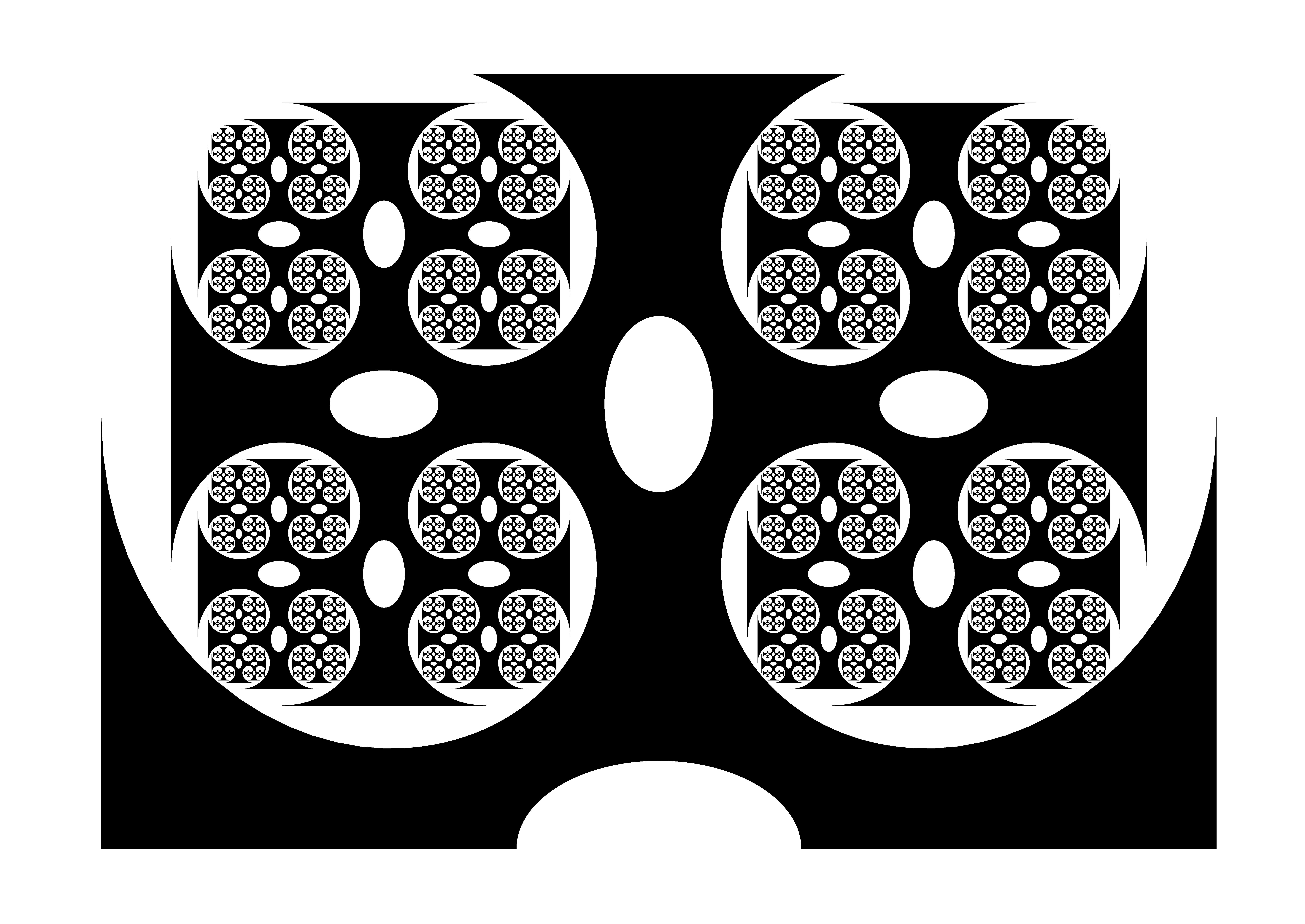
An elaborate binary tree, with spirals

Continue reading

NL VII: “Appetite”

Index to this series

How can we compare two states of mind? This is the question of Chapter VII of The New Leviathan. The answer is contained in the chapter’s title. “Appetite” is a name, both for the chapter and for the fundamental instance of comparing a here-and-now feeling with a “there-and-then” feeling. We compare these two feelings because we are unsatisfied with the former, but prefer the latter.

It would seem then that appetite is at the root of memory. Thus we are among the ideas of the opening verses of The Waste Land of T. S. Eliot, who attended Collingwood’s lectures on Aristotle’s De Anima at Oxford (and was just a year older):

Continue reading

NL V: “The Ambiguity of Feeling”

Index to this series

Feeling differs from thought. Thought is founded in feeling; thought is erected on feeling; thought needs feeling. Thought needs feelings that are strong enough to support it. But thought itself is not strong (or weak); it has (or can have) other properties, like precision and definiteness. Thought can be remembered and shared in a way that feeling cannot.

The New Leviathan is a work of thought. One might say that a work of thought cannot properly explain feeling. Collingwood himself says this, more or less, in Chapter V, even in its very title: “The Ambiguity of Feeling.” Continue reading