Category Archives: Harper’s

Harper’s Magazine

Some Say Poetry

In a poetry review, a remark on being a student has drawn my attention:

In My Poets, a work of autobiographical criticism with occasional ventriloquial interludes, McLane recalls two “early impasses in reading,” freshman-year encounters with Charles Olson and Frank O’Hara. She writes about not “getting it” but wanting to get it, about a desire to get it that was left wanting by code-breaking and analysis and satisfied by hearing and feeling.

This is from the second half of a “New Books” column by Christine Smallwood, in the Reviews section of Harper’s, July 2017. After quoting Smallwood’s review, I want to say something about learning and creating, in poetry and also in mathematics.

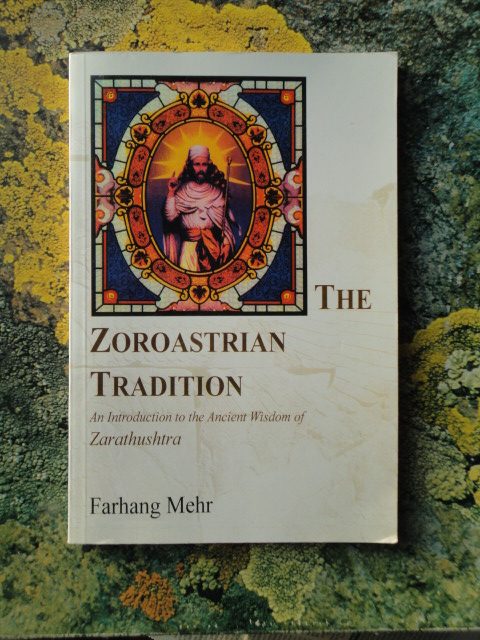
Potted palms with plaster farm animals on hillside behind
Kuzguncuk, 2017.11.05

Continue reading

Ahtamar Island

During a mathematics conference, I visit the ruins of a monastery on a remote island in an inland sea. This moves me to consider the relation between introversion and, if not mathematics, then monasticism. On the origins of Christian monasticism, I look at several sources, notably Gibbon (see the References); also Maugham, who writes of a hermit on an island of the Torres Strait. Since the monastery on the island was Armenian, in what is now Turkey, one should consider also the treatment of minority populations here. I only acknowledge the issue, suggesting Wikipedia pages (linked to presently) as a starting point for research. On this subject, old books on my shelves are not much help; my own experience is not much more help, at least not in a way that lends itself to being written of here. I do know that Turkish politicians will treat imputations of their own Armenian ancestry as an insult.


We visited Ahtamar Island for a second time on Wednesday, August 23, 2017. Thus we saw again the remains of the Church of the Holy Cross. This Armenian church was consecrated in 921 and presumably desecrated in 1915, if not earlier; now, since our last visit, though officially a museum, the church would seem to have been reconsecrated, to judge by the new altarpiece, featuring an icon of the Madonna and Child.

Madonna and child
Altarpiece, Church of the Holy Cross, Ahtamar Island

Continue reading

War and Talk

This is a foray into the mystery of how things happen, based the 164th of the 361 chapters of War and Peace. This chapter contains, in a one-sentence paragraph, a summary of Tolstoy’s theory of history:

Each man lives for himself, using his freedom to attain his personal aims, and feels with his whole being that he can now do or abstain from doing this or that action; but as soon as he has done it, that action performed at a certain moment in time becomes irrevocable and belongs to history, in which it has not a free but a predestined significance.

Continue reading

The Private, Unskilled One

I went into Istanbul’s Pandora Bookshop a month ago, looking for an English translation of War and Peace, since the Garnett translation I had read at college was falling apart. I was told the Oxford World’s Classics edition (with the Maude translation) was coming the next week, and it did come.

Elif Batuman, The Idiot, in Nesin Matematik Köyü, Kayser Dağı Mevkii, Şirince, Selçuk, İzmir, Turkey, 2017.05.18

Continue reading

Duty to Nature

Index to this series

Summary and update (added October 14, 2018): When we do something, or propose to do something, we may explain it or justify it—give a reason for it—as being useful, right, or dutiful. Such is the theory of Collingwood, analyzed here, especially with regard to a question that has increasing urgency: have we a duty, not only to one another, but to nature?

When I originally composed this post, in February of 2017, I had recently analyzed several relevant chapters of Collingwood’s New Leviathan:

Those chapters are the last in the book’s Part I, called “Man.” Collingwood returns to the same ideas in Part II, “Society,” and specifically in Chapter XXVIII, “The Forms of Political Action.” I went on analyze this chapter, 18 months later; it discusses an abuse of the concept of duty by the German political theorist Treitschke.

By one interpretation of a passage in Herodotus, the ancient Persians perceived a duty to nature, through a teaching now attributed to Zoroaster. His teachings influenced Manichaeism, and thus in turn the “Albigensian heresy,” the subject of Chapter XLIII of the New Leviathan.

A theme of Collingwood is that we tend to explain what happens in the world the way we explain what we ourselves do. If our ethics are utilitarian, then, like the ancient Greeks, we may see things in nature too as serving purposes. If we govern our own behavior by laws, then we may also seek laws of nature, as physicists do now.

Since utility and law are general in form, they provide incomplete accounts of exactly what we do. Utility tells us that some kind of thing is useful for some other kind; law keeps us within some bounds, but leaves us free within those bounds. By contrast, duty is to be conceived as providing a complete account of what we do. Conscience tells us that we have a duty; then we have to reason out what it is. The corresponding science of the world is history, which studies us as free agents. Collingwood does not describe a corresponding science of nature as such, at least not in the New Leviathan; but at the end of his first book, Religion and Philosophy, he concluded that everything that happened must be an act of will. This was in the chapter called “Miracle,” which I looked at especially in “Effectiveness.”

It may be hard to distinguish lawful action from dutiful action. In the present post, I look at the examples of

  • paying off a student loan;
  • smoking cigarettes, when rules restrict it;
  • collecting armaments, because, at the Last Supper, by the account in Luke, Jesus recommended buying swords;
  • Islam, as a rule-bound religion;
  • Christian denigrators of Islam, who find in it rules that they think believers must be bound by, even as some Muslims find inspiration in the teachings of Prophet Jesus.

I conclude with the example of an Episcopal priest called Stephen Blackmer, for whom nature is a church and a member of his congregation.


This is a synthesis of some ideas from a recent spate of posts in this blog. A theme is the question of why we do what we do, and whether we can change what we do, especially to Nature.
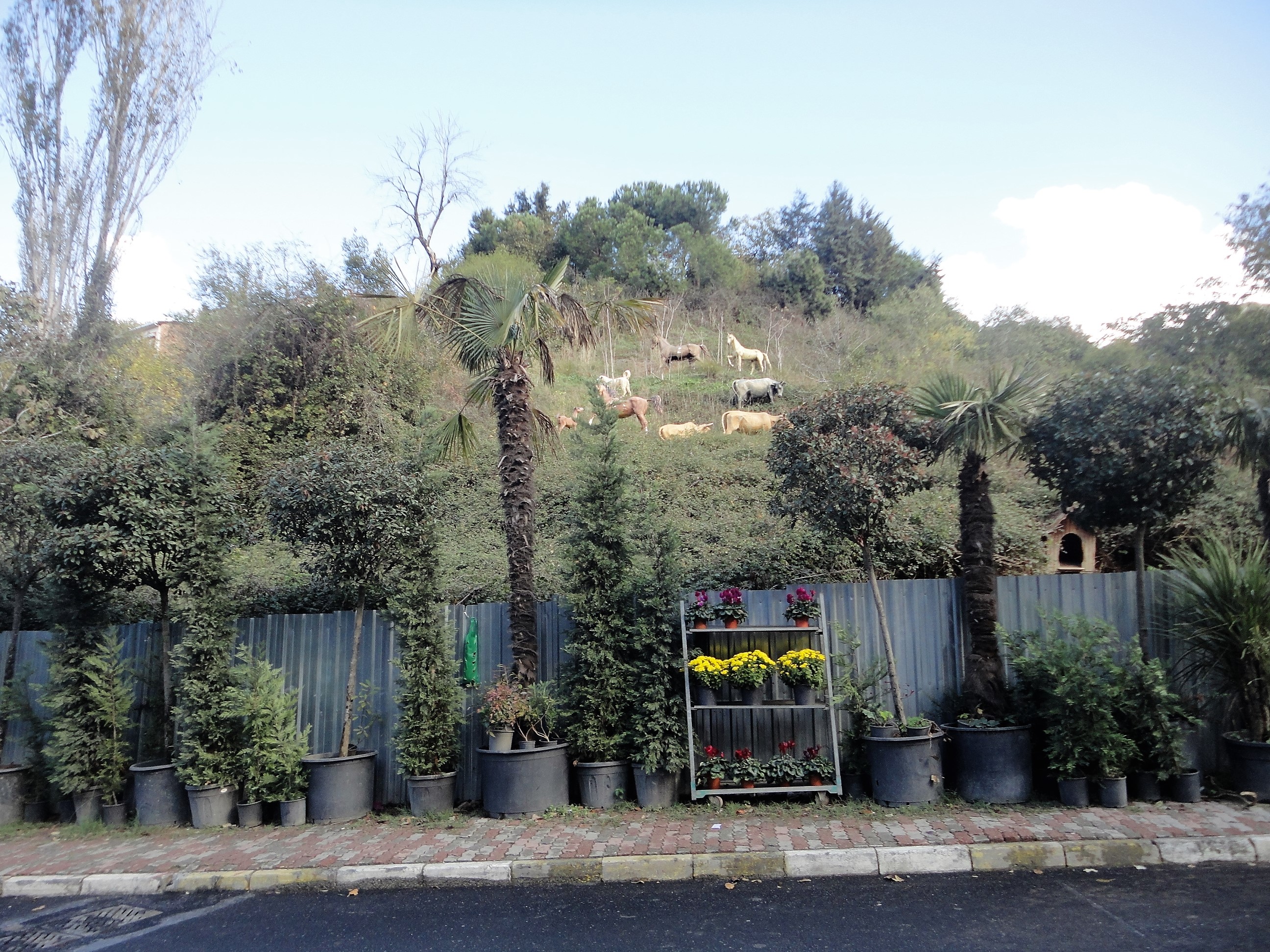
Book cover with image of a bearded man in white robes with a cap or turban, long flowing hair below this, a staff in his left hand, index finger raised on his right hand
Farhang Mehr, The Zoroastrian Tradition.
I bought the book in Yazd, Iran, in 2012

Continue reading

Thinking & Feeling

This essay is written as a distraction from current events, though I make some reference to them. I am prompted by questions of analogy provoked by

  1. the similes of Homer and
  2. a recent theater review in Harper’s that mentions the parables of Jesus.

With sea in the background, on the sand of a beach sits Chapman’s Homer: The Iliad, the cover featuring a 16th-century Flemish tapestry (framed by a circle), Scene from Roman History, showing a number of men, the one in the middle armored; a horse is in the foreground

Continue reading

Rock & Roll

The May 2016 Harper’s features a review of some books about the rock band called Guns N‘ Roses. I find this a bit odd, though perhaps reassuring, since I think I am too old for Guns N’ Roses, and yet Harper’s seems pitched at people who are at least as old as I. During the former editorship of Lewis Lapham, the magazine ran cigarette ads; now it runs ads for retirement communities, hearing aids, and mobile phones with large buttons.

Guns N’ Roses performing at the Los Angeles Street Scene, September 28, 1985 © Marc Canter

Guns N’ Roses performing at the Los Angeles Street Scene, September 28, 1985 © Marc Canter

Continue reading

On trial for pacifism

This is about the 1918 trial of American radical political cartoonist Art Young and others for conspiracy and interfering with enlistment. Most of the article is a quotation of Young’s own words. The words provide some perspective on today’s struggle for freedom of speech.

Capitalism, Art Young, private collection (reproduced in Harper's, Jan 2016, p. 64)

Capitalism, Art Young, private collection (reproduced in Harper’s, Jan 2016, p. 64)

Continue reading

Body and Mind

Does consciousness have a “physical basis” or “material basis”? I am provoked by the suggestion that it does; for the question itself is misleading, if not simply meaningless.

In the September, 2014, issue of Harper’s magazine, Edward O. Wilson begins an essay called “On Free Will” with the following paragraph.

Continue reading