Executive summary (added July 16, 2018): I have had enough of misrepresentation by experts of what other experts have to say about grammar.
An ongoing concern of this blog is the subject taught in school called grammar. See for example
- the previous post, “Writing and Inversion,” about how a supposed rule against the passive voice might be better understood as a rule to avoid certain inversions of order (namely those inversions that add words and torpor);
- the post before that, “A New Kind of Science,” presenting a theory that grammar is properly neither prescriptive nor descriptive, but “criteriological,” because it examines the criteria that we apply to our own speaking and writing;
- an early expression (from six years ago) of some of those ideas: “Strunk and White.”
Grammar causes anxiety. Every aspect of school would seem to cause anxiety in somebody. Decades after they have left school, how many persons have nightmares of missing an examination? Quite a few, it would seem; see the evidence appended to this post. My mother and her brother were such persons, as I learned when growing up. I seem not to be such a person, though I once dreamt of missing a plane.
How much support of current US President Donald Trump is due to memories of belittlement by teachers at school? Similar questions may be raised about
- UK government minister Michael Gove’s saying, “people in this country have had enough of experts …”;
- the rise in Turkey of Recep Tayyip Erdoğan, who has perceived a special threat from the Peace Academics.
On that last matter, see my blog essay of March, 2016, “Academic Freedom.”
In the blog generally, I may criticize some of my fellow academics; but I criticize them for their own criticism of fellow academics and thinkers. Thus in the article “Strunk and White” listed above, I say Geoffrey Pullum was stupid to decry, in 2009, the “50 Years of Stupid Grammar Advice” offered by Strunk and White’s Elements of Style.
Still I have respected Pullum’s recommendation of Style: Toward Clarity and Grace, by Joseph M. Williams. I bought Williams’s book, and in this post I focus on some of his advice.
I thought Williams’s book might be more “democratic” than Strunk and White’s, in the sense of being aimed at a broader audience. That broader audience might include students whose parents didn’t go to college or grow up speaking English.
Now I have doubts that Williams has such an audience in mind. In his final chapter, called “Usage,” Williams writes (on page 176) of
Three Kinds of Rules
1. Some rules characterize the basic structure of English … No native speaker of English has to think about these rules at all.
2. Some rules distinguish standard from nonstandard speech … The only writers and speakers who worry about these rules are those upwardly mobile types who are striving to join the educated class of writers and speakers …
3. Finally, some grammarians try to impose on those who already write educated standard English particular items of usage that they think those educated writers should observe – don’t split infinitives; use that, not which for restrictive clauses …
This may not be much evidence to go on; but judging from the style of #1, I’m not sure Williams has considered the possibility of having readers who are not native speakers of English. In #2, by referring pejoratively to “those upwardly mobile types,” Williams seems to think they are not readers either.
Appearances are corroborated on the next page, after Williams describes again his three kinds of rules:
1. Some rules account for the fundamental structure of English …
2. Some rules distinguish the dialects of the educated and the uneducated …
3. And some rules belong to that category of rules observed by some well-educated people, and ignored by others equally well-educated …
Ordinarily, the first set of rules concerns us not at all. And if you are interested in this book, you probably aren’t much concerned with the second set either. It is the third set of rules that concern – sometimes obsess – already competent but not entirely secure writers. They are the rules of usage out of which the Pop Grammarians have created their cottage industry.
In faithfully transcribing Williams’s words about rules of usage, I have noticed that they violate a certain rule: “Enclose parenthetic expressions between commas.” Indeed, in the first block quotation above, giving the first list of “Three Kinds of Rules,” look again at the last clause (itself a rule):
use that, not which for restrictive clauses.
Here the phrase “not which” is parenthetic, but is not printed that way. Since a comma precedes it, a comma ought also to follow it, at least if one agrees with the rule that I stated, “Enclose parenthetic expressions between commas.”
That rule happens to be Rule 3 of Strunk’s original eight “Elementary Rules of Usage.” It is still Rule 3 in the version of The Elements of Style edited by E. B. White, although some of the other rules have been changed.
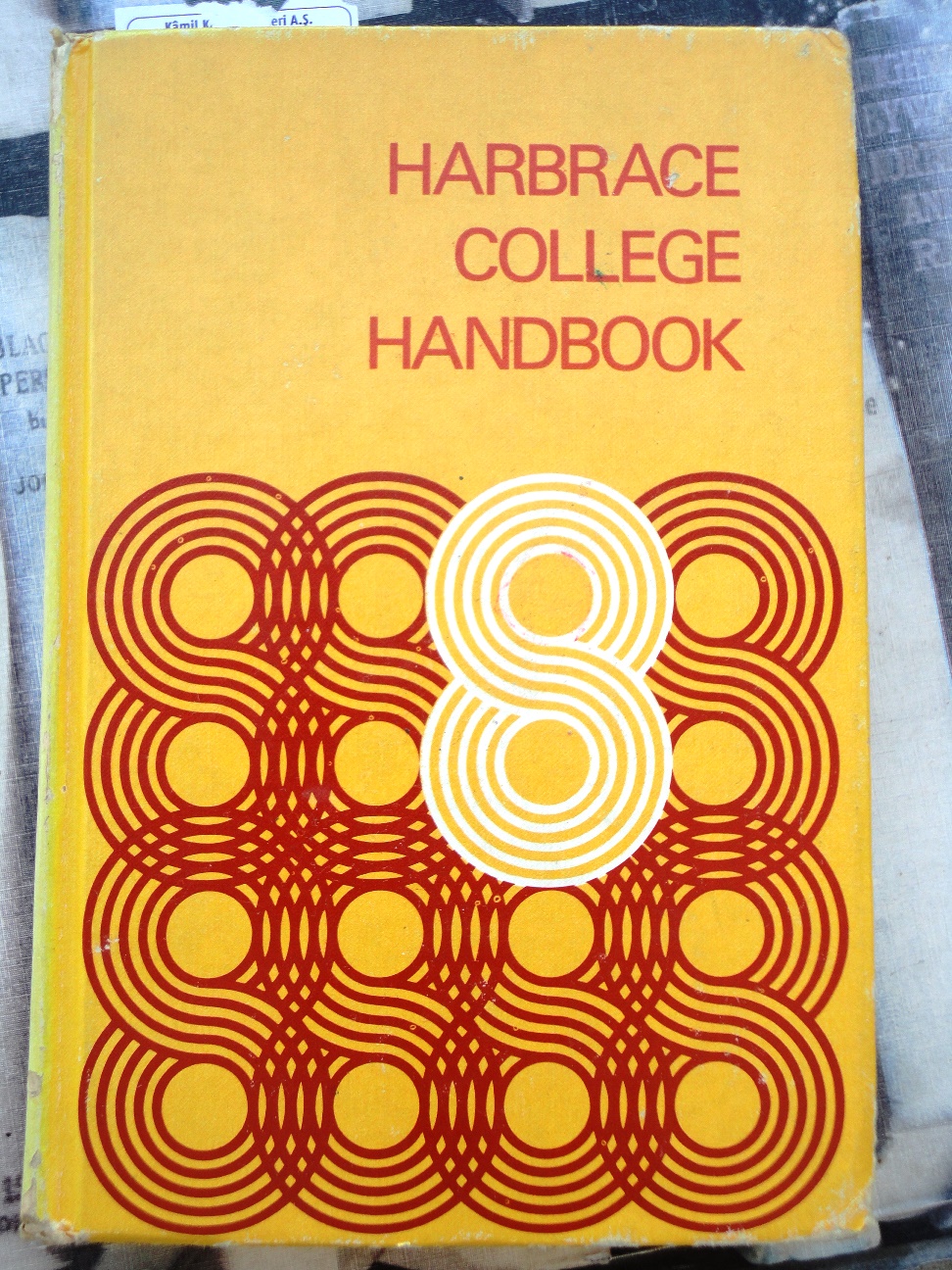
I find the same rule also as part of Rule 12d in the Harbrace College Handbook (8th edition, 1977), used in the ninth-grade English class at my private, college-preparatory school for boys in Washington. According to the Handbook:
Commas set off nonrestrictive clauses and phrases and other parenthetical and miscellaneous elements, such as transitional expressions, items in dates, words used in direct address, and so on. Restrictive clauses and phrases are not set off by commas.
Surely I was taught this rule in earlier years too. The rule seems unobjectionable and even natural to me now, and I do not recall any difficulty with it.
Continue reading →



 Polytropy