Category Archives: New Leviathan

NL XIX: Two Senses of the Word “Society”

Executive summary (below) | Index to this series

After a break of half a year, I return to reading Collingwood’s New Leviathan. Being on holiday at an Aegean beach gives me the opportunity. While here, I may also return to Chapman’s Homer’s Iliad. Last winter I finished Part I of the New Leviathan, the part called “Man.” Here I continue with the first chapter of “Society.” I have reason to look at what Mary Midgley and Albert Einstein say about science. Collingwood’s investigation suggests a way of thinking about prejudice and discrimination.

Part II of the New Leviathan is “Society,” and the first two chapters of this, XIX and XX, concern the distinction between society proper and two more general notions. In Chapter XX, the more general notion will be community. In Chapter XIX, the more general notion has not got its own proper name, and so Collingwood denotes it by writing “society,” in quotation marks.

A “society” of chairs at the beach (Altınova 2017.08.31)

Continue reading

Feyhaman Duran

Born on the Asian side of Istanbul in Kadıköy in 1886, İbrahim Feyhaman was orphaned nine years later. His father had been a poet and calligrapher. His mother’s dying wish was that Feyhaman attend the Lycée Impérial Ottoman de Galata-Sérai; his maternal grandfather, Duran Çavuş, saw that this happened. Some time after graduation, headmaster Tevfik Fikret had Feyhaman come back to Galatasaray to teach calligraphy.


Garden of Aşiyan, September 10, 2015

Continue reading

Duty to Nature

Index to this series

Summary and update (added October 14, 2018): When we do something, or propose to do something, we may explain it or justify it—give a reason for it—as being useful, right, or dutiful. Such is the theory of Collingwood, analyzed here, especially with regard to a question that has increasing urgency: have we a duty, not only to one another, but to nature?

When I originally composed this post, in February of 2017, I had recently analyzed several relevant chapters of Collingwood’s New Leviathan:

Those chapters are the last in the book’s Part I, called “Man.” Collingwood returns to the same ideas in Part II, “Society,” and specifically in Chapter XXVIII, “The Forms of Political Action.” I went on analyze this chapter, 18 months later; it discusses an abuse of the concept of duty by the German political theorist Treitschke.

By one interpretation of a passage in Herodotus, the ancient Persians perceived a duty to nature, through a teaching now attributed to Zoroaster. His teachings influenced Manichaeism, and thus in turn the “Albigensian heresy,” the subject of Chapter XLIII of the New Leviathan.

A theme of Collingwood is that we tend to explain what happens in the world the way we explain what we ourselves do. If our ethics are utilitarian, then, like the ancient Greeks, we may see things in nature too as serving purposes. If we govern our own behavior by laws, then we may also seek laws of nature, as physicists do now.

Since utility and law are general in form, they provide incomplete accounts of exactly what we do. Utility tells us that some kind of thing is useful for some other kind; law keeps us within some bounds, but leaves us free within those bounds. By contrast, duty is to be conceived as providing a complete account of what we do. Conscience tells us that we have a duty; then we have to reason out what it is. The corresponding science of the world is history, which studies us as free agents. Collingwood does not describe a corresponding science of nature as such, at least not in the New Leviathan; but at the end of his first book, Religion and Philosophy, he concluded that everything that happened must be an act of will. This was in the chapter called “Miracle,” which I looked at especially in “Effectiveness.”

It may be hard to distinguish lawful action from dutiful action. In the present post, I look at the examples of

  • paying off a student loan;
  • smoking cigarettes, when rules restrict it;
  • collecting armaments, because, at the Last Supper, by the account in Luke, Jesus recommended buying swords;
  • Islam, as a rule-bound religion;
  • Christian denigrators of Islam, who find in it rules that they think believers must be bound by, even as some Muslims find inspiration in the teachings of Prophet Jesus.

I conclude with the example of an Episcopal priest called Stephen Blackmer, for whom nature is a church and a member of his congregation.


This is a synthesis of some ideas from a recent spate of posts in this blog. A theme is the question of why we do what we do, and whether we can change what we do, especially to Nature.

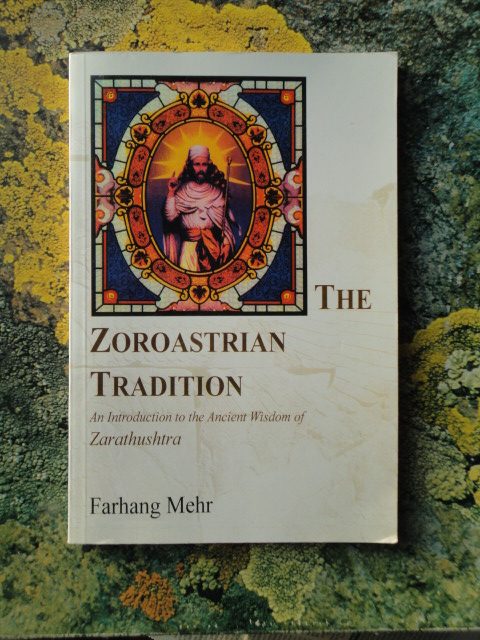
Book cover with image of a bearded man in white robes with a cap or turban, long flowing hair below this, a staff in his left hand, index finger raised on his right hand
Farhang Mehr, The Zoroastrian Tradition.
I bought the book in Yazd, Iran, in 2012

Continue reading

Freedom to Listen

“It’s a free country, so shut up!”

On Thursday, February 16 of this year (2017), at Bosphorus University, a talk on the subject of freedom of speech was given by a Guardian columnist who was a history professor at Oxford. This was Timothy Garton Ash, who observed that freedom of speech and of the press had been severely curtailed in Turkey. For a defender of the regime, the accusation might be belied by the speaker’s freedom to make it. Academics can still come from abroad and give their critical talks. However, as Professor Garton Ash detailed, many Turkish academics have been fired from their positions; many journalists have been imprisoned; other journalists cannot get their articles published.

Nocturnal scene of city buildings under snow, loomed over by towers displaying the crescent and star of the Turkish flag in colored lights
Fulya, Şişli, Istanbul
Friday evening, January 6, 2017

Continue reading

NL XVIII: Theoretical Reason

Index to this series

Reason is primarily practical: it explains why we do what we do. Secondarily, reason explains why others do what they do (18. 1): this makes reason theoretical, though not entirely so, since questions about others arise from, and are answered by, our relations with those others (18. 11). The experimental method involves such relations: we do something to the world, to see how it will respond (18. 12).

Continue reading

NL XVII: “Duty”

Index to this series

New England Primer

“In Adam’s Fall,
We sinned all”
(New England Primer)

We are trying to understand reason in its original form, practical reason. Why do we do what we do? It may be useful for something else, or right according to some law or rule. A third possibility is that what we do may be our duty: the fulfilment of an obligation. Continue reading

NL XVI: “Right”

Index to this series

Follower of Pietro Perugino, Saint Jerome in the Wilderness, c. 1490/1500, tempera on panel (National Gallery of Art, Washington; Samuel H. Kress Collection)

Follower of Pietro Perugino, Saint Jerome in the Wilderness, c. 1490/1500, tempera on panel (National Gallery of Art, Washington; Samuel H. Kress Collection)

We continue to investigate how two purposes x and y can have a relation symbolized by yx. In the previous chapter, the relation was that x was useful for y; now the relation will be that x is right for y, meaning x “conforms with the rule y” (16. 3). Continue reading

NL XV: “Utility”

Index to this series

George Inness (American, 1825–1894), The Lackawanna Valley, c. 1856, oil on canvas (National Gallery of Art, Washington; gift of Mrs. Huttleston Rogers)

George Inness (American, 1825–1894), The Lackawanna Valley, c. 1856, oil on canvas (National Gallery of Art, Washington; gift of Mrs. Huttleston Rogers). See footnote

In the previous chapter, “Reason,” we have seen that an intention x may have another intention y as a ground or reason; and we may symbolize this relation by yx. In Collingwood’s example now, x is giving a sum of money to a tobacconist, and y is receiving a pound of tobacco (15. 17). Continue reading

NL XIV: “Reason”

Index to this series

Summary added January 29, 2019, revised May 8, 2019. Practical reason is the support of one intention by another; theoretical, one proposition by another. Reasoning is thus always “motivated reasoning”: we engage in it to relieve the distress of uncertainty. Reason is primarily practical, only secondarily theoretical; and the reason for saying this is the persistence of anthropomorphism in theoretical reasoning: by the Law of Primitive Survivals in Chapter IX, we tend to think even of inanimate objects as forming intentions the way we do.

Reasons for adding this summary of Chapter XIV of Collingwood’s New Leviathan include

  • the tortuousness of the following post on the chapter,
  • the provocation of a Guardian column by Oliver Burkeman on motivated reasoning.

Says Burkeman, whose “problem” is apparently motivated reasoning itself,

One of the sneakier forms of the problem, highlighted in a recent essay by the American ethicist Jennifer Zamzow, is “solution aversion”: people judge the seriousness of a social problem, it’s been found, partly based on how appetising or displeasing they find the proposed solution. Obviously, that’s illogical …

On the contrary, how we reason cannot be “illogical,” any more than how we speak can be “ungrammatical.” Logic is an account, or an analysis, of how we do actually reason; grammar, of how we speak. Of course we may make errors, by our own standards.

Rogier van der Weyden (Netherlandish, 1399/1400-1464), Portrait of a Lady, c. 1460, oil on panel, Andrew W. Mellon Collection
Rogier van der Weyden (Netherlandish, 1399/1400–1464),
Portrait of a Lady, c. 1460, oil on panel
National Gallery of Art, Washington; Andrew W. Mellon Collection

Context

There was a rumor that Collingwood had become a communist. According to David Boucher, editor of the revised (1992) edition of The New Leviathan, the rumor was one of the “many reasons why [that book] failed to attract the acclaim which had been afforded Collingwood’s other major works.” Continue reading

NL XIII: “Choice”

Index to this series

Adolph Gottlieb, “Centrifugal,” gouache on paperboard, 1961 (National Gallery of Art, Washington; gift of the Woodward Foundation)

Adolph Gottlieb, “Centrifugal,” 1961 (National Gallery of Art, Washington; gift of the Woodward Foundation)

The key idea of Chapter XIII of New Leviathan is the correct statement of the “problem of free will”:

Continue reading