Category Archives: Istanbul

Bohemianism

Summary. Here in Istanbul, the Turkish word kalender appears in the names of both a mosque and an officers’ club: Kalenderhane Camii and Kalender Orduevi. The mosque was earlier a house (hane) for dervishes, apparently of the Kalenderiye order; before that, a church. The officers’ club includes Kalender Kasrı, formerly a summer palace for members of the House of Osman, near where we live on the European side of the Bosphorus, halfway to the Black Sea from Seraglio Point. The palace was erected in its current form during the reign of Abdülaziz, who received there a French prince and was the first sultan to visit western Europe diplomatically. The first Ottoman palace at the site was constructed during the reign of Ahmed I (for whom also the Blue Mosque was built) by an officer called Kalender Çavuş. The location is also called Kalender, and presumably there is a connection, one way or other. Constantine Cavafy described a cafe there in “A Night Out in Kalinderi.” In Roman times, by the account of Dionysius of Byzantium, the adjacent bay was Pitheci Portus, or the Harbor of Pithex. Dionysius reported the story that Pithex had been a Barbarian king who helped a warrior cross over to Asia on his way to the Trojan War. This warrior was the ambidextrous Asteropaeus, who wielded a spear in either hand, but was nonetheless speared by Achilles. However, πίθηξ and πίθηκος can mean ape or monkey (as in Pithecanthropus, “Ape Man,” once the name of the supposed genus of the “missing link,” Java Man). Apparently the name of the bay in question has been interpreted that way.

People can walk around Istanbul without a clue as to what they are passing by. I was like that when walking past the Kalender Kasrı. As for the kalender himself, since he is a dervish, even one devoted to a particularly unconventional life, he may also be any person so devoted: a bohemian.


This blog has been around so long, I can hardly remember writing some of the posts. I look back at them sometimes, to see whether they still make sense, or whether I have been repeating myself. If I make changes to a post, I leave a note at the bottom.

I believe Thoreau kept his journal that way – albeit with a pencil, even one manufactured by the family firm. He wrote,

Contemplation of the unfinished picture may suggest its harmonious completion … Thoughts accidentally thrown together become a frame in which more may be developed and exhibited. Perhaps this is the main value of a habit of writing …

John R. Stilgoe quotes that, in his Preface for the abridgement by Damion Searls of Thoreau’s Journal: 1837–1861. I wrote about the book in “Thoreau by the Aegean,” August, 2015.

Longer than this blog has existed, I have lived in Istanbul. My wife and I came here from Ankara in August, 2011. We lived in the borough of Şişli until October, 2022. Then we moved to Sarıyer. Thus we came in sight of the third bridge over the Bosphorus Strait, where it meets the Black Sea.
Tulips of Istanbul

This post about flowers on the Bosphorus originated in 2015, when I created it as a webpage on my part of my department’s website. A follow-up the next year did become a blog post, “Early Tulips.” Since we moved to Sarıyer in 2022, it turns out we can walk to the Emirgan Korusu in an hour. This is

  • what I have done a couple of times in the last week,
  • why I put this old post here, below the following new photos, from Saturday, February 24, 2024 (made with my old mobile, unlike the old photos!).


I started out in Atatürk City Forest, following the trails down to the lake


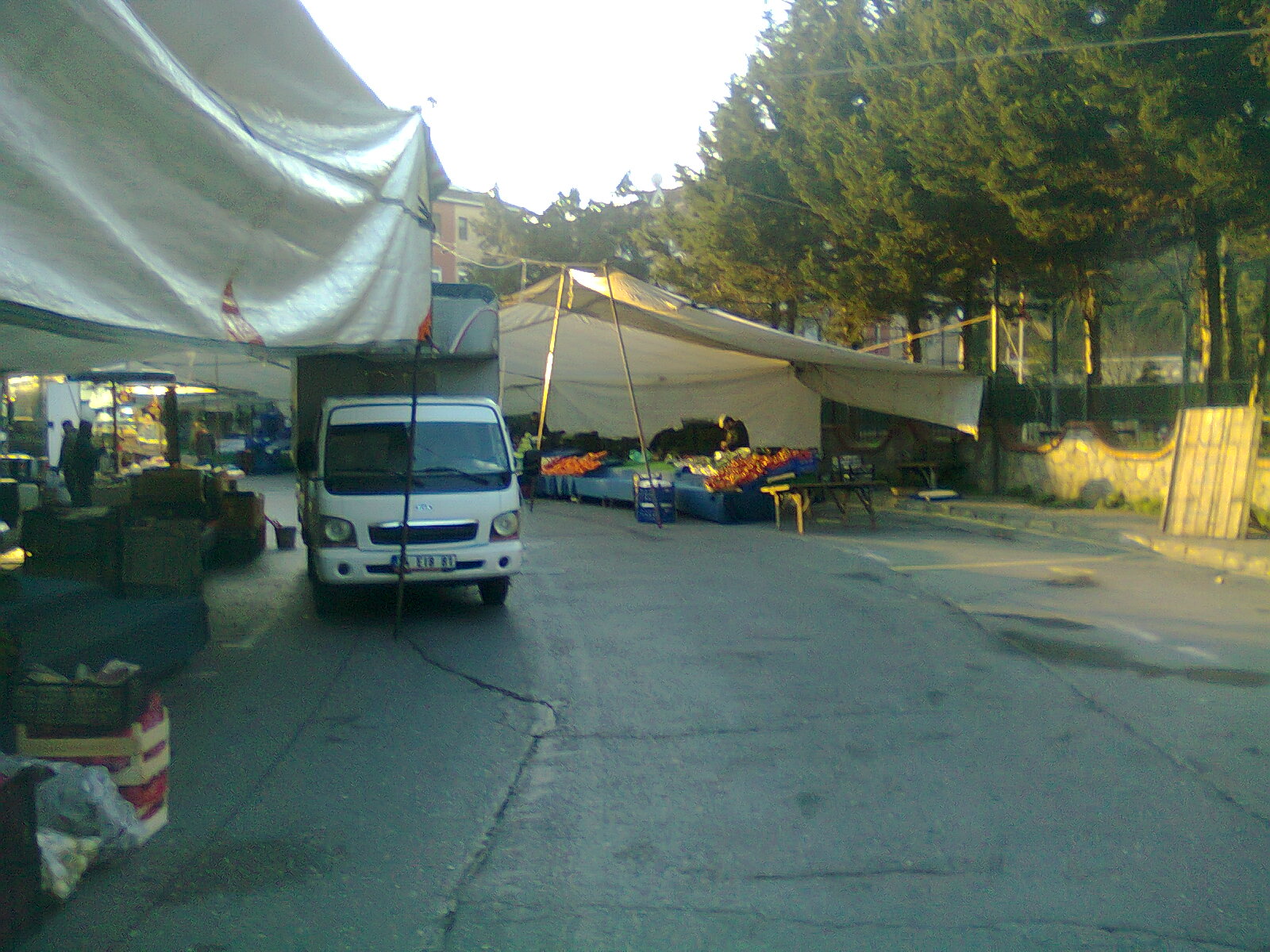
On Saturdays, the old road through the stream valley below the lake hosts a bazaar

Continue reading

Cavafy in Istanbul

The first part of this post concerns a poem by Constantine Cavafy on accepting one’s fate. There are three parts after that:

The Cavafy poem, “The God Abandons Antony,” is based on a passage in Plutarch’s life of that person. Susan Cain wrote about the poem in a newsletter. Her book Quiet gave me a new appreciation for my parents. It so happens that my parents had me by adoption. Unfortunately other people are not happy to be in that situation.

Some people are also not happy with their sex. Cavafy’s poem could have given courage to Ms Cain during a painful birth. Courage is literally manliness in Greek. Plutarch writes of a man’s imitation of a woman in labor. Roberto Calasso’s Marriage of Cadmus and Harmony led me to the story. I talk about all of that.

I have since learned of another good essay, “Personal Integrity in the Poetry of C. P. Cavafy,” in Beshara Magazine, by Andrew Watson. A different Andrew Watson played football for Scotland in 1881, and The Guardian has an article, “‘We looked identical’: one man’s discovery of slavery, family and football” (24 December 2020), by Tusdiq Din, about Malik Al-Nasir, formerly Mark Watson, who discovered, through their physical resemblance, a family relation with Andrew.


When Ayşe and I moved from Fulya to Tarabya last October, we were coming nearer where C. P. Cavafy once lived along the Bosphorus.

Boxes packed for moving. Rolled-up carpets; bubble wrap around bookcases. Light comes from a window on the right and a glowing globe on the upper left. Two more spherical paper shades sit on boxes
Last evening in Fulya
Saturday, October 15, 2022

Continue reading

Seventh Hill, March, 2013

As Rome was traditionally founded on seven hills, so seven hills have been identified within the Theodosian Walls of Constantinople, New Rome.

The theme of seven hills is found in Turkish culture today, as for example in

  • the clothing company called Sevenhill,
  • the university on the Asian side of Istanbul called Yeditepe (i.e. Seven Hills).

This is about a tour in 2013, roughly following part of the chapter called “The Seventh Hill” in Sumner-Boyd and Freely, Strolling Through Istanbul (revised and updated edition, London & New York: I.B. Tauris, 2010). There are no really spectacular sites along the tour. This fact itself makes the tour remarkable: it shows how many interesting things lie beyond the main tourist centers of the city.

Here is a Google map I made of the sites visited.

I created this post originally, not long after the tour it describes; however, I posted it on my departmental website, although this blog did exist in those days too. I last edited the post on the departmental site, Monday, July 2, 2018. I return to it now because of friends’ interest in Byzantine sites in Istanbul (also I have completed the posts about the books of the Iliad that began in November).

As I said, the sites visited here are not spectacular, but they may still be remarkable. The Byzantine ones are:

See also a later post, “Samatya Tour, July, 2018,” for more in this area, including

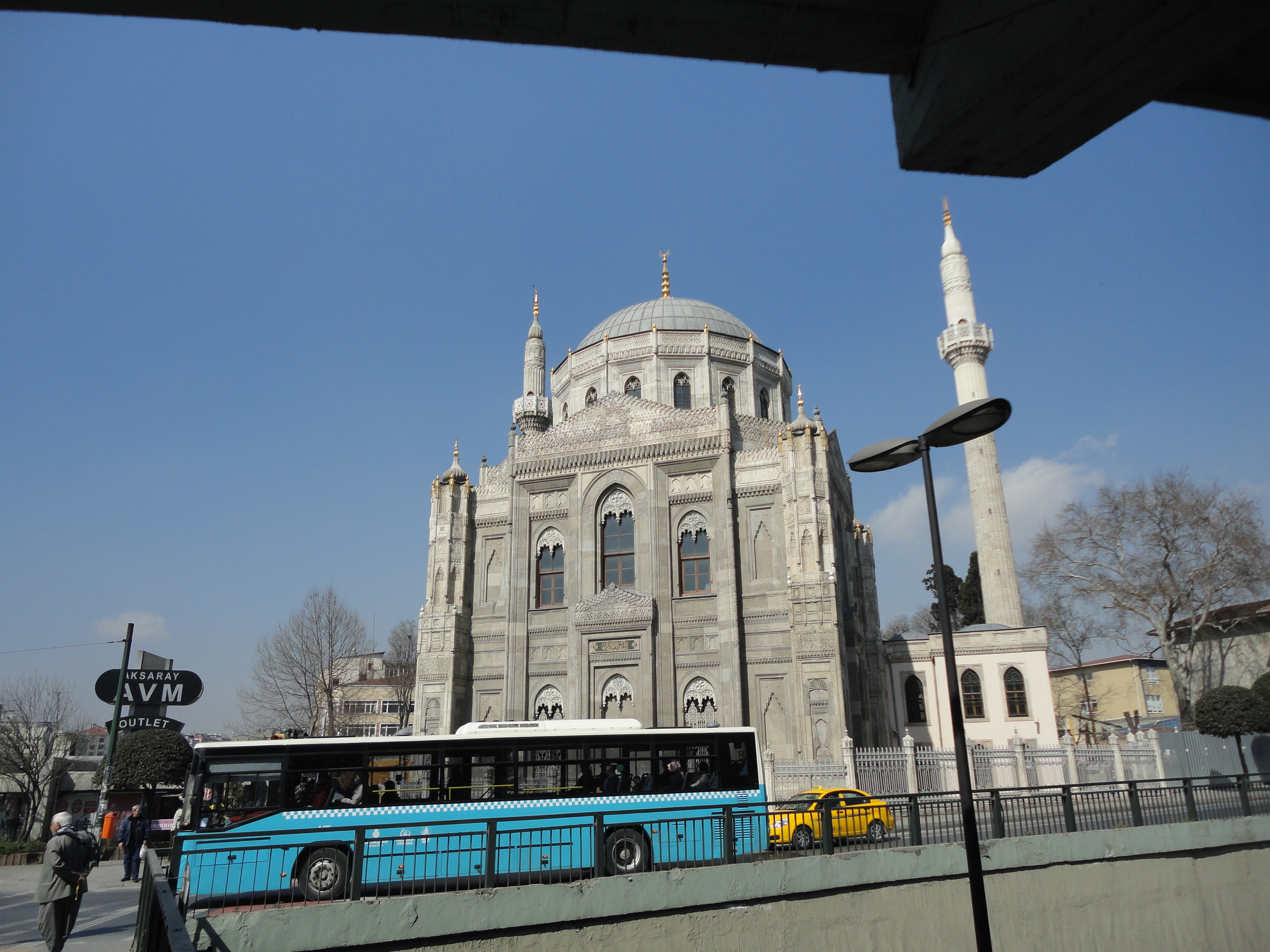
On Sunday, March 24, 2013, my friend Cédric and I took the tram to Aksaray. We passed under an elevated boulevard to reach Valide Sultan Camii, constructed in the late nineteenth century, in the twilight years of the Ottoman Empire.

Continue reading

Figs

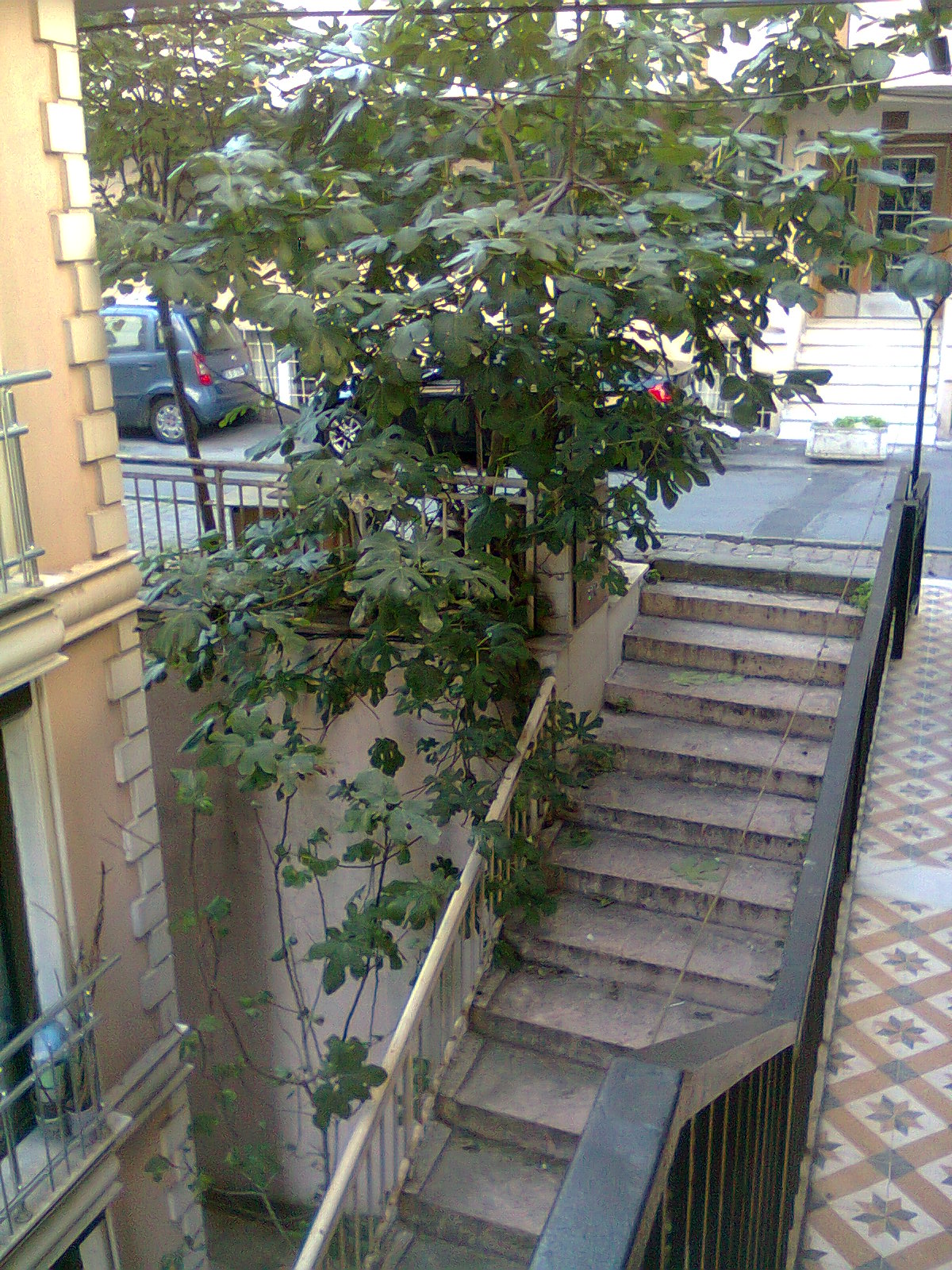
This is about figs, because the opening of “The Sixth Elegy” of the Duino Elegies of Rainer Maria Rilke is about them, and I turn out to live among them.

Fig trees growing like weeds on Ayşecik Sokağı
Fulya, Şişli
November 15, 2021

Continue reading

Summer YILDIZ Park Tour

This post contains images from one of the walking tours that I have learned to make from our flat on the European side of Istanbul.

When the Covid-19 pandemic got going, and there was nowhere in particular to go, I would wander aimlessly, just for the exercise. Then I figured out that, in about two hours, I could walk down to Ortaköy (“Middle Village,” Μεσαχώριον) by one route, coming back by another. I could also pass through the wall around the garden of one of the Ottoman sultans, then exit by another.

The particular route below takes in as much greenery as possible, including several named parks:

Ihlamur Parkı is different from the nearby Ihlamur Kasırları, “Linden Pavilions.” Though it contains two Ottoman stelae, the park does not seem to have a name posted on the ground; its name on the list above links to the Twitter account of a group formed to resist its being built over.

Ayşe and I walked the route below, Sunday morning, August 2, 2021, during a heat wave.

Down into the valley

Continue reading

Computer Recovery

Part of this post is a laboratory notebook. I record how I fixed my computer, because

  • I am pleased to have been able to do it, and

  • I may have to do it again.

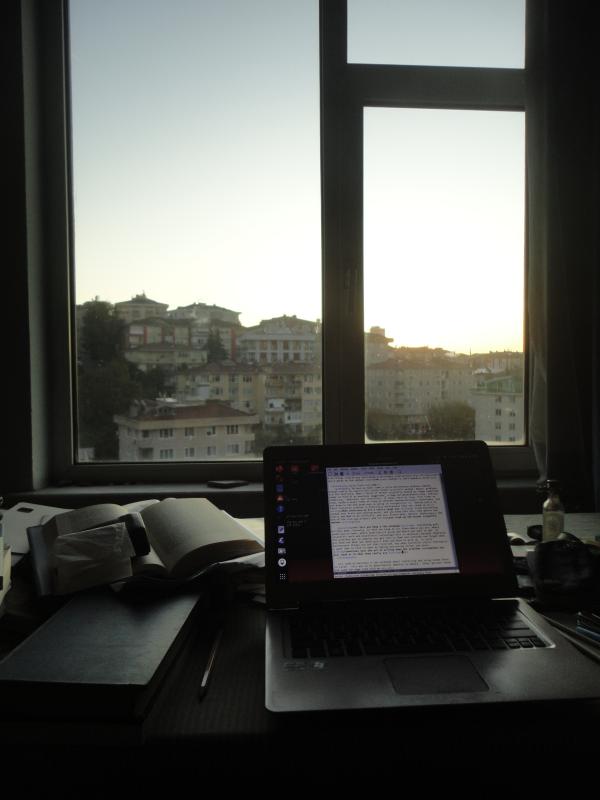
Briefly, when Windows on my laptop failed, I installed Ubuntu, but this failed. Somebody else installed Ubuntu again, and this worked for a while before failing. I managed to fix that problem for myself; but later an upgrade failed. Now I have fixed that. Computer on table by window at dawn

I am recording further issues in an addendum.

Continue reading

Şişli Tour, July 2018

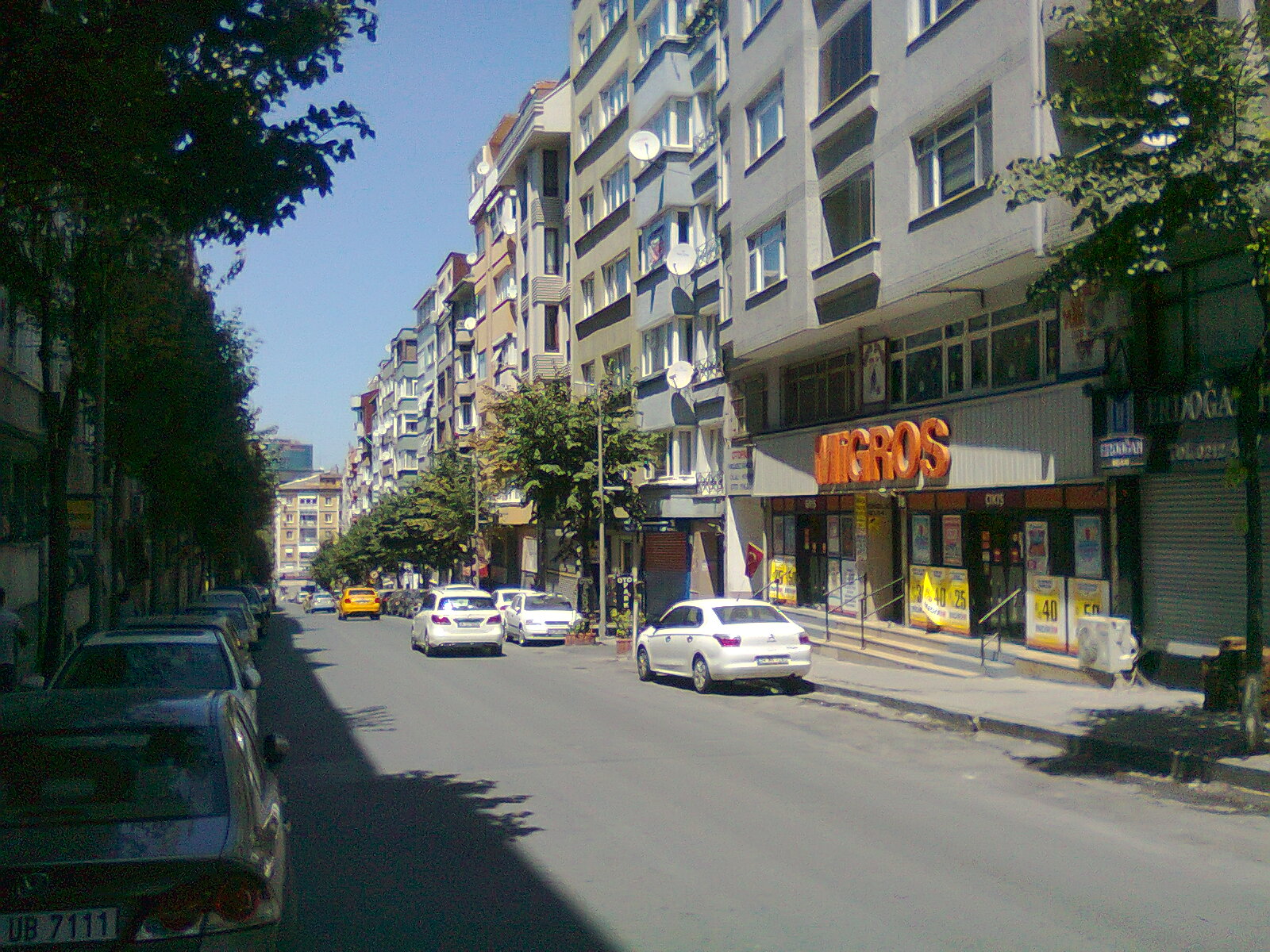
When I lived in Ankara, I tried to build up a collection of photographs about life in different cities. I was exercised by the Ankara mayor’s utter disrespect for pedestrians, as shown for example in his narrowing of sidewalks (by widening roads) so that bus shelters would have to block them, and the sidewalks themselves might disappear into the walls surrounding the adjacent embassies. I took photographs of such situations and started putting them on my webpages (I didn’t have this blog then). I looked for similar situations when we visited Europe. Such visits were usually for conferences, and I prepared webpages about Barcelona, Besançon, Berne, and Istanbul.


Continue reading

Samatya Tour, July 2018

This is about a solo walking tour on Sunday, July 1, 2018. I was mostly around the Seventh Hill of the old walled city of Constantinople, ultimately in the quarter called Ψαμάθεια in Greek, and in Turkish Samatya.

Continue reading

Çarşamba Tour, April 2018

Ayşe and I toured the northern part of the old walled city of Istanbul – including the religiously conservative district of Çarşamba – with our student Abdullah and his brother Yusuf on Sunday, April 8, 2018. At another site I documented a similar tour in March, 2015. Now I do not try to be so thorough. I did not try to document the whole trip photographically, but here is a selection of pictures that I did take. We saw Byzantine and Ottoman structures. For the former, I have since found a comprehensive reference: The Byzantine Legacy.

Kalendarhane

Continue reading