Category Archives: Nesin Mathematics Village

Life in a Crowd

The essay below was originally a post on Medium, August 7, 2017. I wrote from the Nesin Mathematics Village. The crowds there, described here, are a great way to spread infections, as I used to find out. For this reason, I have not gone back to the Village since the winter of 2020, when Covid-19 became pandemic.

The Village is in the hills above Ephesus, site of the temple of Artemis, where there were golden oxen, donated by King Croesus, according to Herodotus (I.92).

When I first came to Turkey in 1998, Herodotus was my tour guide. Because of my interest, from our base in Atarneus, my father-in-law-to-be took seven of us (including himself and a dog) to see Sardis: this was the seat from which Croesus had ruled Lydia, until Cyrus the Great of Persia defeated him.


Cats facing off in the Atatürk City Forest
Tarabya, Sarıyer, Istanbul, October 16, 2024

Continue reading

Evolution of Reality

I enjoy and recommend Robert Wright’s Nonzero Newsletter, which presents thought on both American politics and thought itself.

Tiny green plants on red tile roof, cloudy day

In a 2017 post of this blog, I quoted Wright’s 1988 article in The Atlantic Monthly about Edward Fredkin. Somewhat differently from Fredkin, I spelled out my title, “What Philosophy Is,” without actually being a professional philosopher. I touched on a theme that I shall take up now: that thinkers today could benefit from knowing the thought of R. G. Collingwood.

Continue reading

Piety

The post below is a way to record a passage in the Euthyphro where Socrates says something true and important about mathematics.

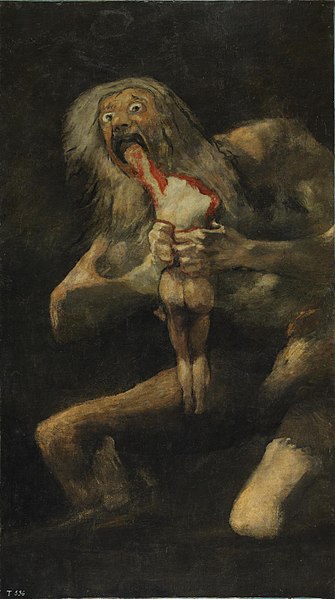
Crude depiction of bug-eyed figure grasping the torso of, and putting into his mouth the arm of, a smaller figure
Goya, [Cronus] Devouring His Son
(see below)

The passage is on a list of Platonic passages that I recently found, having written it in a notebook on May 23, 2018. The other passages are in the Republic; here they are, for the record, with some indication of why they are worth noting (translations are Shorey’s, originally from 1930 and 1935 in the old Loeb edition):

Continue reading

On Chapman’s Homer’s Iliad, Book X

Index to this series | Text of Chapman’s Homer’s Iliad

In Book X of the Iliad, Diomedes and Ulysses go to spy on the Trojan camp at night. When they return to the Greek camp (lines 482 & 3),

Then entred they the meere maine sea, to cleanse their honord sweate
From off their feet, their thighes and neckes: and when their vehement heate …

I can enter the same sea now. After more than ten months, I return to my reading of Homer, and Chapman’s Homer, as I have returned to the place where I was doing it last year, on the Aegean coast opposite Lesbos.

Continue reading

On Knowing Ourselves

In a 2012 post in this blog, I criticized a 2009 essay called “50 Years of Stupid Grammar Advice.” The putative advice was that of Strunk and White. However, what these two had written was not the elements of grammar, but The Elements of Style. They gave style advice by precept and example. The advice is good, if well understood. The critic should recognize that, as I wrote, “Rules of style are supposed to induce thinking, not obedience.”

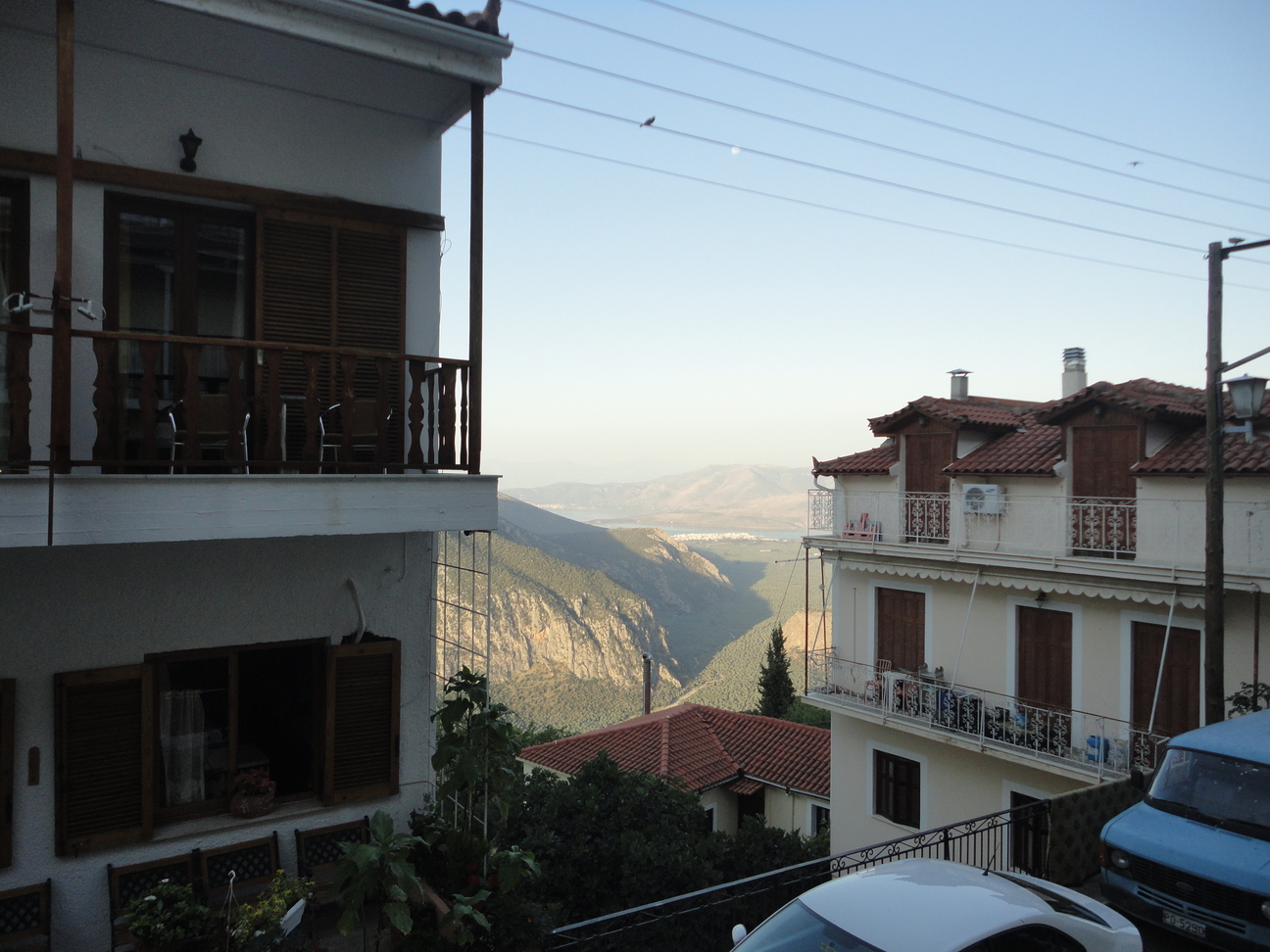
View between two hotel buildings from one mountainside to another, with a bit of the sea beyond
All photos taken in Delphi, July 12–14, 2017

Continue reading

The Tree of Life

My two recent courses at the Nesin Mathematics Village had a common theme. I want to describe the theme here, as simply as I can—I mean, by using as little technical knowledge of mathematics as I can. But I shall talk also about related poetry and philosophy, of T. S. Eliot and R. G. Collingwood respectively.


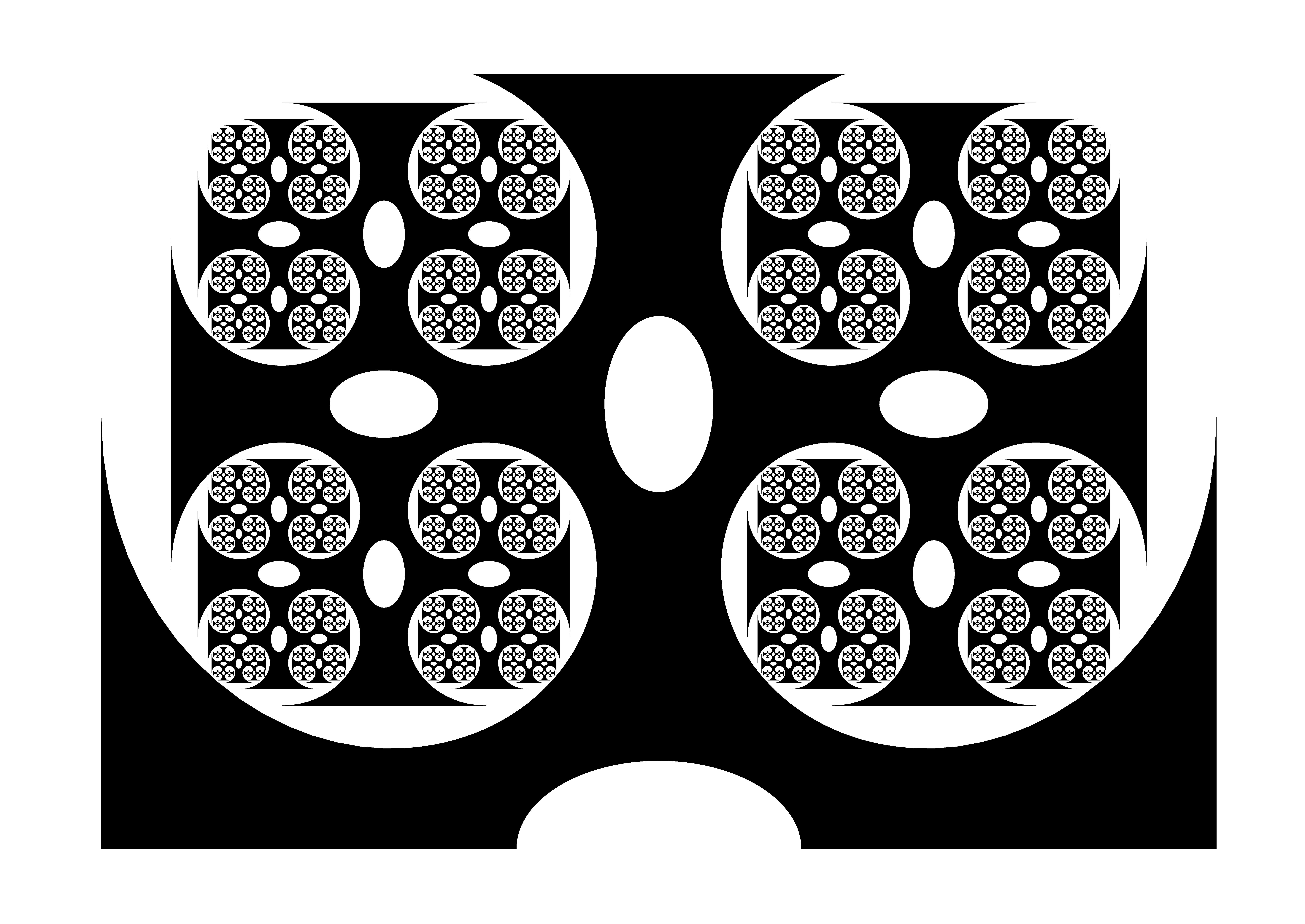
An elaborate binary tree, with spirals

Continue reading

Şirince January 2018

In the Nesin Mathematics Village recently, I was joined at breakfast one morning by a journalist called Jérémie Berlioux. He knew Clément Girardot, the journalist whom I had met in the Village in the summer of 2016. This was before the coup attempt of July 15, but after the terror attack at Atatürk Airport on June 28. I wrote about this attack the next day in “Life in Wartime” on this blog. Then I headed off to Şirince to join a “research group.” My wife and colleague came along, though not to be part of the group; afterwards we headed up the coast for a beach holiday. We were at the beach when the coup attempt happened, as I wrote in my next blog article, “War Continues.” I contrasted politics with mathematics, which was an inherently nonviolent struggle. This was the kind of struggle engaged in by the research group in the Math Village.

Large clay pot against dark vines

Outside the Nişanyan Library

Continue reading

What Philosophy Is

With my presumptuous title, I imitate Arthur Danto’s What Art Is (2013), mentioned in my last post, “Some Say Poetry.” The book is fine, and I have learned from it; but Danto could have learned from Collingwood’s Principles of Art.

Picasso, The Tragedy (1903), National Gallery of Art, Washington Continue reading

Romance

At the end of Shakespeare’s romance called The Tempest, Prospero plans to retire to Milan, where “Every third thought shall be my grave.” I remember these words from reading the play in school and college. I also have thoughts of my grave, and their frequency may increase as the years pass. However, for each of those thoughts, I seem to have more thoughts that are based on memories of youth and childhood.


Continue reading

The Private, Unskilled One

I went into Istanbul’s Pandora Bookshop a month ago, looking for an English translation of War and Peace, since the Garnett translation I had read at college was falling apart. I was told the Oxford World’s Classics edition (with the Maude translation) was coming the next week, and it did come.

Elif Batuman, The Idiot, in Nesin Matematik Köyü, Kayser Dağı Mevkii, Şirince, Selçuk, İzmir, Turkey, 2017.05.18

Continue reading