Victor Vasarely

Tophane-i Amire
Tophane-i Amire, 2017.03.25

Last week I wrote about the Turkish Impressionist Feyhaman Duran, born in 1886. Now my subject is the Hungarian-French Op Artist born twenty years later as Győző Vásárhelyi. His “Rétrospective en Turquie” is at the Tophane-i Amire Culture and Art Center in an Ottoman cannon foundry.

Vasarely show Continue reading

Feyhaman Duran

Born on the Asian side of Istanbul in Kadıköy in 1886, İbrahim Feyhaman was orphaned nine years later. His father had been a poet and calligrapher. His mother’s dying wish was that Feyhaman attend the Lycée Impérial Ottoman de Galata-Sérai; his maternal grandfather, Duran Çavuş, saw that this happened. Some time after graduation, headmaster Tevfik Fikret had Feyhaman come back to Galatasaray to teach calligraphy.


Garden of Aşiyan, September 10, 2015

Continue reading

Nature and Death

Thoughts on mortality and the evolution of the universe, occasioned by a funeral and by Collingwood’s Idea of Nature and Plato’s Phaedo

Cebeci, Ankara, 2016.05.17

When the husband of my second-grade teacher died, I wanted to pay my respects. My father took me to the funeral home, where I hid behind him as he greeted the family of the deceased. My teacher was not among them. When invited to view the body, I looked over and saw it, lying off to the side in an open casket. I had never seen the man when he was alive. I declined the opportunity to gaze at his lifeless form. Until I came to Turkey, this was my closest approach to the materiality of death—except for a visit to the medical school of the University of New Mexico in Albuquerque. There, as part of the laboratory program at St John’s College in Santa Fe, students viewed dissected human cadavers.

Continue reading

Community

Concerning a proposal (not by me) to make a “strategic withdrawal” from public life in order to restore the imagined virtues of the Middle Ages.

What in the 1960s was a commune is now an intentional community. I lived in one in the mid-1990s, when I was in graduate school.

Mont Saint-Michel, in the image that heads Dreher’s linked article

Continue reading

Duty to Nature

Index to this series

Summary and update (added October 14, 2018): When we do something, or propose to do something, we may explain it or justify it—give a reason for it—as being useful, right, or dutiful. Such is the theory of Collingwood, analyzed here, especially with regard to a question that has increasing urgency: have we a duty, not only to one another, but to nature?

When I originally composed this post, in February of 2017, I had recently analyzed several relevant chapters of Collingwood’s New Leviathan:

Those chapters are the last in the book’s Part I, called “Man.” Collingwood returns to the same ideas in Part II, “Society,” and specifically in Chapter XXVIII, “The Forms of Political Action.” I went on analyze this chapter, 18 months later; it discusses an abuse of the concept of duty by the German political theorist Treitschke.

By one interpretation of a passage in Herodotus, the ancient Persians perceived a duty to nature, through a teaching now attributed to Zoroaster. His teachings influenced Manichaeism, and thus in turn the “Albigensian heresy,” the subject of Chapter XLIII of the New Leviathan.

A theme of Collingwood is that we tend to explain what happens in the world the way we explain what we ourselves do. If our ethics are utilitarian, then, like the ancient Greeks, we may see things in nature too as serving purposes. If we govern our own behavior by laws, then we may also seek laws of nature, as physicists do now.

Since utility and law are general in form, they provide incomplete accounts of exactly what we do. Utility tells us that some kind of thing is useful for some other kind; law keeps us within some bounds, but leaves us free within those bounds. By contrast, duty is to be conceived as providing a complete account of what we do. Conscience tells us that we have a duty; then we have to reason out what it is. The corresponding science of the world is history, which studies us as free agents. Collingwood does not describe a corresponding science of nature as such, at least not in the New Leviathan; but at the end of his first book, Religion and Philosophy, he concluded that everything that happened must be an act of will. This was in the chapter called “Miracle,” which I looked at especially in “Effectiveness.”

It may be hard to distinguish lawful action from dutiful action. In the present post, I look at the examples of

  • paying off a student loan;
  • smoking cigarettes, when rules restrict it;
  • collecting armaments, because, at the Last Supper, by the account in Luke, Jesus recommended buying swords;
  • Islam, as a rule-bound religion;
  • Christian denigrators of Islam, who find in it rules that they think believers must be bound by, even as some Muslims find inspiration in the teachings of Prophet Jesus.

I conclude with the example of an Episcopal priest called Stephen Blackmer, for whom nature is a church and a member of his congregation.


This is a synthesis of some ideas from a recent spate of posts in this blog. A theme is the question of why we do what we do, and whether we can change what we do, especially to Nature.

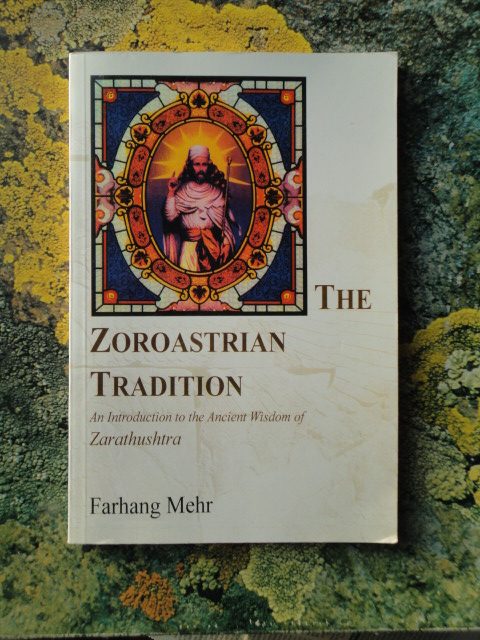
Book cover with image of a bearded man in white robes with a cap or turban, long flowing hair below this, a staff in his left hand, index finger raised on his right hand
Farhang Mehr, The Zoroastrian Tradition.
I bought the book in Yazd, Iran, in 2012

Continue reading

Freedom to Listen

“It’s a free country, so shut up!”

On Thursday, February 16 of this year (2017), at Bosphorus University, a talk on the subject of freedom of speech was given by a Guardian columnist who was a history professor at Oxford. This was Timothy Garton Ash, who observed that freedom of speech and of the press had been severely curtailed in Turkey. For a defender of the regime, the accusation might be belied by the speaker’s freedom to make it. Academics can still come from abroad and give their critical talks. However, as Professor Garton Ash detailed, many Turkish academics have been fired from their positions; many journalists have been imprisoned; other journalists cannot get their articles published.

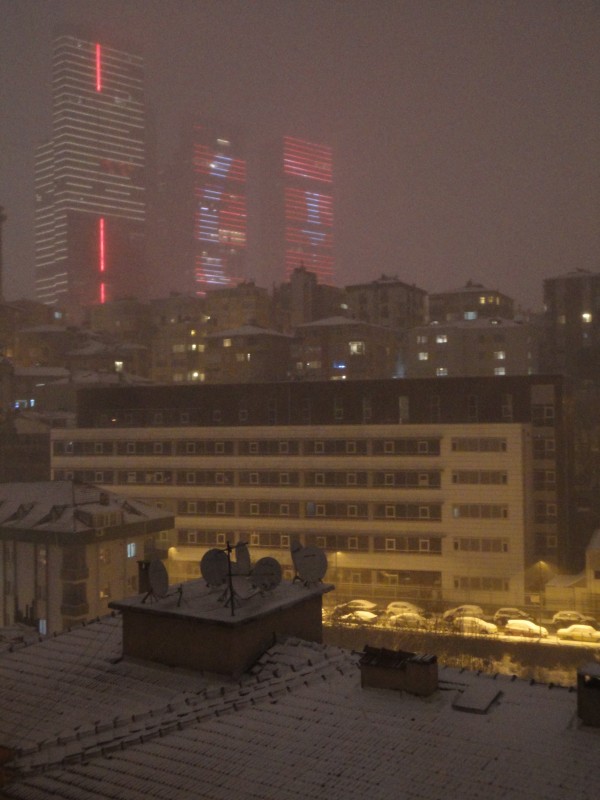
Nocturnal scene of city buildings under snow, loomed over by towers displaying the crescent and star of the Turkish flag in colored lights
Fulya, Şişli, Istanbul
Friday evening, January 6, 2017

Continue reading

NL XVIII: Theoretical Reason

Index to this series

Reason is primarily practical: it explains why we do what we do. Secondarily, reason explains why others do what they do (18. 1): this makes reason theoretical, though not entirely so, since questions about others arise from, and are answered by, our relations with those others (18. 11). The experimental method involves such relations: we do something to the world, to see how it will respond (18. 12).

Continue reading

NL XVII: “Duty”

Index to this series

New England Primer

“In Adam’s Fall,
We sinned all”
(New England Primer)

We are trying to understand reason in its original form, practical reason. Why do we do what we do? It may be useful for something else, or right according to some law or rule. A third possibility is that what we do may be our duty: the fulfilment of an obligation. Continue reading

NL XVI: “Right”

Index to this series

Follower of Pietro Perugino, Saint Jerome in the Wilderness, c. 1490/1500, tempera on panel (National Gallery of Art, Washington; Samuel H. Kress Collection)

Follower of Pietro Perugino, Saint Jerome in the Wilderness, c. 1490/1500, tempera on panel (National Gallery of Art, Washington; Samuel H. Kress Collection)

We continue to investigate how two purposes x and y can have a relation symbolized by yx. In the previous chapter, the relation was that x was useful for y; now the relation will be that x is right for y, meaning x “conforms with the rule y” (16. 3). Continue reading

NL XV: “Utility”

Index to this series

George Inness (American, 1825–1894), The Lackawanna Valley, c. 1856, oil on canvas (National Gallery of Art, Washington; gift of Mrs. Huttleston Rogers)

George Inness (American, 1825–1894), The Lackawanna Valley, c. 1856, oil on canvas (National Gallery of Art, Washington; gift of Mrs. Huttleston Rogers). See footnote

In the previous chapter, “Reason,” we have seen that an intention x may have another intention y as a ground or reason; and we may symbolize this relation by yx. In Collingwood’s example now, x is giving a sum of money to a tobacconist, and y is receiving a pound of tobacco (15. 17). Continue reading