Tag Archives: Gödel

Gödel and AI

To prove that no recursive theory of addition and multiplication of the counting numbers can be complete, Gödel relies on the distinction between the subjective and the objective. I suggested this in “Subjective and Objective,” while noting also that, for a computer, all is subjective.

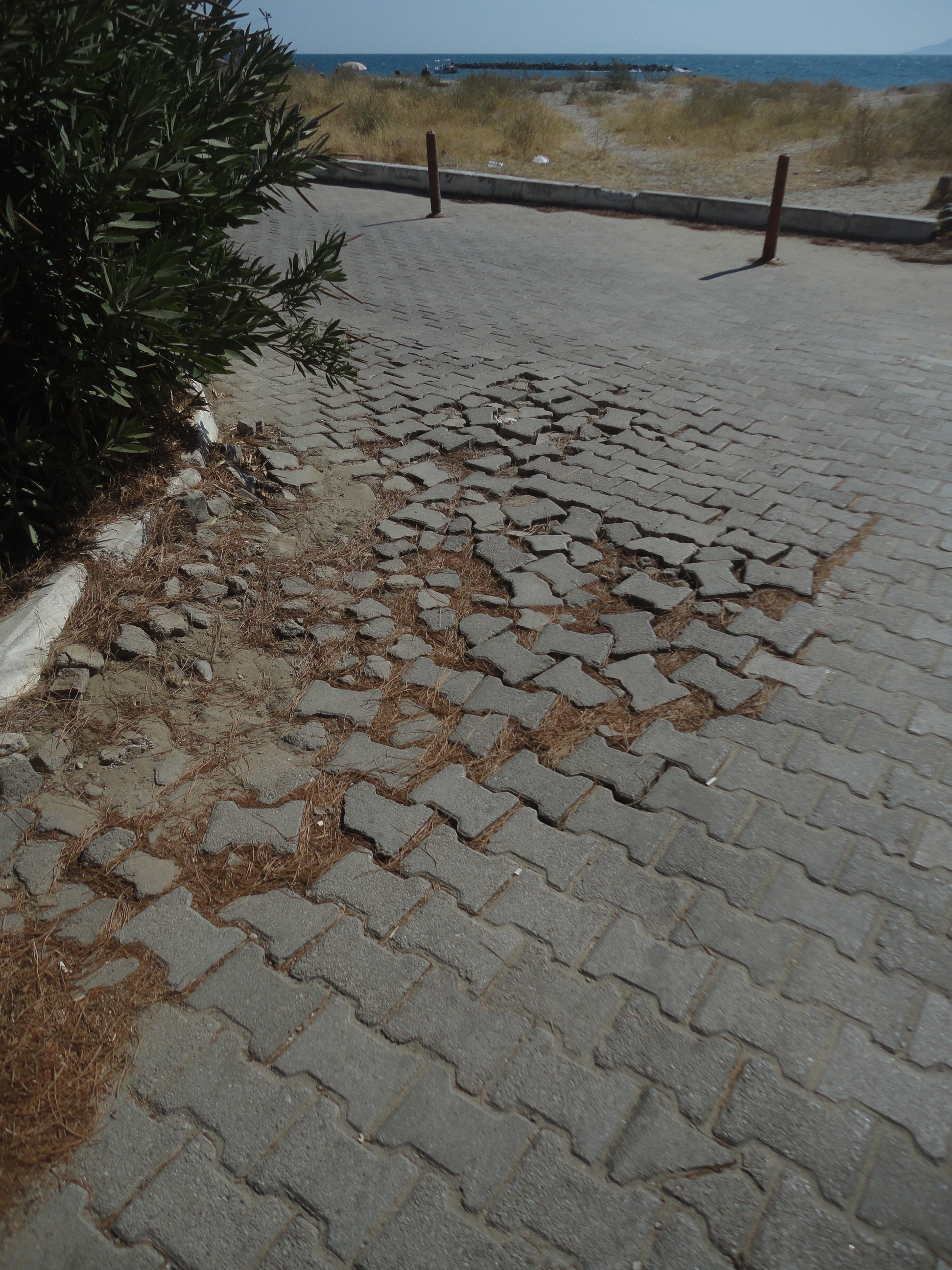
At the inner corner of a street, interlocking bricks break out of their pattern

Incomplete pavement
Altınova, Ayvalik, Balıkesir
September 9, 2025

Continue reading

Gödel, Grammar, and Mathematics

Preface

This attempt at exposition of Gödel’s Incompleteness Theorem was inspired or provoked by somebody else’s attempt at the same thing, in a blog post that a friend directed me to. I wanted in response to set the theorem in the context of mathematics rather than computer science.

Continue reading

Mathematics and Logic

Large parts of this post are taken up with two subjects:

  1. The notion (due to Collingwood) of criteriological sciences, logic being one of them.

  2. Gödel’s theorems of completeness and incompleteness, as examples of results in the science of logic.

Like the most recent in the current spate of mathematics posts, the present one has arisen from material originally drafted for the first post in this series.

In that post, I defined mathematics as the science whose findings are proved by deduction. This definition does not say what mathematics is about. We can say however what logic is about: it is about mathematics quâ deduction, and more generally about reasoning as such. This makes logic a criteriological science, because logic seeks, examines, clarifies and limits the criteria whereby we can make deductions. As examples of this activity, Gödel’s theorems are, in a crude sense to be refined below, that

  • everything true in all possible mathematical worlds can be deduced;

  • some things true in the world of numbers can never be deduced;

  • the latter theorem is one of those things.

Continue reading

Anthropology of Mathematics

This essay was long when originally published; now, on November 30, 2019, I have made it longer, in an attempt to clarify some points.

The essay begins with two brief quotations, from Collingwood and Pirsig respectively, about what it takes to know people.

  • The Pirsig quote is from Lila, which is somewhat interesting as a novel, but naive about metaphysics; it might have benefited from an understanding of Collingwood’s Essay on Metaphysics.

  • A recent article by Ray Monk in Prospect seems to justify my interest in Collingwood; eventually I have a look at the article.

Ideas that come up along the way include the following.

  1. For C. S. Lewis, the reality of moral truth shows there is something beyond the scope of natural science.

  2. I say the same for mathematical truth.

  3. Truths we learn as children are open to question. In their educational childhoods, mathematicians have often learned wrongly the techniques of induction and recursion.

  4. The philosophical thesis of physicalism is of doubtful value.

  5. Mathematicians and philosophers who ape them (as in a particular definition of physicalism) use “iff” needlessly.

  6. A pair of mathematicians who use “iff” needlessly seem also to misunderstand induction and recursion.

  7. Their work is nonetheless admirable, like the famous expression of universal equality by the slave-driving Thomas Jefferson.

  8. Mathematical truth is discovered and confirmed by thought.

  9. Truth is a product of every kind of science; it is not an object of natural science.

  10. The distinction between thinking and feeling is a theme of Collingwood.

  11. In particular, thought is self-critical: it judges whether itself is going well.

  12. Students of mathematics must learn their right to judge what is correct, along with their responsibility to reach agreement with others about what is correct. I say this.

  13. Students of English must learn not only to judge their own work, but even that they can judge it. Pirsig says this.

  14. For Monk, Collingwood’s demise has meant Ryle’s rise: unfortunately so since, for one thing, Ryle has no interest in the past.

  15. In a metaphor developed by Matthew Arnold, Collingwood and Pirsig are two of my touchstones.

  16. Thoreau is another. He affects indifference to the past, but his real views are more subtle.

  17. According to Monk, Collingwood could have been a professional violinist; Ryle had “no ear for tunes.”

  18. For Collingwood, Victoria’s memorial to Albert was hideous; for Pirsig, Victorian America was the same.

  19. Again according to Monk, some persons might mistake Collingwood for Wittgenstein.

  20. My method of gathering together ideas, as outlined above, resembles Pirsig’s method, described in Lila, of collecting ideas on index cards.

  21. Our problems are not vague, but precise.


When Donald Trump won the 2016 U.S. Presidential election, which opinion polls had said he would lose, I wrote a post here called “How To Learn about People.” I thought for example that just calling people up and asking whom they would vote for was not a great way to learn about them, even if all you wanted to know was whom they would vote for. Why should people tell you the truth?

Saturn eclipse mosaic from Cassini

Continue reading

On Being Given to Know

  1. What if we could upload books to our brains?
  2. What if a machine could tell us what was true?

We may speculate, and it is interesting that we do speculate, because I think the questions do not ultimately make sense – not the sense that seems to be intended anyway, whereby something can be got for nothing.

Trees, clearings, and houses in the foreground; mountains receding into the background; clouds above
View from Şavşat

Continue reading

On Gödel’s Incompleteness Theorem

This is an appreciation of Gödel’s Incompleteness Theorem of 1931. I am provoked by a depreciation of the theorem.

I shall review the mathematics of the theorem, first in outline, later in more detail. The mathematics is difficult. I have trouble reproducing it at will and even just confirming what I have already written about it below (for I am adding these words a year after the original publication of this essay).

The difficulty of Gödel’s mathematics is part of the point of this essay. A person who thinks Gödel’s Theorem is unsurprising is probably a person who does not understand it.

Next to a slice from a tree trunk, a worn copy of the book Frege and Gödel: Two Fundamental Texts in Mathematical Logic, edited by Jean van Heijenoort

Continue reading

Boolean Arithmetic

Mathematics can be highly abstract, even when it remains applicable to daily life. I want to show this with the mathematics behind logic puzzles, such as how to derive a conclusion using all of the following premisses:

  1. Babies are illogical.
  2. Nobody is despised who can manage a crocodile.
  3. Illogical persons are despised.

The example, from Terence Tao’s blog, is attributed to Lewis Carroll. By the first and third premisses, babies are despised; by the second premiss then, babies cannot manage crocodiles.

George Boole, The Laws of Thought (1854), Open Court, 1940

Continue reading

The Private, Unskilled One

I went into Istanbul’s Pandora Bookshop a month ago, looking for an English translation of War and Peace, since the Garnett translation I had read at college was falling apart. I was told the Oxford World’s Classics edition (with the Maude translation) was coming the next week, and it did come.

Elif Batuman, The Idiot, in Nesin Matematik Köyü, Kayser Dağı Mevkii, Şirince, Selçuk, İzmir, Turkey, 2017.05.18

Continue reading

NL II: “The Relation Between Body and Mind”

Index to this series

I continue making notes on The New Leviathan of R. G. Collingwood (1889–1943). Now my main concern is with the second chapter, “The Relation Between Body and Mind”; but I shall range widely, as I did for the first chapter.

Preliminaries

Some writers begin with an outline, which they proceed to fill out with words. At least, they do this if they do what they are taught in school, according to Robert Pirsig:

He showed how the aspect of Quality called unity, the hanging-togetherness of a story, could be improved with a technique called an outline. The authority of an argument could be jacked up with a technique called footnotes, which gives authoritative reference. Outlines and footnotes are standard things taught in all freshman composition classes, but now as devices for improving Quality they had a purpose.

That is from Zen and the Art of Motorcycle Maintenance, chapter 17.

Does anybody strictly follow the textbook method of writing? Continue reading