Category Archives: Harper’s

Harper’s Magazine

Gödel and AI

To prove that no recursive theory of addition and multiplication of the counting numbers can be complete, Gödel relies on the distinction between the subjective and the objective. I suggested this in “Subjective and Objective,” while noting also that, for a computer, all is subjective.

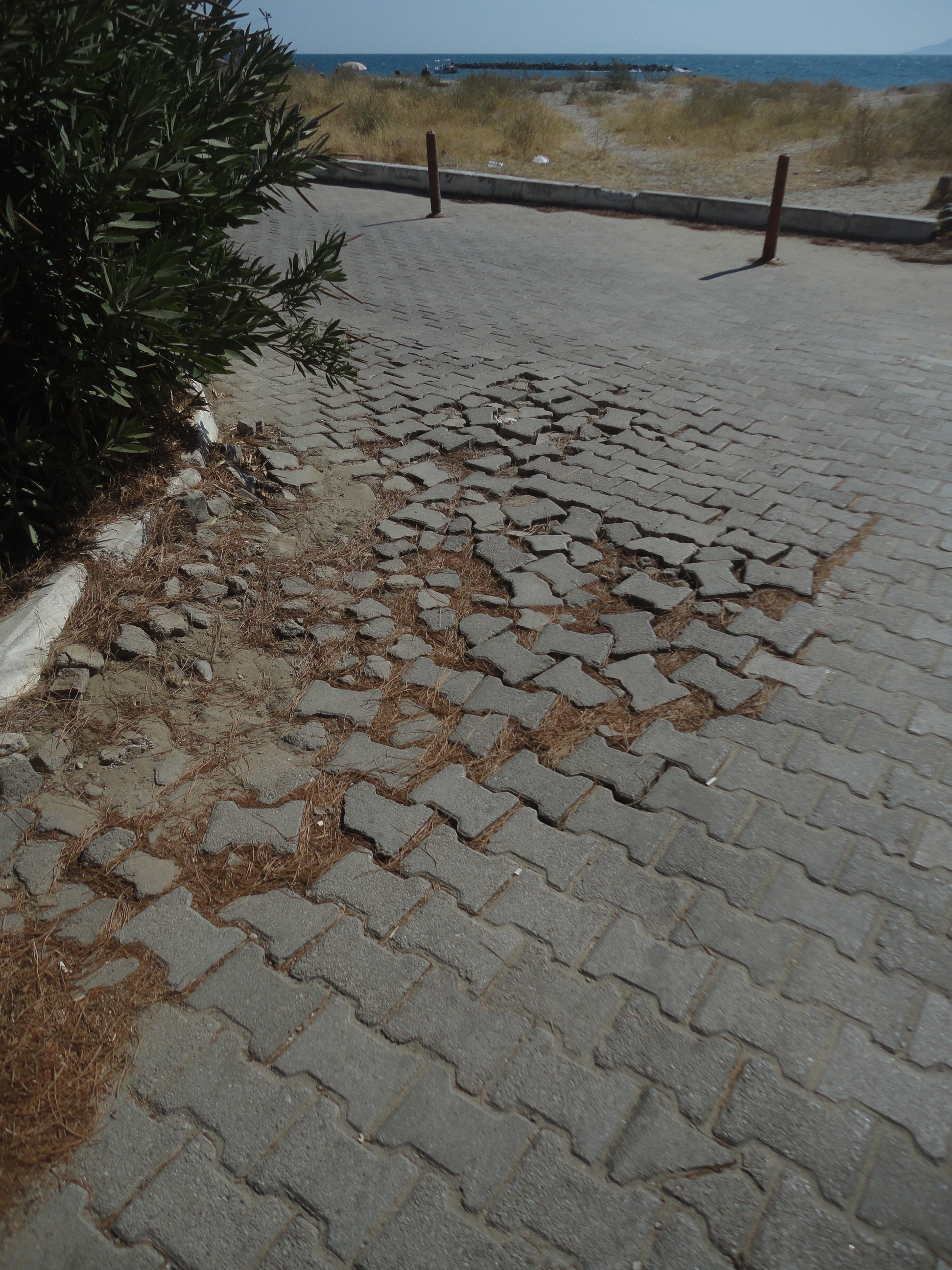
At the inner corner of a street, interlocking bricks break out of their pattern

Incomplete pavement
Altınova, Ayvalik, Balıkesir
September 9, 2025

Continue reading

Omniscience

I have been working on a post that could have been the result of the following prompt:

Write on Gödel’s Incompleteness Theorem and AI, using such thinkers as

  • Yuval Noah Harari (b. 1976),
  • William Deresiewicz (b. 1964),
  • Annie Dillard (b. 1945),
  • Roger Penrose (b. 1931),
  • Robert Pirsig (1928–2017),
  • George Orwell (1903–50),
  • E.B. White (1899–1985),
  • Michael Attaleiates (c. 1022–80), and
  • Plato (fl. 4th cent. b.c.e.).

Not until I had finished a first draft did I actually know that all of those people would feature. My real prompt had been more like,

In the style of David Pierce, write on Gödel’s Incompleteness Theorem and AI, as discussed by Roger Penrose in his “Précis of The Emperor’s New Mind.

So instructed, could an LLM have come up with the connections that I did? Well, sure. Anything that has happened, could have happened, even in some other way. The real question is whether I would want AI to write my next post.

The present post consists of things I wanted to say at the beginning of that other post, after I had a first draft.

          ⯅          

Note added September 27, 2025. The next post after this one was

  • Prairie Life,” comparing Robert Pirsig and Wendell Berry, because I was reading them both.

After that came the two posts that the draft mentioned above turned into:

After those came

  • The System,” on what was bothering Pirsig; this led me to the resurgence of fascism today.

I was trying to work all of this out in the place in the photo below.

          ⯆          

Two tall bushes, lit up by the sun, rise in front of a low wall, next to a pine trunk; crowns of pines behind

Laurels in the garden
Altınova, Ayvalik, Balıkesir
September 2, 2025

Continue reading

Found Poetry

This is adapted from emails I wrote in 2022 (on February 10 and July 16 and 17). I post them now, because I have been updating the “Directory” of documents that I have saved on this blog, other than as posts. I could not remember why I had saved an “Annotation” from Harper’s, until I found the reason below. I take up poetry by T. S. Eliot, E. McKim, and Robinson Jeffers, in addition to the one I first quote.


An email friend shared a poem called “Merrymakers” (from “Four Poems,” London Review of Books, 9 May 2013), by Charles Simic:

A troop of late night revellers,
most likely shown the door
at some after-hours club
or a party in the neighbourhood,
still whooping it up
as they stagger down the street
with a girl in a wedding dress
walking pigeon-toed far behind them,
and calling out in distress:
‘Hey, you! Where the fuck
do you think you’re going?’

The poets sets us up, sort of the way young Eliot does in “Prufrock”:

Let us go then, you and I,
When the evening is spread out against the sky
Like a patient etherised upon a table …

The shock from Simic is not in image, but in meter, which one might have expected to continue iambically:

A troop of late night revellers,
  most likely shown the door
at some old after-hours club,
  continued with their roar,
forgetting sensibilities …

As it is, the poem gets prosy. The lines are pretty much just units of speech, “end-stopped,” never “emjambed,” at least until the end.

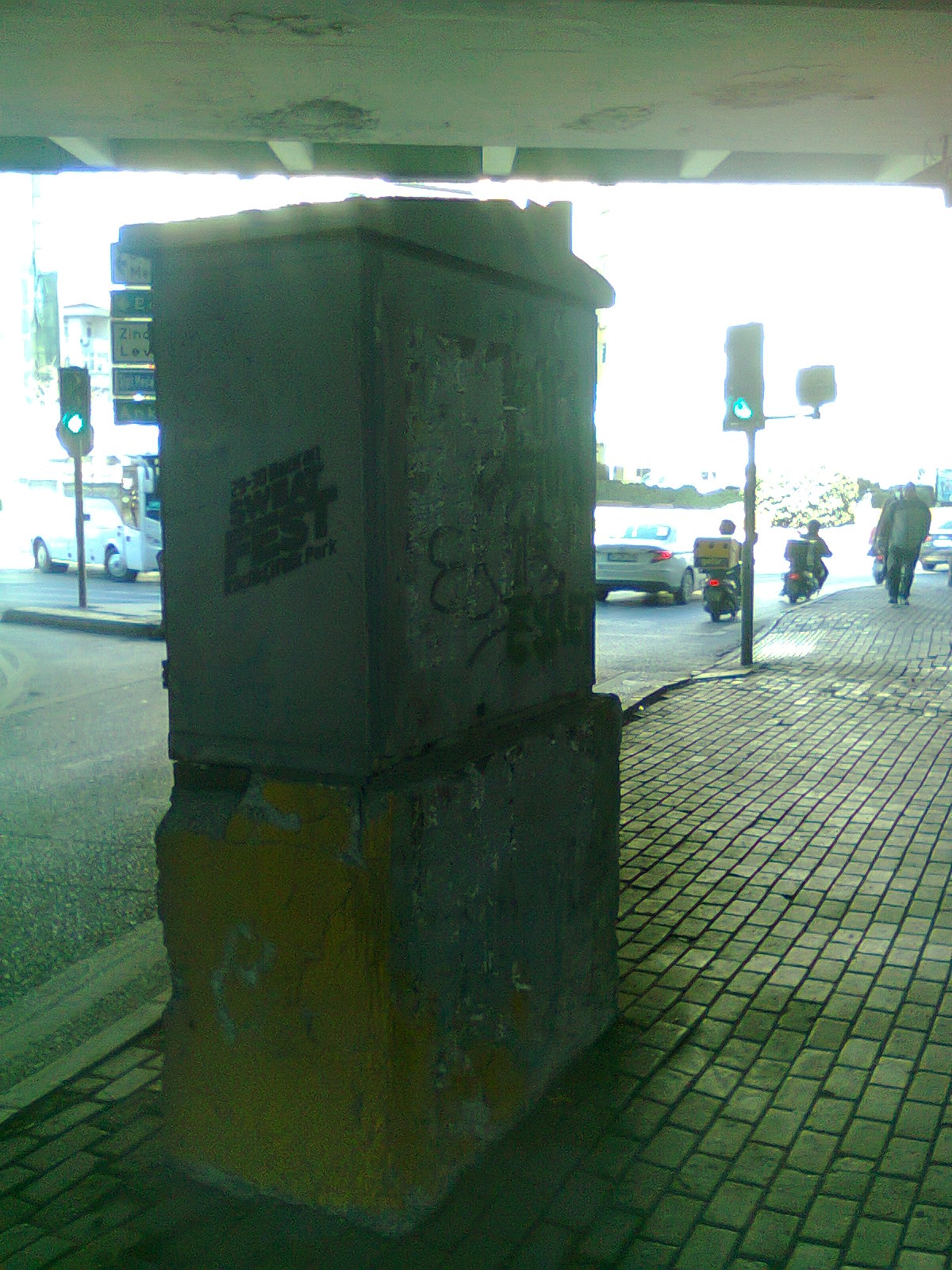
Just printing the vignette as poetry makes us pay attention in a certain way. Art is everywhere, if we know how to see it. The other day I was walking by an ugly old electrical box on the street, covered with remains of old posters, and I thought it could be spruced up with a small brass plaque, as if it were a sculpture.

Tests

This post concerns different kinds of knowledge, as for example of Achilles, or Cyrus the Great, or even oneself.

According to the last sentence of the “Findings” column in Harper’s for June, 2023,

Researchers developed a blood test for anxiety, which was found to underlie the joy of missing out.

Those researchers need a weatherman to tell which way the wind blows.

Similar research is reported in the Guardian Weekly for 9 September, 2022. The article is called “‘I’m glowing’: How an app is helping us measure the joy of trees.” The app in question does not detect your joy in the woods; it gives you a way to record your own self-assessment for later study. However, writes Patrick Barkham,

several studies suggest that more biodiversity has a bigger boost on people’s mental health, while the recording of brain activity in response to forest density found a more relaxed state and reduced tension and fatigue in forests with a lower density of trees.

Are you going to need a brain scan to tell if you are chilling out? Other people may relax among a few trees; does that mean you will?

My grandfather Kenneth Crawford described his own grandparents’ house in Wisconsin as being

innocent of plumbing, central heat or telephone. But the proportions were good and it was set in a grove of assorted trees.

I wish he had named some of the trees in the assortment. Right now I’ve got doves cooing in the umbrella pines overhead. Beneath these are oleanders and laurels and pomegranate trees.

Pine trunk next to leaves and needles of other trees; white wall below

Continue reading

Miracles

This is inspired by Charlotte Brontë’s Villette. After reading this 1853 novel a second time in the summer of 2018, I put some passages I liked into a LaTeX file. I added some commentary and came up with a document more than 90 A5 pages long. I recently reread it and was reminded how much I had enjoyed the novel. I thought some of my commentary could be adapted to stand alone as a blog post – this one.

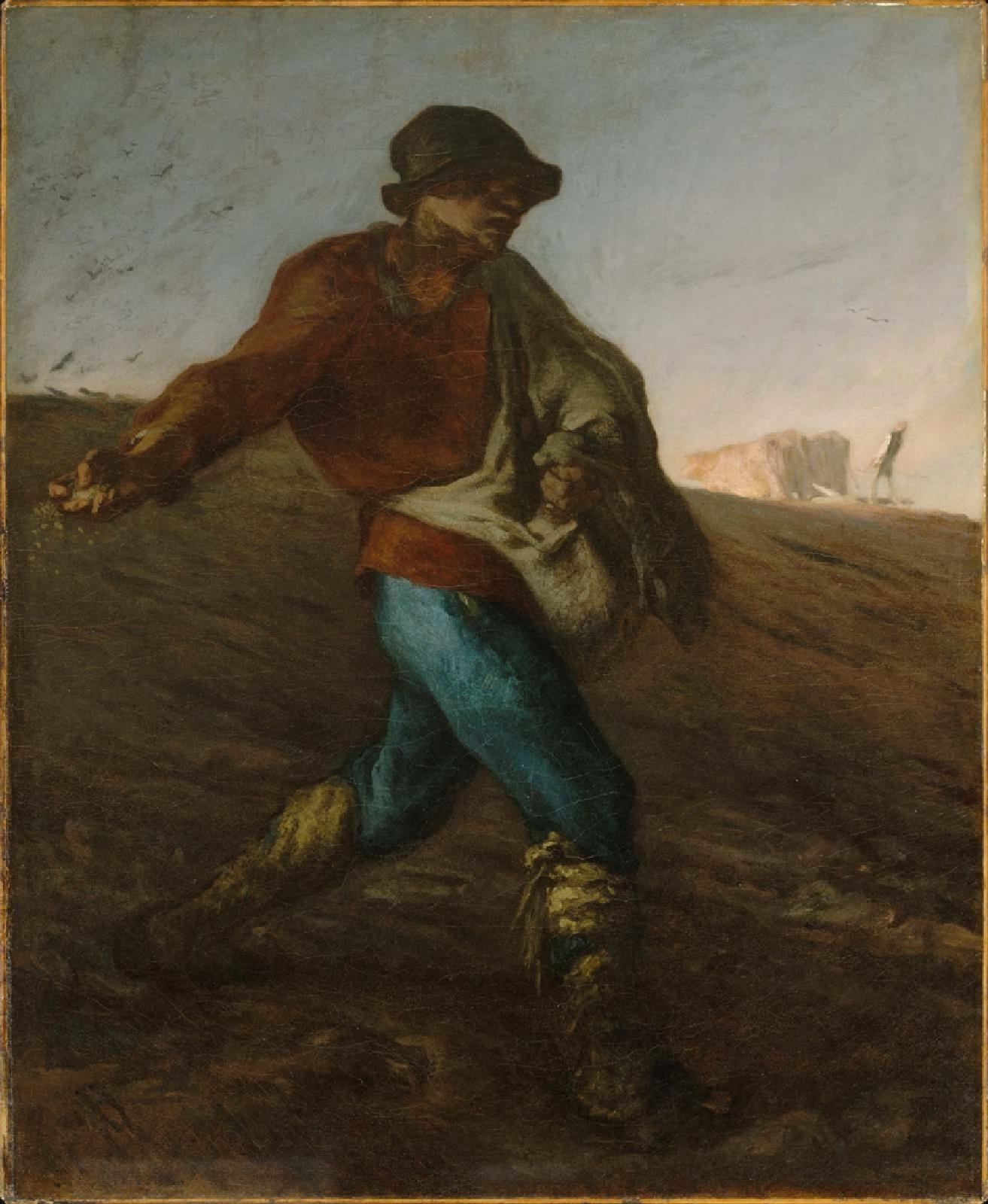
Man in a field, sack over left shoulder, casts seeds with his right hand
The Sower,” 1850
Jean-François Millet (French, 1814–1875)
Museum of Fine Arts, Boston

Continue reading

The Divided Line

Index to this series

We are still in the latter part of Book VI of Plato’s Republic, where Socrates undertakes to explain the education of the philosopher-kings (502c–d). They are not literally so called, as we noted last time. They are going to need to “be able to bear the greatest studies” (503e), and “the idea of the good is the greatest study” (505a). People are confused about what the good is:

  • many say it is pleasure;
  • a few, knowledge (505b).

It rather the case that

  • so the Good makes it possible to have
    • knowledge (508d), and perhaps even
    • pleasure (509a),
  • as the sun makes it possible to see (508b–d).

We looked at that much last time.

Sun through the leaves of planes
Dünya Barış Parkı 2021.10.30

Continue reading

Words

This post is based on recent readings, often on or through Twitter, of the following writers.

  1. Lilith Saintcrow on “Domestic abusers, white supremacists, and religious bigots.”
  2. C. S. Lewis on gulling the educated, and objectivity as a dubious value.
  3. Marilynne Robinson on consensus as concealing the objectively true.
  4. Neil deGrasse Tyson on objectivity as a good value.
  5. Plato on seeming wise, without being so.
  6. Mark Vernon on imagination in William Blake.
  7. whoever wrote an “Open Letter Concerning Transphobia in Philosophy,” signed by many professional philosophers.
  8. Agnes Callard on how philosophers shouldn’t be signing petitions.
  9. Rebecca Reilly-Cooper, on the incoherence of the notion of gender identity.
  10. Christopher Bertram, a signer of the “Open Letter.”
  11. Nathan Oseroff-Spicer, who noticed who had not signed the letter.
  12. Aaden Friday, on what’s wrong with Reilly-Cooper and other such women.
  13. Brian Earp, on why declaring pronouns is not obviously a good thing.
  14. Liam Kofi Bright, another signer of the “Open Letter.”
  15. Masha Gessen, on wishing he could have transitioned as a teen.
  16. John Steinbeck, on being a man.
  17. Christa Peterson, on what gender identity might be.
  18. Holly Lawford-Smith, on third bathrooms and being banned from social media.
  19. Jason Stanley, who signed the “Open Letter,” but also calls for left unity.
  20. Isaac Asimov, on behaviorism.
  21. Dominic Berry, who will block anybody who follows the editor who published Reilly-Cooper’s essay.
  22. Kathleen Stock, the subject of the “Open Letter.”
  23. Caitlin Green, on what people such as Stock should do if they are going to change their research focus.

Having originally posted this essay on January 9, 2021, I edited and augmented it, on January 19 and December 19 of that year. I return to it now, on June 22, 2023, having posted “On Dialectic,” two days ago; this one is another post that quotes lots of people, and I want to check how it reads. It reads fine, to me, although I did have to correct occurrences of “behavior” spelled as “behavor.” Moreover, although I had forgotten what was here, I recognized it instantly as I read; another reader would not experience this recognition.

What stands out most to me now is Christa Peterson’s suggestion,

A representation of our own gender … could … be a means of picking out people as who we are co-gendered with …

As the essay already suggests, if you replaced “gender” with “race,” then the resulting speculation could get you called a racist, and that is supposed to be something bad. However, if we replace “gender” with “sex,” we obtain a proposition that is fundamental to contemporary biology, as I understand it, because evolution is

  • not only by natural selection, or “survival of the fittest” – selection by the rigors of the natural environment,
  • but also by sexual selection, or selection for mating by members of the opposite sex of one’s (sexually reproducing) species.

I think this is why Nina Paley can say, in a blog post called “Why I Don’t Use ‘Preferred Pronouns’,” which I referred to also in “Imagination,”

Like most mammals, I can’t help but identify someone’s sex with +99% accuracy. (… Women, I think, are better at identifying sex than men, either due to instinct or conditioning for survival …)

We know that there are two sexes, and we know who is of which sex, the way we know that some foods are good to eat. However, Peterson seems to think of this knowledge a bit differently:

Trans people’s dignity and legitimacy does not depend on the success of any one attempt to conceptualize their experience. But the most common way, in terms of “gender identity,” is perfectly functional. The commitments of the popular notion are minimal: people have an internal sense of their own gender that can come apart from their knowledge of their assigned sex, and is generally fixed, and certainly not revisable in the way ordinary beliefs are.

What is the word “assigned” doing here? Does whether you are trans depend on whether somebody made a mistake when checking one of the boxes marked “male” and “female” at your birth?

A lot of old PSA’s about drugs are on YouTube and the Web Archive, and sometimes they are linked to by articles that ridicule them. There is one that I have not been able to find, perhaps from around 1970, in which parents confront their teenager with the drug paraphernalia that they have found in his room. The boy storms out of the house, saying, “You don’t understand!”

There’s a lot that I don’t understand. I must not, since it seems childish, but is coming from adults. Some of these adults stormed the US Capitol the other day; others encourage them; still others are professors of philosophy.

Figure in book showing egg and sperm. The circular egg has a fiery corona, and little sperm with wavy flagella come at it from one side. There are also two sperm with parallel straight flagella whose length is the diameter of the egg
“Human egg and sperm cells.”
Asimov’s New Guide to Science (1984), page 600

Continue reading

Pacifism

Pacifism is properly pacificism, the making of peace: not a belief or an attitude, but a practice. Mathematics then is pacifist, because learning it means learning that you cannot fight your way to the truth. Might does not make right. If others are going to agree with you, they will have to do it freely. Moreover, you cannot rest until they do agree with you, if you’ve got a piece of mathematics that you think is right; for you could be wrong, if others don’t agree.

The book *Dorothy Healey Remembers,* with photo of subject

Continue reading

Donne’s Undertaking

To ease the strain of pandemic restrictions, I was recently called on to recommend a poem. I chose “The Undertaking” of John Donne. I want to say here why. Briefly:

  1. The poem (which I transcribe below) has a sound that impressed me when I first read it, more than thirty years ago.
  2. The poem alludes to ideals:
    • of recognizing what is good for its own sake, and
    • of climbing a rung or two on Diotima’s ladder of love.
  3. The sound of Donne’s poem may seduce one into thinking the ideals worthy.

          ⯅          

I also indulge myself here in reminiscences not obviously relevant to “The Undertaking.” They do conclude with my sitting down to read Donne for myself. (Note added November 3, 2025.)

          ⯆          

Diotima’s ladder, or stairway, is recounted by Socrates in Plato’s Symposium (211c, here in the translation of Jowett, which is the one I read at school, though it may not be the most faithful; the bullets and insertions from the Greek text are mine):

And the true order of going, or being led by another, to the things of love (τὰ ἐρωτικά), is to begin from the beauties of earth and mount upwards for the sake of that other beauty, using these as steps (οἳ ἐπαναβαθμοί) only, and from

  • one going on to
  • two, and from two to
  • all fair forms (τὰ καλὰ σώματα), and from fair forms to
  • fair practices (τὰ καλὰ ἐπιτηδεύματα), and from fair practices to
  • fair notions (τὰ καλὰ μαθήματα), until from fair notions he arrives at
  • the notion of absolute beauty, and at last knows what the essence of beauty is (ὃ ἔστι καλόν).

Analytic Geometry and Donne’s complete poetry
Two books that were my mother’s

Continue reading

Effectiveness

Preface

First posted May 17, 2018, this essay concerns Eugene Wigner’s 1960 article “The Unreasonable Effectiveness of Mathematics in the Natural Sciences.” I wrote a lot, which I now propose to summarize by section. (The meditations also continue in the next article.)

  • Some things are miraculous. Among Wigner’s examples are

    • that mathematics is possible at all, and
    • that “regularities” in the physical world can be discovered, as by Galileo and Newton.

    For Wigner, we should be grateful for the undeserved gift of a mathematial formulation of the laws of physics. This makes no sense theologically – and here I agree with the character Larry Darrell in Somerset Maugham’s novel The Razor’s Edge. Wigner’s idea that our mathematical reasoning power has been brought to perfection makes no sense to me either.

  • Everything is miraculous. Here I agree with Collingwood in Religion and Philosophy. A miracle cannot be the breaking of a natural law, since such a thing cannot be broken. A great artist like Beethoven follows no rules in the first place, or makes them up as he goes along; and he is like God in this way.

  • Natural law. That it cannot be broken is part of the very concept of natural law. Quantum phenomena and the theory of relativity have not in fact been brought under a single law; for Wigner, it may not be possible.

  • Mystery. Not only can we not define miracles, but (as we should have observed in the first place) we cannot even say when they happen. If like Wigner we call something miraculous, this means it cleanses our own doors of perception, in the sense of William Blake.

  • Definitions. In his treatment of miracle in Religion and Philosophy, Collingwood shows the futility of trying to define a term when you are not sure how to use it. He makes this futility explicit in The Principles of Art. If we are going to think about the use of mathematics in natural science, this means we ought to be mathematician, natural scientist, and philosopher; and not just “natural scientist,” but physicist and biologist, since if mathematics is effective in physics, it would seem to be ineffective in biology.

  • Being a philosopher. We are all philosophers, in the sense that Maugham describes in the story “Appearance and Reality,” if only we think. All thought is for the sake of action. This does not mean that thought occurs separately from an action and is to be judged by the action. We may value “pure” thought, such as doing mathematics or making music or living the contemplative life of a monk. This however moves me to a give a thought to the disaster of contemporary politics.

  • Philosophizing about science. For present purposes, compart­ment­al­ization of knowledge is a problem. So is the dominance of analytic philosophy, for suggesting (as one cited person seems to think) that big problems can be broken into little ones and solved independently. In mathematics, students should learn their right to question somebody else’s solutions to problems. In philosophy, the problems themselves will be our own. Philosophy as such cannot decide what the problems of physics or biology are, though it may help to understand the “absolute presuppositions” that underlie the problems. Philosophers quâ metaphysicians cannot determine once for all what the general structure of the universe is. This does not mean they should do “experimental philosophy,” taking opinion polls about supposedly philosophical questions. What matters is not what people say, but what they mean and are trying to mean. As Collingwood observes, metaphysics is an historical science.

For more on the last points, see a more recent article, “Re-enactment.” (This Preface added June 3, 2018.)


I am writing from the Math Village, and here I happen to have read that Abraham Lincoln kept no known diary as such, but noted his thoughts on loose slips of paper. Admired because he “could simply sit down and write another of his eloquent public letters,”

Lincoln demurred. “I had it nearly all in there,” he said, pointing to an open desk drawer. “It was in disconnected thoughts, which I had jotted down from time to time on separate scraps of paper.” This was how he worked, the president explained. It was on such scraps of paper, accumulating over the years into a diaristic density, that Lincoln saved and assembled what he described to the visitor as his “best thoughts on the subject.”

Thus Ronald C. White, “Notes to Self,” Harper’s, February 2018. My own notes to self are normally in bound notebooks, and perhaps later in blog articles such as the present one, which is inspired by the 1960 article called “The Unreasonable Effectiveness of Mathematics in the Natural Sciences,” by Eugene Wigner.

Papers on a table with a view of trees and a distant hill between stone columns

Continue reading