Tag Archives: St. Albans School

Artificial Language

TL;DR: AI writing is like human writing. Of course it is, since its model is human writing. But then what AI produces is like bad human writing.

My sources include Plato, Wendell Berry, George Orwell, E. B. White, William Deresiewicz, Hadley Freeman, Andrew Kay, Kenneth G. Crawford, Hollis Robbins, Yuval Noah Harari, William Egginton, Megan Fritts, and Vi Hart.


About preparing certain seeds for human consumption in an infusion:

For sensory attributes, I’m admittedly Platonic and believe that since coffee is a fruit, it should taste something like a fruit. (And it’s not just any fruit – it’s a cherry!) My roasting philosophy comes from the same conviction. Generally, I’m after bright, juicy, fruity, syrupy goodness.

Thus Caleb Bilgen, founder of Ánimo Coffee Roasters in Asheville, North Carolina.

          ⯅          
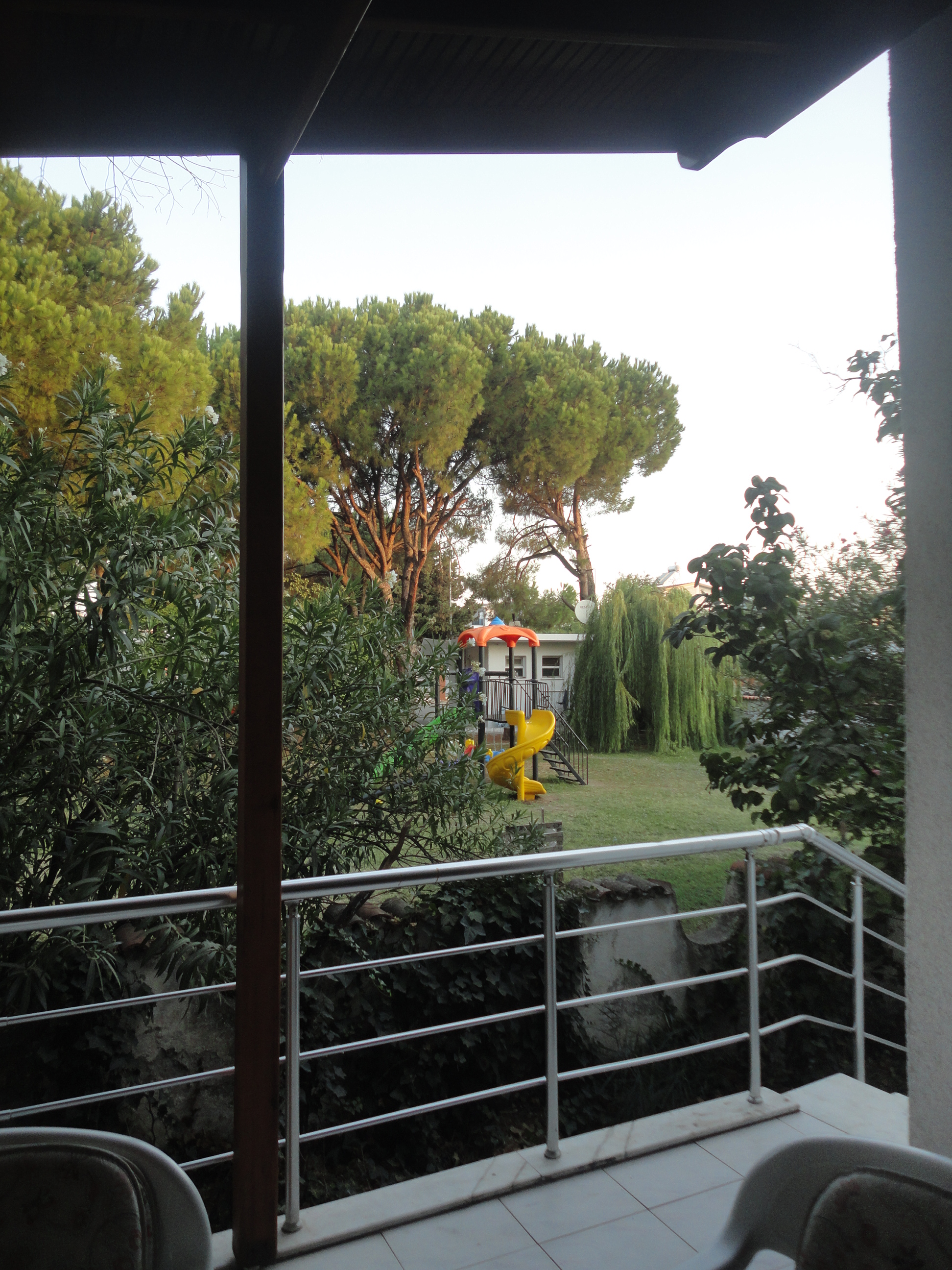
From a terrace beneath an awning, a low wall obscured by ivy, oleander, and quince; on the other side, a lawn with a jungle gym; beyond this, a weeping willow and a small white house beneath umbrella pines

What I see as the sun rises
Altınova, Ayvalik, Balıkesir
September 5, 2025

          ⯆          

Continue reading

Omniscience

I have been working on a post that could have been the result of the following prompt:

Write on Gödel’s Incompleteness Theorem and AI, using such thinkers as

  • Yuval Noah Harari (b. 1976),
  • William Deresiewicz (b. 1964),
  • Annie Dillard (b. 1945),
  • Roger Penrose (b. 1931),
  • Robert Pirsig (1928–2017),
  • George Orwell (1903–50),
  • E.B. White (1899–1985),
  • Michael Attaleiates (c. 1022–80), and
  • Plato (fl. 4th cent. b.c.e.).

Not until I had finished a first draft did I actually know that all of those people would feature. My real prompt had been more like,

In the style of David Pierce, write on Gödel’s Incompleteness Theorem and AI, as discussed by Roger Penrose in his “Précis of The Emperor’s New Mind.

So instructed, could an LLM have come up with the connections that I did? Well, sure. Anything that has happened, could have happened, even in some other way. The real question is whether I would want AI to write my next post.

The present post consists of things I wanted to say at the beginning of that other post, after I had a first draft.

          ⯅          

Note added September 27, 2025. The next post after this one was

  • Prairie Life,” comparing Robert Pirsig and Wendell Berry, because I was reading them both.

After that came the two posts that the draft mentioned above turned into:

After those came

  • The System,” on what was bothering Pirsig; this led me to the resurgence of fascism today.

I was trying to work all of this out in the place in the photo below.

          ⯆          

Two tall bushes, lit up by the sun, rise in front of a low wall, next to a pine trunk; crowns of pines behind

Laurels in the garden
Altınova, Ayvalik, Balıkesir
September 2, 2025

Continue reading

Visibility

I was nine when I first read the following, and I read it many times after that:

Book opened to the quoted text. In the drawing on the left page, workers are fitting glass between tall mullions. On the right, an octagonal maze in the floor

While the windows were being installed, plasterers covered the underside of the vault and painted red lines on it to give the impression that all the stones of the web were exactly the same size. They were eager for the web to appear perfect even if no one could see the lines from the ground.

Continue reading

Valor

The virtue of courage is seen most clearly

In saying this, we do not mean

  • we should all engage in such contests, or
  • any of us should, or
  • we cannot be brave without it.

Perhaps we should not be brave at all. Still, it is somehow open to us. It is better than the alternatives, but one has to work that out for oneself.

Fallen warrior on cover of Lattimore’s Iliad, lying on Crisp’s Nicomachean Ethics

Continue reading

Potential (Iliad Book XIII)

Let us first look at the calendar. We see the dawn of a new day in the Iliad in Book I, line 477, when the mission led by Odysseus to give Chryseis back to her father Chryses sails back to the Achaean camp at Troy.

The day before, when the mission arrived in Chryse, Thetis told Achilles that, the day before that, Zeus and the other gods had gone to visit the Ethiopians in Oceanus, but would return on the twelfth day (lines 423–5).

It is not clear to me just how the counting is done, but a twelfth dawn comes on line 493, when the gods return to Olympus, and Thetis gets the nod from Zeus that he will honor Achilles, who meanwhile has been going neither to the “place of gathering” (ἀγορή, line 490) nor to war. We are given no details, such as we now see in Book XIII, of how the war has been going.

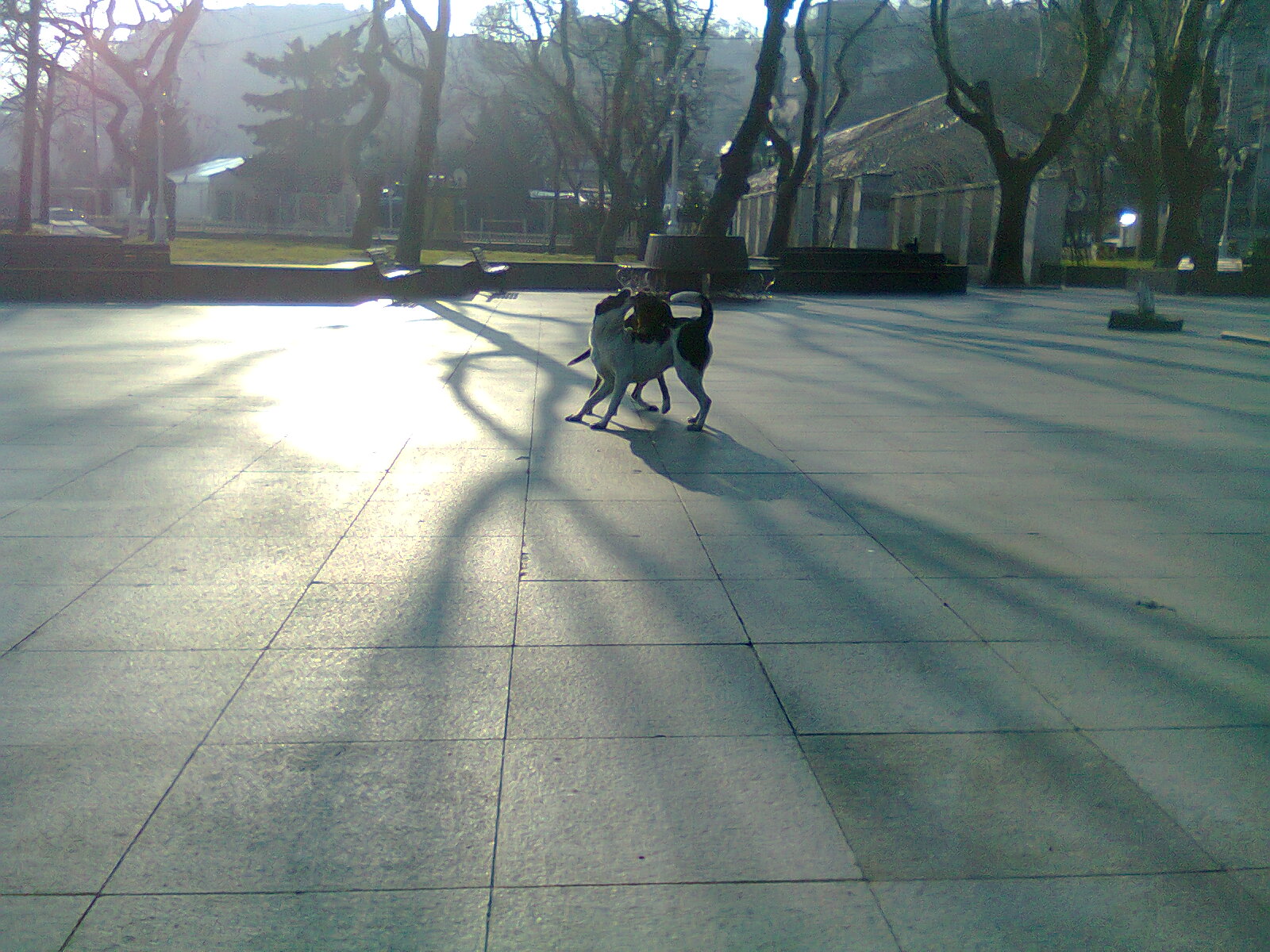
Two dogs on a stone plaza among the shadows of the bare trees that are behind them
Two dogs play-fighting
Haydar Aliyev Parkı
Kireçburnu, Sarıyer, Istanbul
Saturday morning, February 18, 2023

Continue reading

Charles Bell’s Axiomatic Drama

Here is an annotated transcription of a 1981 manuscript by Charles Greenleaf Bell (1916–2010) called “The Axiomatic Drama of Classical Physics.” A theme is what Heraclitus observed, as in fragment B49a of Diels, LXXXI of Bywater, and D65a of Laks and Most:

We step and we do not step into the same rivers,
we are and we are not.

ποταμοῖς τοῖς αὐτοῖς ἐμβαίνομέν τε καὶ οὐκ ἐμβαίνομεν,
εἶμέν τε καὶ οὐκ εἶμεν.

Bell reviews the mathematics, and the thought behind it, of

  1. free fall,
  2. the pendulum,
  3. the Carnot heat engine.

In a postlude called “The Uses of Paradox,” Bell notes:

Forty-five years ago I decided that when reason drives a sheer impasse into an activity which in fact goes on, we have to think of the polar cleavage as both real and unreal.

I like that reference to “an activity which in fact goes on.” In youth it may be hard to recognize that there are activities that go on. We do things then, but that they will get anywhere may be no more than a dream. In any case, Bell himself goes on:

… that is a job as huge and demanding as Aristotle’s, and for me at 70, just begun.

“Look,” my friends say, “Bell’s been doing the same thing since he was 25. About that time he had a vision of Paradox as paradise, and he’s been stuck there ever since.”

Bell’s picture next to Aristotle’s Physics
The back of Bell’s Five Chambered Heart with
the front of the OCT of Aristotle’s Physics

Continue reading

On Plato’s Republic, 12

Index to this series

We have completed the long detour of the Three Waves. In Book VIII of Plato’s Republic (Stephanus 543–69c), we return to the degeneration of the polity and the soul.

Rooster facing the sun at the top of a stairway
Freely ranging rooster
Çetin Emeç Park, Beşiktaş, Ιstanbul
November 22, 2021
Born in 1935, journalist Çetin Emeç was assassinated in 1990

Continue reading

On Plato’s Republic, 1

After the Pensées of Pascal and the Canterbury Tales of Chaucer, here begins another series on readings of a classic, now the Republic of Plato. The sections (after this one) of the present post are

Continue reading

Reason in Pascal

In some of the Pensées, Pascal contrasts reason with instinct, passions, folly, the senses, and imagination.

Here I investigate Pascal’s raison, after one session of an ongoing discussion of the Pensées that is being carried out on Zoom.

Continue reading

What Mathematics Is

Mathematics “has no generally accepted definition,” according to Wikipedia on September 15, 2020, with two references. On September 14, 2023, the assertion is, “There is no general consensus among mathematicians about a common definition for their academic discipline”; this time, there are no references.

I suggest that what really has no generally accepted definition is the subject of mathematics: the object of study, what mathematics is about. Mathematics itself can be defined by its method. As Wikipedia says also (as of either date given above),

it has become customary to view mathematical research as establishing truth by rigorous deduction from appropriately chosen axioms and definitions.

I would put it more simply. Mathematics is the science whose findings are proved by deduction.

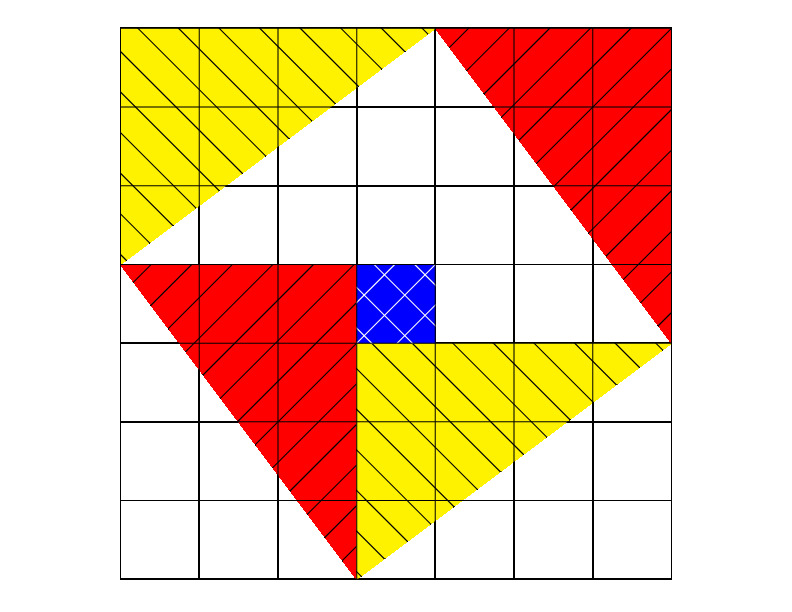
A 7×7 grid of squares, divided into four 3×4 rectangles arranged symmetrically about one square; the rectangles are divided in two by diagonals, which themselves describe a square
The right triangle whose legs are 3 and 4 has hypotenuse 5, because the square on it is
(4 − 3)2 + 2 ⋅ (4 ⋅ 3),
which is indeed 25 or 52. This is also
42 + 32.

Continue reading