Category Archives: Mathematics

LaTeX to HTML

This is a little about mathematics, and a little about writing for the web, but mostly about the nuts and bolts of putting mathematics on the web. I want to record how, mainly with the pandoc program, I have converted some mathematics from a LaTeX file into html. Like “Computer Recovery” then, this post is a laboratory notebook.

A stack of books of and about mathematics: The Princeton Companion to Mathematics at the bottom, volume 2 of Heath’s edition of The Elements of Euclid at the top

Continue reading

Discrete Logarithms

In the fall of 2017, I created what I propose to consider as being both art and mathematics. Call the art conceptual; the mathematics, expository; here it is, as a booklet of 88 pages, size A5, in pdf format.

More precisely, the work to be considered as both art and mathematics is the middle of the three chapters that make up the booklet. The first chapter is an essay on art, ultimately considering some examples that inspire my own. The last chapter establishes the principle whereby the lists of numbers in Chapter 2 are created.

Continue reading

An Exercise in Analytic Geometry

This past spring (of 2020), when my university in Istanbul was closed (like all others in Turkey) against the spread of the novel coronavirus, I created for my students an exercise, to serve at least as a distraction for those who could find distraction in learning.

Diagram from textbook page shows, centered at the origin of coordinates, a circle and an ellipse whose four points of intersection are traversed by two lines in red through the origin
From Weeks & Adkins, Second Course in Algebra, p. 395

Note added, April 17, 2023: An account of the mathematics involved in the exercise would ultimately be published as: Pierce, D. (2021). “Conics in Place.” Annales Universitatis Paedagogicae Cracoviensis | Studia Ad Didacticam Mathematicae Pertinentia, 13, 127–150.

Continue reading

Poetry and Mathematics

This reviews some reading and thinking of recent weeks, pertaining more or less to the title subjects, of which it may be worth noting that

  • poetry is from ποιέω “make”;
  • mathematics is from μανθάνω “learn.”

Summary added August 23, 2020: Mathematics may bring out such emotions as poetry does; but in the ideal, a work of mathematics is correct or not, in a sense that everybody will agree on. Here I review work of

  1. Lisa Morrow, writing in Meanjin as an immigrant to Istanbul, like me.
  2. Wendell Berry, in “The Peace of Wild Things,” which things “do not tax their lives with forethought / of grief,” and include the stars.
  3. Randall Jarrell, in The Animal Family.
  4. Mary Midgley, in Evolution as a Religion, on how we see animals.
  5. James Beall, astronomer, poet of the stars, tutor at my college.
  6. Edith Södergran, in “God,” as translated by Nicholas Lawrence in Cordite.
  7. Lukas Moodysson, in Fucking Åmål, where Agnes’s father notices that his daughter is reading Edith Södergran.
  8. Thomas J.J. Altizer, in The Gospel of Christian Atheism, a book that I kept from my father’s collection.
  9. Özge Samancı, in Dare to Disappoint, where the character to be disappointed is the father of the artist, and where Özlem (the artist’s friend and mine) praises the poetry of mathematics.
  10. Fiona Hile, writing, quâ editor of an issue of Cordite featuring poetry of mathematics, about the set theory of Maryanthe Malliaris and Saharon Shelah.
  11. Anupama Pilbrow, a poet writing in Meanjin about studying mathematics.
  12. Robert Pirsig, about students who ask their teacher, “Is this what you want?”
  13. R. G. Collingwood, who in Speculum Mentis analyzes Art, Religion, Science, History, and Philosophy as modes of existence.
  14. Michael Oakeshott, supposedly influenced by Collingwood, but also considered a forefather of “postmodern conservatism,” and analyzing existence into different modes from Collingwood’s, the latter according to the article in the Stanford Encyclopedia of Philosophy by Terry Nardin, who reports, “to insist on the primacy of any single mode is not only boorish but barbaric.”
  15. Allan Bloom, who suggests, in The Closing of the American Mind, that for Ronald Reagan, for the Soviet Union to be “the evil empire” and to “have different values” from the United States is the same thing.
  16. Galen Strawson, who seems to belie the possibility of different modes of being by saying, “we know exactly what consciousness is,” and also, “The nature of physical stuff is mysterious except insofar as consciousness is itself a form of physical stuff,” when (according to me) consciousness is simply not physical, not in the sense of being studied by physics.

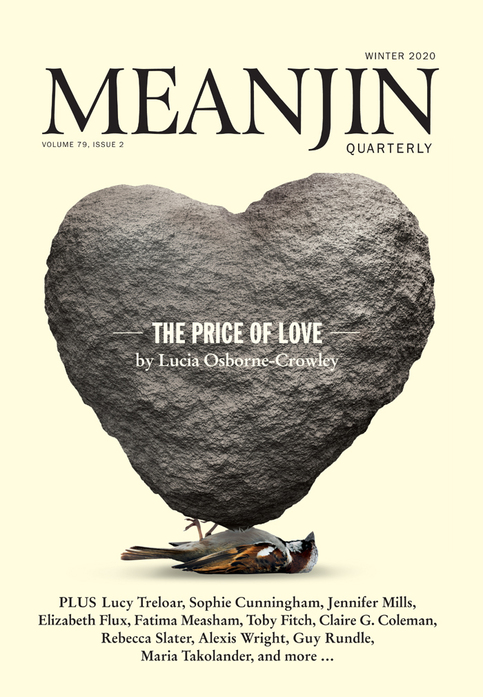
A Twitter friend living here in Istanbul announced (on June 16) her pleasure in having a memoir published in Meanjin.

Meanjin cover, Winter 2020: a bird crushed by a stone heart

Continue reading

Doing and Suffering

To do injustice is worse than to suffer it. Socrates proves this to Polus and Callicles in the dialogue of Plato called the Gorgias.

I wish to review the proofs, because I think they are correct, and their result is worth knowing.

Loeb Plato III cover

Or is the result already clear to everybody?

Whom would you rather be: a Muslim in India, under attack by a Hindu mob, or a member of that mob?

You would rather not be involved; but if you had to choose, which option would be less bad: to be driven to an insane murderous fury, or to be the object of that fury?

Continue reading

Salvation

Because Herman Wouk was going to put physicists in a novel, Richard Feynman advised him to learn calculus: “It’s the language God talks.” I think I know what Feynman meant. Calculus is the means by which we express the laws of the physical universe. This is the universe that, according to the mythology, God brought into existence with such commands as, “Let there be light.” Calculus has allowed us to refine those words of creation from the Biblical account. Credited as a discover of calculus, as well as of physical laws, Isaac Newton was given an epitaph (ultimately not used) by Alexander Pope:

Nature and Nature’s laws lay hid in night:
God said, Let Newton be! and all was light.

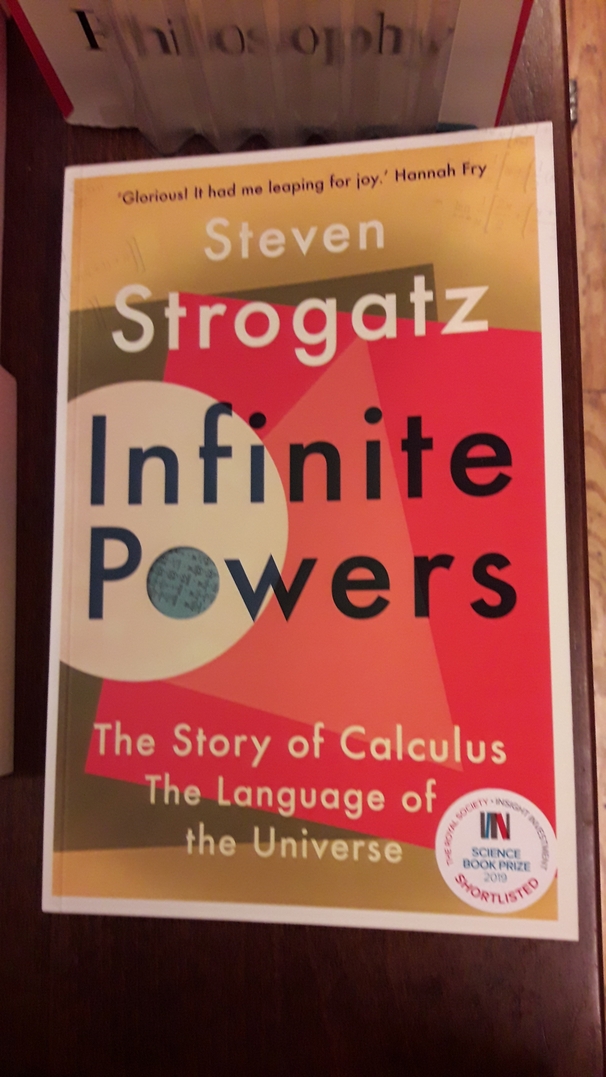
I don’t know, but maybe Steven Strogatz quotes Pope’s words in his 2019 book, Infinite Powers: How Calculus Reveals the Secrets of the Universe. This is where I found out about Wouk’s visit with Feynman. I saw the book recently (Saturday, February 22, 2020) in Pandora Kitabevi here in Istanbul. I looked in the book for a certain topic that was of interest to me, but did not find it; then I found a serious misunderstanding.

book cover: Steven Strogatz, Infinite Powers

Continue reading

Ordinals

This is about the ordinal numbers, which (except for the finite ones) are less well known than the real numbers, although theoretically simpler.

The numbers of either kind compose a linear order: they can be arranged in a line, from less to greater. The orders have similarities and differences:

  • Of real numbers,
    • there is no greatest,
    • there is no least,
    • there is a countable dense set (namely the rational numbers),
    • every nonempty set with an upper bound has a least upper bound.
  • Of ordinal numbers,
    • there is no greatest,
    • every nonempty set has a least element,
    • those less than a given one compose a set,
    • every set has a least upper bound.

Note. Would it be helpful to write that more verbosely?

  • There is no greatest real number.
  • There is no least real number.
  • The set of real numbers has a countable dense subset, namely the set of rational numbers.
  • Every set of real numbers that has an upper bound has a least upper bound.

  • There is no greatest ordinal number.
  • There is a least ordinal number.
  • Indeed,
    • every nonempty set of ordinal numbers has a least element, and
    • the class of ordinals that are less than a given ordinal is a set.
  • Every set of ordinals has a least upper bound.

One can conclude in particular that the ordinals as a whole do not compose a set; they are a proper class. This is the Burali-Forti Paradox.

Diagram of reals as a solid line without endpoints; the ordinals as a sequence of dots, occasionally coming to a limit

Continue reading

On the Idea of History

Note added, March 10–11, 2021. The bulk of this post concerns race in the theory of history, particularly the theory attributed to Johann Gottfried Herder (1744–1803). Not having read Herder for myself, I rely on the accounts of

  • R. G. Collingwood in § 2, “Herder,” of Part III of The Idea of History (1946),
  • Michael Forster in “Johann Gottfried von Herder,” Stanford Encyclopedia of Philosophy (summer 2019).

Somebody like Herder may introduce race as an hypothesis to explain history, but ultimately the hypothesis fails, by denying us the freedom that is essential to history as such. Nonetheless, Forster defends Herder as having

an impartial concern for all human beings … Herder does also insist on respecting, preserving, and advancing national groupings. However, this is entirely unalarming,

because, for one thing, “The ‘nation’ in question is not racial but linguistic and cultural.”

Change Collingwood’s word “race” to “linguistic and cultural grouping” then. I think his conclusion remains sound: “Once Herder’s theory of race is accepted, there is no escaping the Nazi marriage laws.”

More detail is in the post below. I go on to review the philosophy of history that Collingwood presents in the Introduction of The Idea of History. This book provided me with a title for the post.

I wrote a lot in this post, as I often do. Growing self-conscious for being opinionated about the theory of history, I listed the published evidence of my actually being an historian (an historian of ancient Greek mathematics in particular).

I originally wrote that my research had been inspired by a tweet. The author of that tweet also wrote the nice long comment on this post. However, although the tweet can be found on the Internet Archive, the author later deleted his Twitter account, and so the tweet appears on Twitter today as a gap in the thread above my own tweet in response to the other tweet.

That missing tweet referred to another tweet of the author, but the Internet Archive seems not to have saved it. It did save the present post; so if one were curious, one could see the changes that I have made since initial publication, or rather since September 29, 2020, when the Archive took the first snapshot.

The changes are for style and local clarity. Any large-scale changes would need me to recover the spirit that possessed me when I originally wrote.

I return to this post now, simply because a friend mentioned reading Middlemarch, and I remembered quoting George Eliot’s novel in a blog post, and that post turned out to be this one.

Had somebody mentioned reading Herder, I might have recalled writing about him in a blog post; that would be this post too.


Our environment may influence our feelings, but what we make of those feelings is up to us. Thus we are free; we are not constrained by some fixed “human nature”—or if we are, who is to say what its limits are?


Rembrandt van Rijn (and Workshop?), Dutch, 1606–1669,
The Apostle Paul, c. 1657, oil on canvas,
Widener Collection, National Gallery of Art

Continue reading

Anthropology of Mathematics

This essay was long when originally published; now, on November 30, 2019, I have made it longer, in an attempt to clarify some points.

The essay begins with two brief quotations, from Collingwood and Pirsig respectively, about what it takes to know people.

  • The Pirsig quote is from Lila, which is somewhat interesting as a novel, but naive about metaphysics; it might have benefited from an understanding of Collingwood’s Essay on Metaphysics.

  • A recent article by Ray Monk in Prospect seems to justify my interest in Collingwood; eventually I have a look at the article.

Ideas that come up along the way include the following.

  1. For C. S. Lewis, the reality of moral truth shows there is something beyond the scope of natural science.

  2. I say the same for mathematical truth.

  3. Truths we learn as children are open to question. In their educational childhoods, mathematicians have often learned wrongly the techniques of induction and recursion.

  4. The philosophical thesis of physicalism is of doubtful value.

  5. Mathematicians and philosophers who ape them (as in a particular definition of physicalism) use “iff” needlessly.

  6. A pair of mathematicians who use “iff” needlessly seem also to misunderstand induction and recursion.

  7. Their work is nonetheless admirable, like the famous expression of universal equality by the slave-driving Thomas Jefferson.

  8. Mathematical truth is discovered and confirmed by thought.

  9. Truth is a product of every kind of science; it is not an object of natural science.

  10. The distinction between thinking and feeling is a theme of Collingwood.

  11. In particular, thought is self-critical: it judges whether itself is going well.

  12. Students of mathematics must learn their right to judge what is correct, along with their responsibility to reach agreement with others about what is correct. I say this.

  13. Students of English must learn not only to judge their own work, but even that they can judge it. Pirsig says this.

  14. For Monk, Collingwood’s demise has meant Ryle’s rise: unfortunately so since, for one thing, Ryle has no interest in the past.

  15. In a metaphor developed by Matthew Arnold, Collingwood and Pirsig are two of my touchstones.

  16. Thoreau is another. He affects indifference to the past, but his real views are more subtle.

  17. According to Monk, Collingwood could have been a professional violinist; Ryle had “no ear for tunes.”

  18. For Collingwood, Victoria’s memorial to Albert was hideous; for Pirsig, Victorian America was the same.

  19. Again according to Monk, some persons might mistake Collingwood for Wittgenstein.

  20. My method of gathering together ideas, as outlined above, resembles Pirsig’s method, described in Lila, of collecting ideas on index cards.

  21. Our problems are not vague, but precise.


When Donald Trump won the 2016 U.S. Presidential election, which opinion polls had said he would lose, I wrote a post here called “How To Learn about People.” I thought for example that just calling people up and asking whom they would vote for was not a great way to learn about them, even if all you wanted to know was whom they would vote for. Why should people tell you the truth?

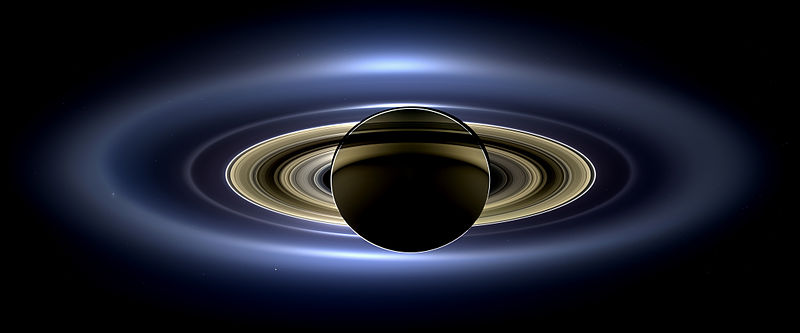
Saturn eclipse mosaic from Cassini

Continue reading

On Chapman’s Homer’s Iliad, Book XVIII

I analyze Book XVIII of the Iliad into seven scenes.

Branches against sky

Continue reading