Category Archives: Mathematics

Beykoz, Istanbul

After five years in Istanbul, we continue to learn how much there is still to discover here. Now we have been to the Asian borough of Beykoz. Much of what we saw there was rural, and the topography and flora reminded me of Appalachia. I have nothing to say about the poverty and ignorance that might be suggested by this term; for me, Appalachia was always a locus for holidays, mostly at my late uncle’s place in West Virginia, but also in the form of bicycle tours. Travelling now to Beykoz, “Country roads,” I could think, “take me home, to the place I belong!” We got there by public bus from our European borough of Şişli.

Polonezköy, Beykoz, 2016.08.14

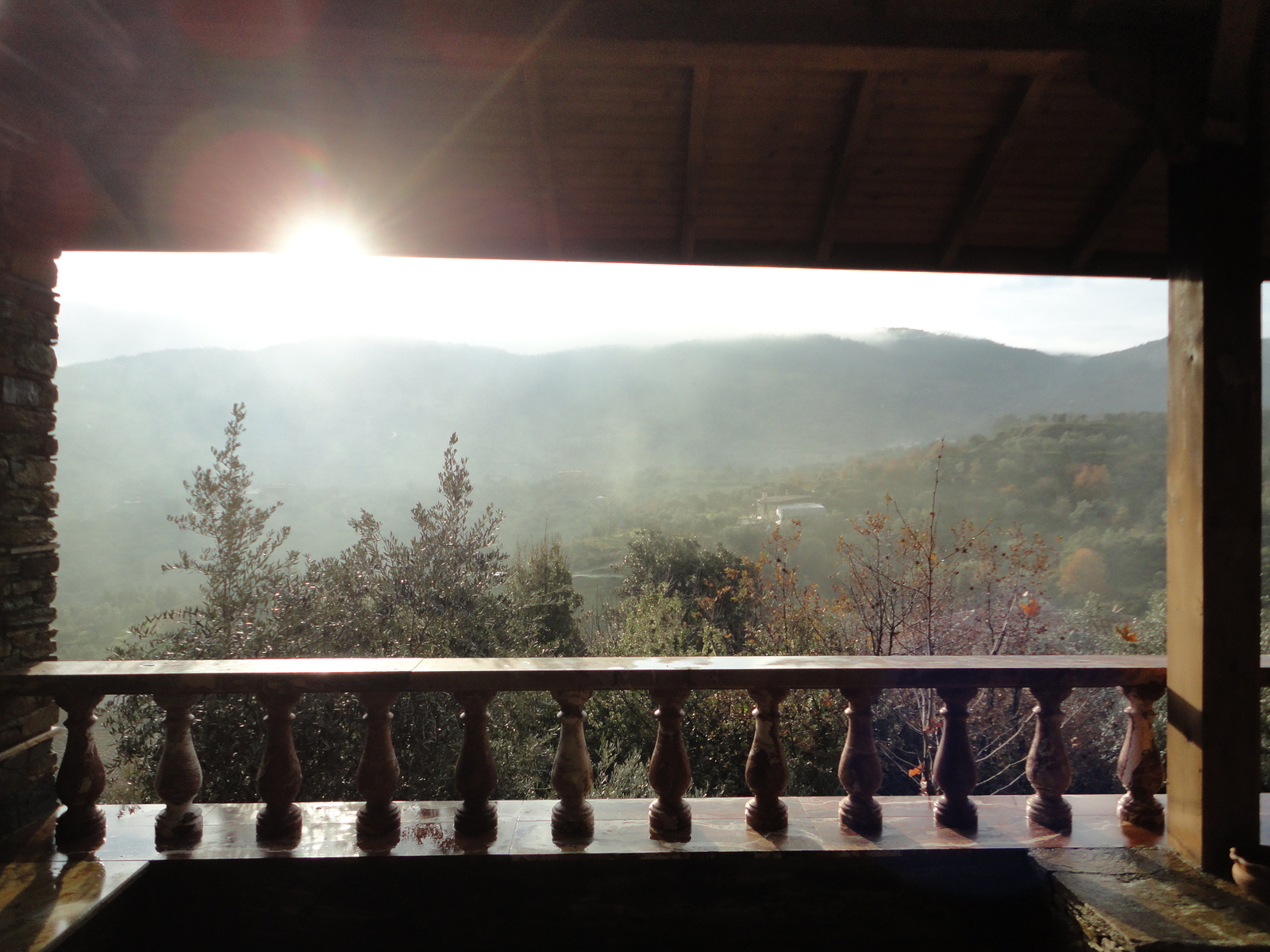
Polonezköy, Beykoz, 2016.08.14

Continue reading

Thinking & Feeling

This essay is written as a distraction from current events, though I make some reference to them. I am prompted by questions of analogy provoked by

  1. the similes of Homer and
  2. a recent theater review in Harper’s that mentions the parables of Jesus.

With sea in the background, on the sand of a beach sits Chapman’s Homer: The Iliad, the cover featuring a 16th-century Flemish tapestry (framed by a circle), Scene from Roman History, showing a number of men, the one in the middle armored; a horse is in the foreground

Continue reading

Academic Freedom

(See also other articles in the Freedom category.)

Yesterday (March 24, 2016) was the first day of the sixth Models and Groups Istanbul meeting. There were participants from the Middle East, Europe, and America. Kıvanç Ersoy was to speak about his own mathematics. He could not speak, because he was in prison. He, Esra Mungan, and Muzaffer Kaya were in prison, because the three of them had publicly insisted that the government of Turkey make peace in the southeast of the country. Absurd, but true. Continue reading

Nesin Matematik Köyü, Ocak (January) 2016

DSC05976

My first visit to the Nesin Mathematics Village was in the summer of 2007. My first course there was in the summer of 2008. I have been back every summer since, sometimes more than once. Now I have visited for the first time in winter. I am in awe. The photographs here are supposed to give you an idea why. Continue reading

The Facebook Algorithm

I thank all of the friends who sent me birthday greetings on Facebook this year. [But see note at end.] One friend noted that I was not likely to see his birthday greeting, since I do not pay attention to Facebook these days. I usually do not pay attention; but since so many friends apparently continue to use that medium, I have not closed my account. I recently posted on Facebook a couple of photographs showing a friend from Washington who was visiting Istanbul. These photographs were “liked” by friends of that person or of me. Thus I suppose I used Facebook for its best purpose. Continue reading

Equality Is Not Identity

I want to record here an account by Collingwood of Aristotle’s theory of knowledge. The passages quoted below are relevant, both to something I have learned from reading Euclid with students, and to the considerations of consciousness that led to my recent article “Body and Mind.”

Continue reading

The Academic Battery Cage

The purpose of this article is to record a couple of paragraphs by Mary Midgley about academia today and its judging of people according to numbers of papers published. I have become something of a fan of Midgley. Her field is philosophy, though I think her complaint applies to mathematics or anything else:

Continue reading

The Peace of Liberal Education

The wall of Dolmabahçe Sarayı, January 11, 2015

The wall of Dolmabahçe Sarayı, January 11, 2015

The occasion of this article is my discovery of a published Turkish translation of Collingwood’s Speculum Mentis or The Map of Knowledge (Oxford, 1924). Published as Speculum Mentis ya da Bilginin Haritası (Ankara: Doğu Batı, 2014), the translation is by Kubilay Aysevenler and Zerrin Eren. Near the end of the book, Collingwood writes the following paragraph about education, or what I would call more precisely liberal education. The main purpose of this article then is to offer the paragraph to any reader who happens to stop by.

Continue reading

Bosphorus Sky

This is about the morning of Thursday, December 18, 2014, a morning I spent by the Bosphorus, thinking mostly about poetry, and photographing the sky.

Seagulls against clouds and a brighter sea

Continue reading

Uniformity

For certain reasons, this is something of a follow-up to an earlier article, Interconnectness, in which I quoted myself from December of 1987 as saying,

I came to think that if one understood the law of contradiction, there would be nothing left to understand.

I am going to quote now the person I quote the most, Collingwood, from the fourth paragraph from the end of Religion and Philosophy:

Uniformity, in a word, is relative to our needs; and to suggest that a game of cricket, for instance, would be impossible if we supposed that the ball might suddenly decide to fly to the moon, is no less and no more sensible than to suggest that it is impossible because the bowler might put it in his pocket and walk off the field. We know that the friend we trust is abstractly capable, if he wished, of betraying us, but that does not prevent our trusting him. It may be that our faith in the uniformity of matter is less removed from such a trust than we sometimes imagine. Whether we describe it as faith in matter or faith in God makes, after all we have said, little difference.

Continue reading