Category Archives: Mathematics

Equality Is Not Identity

I want to record here an account by Collingwood of Aristotle’s theory of knowledge. The passages quoted below are relevant, both to something I have learned from reading Euclid with students, and to the considerations of consciousness that led to my recent article “Body and Mind.”

Continue reading →

The Academic Battery Cage

The purpose of this article is to record a couple of paragraphs by Mary Midgley about academia today and its judging of people according to numbers of papers published. I have become something of a fan of Midgley. Her field is philosophy, though I think her complaint applies to mathematics or anything else:

Continue reading →

The Peace of Liberal Education

The wall of Dolmabahçe Sarayı, January 11, 2015

The wall of Dolmabahçe Sarayı, January 11, 2015

The occasion of this article is my discovery of a published Turkish translation of Collingwood’s Speculum Mentis or The Map of Knowledge (Oxford, 1924). Published as Speculum Mentis ya da Bilginin Haritası (Ankara: Doğu Batı, 2014), the translation is by Kubilay Aysevenler and Zerrin Eren. Near the end of the book, Collingwood writes the following paragraph about education, or what I would call more precisely liberal education. The main purpose of this article then is to offer the paragraph to any reader who happens to stop by.

Continue reading →

Bosphorus Sky

This is about the morning of Thursday, December 18, 2014, a morning I spent by the Bosphorus, thinking mostly about poetry, and photographing the sky.

Seagulls against clouds and a brighter sea

Continue reading →

Uniformity

For certain reasons, this is something of a follow-up to an earlier article, Interconnectness, in which I quoted myself from December of 1987 as saying,

I came to think that if one understood the law of contradiction, there would be nothing left to understand.

I am going to quote now the person I quote the most, Collingwood, from the fourth paragraph from the end of Religion and Philosophy:

Uniformity, in a word, is relative to our needs; and to suggest that a game of cricket, for instance, would be impossible if we supposed that the ball might suddenly decide to fly to the moon, is no less and no more sensible than to suggest that it is impossible because the bowler might put it in his pocket and walk off the field. We know that the friend we trust is abstractly capable, if he wished, of betraying us, but that does not prevent our trusting him. It may be that our faith in the uniformity of matter is less removed from such a trust than we sometimes imagine. Whether we describe it as faith in matter or faith in God makes, after all we have said, little difference.

Continue reading →

The Hyperbola

Here is the model that I made of the hyperbola, or rather the conjugate hyperbolae, as Apollonius calls them.

Conjugate hyperbolae and their common diameter

Conjugate hyperbolae and their common diameter


Continue reading →

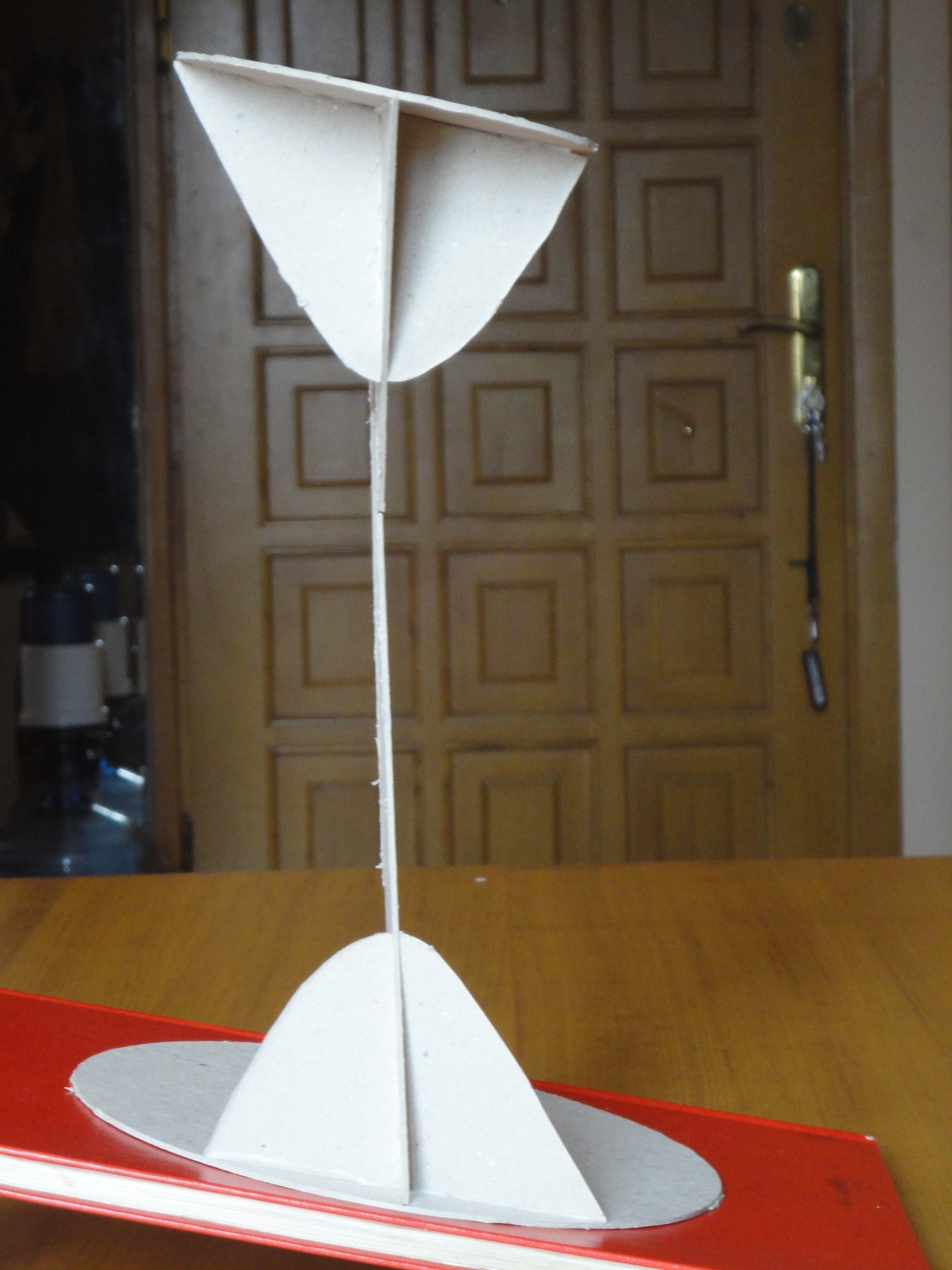
The Parabola

I do not now recall my specific inspiration; but in January of 2012, sitting at home in Istanbul, I cut up a cardboard box in order to make a model of a parabola quâ conic section.

January 14, 2012

January 14, 2012


Continue reading →

Facts (NL IX, ‘Retrospect,’ first 6 paragraphs)

Index to this series

A certain person says,

I am not better than you or more virtuous than you. If you see me on the right path, help me. If you see me on the wrong path, advise me and halt me. And obey me as far as I obey God.

How should one hear these words: as an eminently reasonable expression of benevolent humility such as any of us might honorably make? Well, no matter how qualified, the command obey me might be a warning sign. The words are in fact from a recently published video, as quoted in the Guardian Weekly (Vol 190 No 5, 11–17 July 2014, p. 4). The speaker is the man whose nom de guerre is Abu Bakr al-Baghdadi, on whose head the Department of State of the United States of America placed a ten-million-dollar bounty in 2011. He now styles himself Ibrahim, Caliph of the Islamic State, a new entity that is supposed to restore the lost Muslim glory of past centuries. This restoration is to be achieved through war. War requires military discipline, with punishments meted out for infractions like insubordination, not to mention the slaughter of those perceived as enemies. So al-Baghdadi’s request to be advised and halted if seen to be in the wrong must be interpreted rather carefully.

It is difficult to know how to interpret somebody’s words. With that I pass to the transitional chapter in the first part, “Man,” of Collingwood’s New Leviathan.

Continue reading →

Şirince 2014

This is about our second visit to the Nesin Mathematical Village in Şirince this year. The first visit was to attend the Summer School Around Valuation Theory, May 22–26. Now we have come back to teach, as usual, in the Turkish Mathematical Society Undergraduate and Graduate Summer School. This time we are teaching not just one week, but two: July 14–27. My own course, as several times in the past, is on nonstandard analysis. Each course meets every day but Thursday, two hours a day.

The Math Village only increases in beauty every year, as I mean to suggest by posting a few photographs below.

Continue reading →

NL V: “The Ambiguity of Feeling”

Index to this series

Feeling differs from thought. Thought is founded in feeling; thought is erected on feeling; thought needs feeling. Thought needs feelings that are strong enough to support it. But thought itself is not strong (or weak); it has (or can have) other properties, like precision and definiteness. Thought can be remembered and shared in a way that feeling cannot.

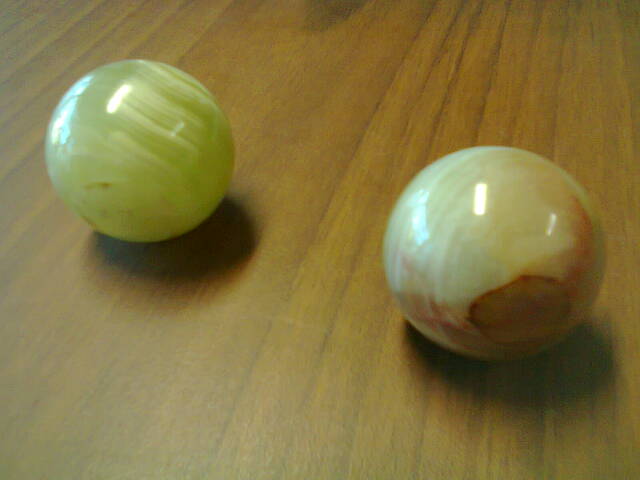
Two shiny spheres, more or less translucent, streaked with green and brown respectively, sitting on a flat surface of fake woodgrain

Onyx balls from a tourist shop in Cappadocia

Continue reading →