Category Archives: Collingwood

Concerning the philosopher R. G. Collingwood (1889–1943). Many if not most of my posts concern Collingwood somehow, so this category may not be of much use. See Articles on Collingwood for some articles by other persons

NL XXIII: The Family As a Society

Index to this series

Executive summary (added September 11, 2018):

1.
The society at the nucleus of the family is temporary, ending with the death of one of the two members.
2.
The family has a life-cycle, with three phases: (1) before children; (2) after children, but before they have free will; (3) after the children have free will.
3.
The community consisting of husband and wife is now a society. It was not a society when a marriage was arranged by the groom or the groom’s father and the father of the bride. The non-social aspect of a marriage survives in the custom of formally “giving away” the bride.
4.
If today a bride and groom do not quite recognize themselves as forming a society, they may come to do so in time.
5.
Contraception helps clarify that a marriage is normally for the sake of having children.
6.
In order to grow up and leave the nursery, the child must be educated. The work of this is both the child’s and its teachers’. Parents must also allow the child to leave the nursery and join their society.
7.
There are three possible needs, and they are distinct: (1) to have a baby, (2) to have a child, (3) to have a grown-up child.
8.
Any of those three needs is fulfilled by an act of will; there is no parental “instinct”—not a scientific term anyway, though it is used popularly for an appetite or desire.
9.
Born without free will, we are not born in chains either, since this would mean suppression of a will that didn’t exist.

The last chapter was called “The Family As a Mixed Community,” because the family consists of both a society and a non-social part, called the nursery. Now we are looking at “The Family As a Society.” We are not in contradiction, but are in the flux that Heraclitus observed in all existence (24. 62). The inmates of the nursery normally grow and join the society of their parents: the family as a whole is a society in this sense.

Altınova bazaar, Wednesday, September 13, 2017

Continue reading

NL XXII: The Family As a Mixed Community

Index to this series

Executive summary (added September 10, 2018): The family is a mixed community, consisting of a society and a non-social community. Usually the society is a married couple; if they have children, these constitute the nursery, which is the non-social part of the family. The children need an ordered, regular life. They grow up and leave the nursery; the parents may replenish it.


This chapter and the next concern the family, which like most communities is a mixed community (22. 11): part of it is a non-social community, but some part of it is a society proper (22. 1), this being, again, as in Chapter XX especially, a community constituted as an act of will on the part of its members.

Continue reading

On Chapman’s Homer’s Iliad, Book VI

Index to this series | Text of Chapman’s Homer’s Iliad

Book VI of the Iliad may illustrate or test what I have also been reading, whose second title is Man, Society, Civilization and Barbarism. For the Greeks, the Trojan war is a fight for civilization, against the barbarism of stealing the wife of the man who has played host to you. In Book VI is the great exemplar of civilization: the meeting of Diomedes with Glaucus. Discovering that the grandfather of his Trojan enemy had once been a guest of his own grandfather, Diomedes urges that he and Glaucus must exchange gifts, be friends, and avoid meeting on the battlefield; and Glaucus agrees.


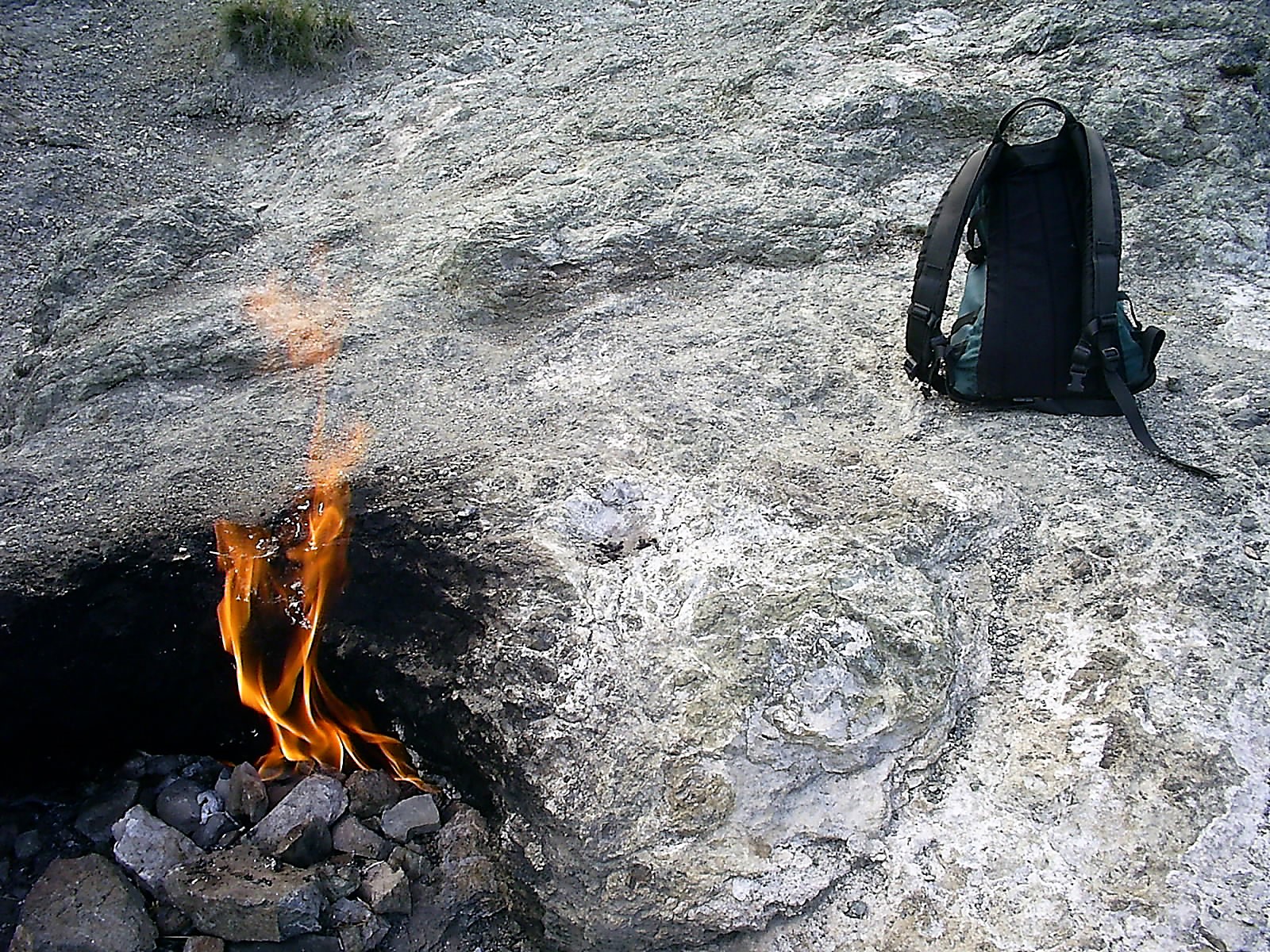
One flame of the Chimera, with my backpack, 2009

Continue reading

NL XXI: Society as Joint Will

Index to this series

Executive summary (added September 10, 2018):

1.
I cannot say “I will” without recognizing the possibility of joining with others to say “we will.”
2.
A social consciousness consists of (1) a precise idea of one’s place in a society and (2) a vague sense of the society as a whole. The latter sense may be incorrect, having been foolishly accepted on the word of an authority.
3.
Properly understood, ruling, of itself and perhaps of a non-social community, may be all that a society does. It is the responsibility of the members alone.
4.
To form a society means (1) to form social relations and (2) to do this for some purpose. To focus on (1) yields the idea of a universal society—which cannot actually exist, despite foolish hopes for the League of Nations.
5.
The universal society cannot exist, because we produce a society by transforming an earlier community, and some trace of this must remain.
6.
Members of a society are equal, (1) in having the freedom to join and (2) in just being members. A society may create an inequality, as by delegating authority. There may be natural inequalities, not produced by the society itself; society may compensate for them, turn them into assets, or even depend on them, as in the case of initiative.
7.
Rule by force (in a non-social community) may be by rewards and punishments, that is, objects of desire and fear. These may be promised or threatened fraudulently. One who grows too accustomed to exerting force may lose freedom of will.
8.
Societies institute criminal law to mitigate members’ losses of freedom of will.
9.
Societies can be temporary or permanent.

Continue reading

NL XX: Society and Community

Index to this series

Executive summary (added September 9, 2018): Henceforth we are concerned with communities, namely “societies” of human beings (or beings with at least the potential for free agency). Indeed, the whole of Part II is “an inquiry into communities” (1. 15). A society, also called a partnership, is a community formed by common agreement among its members, each with each, for some purpose: this relaxes the original, more specific requirements of Roman law. Members of any community share something; members of a society share a social consciousness. Any community is established and maintained by rule: immanent rule if the community is a society, otherwise transeunt rule. Practically speaking, the ruler of others must also rule him- or herself. Rule of a non-social community is by force: this is moral force, an irresistable emotion within the person being ruled, excited by somebody who is mentally stronger in any of various ways.


A society is an act of will: it emerges and persists because its members will that it do so. We said this in the previous chapter; we say it now in more detail. In particular, we impose on a society no such further requirement of economic interest as Roman lawyers (apparently) did.

Continue reading

NL XIX: Two Senses of the Word “Society”

Executive summary (below) | Index to this series

After a break of half a year, I return to reading Collingwood’s New Leviathan. Being on holiday at an Aegean beach gives me the opportunity. While here, I may also return to Chapman’s Homer’s Iliad. Last winter I finished Part I of the New Leviathan, the part called “Man.” Here I continue with the first chapter of “Society.” I have reason to look at what Mary Midgley and Albert Einstein say about science. Collingwood’s investigation suggests a way of thinking about prejudice and discrimination.

Part II of the New Leviathan is “Society,” and the first two chapters of this, XIX and XX, concern the distinction between society proper and two more general notions. In Chapter XX, the more general notion will be community. In Chapter XIX, the more general notion has not got its own proper name, and so Collingwood denotes it by writing “society,” in quotation marks.

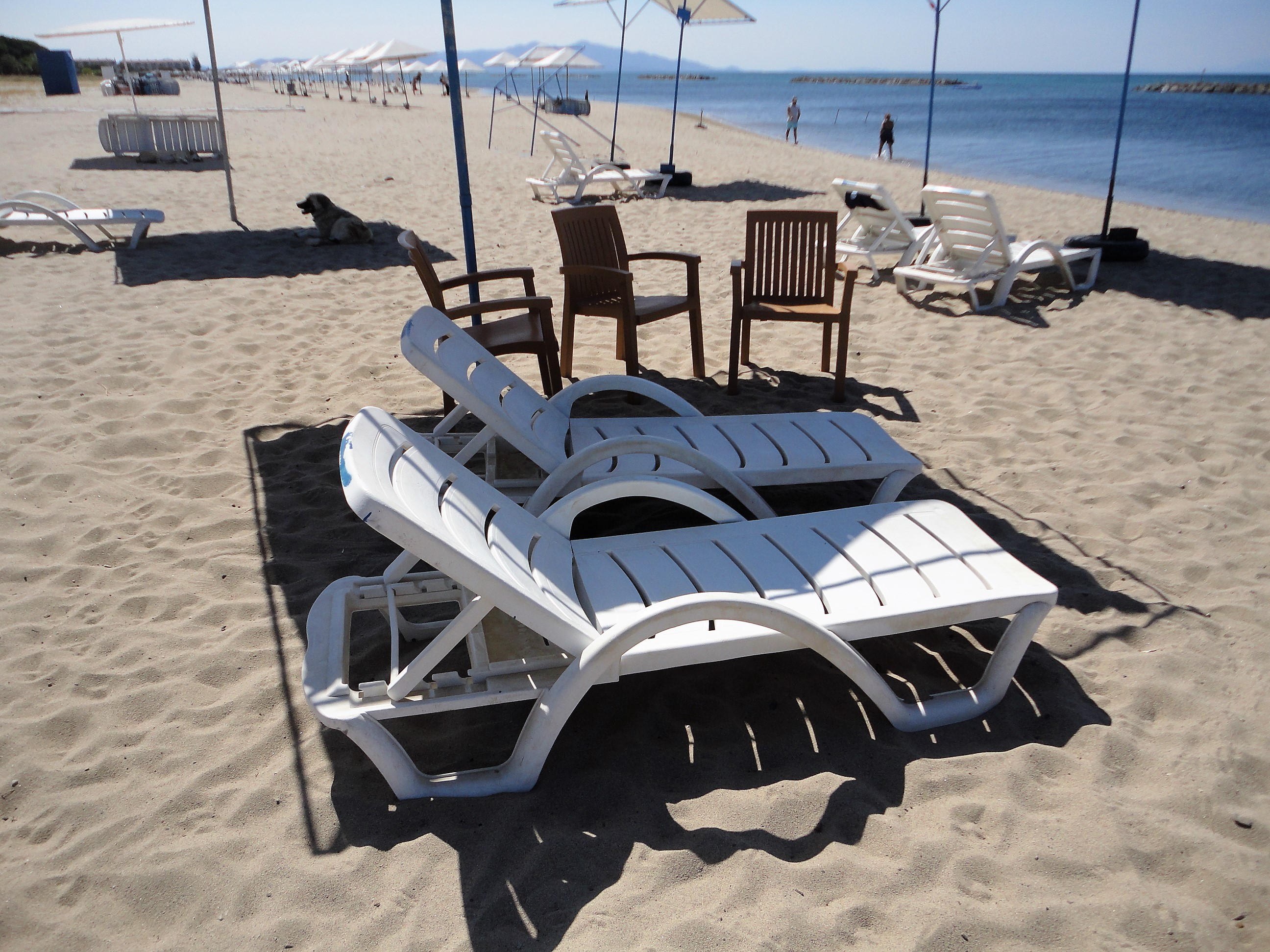
A “society” of chairs at the beach (Altınova 2017.08.31)

Continue reading

Hypomnesis

When is a help a hindrance? The Muses have provoked this question. They did this through their agents, the cicadas, who sang around the European Cultural Center of Delphi, during the 11th Panhellenic Logic Symposium, July 12–5, 2017.

     Cicada, European Cultural Center of Delphi, 2017.07.15     

Cicada, European Cultural Center of Delphi, 2017.07.15

My question has two particular instances.

  1. At a mathematical conference, can theorems “speak for themselves,” or should their presenters be at pains to help the listener appreciate the results?

  2. When the conference is in Greece, even at one of the country’s greatest archeological sites, does this enhance the reading of ancient Greek texts, or is it only a distraction?

Continue reading

War and Talk

This is a foray into the mystery of how things happen, based the 164th of the 361 chapters of War and Peace. This chapter contains, in a one-sentence paragraph, a summary of Tolstoy’s theory of history:

Each man lives for himself, using his freedom to attain his personal aims, and feels with his whole being that he can now do or abstain from doing this or that action; but as soon as he has done it, that action performed at a certain moment in time becomes irrevocable and belongs to history, in which it has not a free but a predestined significance.

Continue reading

The Hands of an Angry Deity

I first drafted the following essay in late October, 2011, a few days after the first of the earthquakes in Van, and a few weeks after moving from Ankara to Istanbul. I rediscovered the essay recently by chance. It seems worth revisiting now, in the spring of 2017, given the political upheaval in the United States last fall, and the potential for more around the world.

Body of minivan with missing windows on overgrown grassy slope
Above Mehmetçik Caddesi in Şişli, one of the most densely populated of Istanbul’s 39 boroughs; 2017.04.02

Continue reading

Victor Vasarely

Tophane-i Amire
Tophane-i Amire, 2017.03.25

Last week I wrote about the Turkish Impressionist Feyhaman Duran, born in 1886. Now my subject is the Hungarian-French Op Artist born twenty years later as Győző Vásárhelyi. His “Rétrospective en Turquie” is at the Tophane-i Amire Culture and Art Center in an Ottoman cannon foundry.

Vasarely show Continue reading