Category Archives: Pirsig

Dicaeology

Our topic now is justice, in two senses:

  1. Lawfulness.
  2. Equity.

That doesn’t mean we’re talking about equality before the law. Instead of lawfulness and equity, we might refer to morality and fairness. What we are really trying to do is understand what Aristotle means, when he says that “the dikaion” (τὸ δίκαιον) is one of the following:

  1. “The nomimon” (τὸ νόμιμον).
  2. “The ison” (τὸ ἴσον).

Why would we want to do understand this? Well, that last Greek word appears as a suffix in isoskeles (ἰσοσκελής), which has become our word “isosceles” for the same thing. The ison is the equal. A triangle is isosceles when two of its legs are equal. Each of those legs is a skelos (σκέλος), while the remaining side is the basis (βάσις), the base.

Two books: Zen and the Art, and the Guidebook to it, the latter featuring an image of the former on its cover; the top of a pine tree beyond, and beyond that, more trees and an apartment building

Continue reading

Creativity

In the Platonic dialogues, Socrates frequently mentions τέχνη (technê), which is art in the archaic sense: skill or craft. The concern of this post is how one develops a skill, and what it means to have one in the first place.

Books quoted or mentioned in the text, by Midgley, Simone Weil, Thoreau, Amy Mandelker (on Tolstoy), Oliver Byrne (on Euclid), Wittgenstein, Arendt, and Caroline Alexander (on Homer)

Continue reading

On Plato’s Republic, 5

Index to this series

Our fifth scheduled reading in the Republic is Book IV (Stephanus pages 419–45). Socrates speaks

  • with Adeimantus, through the completion of the construction of the city in speech;
  • with Glaucon, after he insists (427d) that Socrates join in the search for justice in the city; they find it and map it back to the individual.

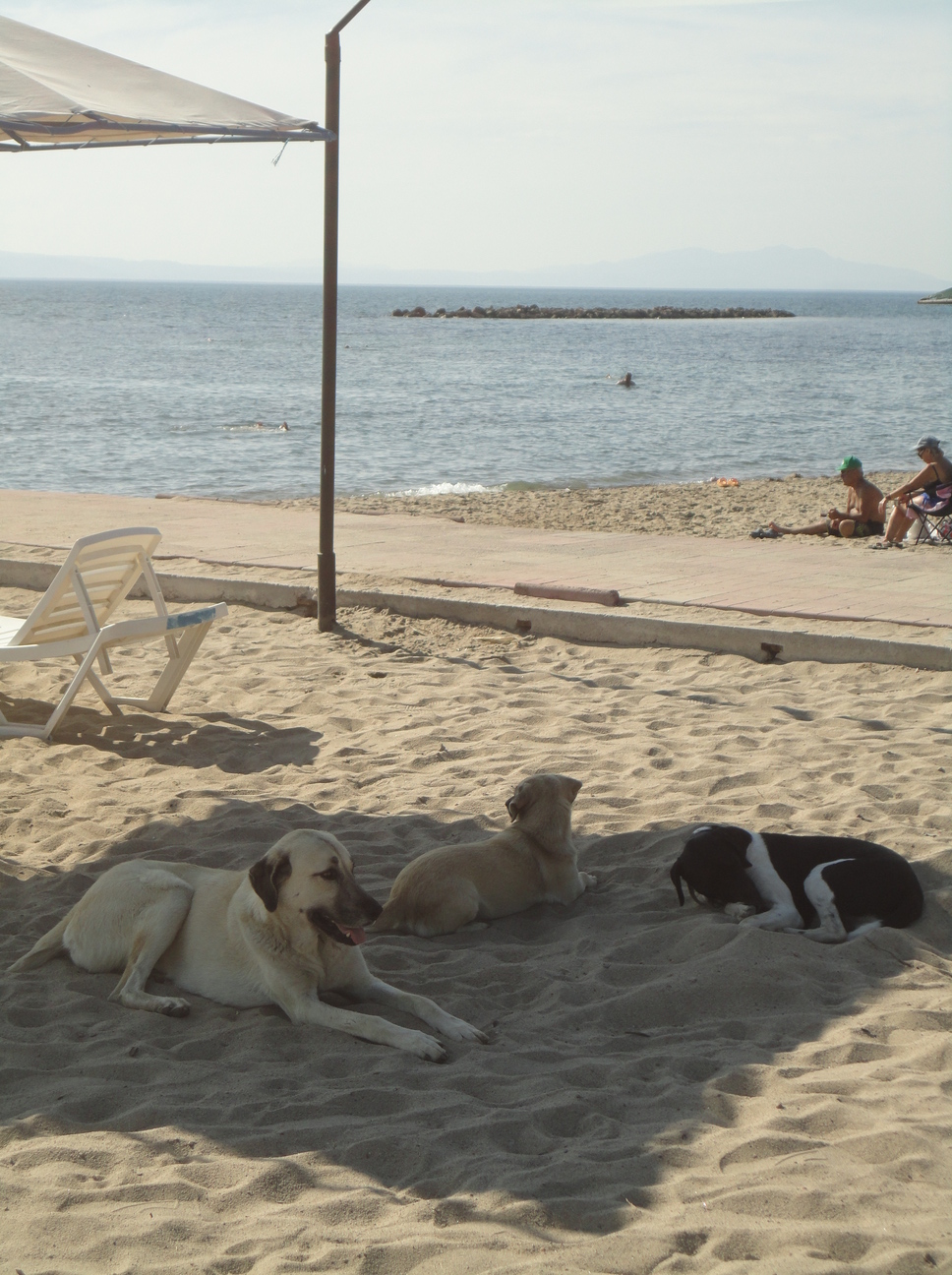
Three dogs sit in the shade of a beach umbrella
Intellect, spirit, and appetite
Profesörler Sitesi, Altınova, Balıkesir, Turkey
September 13, 2021

Continue reading

Map of Art

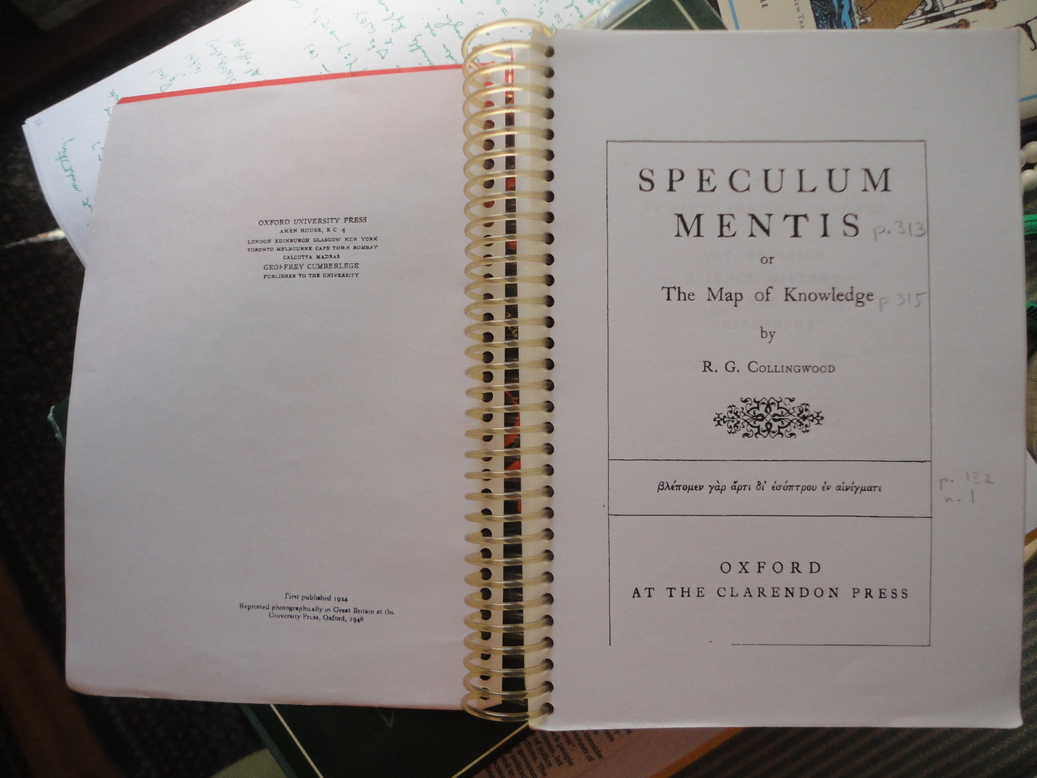
The bulk of this post is a summary of the chapter on art in Collingwood’s Speculum Mentis: or The Map of Knowledge (1924). The motto of the book is the first clause of I Corinthians 13:12:

Βλέπομεν γὰρ ἄρτι δι’ ἐσόπτρου ἐν αἰνίγματι

For now we see through a glass, darkly

The chapter “Art” has eight sections:

Continue reading

Doing and Suffering

To do injustice is worse than to suffer it. Socrates proves this to Polus and Callicles in the dialogue of Plato called the Gorgias.

I wish to review the proofs, because I think they are correct, and their result is worth knowing.

Loeb Plato III cover

Or is the result already clear to everybody?

Whom would you rather be: a Muslim in India, under attack by a Hindu mob, or a member of that mob?

You would rather not be involved; but if you had to choose, which option would be less bad: to be driven to an insane murderous fury, or to be the object of that fury?

Continue reading

Computer Recovery

Part of this post is a laboratory notebook. I record how I fixed my computer, because

  • I am pleased to have been able to do it, and

  • I may have to do it again.

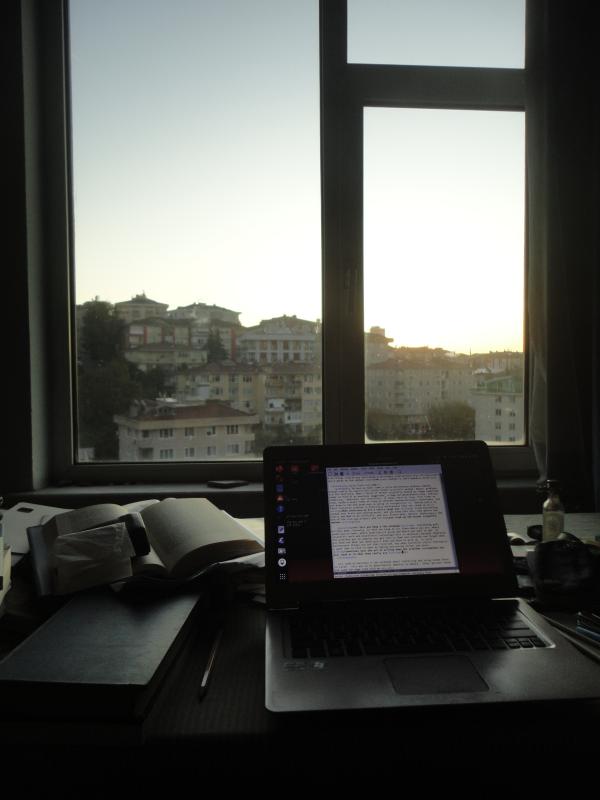
Briefly, when Windows on my laptop failed, I installed Ubuntu, but this failed. Somebody else installed Ubuntu again, and this worked for a while before failing. I managed to fix that problem for myself; but later an upgrade failed. Now I have fixed that. Computer on table by window at dawn

I am recording further issues in an addendum.

Continue reading

Anthropology of Mathematics

This essay was long when originally published; now, on November 30, 2019, I have made it longer, in an attempt to clarify some points.

The essay begins with two brief quotations, from Collingwood and Pirsig respectively, about what it takes to know people.

  • The Pirsig quote is from Lila, which is somewhat interesting as a novel, but naive about metaphysics; it might have benefited from an understanding of Collingwood’s Essay on Metaphysics.

  • A recent article by Ray Monk in Prospect seems to justify my interest in Collingwood; eventually I have a look at the article.

Ideas that come up along the way include the following.

  1. For C. S. Lewis, the reality of moral truth shows there is something beyond the scope of natural science.

  2. I say the same for mathematical truth.

  3. Truths we learn as children are open to question. In their educational childhoods, mathematicians have often learned wrongly the techniques of induction and recursion.

  4. The philosophical thesis of physicalism is of doubtful value.

  5. Mathematicians and philosophers who ape them (as in a particular definition of physicalism) use “iff” needlessly.

  6. A pair of mathematicians who use “iff” needlessly seem also to misunderstand induction and recursion.

  7. Their work is nonetheless admirable, like the famous expression of universal equality by the slave-driving Thomas Jefferson.

  8. Mathematical truth is discovered and confirmed by thought.

  9. Truth is a product of every kind of science; it is not an object of natural science.

  10. The distinction between thinking and feeling is a theme of Collingwood.

  11. In particular, thought is self-critical: it judges whether itself is going well.

  12. Students of mathematics must learn their right to judge what is correct, along with their responsibility to reach agreement with others about what is correct. I say this.

  13. Students of English must learn not only to judge their own work, but even that they can judge it. Pirsig says this.

  14. For Monk, Collingwood’s demise has meant Ryle’s rise: unfortunately so since, for one thing, Ryle has no interest in the past.

  15. In a metaphor developed by Matthew Arnold, Collingwood and Pirsig are two of my touchstones.

  16. Thoreau is another. He affects indifference to the past, but his real views are more subtle.

  17. According to Monk, Collingwood could have been a professional violinist; Ryle had “no ear for tunes.”

  18. For Collingwood, Victoria’s memorial to Albert was hideous; for Pirsig, Victorian America was the same.

  19. Again according to Monk, some persons might mistake Collingwood for Wittgenstein.

  20. My method of gathering together ideas, as outlined above, resembles Pirsig’s method, described in Lila, of collecting ideas on index cards.

  21. Our problems are not vague, but precise.


When Donald Trump won the 2016 U.S. Presidential election, which opinion polls had said he would lose, I wrote a post here called “How To Learn about People.” I thought for example that just calling people up and asking whom they would vote for was not a great way to learn about them, even if all you wanted to know was whom they would vote for. Why should people tell you the truth?

Saturn eclipse mosaic from Cassini

Continue reading

NL XLIII: The Second Barbarism: The ‘Albigensian Heresy’

Index to this series

Summary. Suppose your society has certain rites and customs, perceived as essential to its functioning. When some persons among you reject those rites and customs, what are you going to do? Persecution would be the normal response of a society that aimed to preserve itself. In the example to be considered here, the society is medieval Christendom, where

  • buildings called churches were customarily the abode of friendly spirits, and
  • the rite of swearing an oath was a sign of special commitment.

Oaths and churches were rejected by persons called Paulicians, or Bogomils, or Albigensians. Their beliefs were Manichaean. These persons were persecuted so successfully that we do not understand them very well. Therefore we must leave open the question of whether they were barbarists.

Here I am going to review, among other things,

  • what it means to fight barbarism;
  • the response to German bombardment described in Goodbye, Mr. Chips;
  • what Jesus Christ says about swearing;
  • how the United States accommodates various beliefs (as by allowing affirming instead of swearing, or allowing Muslims to swear on a Quran);
  • the threat of a lying President;
  • the threat of ignoring climate change;
  • the etymology of heresy;
  • the discussion of mythos and logos in Pirsig.

Fire temple, Yazd, Iran, September 2012. See “Duty to Nature

Continue reading

A New Kind of Science

Executive summary. Some sciences are called descriptive, empirical, or natural; others, prescriptive or normative. We should recognize a third kind of science, which studies the criteria as such that a thinking being imposes on itself as it tries to achieve success. I propose linguistics as an example. Collingwood introduced the term criteriological for the third kind of science. This was in The Principles of Art (1938), though I find the germ of the concept in earlier work, even in Collingwood’s first book, Religion and Philosophy (1916), in the passage on psychology that the author would recall in An Autobiography (1939).

Collingwood’s examples of criteriological sciences are logic, ethics, aesthetics, and economics. Pirsig effectively (and independently) works out rhetoric as an example in Zen and the Art of Motorcycle Maintenance (1974). We may benefit from clarity here, given how people can have a strong reaction to being lectured by experts. For Collingwood, such a reaction is found in Nazi Germany; see the last chapter of The New Leviathan (1942). Reactions to grammar are the subject of my own two ensuing articles, “Writing and Inversion” and “Writing Rules.”


Some sciences are not recognized for what they are. The sciences themselves are not new, but a proper understanding of them may be new to some of us, including myself.

Continue reading

On Knowing Ourselves

In a 2012 post in this blog, I criticized a 2009 essay called “50 Years of Stupid Grammar Advice.” The putative advice was that of Strunk and White. However, what these two had written was not the elements of grammar, but The Elements of Style. They gave style advice by precept and example. The advice is good, if well understood. The critic should recognize that, as I wrote, “Rules of style are supposed to induce thinking, not obedience.”

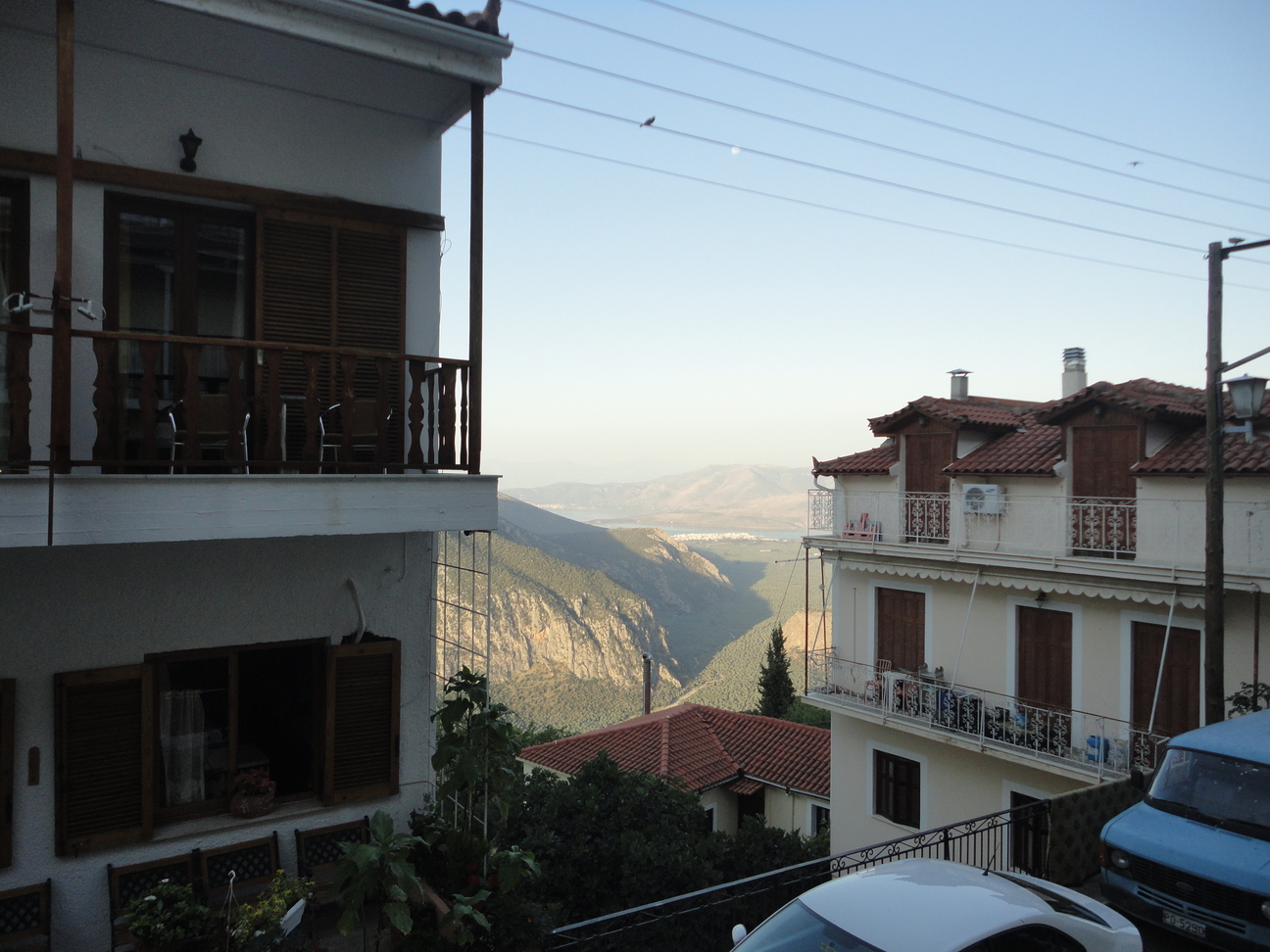
View between two hotel buildings from one mountainside to another, with a bit of the sea beyond
All photos taken in Delphi, July 12–14, 2017

Continue reading