Category Archives: Plato

On Plato’s Republic, 10

Index to this series

In the first part of Book VII of Plato’s Republic, Stephanus 514a–21c, the subject is the Allegory of the Cave and an inference from this:

Education is not the filling of a pail, but the lighting of a fire.

Actually that’s not what Socrates says, although such a saying is attributed to him. He says something close, at least if you think that

  • filling a pail is like putting sight into blind eyes, and
  • lighting a fire is like turning the soul to the light.

They are not that close.

A stairway up in a garden
The way up
Yıldız Parkı, October 25, 2021

Perhaps the actual message of Socrates is opposed to the misattributed saying. Here is what he tells Glaucon at 518b–d:

Continue reading

The Divided Line

Index to this series

We are still in the latter part of Book VI of Plato’s Republic, where Socrates undertakes to explain the education of the philosopher-kings (502c–d). They are not literally so called, as we noted last time. They are going to need to “be able to bear the greatest studies” (503e), and “the idea of the good is the greatest study” (505a). People are confused about what the good is:

  • many say it is pleasure;
  • a few, knowledge (505b).

It rather the case that

  • so the Good makes it possible to have
    • knowledge (508d), and perhaps even
    • pleasure (509a),
  • as the sun makes it possible to see (508b–d).

We looked at that much last time.

Sun through the leaves of planes
Dünya Barış Parkı 2021.10.30

Continue reading

On Plato’s Republic, 9

Index to this series

We reach now the Analogy of the Sun and the associated Divided Line.

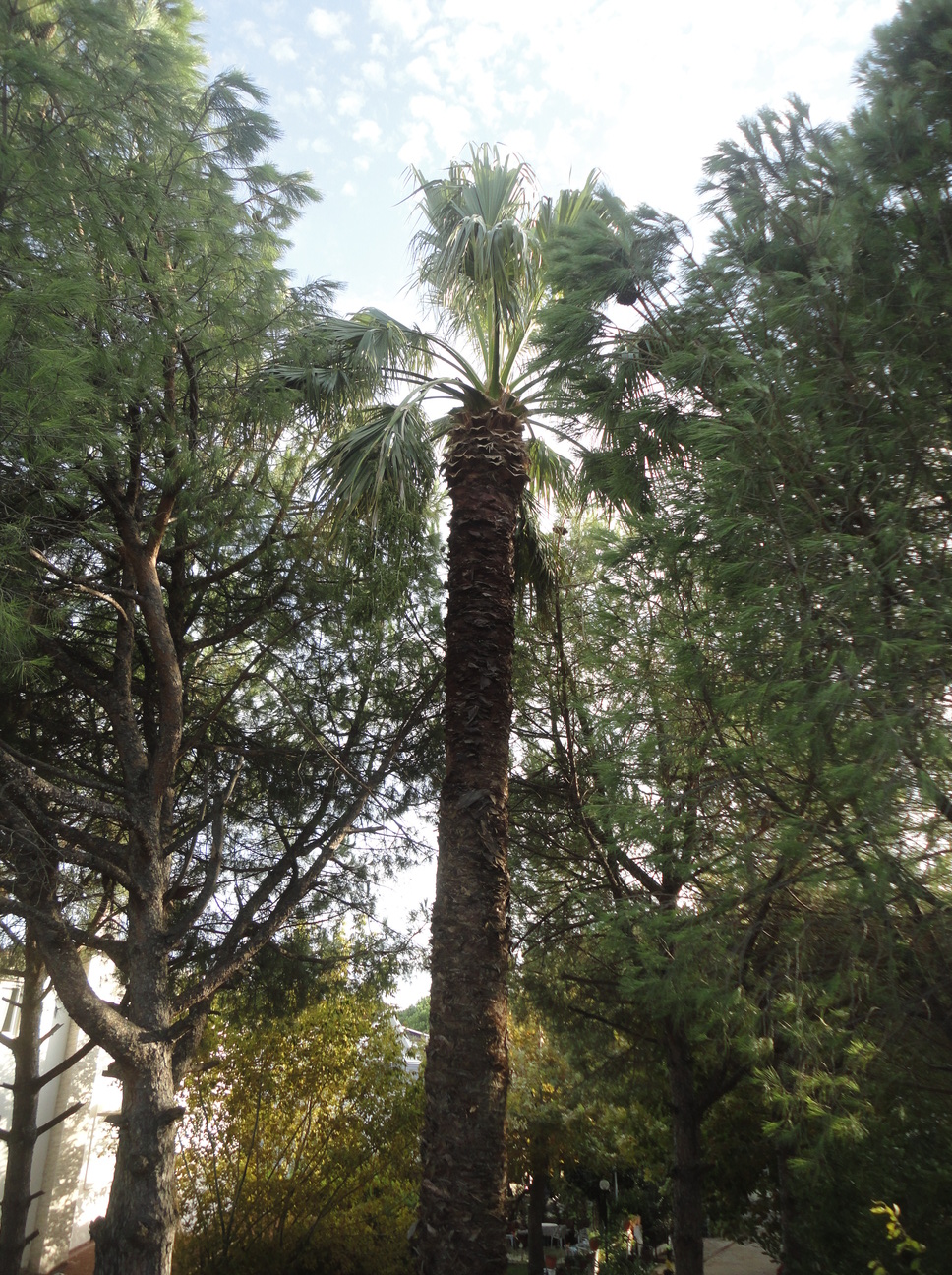
Among pines, a palm tree with highest fronds lit by the setting sun
The highest fronds take the setting sun in Altınova
September 27, 2021

Continue reading

On Plato’s Republic, 8

Index to this series

Plato is somehow quite challenging in the present reading, which is the first part (Stephanus 484–502d) of Book VI of the Republic. Socrates tries to work out the third wave from the previous reading. Significant features are several analogies or figures:

  • city as ship whose sailors neither know how to sail nor want to know;
  • people and sophist as beast and zoologist or zookeeper;
  • ruler as painter who compares a canvas with what the mind’s eye sees;
  • philosopher as seed that needs good soil, lest it become a noxious weed.

I concurrently discuss the Republic readings in a group formed through the Catherine Project, which now has the website just linked to. The same was true for Pascal in the winter and Chaucer in the summer.

Bookshelves in morning sun
Ayşecik Sokağı, Fulya, Şişli, İstanbul, October 14, 2021.
The order of the books on the shelves of the cases being like that of words on the lines of pages of an individual book, the ordering is chronological, by birth date of author, editor, or personal subject. The youngest author for now is Sally Rooney, and Zena Hitz is on the same shelf. Plato is on the opposite wall.

Continue reading

On Plato’s Republic, 7

Index to this series

(Note added October 23, 2022.) As I return to the analysis of the philosopher in the Republic, I think of two or three recent encounters with resistance to what I would call philosophical thought. See my comments added at the end. Meanwhile, here is a table contents for this post:

The Philosopher

We are going to define the lovers of knowledge or wisdom: the philosophers. Socrates’s definition is at Stephanus 480a, at the end of our seventh reading in Plato’s Republic. The reading constitutes, of Book V, the latter part, beginning at 472a. Socrates concludes,

Τοὺς αὐτὸ ἄρα ἕκαστον τὸ ὂν ἀσπαζομένους
φιλοσόφους ἀλλ’ οὐ φιλοδόξους κλητέον.

We might translate the first part word by word as follows.

τοὺς αὐτὸ ἄρα ἕκαστον τὸ ὂν ἀσπαζομένους,
those-who-are itself therefore each thing-that-is being delighting-in.

The whole sentence then is literally,

Therefore those who are delighting in each thing that is being, itself,
are to be called philosophers, but not “philodoxers.”

Here are five published translations; take your pick.

Continue reading

Nature

Index to this series

Can Socrates really “find a natural support for justice,” as Allan Bloom says he must? It is strictly impossible, as I say in “Bloom, Badiou, Ryle, Shorey.” Inevitably there is more that can be said, and I shall try to say some of it here.

Sand, sea, mountains, sky
Anatolian sand, Aegean sea, Lesbian mountains
Uranus over all
Profesörler Sitesi, Altınova, Balıkesir, Turkey
September 24, 2021

Continue reading

On Plato’s Republic, 6

Index to this series

Book V of Plato’s Republic features three of what Socrates calls waves or breakers:

  1. That women serve alongside men as guardians.
  2. That women be bred with men like animals and not know their children.
  3. That philosophers rule as kings, or kings become philosophers.

Such outlandish injunctions will have Socrates swept away, though he does not say by whom or what.

Our sixth scheduled reading covers the first two of the three waves, in Stephanus pages 449a–71e. Socrates is induced to spell out details adumbrated in the last reading, Book IV, concerning the sharing of women and children among the guardians.

Four dogs at the edge of the sea, or in it
Wisdom, courage, moderation, and justice
Profesörler Sitesi, Altınova, Balıkesir, Turkey
September 20, 2021

Continue reading

On Plato’s Republic, 5

Index to this series

Our fifth scheduled reading in the Republic is Book IV (Stephanus pages 419–45). Socrates speaks

  • with Adeimantus, through the completion of the construction of the city in speech;
  • with Glaucon, after he insists (427d) that Socrates join in the search for justice in the city; they find it and map it back to the individual.

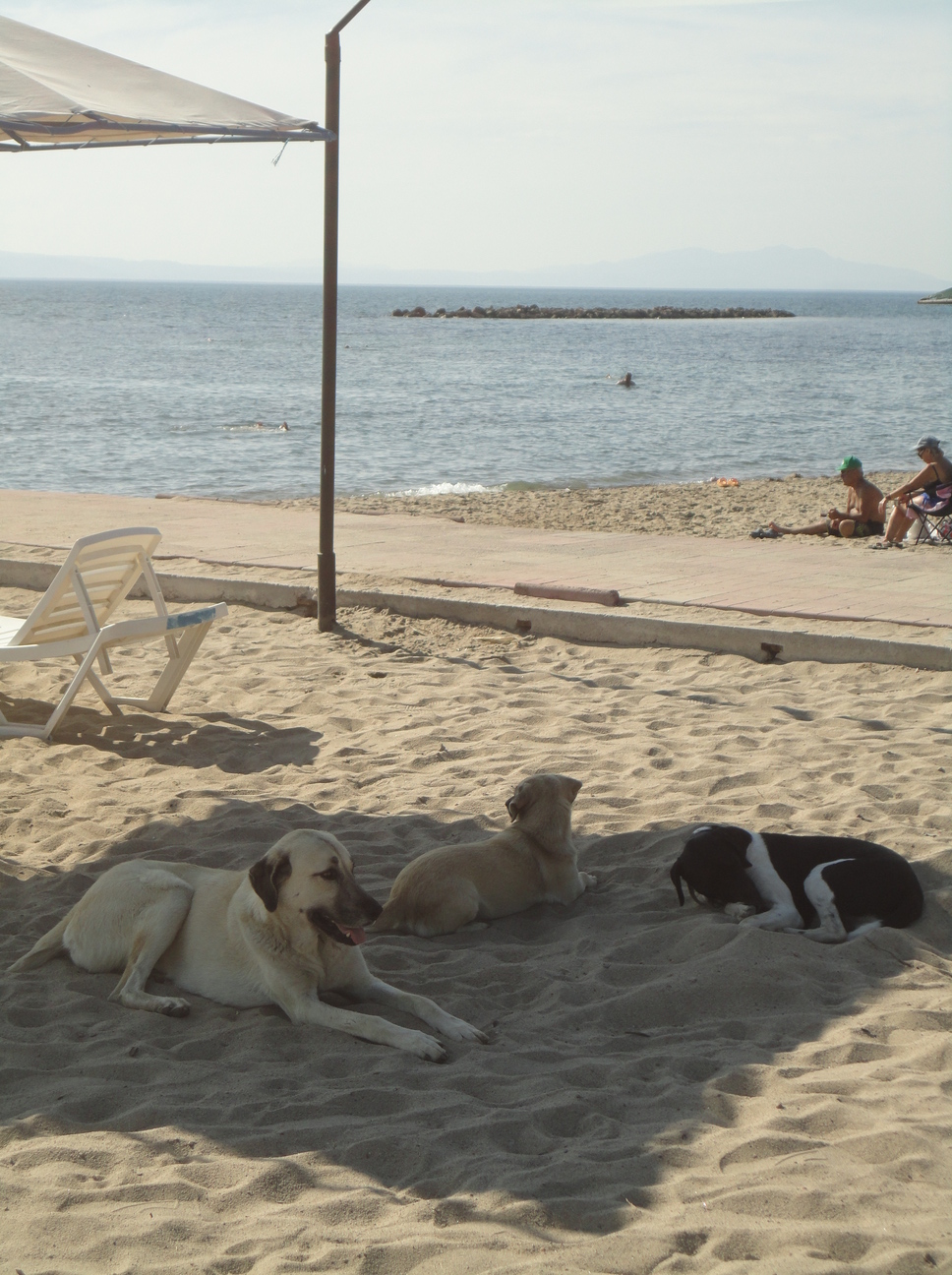
Three dogs sit in the shade of a beach umbrella
Intellect, spirit, and appetite
Profesörler Sitesi, Altınova, Balıkesir, Turkey
September 13, 2021

Continue reading

Badiou, Bloom, Ryle, Shorey

Index to this series

The discussion having been postponed for our fifth reading in the Republic, I give here some remarks that started out as part of my commentary on Book IV. The remarks concern

  • the translations of the Republic that I have been reading, mainly those of
    • Alain Badiou (b. 1937), translated in turn from the French by Susan Spitzer;
    • Allan Bloom (1930–92);
    • Paul Shorey (1857–1934);
  • the “Interpretive Essay” that accompanies Bloom’s translation;
  • a 1969 review of Bloom’s translation and essay by Gilbert Ryle (1900–76), who embarrasses the profession of philosophy (if it be a profession).

I quote also Christopher Hitchens; A Guide to Plato’s Rupublic, by Daryl H. Rice; Agnes Callard; Martha Nussbaum; and Henry David Thoreau.


Palm trimmed
Profesörler Sitesi, Altınova, Balıkesir, Turkey
September 13, 2021

Continue reading

On Plato’s Republic, 4

Index to this series

Our fourth scheduled reading in the Republic is Book III, Stephanus pages 386–417. Socrates continues to direct the construction of the fantastic city. Plato’s brothers, faithful as dogs, agree to two infamous proposals:

  1. The deportation from the city of any poet “who is able by wisdom to become every sort of thing and to imitate all things” (δυνάμενον ὑπὸ σοφίας παντοδαπὸν γίγνεσθαι καὶ μιμεῖσθαι πάντα χρήματα, 398a).

  2. The teaching of the Noble Lie, that the citizens were formed under ground and distinguished, according to class, with admixture of

    • gold for the rulers,
    • silver for the auxiliaries,
    • iron and bronze for the “farmers and other craftsmen” (414b–5c).

Later in this post, I shall try to analyze the reading into sections; but a serial summary of these seems tedious, and I shall focus on a few remarkable points, such as the ones above.


Two dogs with my copy of
Allan Bloom (translator), The Republic of Plato, 2016 edition,
on the beach at
Profesörler Sitesi, Altınova, Balıkesir, Turkey
September 8, 2021

I shall be quoting

  • Homer, whom Socrates loves to hate;
  • Adam Kirsch, from the 2016 introduction to Allan Bloom’s Republic translation, on the danger of summarizing Plato;
  • Pascal on the will of God as the rule for justice;
  • Bruno Bettelheim on fairy tales such as the Three Little Pigs, and perhaps our City in Speech, as opposed to fables;
  • Somerset Maugham on the fable of the Ant and the Grasshopper;
  • Plato, in the Symposium, on the identity of comedy and tragedy, and Socrates as a seductive flute-player;
  • Anne Applebaum on “The New Puritans”: the same as the old ones, called Glaucon, Adeimantus, and Socrates?

Continue reading