NL XIX: Two Senses of the Word “Society”

Executive summary (below) | Index to this series

After a break of half a year, I return to reading Collingwood’s New Leviathan. Being on holiday at an Aegean beach gives me the opportunity. While here, I may also return to Chapman’s Homer’s Iliad. Last winter I finished Part I of the New Leviathan, the part called “Man.” Here I continue with the first chapter of “Society.” I have reason to look at what Mary Midgley and Albert Einstein say about science. Collingwood’s investigation suggests a way of thinking about prejudice and discrimination.

Part II of the New Leviathan is “Society,” and the first two chapters of this, XIX and XX, concern the distinction between society proper and two more general notions. In Chapter XX, the more general notion will be community. In Chapter XIX, the more general notion has not got its own proper name, and so Collingwood denotes it by writing “society,” in quotation marks.
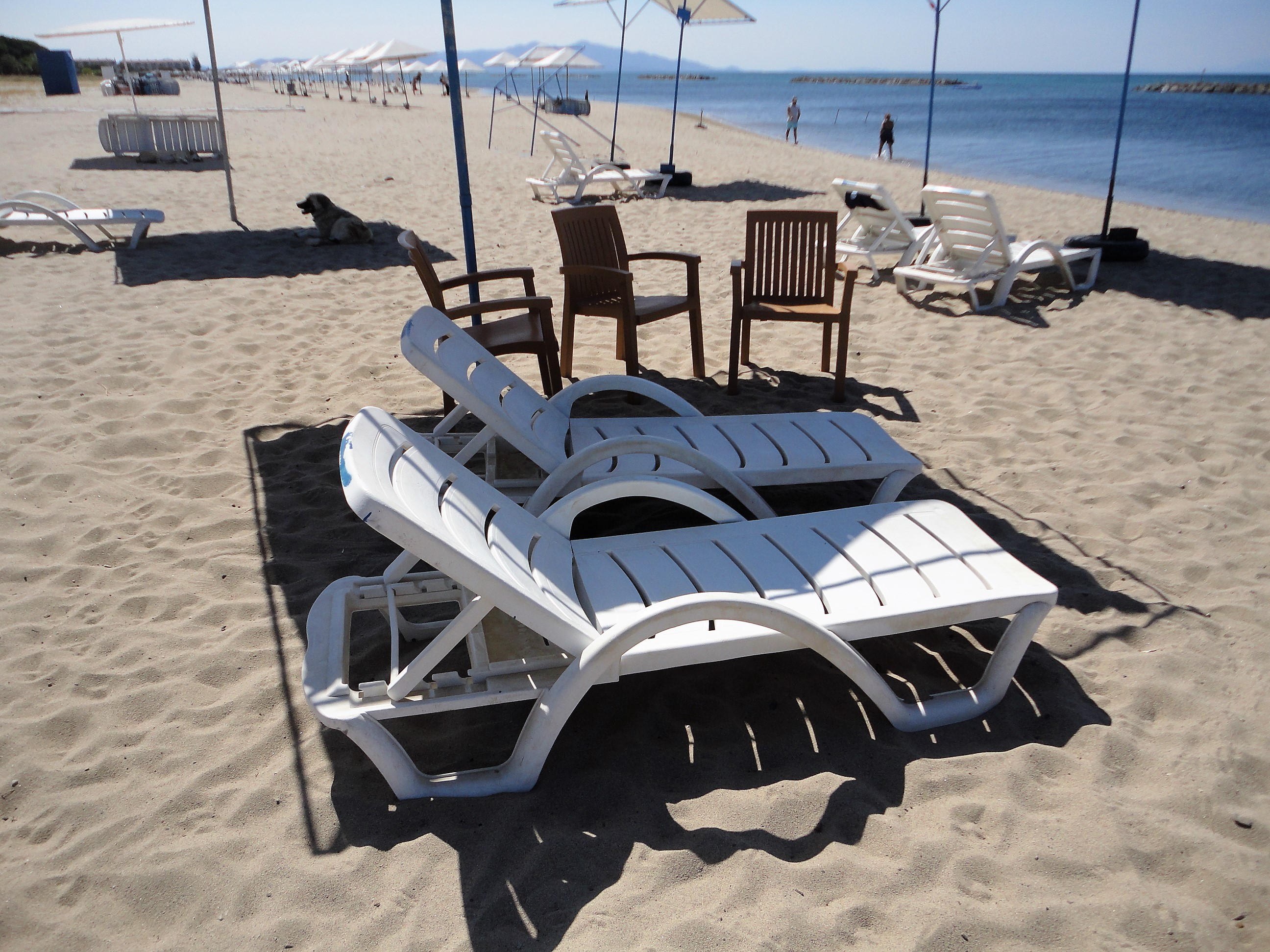
A “society” of chairs at the beach (Altınova 2017.08.31)

Continue reading

Ahtamar Island

During a mathematics conference, I visit the ruins of a monastery on a remote island in an inland sea. This moves me to consider the relation between introversion and, if not mathematics, then monasticism. On the origins of Christian monasticism, I look at several sources, notably Gibbon (see the References); also Maugham, who writes of a hermit on an island of the Torres Strait. Since the monastery on the island was Armenian, in what is now Turkey, one should consider also the treatment of minority populations here. I only acknowledge the issue, suggesting Wikipedia pages (linked to presently) as a starting point for research. On this subject, old books on my shelves are not much help; my own experience is not much more help, at least not in a way that lends itself to being written of here. I do know that Turkish politicians will treat imputations of their own Armenian ancestry as an insult.


We visited Ahtamar Island for a second time on Wednesday, August 23, 2017. Thus we saw again the remains of the Church of the Holy Cross. This Armenian church was consecrated in 921 and presumably desecrated in 1915, if not earlier; now, since our last visit, though officially a museum, the church would seem to have been reconsecrated, to judge by the new altarpiece, featuring an icon of the Madonna and Child.

Madonna and child
Altarpiece, Church of the Holy Cross, Ahtamar Island

Continue reading

Hypomnesis

When is a help a hindrance? The Muses have provoked this question. They did this through their agents, the cicadas, who sang around the European Cultural Center of Delphi, during the 11th Panhellenic Logic Symposium, July 12–5, 2017.

     Cicada, European Cultural Center of Delphi, 2017.07.15     

Cicada, European Cultural Center of Delphi, 2017.07.15

My question has two particular instances.

  1. At a mathematical conference, can theorems “speak for themselves,” or should their presenters be at pains to help the listener appreciate the results?

  2. When the conference is in Greece, even at one of the country’s greatest archeological sites, does this enhance the reading of ancient Greek texts, or is it only a distraction?

Continue reading

War and Talk

This is a foray into the mystery of how things happen, based the 164th of the 361 chapters of War and Peace. This chapter contains, in a one-sentence paragraph, a summary of Tolstoy’s theory of history:

Each man lives for himself, using his freedom to attain his personal aims, and feels with his whole being that he can now do or abstain from doing this or that action; but as soon as he has done it, that action performed at a certain moment in time becomes irrevocable and belongs to history, in which it has not a free but a predestined significance.

Continue reading

On Chapman’s Homer’s Iliad, Book III

Index | Text

The Iliad is about the feud between Achilles and Agamemnon, a feud that occurs during the Trojan War. Book III of the Iliad has nothing to do with Achilles, a little to do with Agamemnon, and everything to do with why the whole war is happening at all.

Note added August 19, 2024: The war is happening because Paris is God’s gift to women. By his own account, he is excellent in the “gifts of peace,” and these are “as little to be scorn’d, / As to be wonne with strength, wealth, state …” It is good to recognize that some things cannot be obtained by “strength” or force. Achilles recognizes this in Book I when he refrains from killing Agamemnon. However, Paris scorns not only strength, but also wealth and state. I suppose it is “state” that lets Hector and Agamemnon come to an agreement about a duel between Paris and Menelaus that will end the war. Paris breaks the agreement by running away to visit the prize of his excellence, namely Helen. Homer has Venus spirit Paris away, but I take this to be a poetic embellishment, agreeing with Eva Brann in Homeric Moments: Clues to Delight in Reading the Odyssey and the Iliad (Paul Dry Books, 2002; pages 41–3):

But the gods’ face-off effects nothing; at least nothing happens that could not happen without them. And so it is always; Zeus himself disclaims responsibility for human fate right at the beginning of the Odyssey


To be sure, as I said above, nothing is ever done that could not have been done by the humans themselves …

Photo of the tower of books used for this article

Continue reading

The Private, Unskilled One

I went into Istanbul’s Pandora Bookshop a month ago, looking for an English translation of War and Peace, since the Garnett translation I had read at college was falling apart. I was told the Oxford World’s Classics edition (with the Maude translation) was coming the next week, and it did come.

Elif Batuman, The Idiot, in Nesin Matematik Köyü, Kayser Dağı Mevkii, Şirince, Selçuk, İzmir, Turkey, 2017.05.18

Continue reading

Edirne

This is about a May Day trip from the third Ottoman capital to the second. In the former, the government has been suppressing May Day demonstrations in Taksim Square since 2013. That year, the suppression may have helped provoke the Gezi Park protests, as I suggested in “May Day One Month Late.” I reported on the following year’s suppression in “Madness, Stupidity, or Evil?” This year (2017), labor unions held a legal May Day demonstration in Bakırköy, further west in European Istanbul, as reported by the Anadolu Agency (which as far as I know is owned by the Turkish state). My wife and I just got out of town.


Selimiye Mosque, 2017.04.30

Continue reading

On Chapman’s Homer’s Iliad, Book II

Index | Text

Even gods must sleep; but under the weight of his responsibility to Thetis, Zeus cannot. As Achilles pointed out in Book I, “dreams are often sent from Jove”; now we shall have a case in point (Chapman’s lines 4–7).

… Al waies cast; this coūsel seru’d his mind
With most allowance: to dispatch, a harmefull dreame to greet
The king of men; and gaue this charge: Go, to the Achiue fleet,
(Pernicious dreame) …

Continue reading

Thinking in the age of cyborgs

I am reblogging this article because I like it, and because it may help amplify or refine (or correct?) some ideas I tried to express in “The point of teaching mathematics.” Mathematics should teach both the possibility of peaceful cooperation and the power of our own thought.

junaidmubeen's avatarJunaid Mubeen, PhD

We have our clearest indication yet that the cyborgs are coming.Elon Musk has formally accepted his invitation to the AI party the only way he knows how: by founding a company. Neuralink will create brain-enhancing digital implants; the first step on the road to merging humans with software. Musk has taken on the mantel of preserving the human race, and he believes the only way to counter the threat of AI’s rapid ascent is by meshing together biological and digital forms of intelligence.

To date, cyborgs have been the preserve of Sci-Fi. But Musk has form for bringing outlandish fantasies to bear. In fact, to Musk the cyborg is no fantasy at all. He recently argued that humans have already merged with technology. Musk is not the first to make the point: over half a century has passed since Marshall McLuhan declared technology “the extensions of man”

View original post 722 more words

36th Istanbul Film Festival, 2017

This is about seeing six films in the Istanbul Film Festival, which began this year (2017) on Wednesday, April 5.

Oblique gray square against a lighter square ground
Kazimer Malevich, Suprematist Composition: White on White, 1918 (MoMA)

Continue reading