-
-
Meta
-
Archives
-
Categories
- Art (184)
- Music (3)
- Poetry (106)
- Homer (75)
- Sylvia Plath (4)
- T. S. Eliot (12)
- Prose (71)
- Visual Art (26)
- Film (5)
- Education (54)
- Facebook (14)
- History (66)
- Archeology (6)
- Tourism (30)
- Language (35)
- Fowler (6)
- Grammar (12)
- Strunk and White (9)
- Turkish (7)
- Logic (12)
- Mathematics (76)
- Exposition (20)
- Mathematical Topics (10)
- Calculus (4)
- Conic Sections (6)
- Mathematicians (28)
- Archimedes (8)
- Euclid (20)
- G. H. Hardy (7)
- Philosophy of Mathematics (18)
- Nature (27)
- Philosophy (295)
- “God is a circle …” (5)
- Categorical Thinking (6)
- Causation (12)
- Contradiction (8)
- Criteriological Science (8)
- dialectic (28)
- Freedom (23)
- Ontological Proof (6)
- Pacifism (9)
- Persons (242)
- Aristotle (59)
- Collingwood (163)
- absolute presuppositions (18)
- “ceases to be a mind” (5)
- New Leviathan (70)
- overlap of classes (11)
- Principles of Art (45)
- question and answer (5)
- Descartes (18)
- Leo Strauss (11)
- Midgley (13)
- Pirsig (38)
- Plato (99)
- Philosophy of History (27)
- Sex and Gender (12)
- Stoicism (2)
- Psychology (19)
- Science (30)
- Galileo (7)
- Turkey (97)
- coup (3)
- Istanbul (58)
- Bosphorus (5)
- Gezi (8)
- The Islands (3)
- Tophane (3)
- Nesin Mathematics Village (27)
- Uncategorized (8)
- West Virginia (16)
- Art (184)
-
Recent Posts
Tag Archives: George Constantinople
On Homer’s Iliad Book III
December 12, 2022 – 5:23 pm

Yeniköy (Νιχώρι) on the Bosphorus
Sarıyer, Istanbul, December 11, 2022
The Paphlagonians must have passed by here
on their way to join the Trojans
as they did according to Iliad II.851–5
as mentioned in the Wikipedia article “Cytorus”
created by me in 2010
In Book III of the Iliad, we learn about Menelaus, Paris, Hector, Helen, and Priam. Having learned about Agamemnon, Achilles, and Patroclus in the first two books, now we know all of the players in the following summary of the epic.
On Plato’s Republic, 12
November 22, 2021 – 10:06 pm
We have completed the long detour of the Three Waves. In Book VIII of Plato’s Republic (Stephanus 543–69c), we return to the degeneration of the polity and the soul.

Freely ranging rooster
Çetin Emeç Park, Beşiktaş, Ιstanbul
November 22, 2021
Born in 1935, journalist Çetin Emeç was assassinated in 1990
On Plato’s Republic, 1
August 15, 2021 – 6:34 am
After the Pensées of Pascal and the Canterbury Tales of Chaucer, here begins another series on readings of a classic, now the Republic of Plato. The sections (after this one) of the present post are
- My Personal Journey (how and when I have read the Republic before)
- Schedule of the current readings
- Summary of the Readings
- The Persons of the Dialogue – that dialogue of which the Republic is a recounting (when translators give lists of dramatis personae, they leave out the enslaved boy of Polemarchus, though he does speak)
- Notes on the First Reading
“Highlighting In Used Copy Of Plato’s Republic Stops On Page 17”
The Onion, March 24, 1999
On the Odyssey, Book I
November 9, 2019 – 7:25 am
-
In reading his rendition of the Iliad, having enjoyed hearing Chapman speak out loud and bold;
-
having enjoyed writing here about each book, particularly the last ten books in ten days on an Aegean beach in September of this year (2019);
-
having taken the name of this blog from the first line of the Odyssey;
-
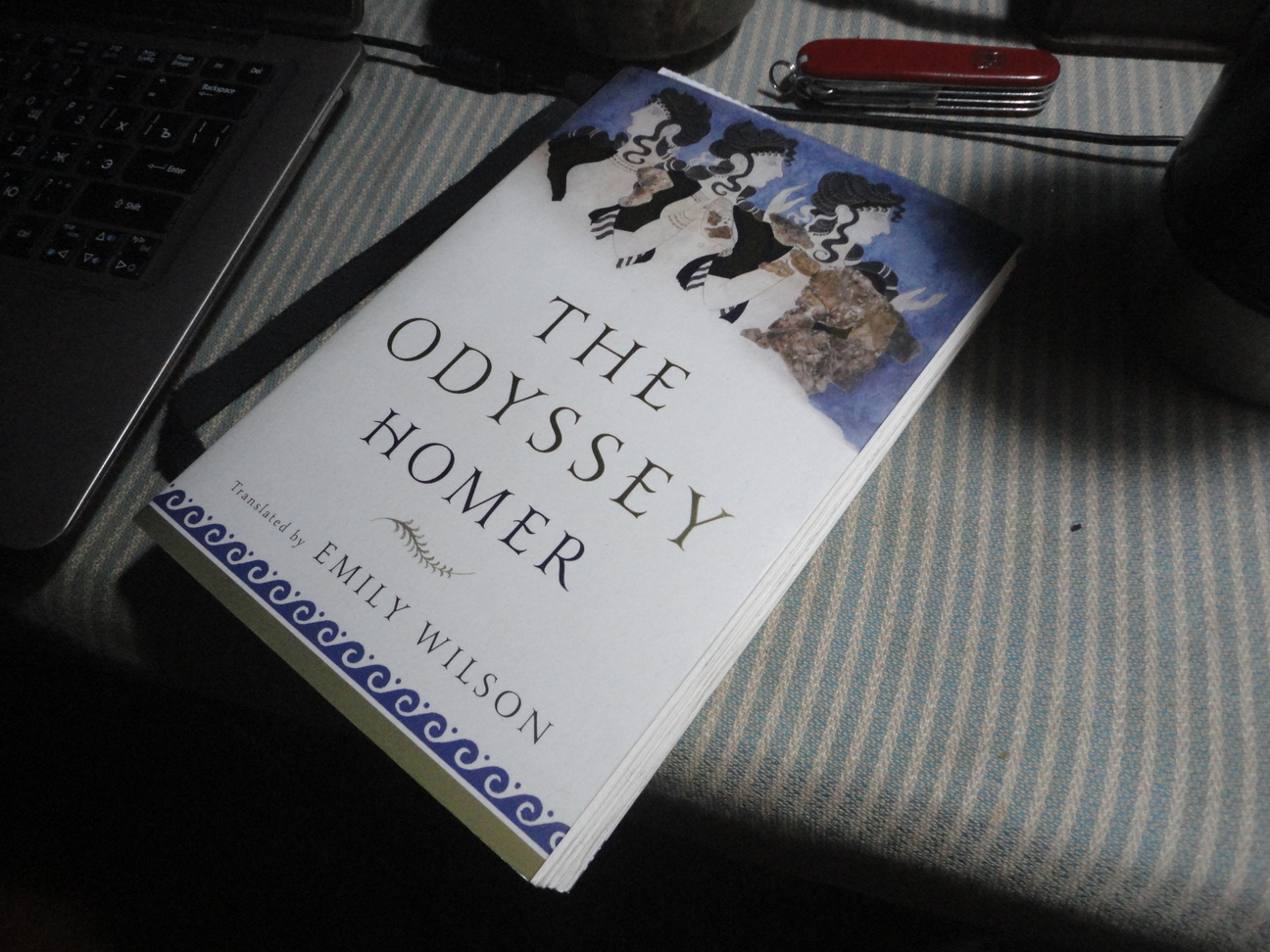
having obtained, from Homer Books here in Istanbul, Emily Wilson’s recent translation (New York: Norton, 2018);
On Chapman’s Homer’s Iliad, Book I
April 14, 2017 – 1:48 pm
This post, originally of April 14, 2017, is the first of twenty-four, one on each book of Homer’s Iliad in Chapman’s translation.
A later series began on November 29, 2022. Again there was a post on each book of the Iliad, but now I was reading Murray’s translation in the Loeb Classical Library.
“Achilles banefull wrath” is to be resounded by the Goddess, whom the poet invokes.
Strife between Achilles and Agamemnon is the story of the Iliad. It begins with Apollo, who has plagued the Greek army.
Homer denies no human responsibility. Apollo has plagued the army, because Agamemnon insists on keeping a man’s daughter as his slave. The woman’s father is a priest of Apollo called Chryses; we shall come to know the daughter’s name only as Chryseis. She has been taken in a Greek raid on her home town, which will be called Chrysa. We shall hear more about the raid later in Book I, when Achilles tells the story to his mother.
Thus Homer’s narrative is not sequential. In a technique that will become standard in literature, we start in medias res.
Impressionism
June 17, 2015 – 3:10 pm
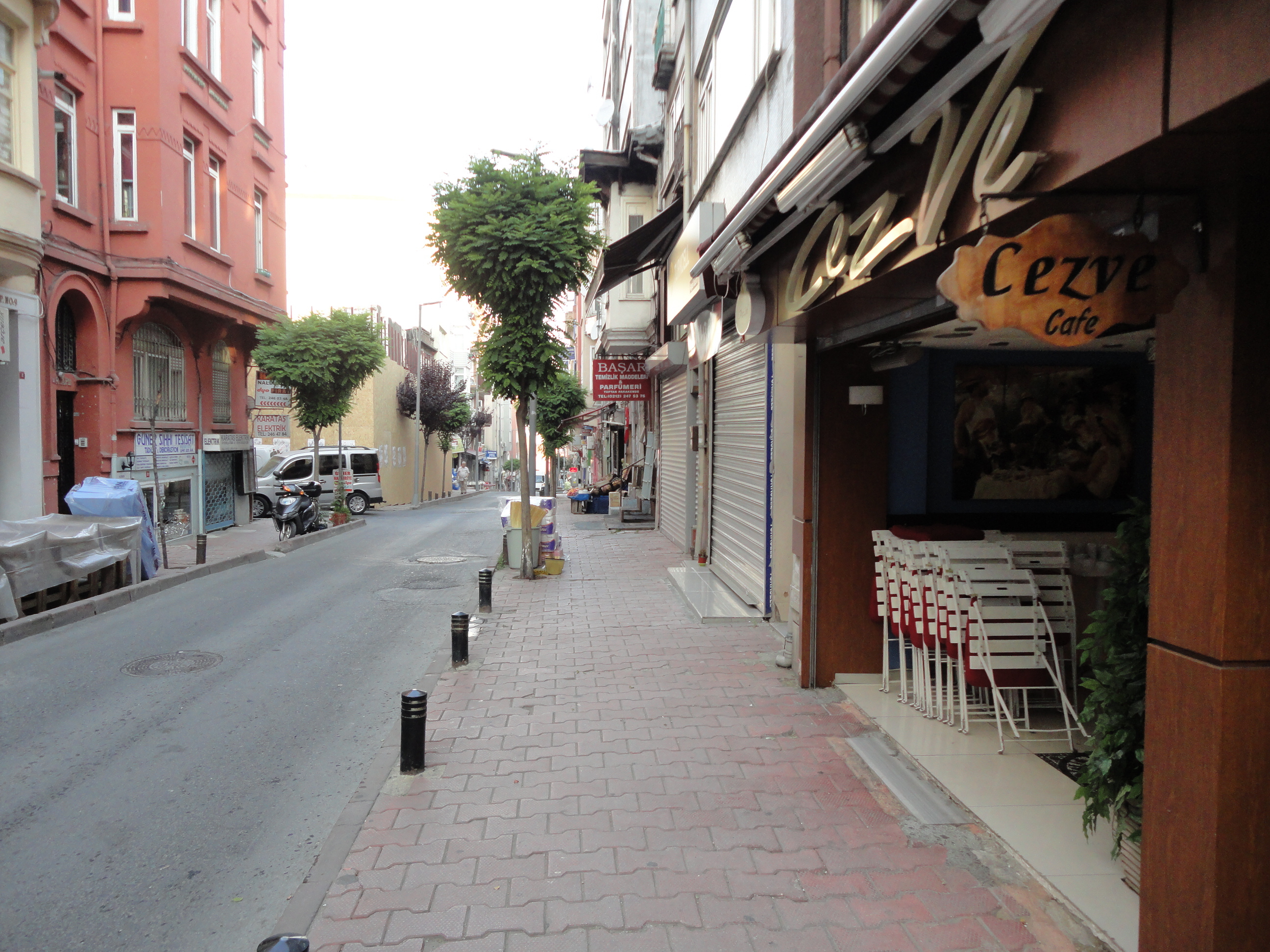
I went early to the office on Tuesday morning, June 17, 2015. On Harzemşah Sokağı in the Merkez (Center) Mahalle of Şişli, Istanbul, I paused to note a cafe decorated with the “Luncheon of the Boating Party.”