Book VII of the Iliad shows us the paradox of men at war who can still work together.
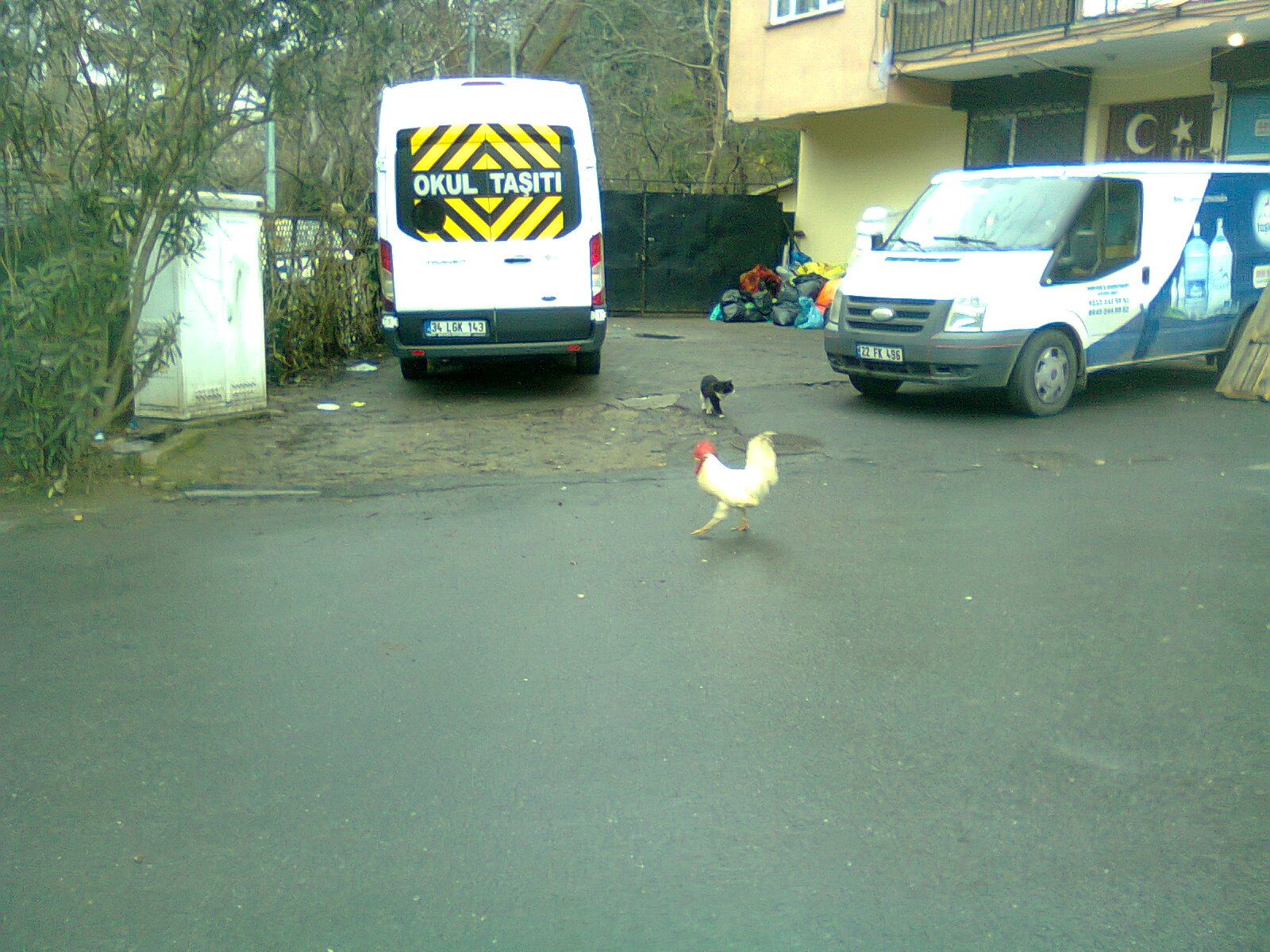
Cock and cat on a village street
near a stream channelled between concrete walls
Tarabya, Sarıyer, Istanbul
Wednesday, January 11, 2023
Book VII of the Iliad shows us the paradox of men at war who can still work together.
Cock and cat on a village street
near a stream channelled between concrete walls
Tarabya, Sarıyer, Istanbul
Wednesday, January 11, 2023

Tarabya Marina, Sarıyer, Istanbul
January 1, 2023
“As is the generation of leaves, so is that of humanity.” Glaucus says that to Diomedes in the Iliad, when the two warriors meet on the battlefield, and Diomedes wants to know whether he is facing man or god.
Humans are multitudinous and ephemeral, like the folia of trees, says Glaucus; why should his own tree be of interest to anybody else? It’s a pro forma question, perhaps, since Glaucus does proceed to describe his family.

Kireçburnu, Sarıyer, Istanbul
Friday, December 30, 2022
On the last Wednesday of 2022, I first noted the existence of Andrew Tate. I was reading a blog post dated the previous day, December 27. The post was “Time Out,” by Neville Morley, who recalled,
there was a flurry last month when the loathsome Andrew Tate declared the pointlessness of all books and book-learning and was widely denounced on the Twitter.
Maybe I had noticed some of the flurry, while paying it little mind. Continue reading

Creative destruction
Arpa Suyu Sokağı, Şişli, Istanbul
Thursday, December 22, 2022
In Book V of the Iliad, the battlefield deaths that started in Book IV continue. Some of them are caused by Diomedes, who also stalks higher prey:
In echo of Achilles’s summoning of Thetis in Book I, the wounded gods go crying to their parents.

Kireçburnu, Sarıyer, Istanbul
November 30, 2022
Last time I mentioned what I had remembered most from the Iliad, after reading it in high school: the metaphor in Book VI of humans as leaves dying in the fall, to be replaced by new ones in the spring. I also remembered how often men died at the hands of their fellow men:

Yeniköy (Νιχώρι) on the Bosphorus
Sarıyer, Istanbul, December 11, 2022
The Paphlagonians must have passed by here
on their way to join the Trojans
as they did according to Iliad II.851–5
as mentioned in the Wikipedia article “Cytorus”
created by me in 2010
In Book III of the Iliad, we learn about Menelaus, Paris, Hector, Helen, and Priam. Having learned about Agamemnon, Achilles, and Patroclus in the first two books, now we know all of the players in the following summary of the epic.
As I proposed last time, Achilles performs the greatest act in the Iliad by not killing Agamemnon in Book I. He then takes himself out of the action for a while. We are not going to see him again till Book IX, when he receives the embassy of Phoenix, Ajax, and Odysseus (chosen by Nestor in lines 168–9).

Kireçburnu, Sarıyer, Istanbul
Wednesday, November 30, 2022
In Book I of the Iliad, Achilles restrains an impulse to run a sword through Agamemnon.
That may be the greatest act in the whole epic. I say so, having recently completed a reading of Njal’s Saga, which features a lot of impulsive killing. Now I am embarking on the Iliad again, a book at a time. Here I take up Book I, some comparisons with the saga, and some connections with Plato, Augustine, and Collingwood.
I wrote here about Homer’s epic, book by book, between April, 2017, and September, 2019. I was reading Chapman’s Elizabethan translation. In my account of Book I from then, there are details that do not otherwise stand out to me now, when

Sarıyer, Istanbul (European side)
Loeb Iliad, volume I
November 25, 2022
Executive summary. An experiment has been performed to detect whether we are living in a simulation. The experiment is to tell Abraham to sacrifice his son. Whatever he does, he breaks a law. Thus there is more to the world than can be understood by natural science.
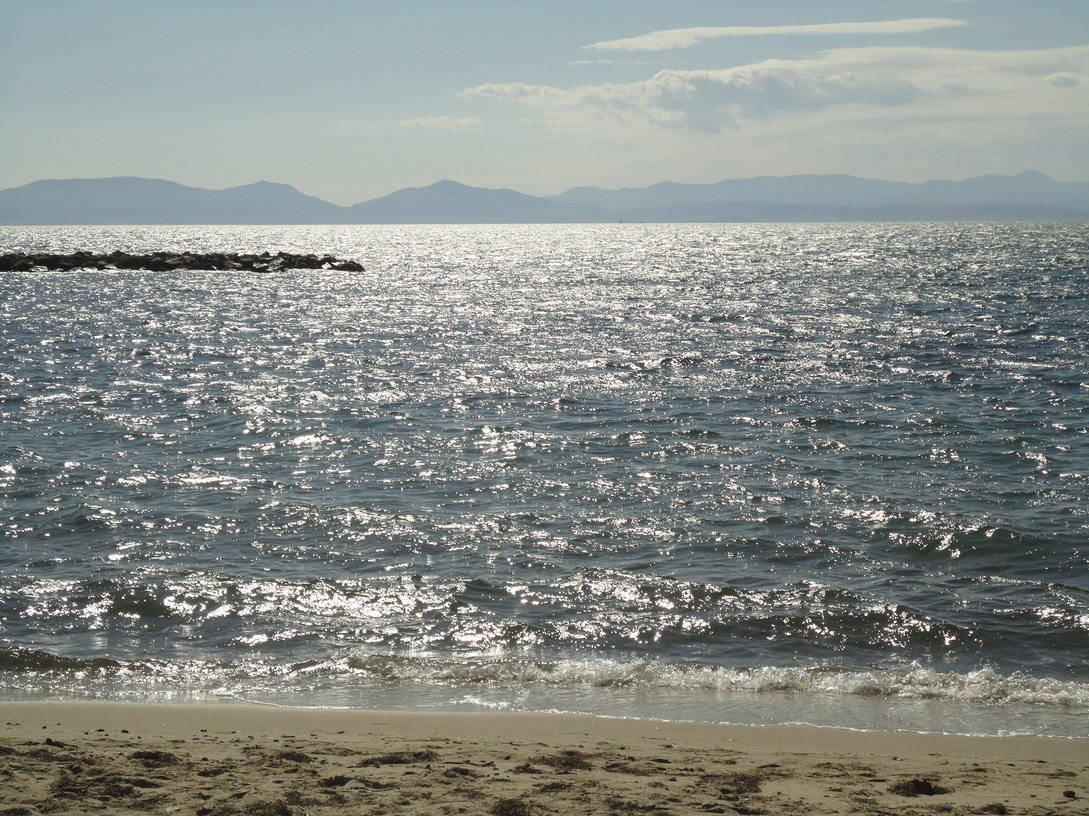
Altınova, Ayvalık, Balıkesir, Türkiye
Looking towards Lesbos, Greece
September 20, 2022
In the Platonic dialogues, Socrates frequently mentions τέχνη (technê), which is art in the archaic sense: skill or craft. The concern of this post is how one develops a skill, and what it means to have one in the first place.

 Polytropy