Category Archives: Prose

Affiliation

Friendship is natural to most animals, especially human beings, and that’s why we praise the philanthropist. You will see, if you travel, that all of us are family and even friends.

Something like that is what Aristotle says, in this first of eight readings on friendship. I have trouble imagining where the Philosopher is going to go with his subject; or perhaps I am troubled to imagine what may be in store.

Blurry white disk in a gray sky above black, bird-shaped dots in the highest branches of the foremost of a line of bare trees; several human silouettes below
Crows in a tree
in the morning mist by the Bosphorus
Kireçburnu, Sarıyer, İstanbul
Sunday, March 10, 2024

Continue reading

Even More on Dialectic

At the beginning of the first post “On Dialectic,” I raised the question of why I put so much into such posts. I propose now a couple of answers.

  1. I want to collect all evidence for what I am investigating – currently dialectic in Plato’s Republic. As Arthur Conan Doyle (1859–1930) has Sherlock Holmes say in A Study in Scarlet (1887; Wordsworth Classics, 2004),

    It is a capital mistake to theorize before you have all the evidence. It biases the judgment.

    And yet in Religion and Philosophy (1916), Collingwood states “the fundamental axiom of all thinking,”

    namely that whatever exists stands in some definite relation to the other things that exist.

    Thus “all the evidence” is everything in the world.

  2. I am engaged in such self-defense as a certain Islamic philosopher is, by the account of Strauss in Persecution and the Art of Writing (1952):

    Fārābī avails himself then of the specific immunity of the commentator or of the historian in order to speak his mind concerning grave matters in his “historical” works, rather than in the works in which he speaks in his own name.

Cloud with several lobes above deciduous trees in leaf
View from our balcony
Sanatçılar Sitesi, Tarabya, Istanbul
Saturday, July 8, 2023

Continue reading

Responsibility (Iliad Book XIX)

Book XIX of the Iliad is all talk. This annoys Achilles, but is important for Agamemnon and Odysseus, and they should know better – Odysseus even says so.

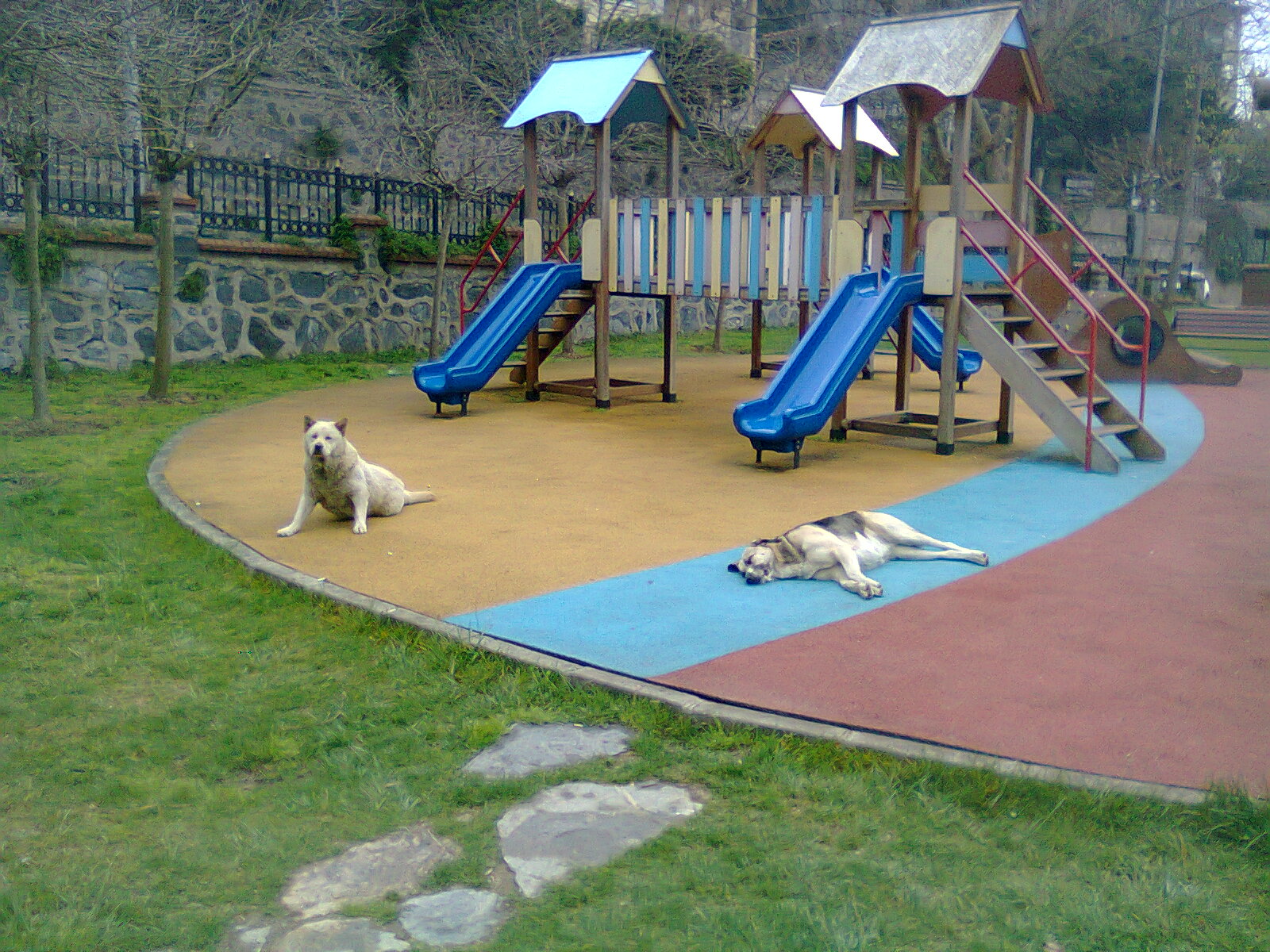
Two corpulent dogs lie at the bottom of two slides in a children’s playground; one has started to raise himself
Achilles gets ready to fight while Patroclus lies dead
(or, one of two well-fed street-dogs goes through the motions of defense)
Şalcıkır Parkı, Tarabya
Sarıyer, Istanbul
Sunday morning, March 26, 2023

Continue reading

Emotional Contagion (Iliad VIII)

On the day recounted in Book VIII of the Iliad,

  • on earth, the Achaeans are twice driven behind their new walls;
    • during the first rout,
      • Odysseus does not hear when Diomedes urges him to come to the aid of Nestor;
      • Hector thinks he will be able to burn the Achaean ships and kill all the men;
      • Agamemnon prays for mere survival;
    • the second time, Hector calls for fires to be lit, lest the Greeks try to escape in the night;
  • in heaven, Zeus
    • weighs out a heavier fate for the Achaeans;
    • declares that it shall be so until Achilles is roused by the death of Patroclus;
    • warns Hera and Athena not to interfere (though they try to anyway).

I wrote a fuller summary in 2017. Because I was reading it, I also talked about Huysmans, Against Nature, and the belief of the main character that the prose poem could

contain within its small compass, like beef essence, the power of a novel, while eliminating its tedious analyses and superfluous descriptions.

Now I shall find reason to bring up Herodotus, Plato, Aristotle, Thoreau, and Freud, and especially William James and Collingwood on the subject of emotion.

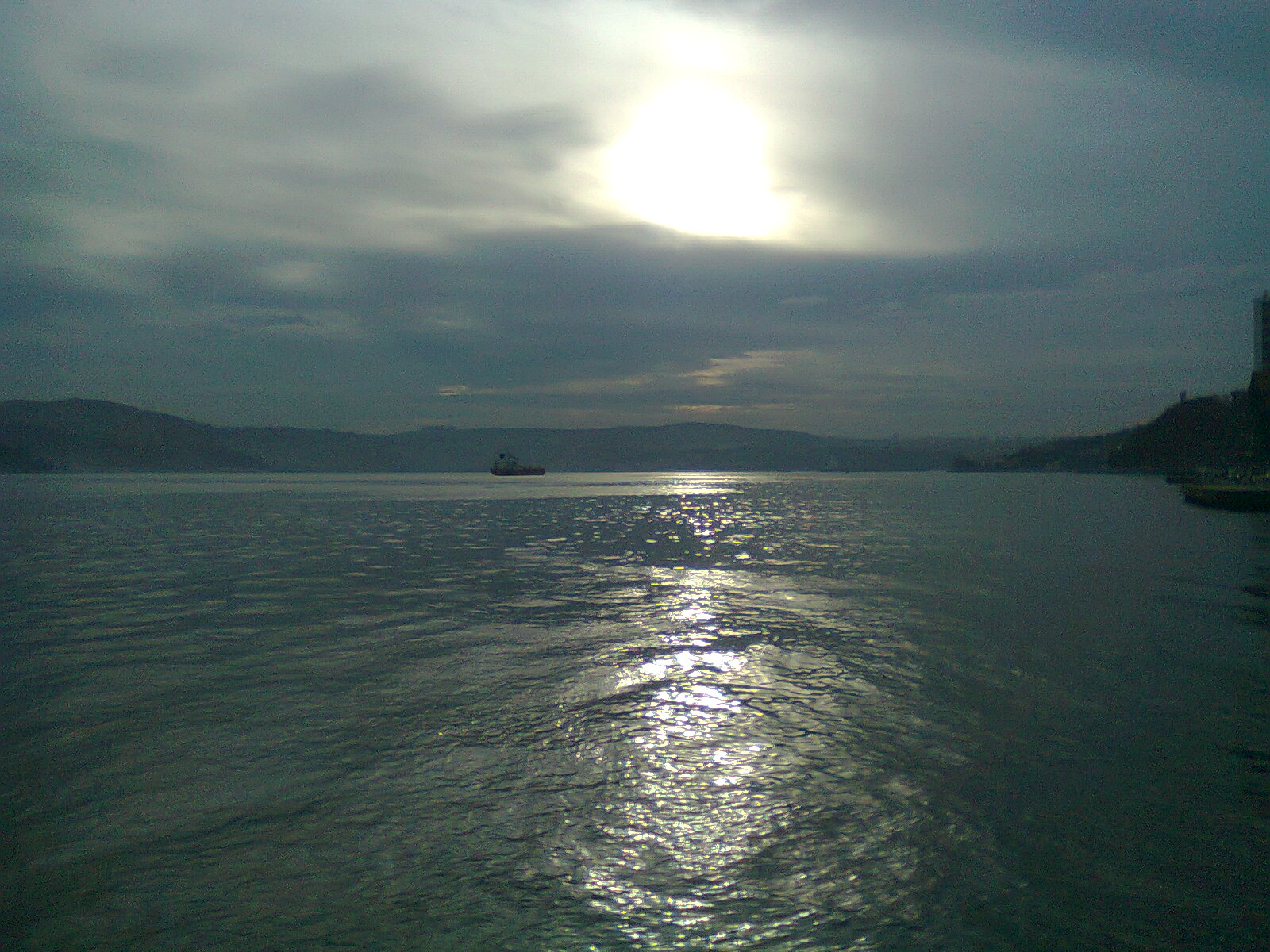
Morning sun, obscured by overcast skies, still shines on waters in turmoil in the Bosphorus Strait
Waters of the Bosphorus, Sarıyer, Istanbul
Wednesday morning, January 11, 2023

Continue reading

On Homer’s Iliad Book VII

Book VII of the Iliad shows us the paradox of men at war who can still work together.

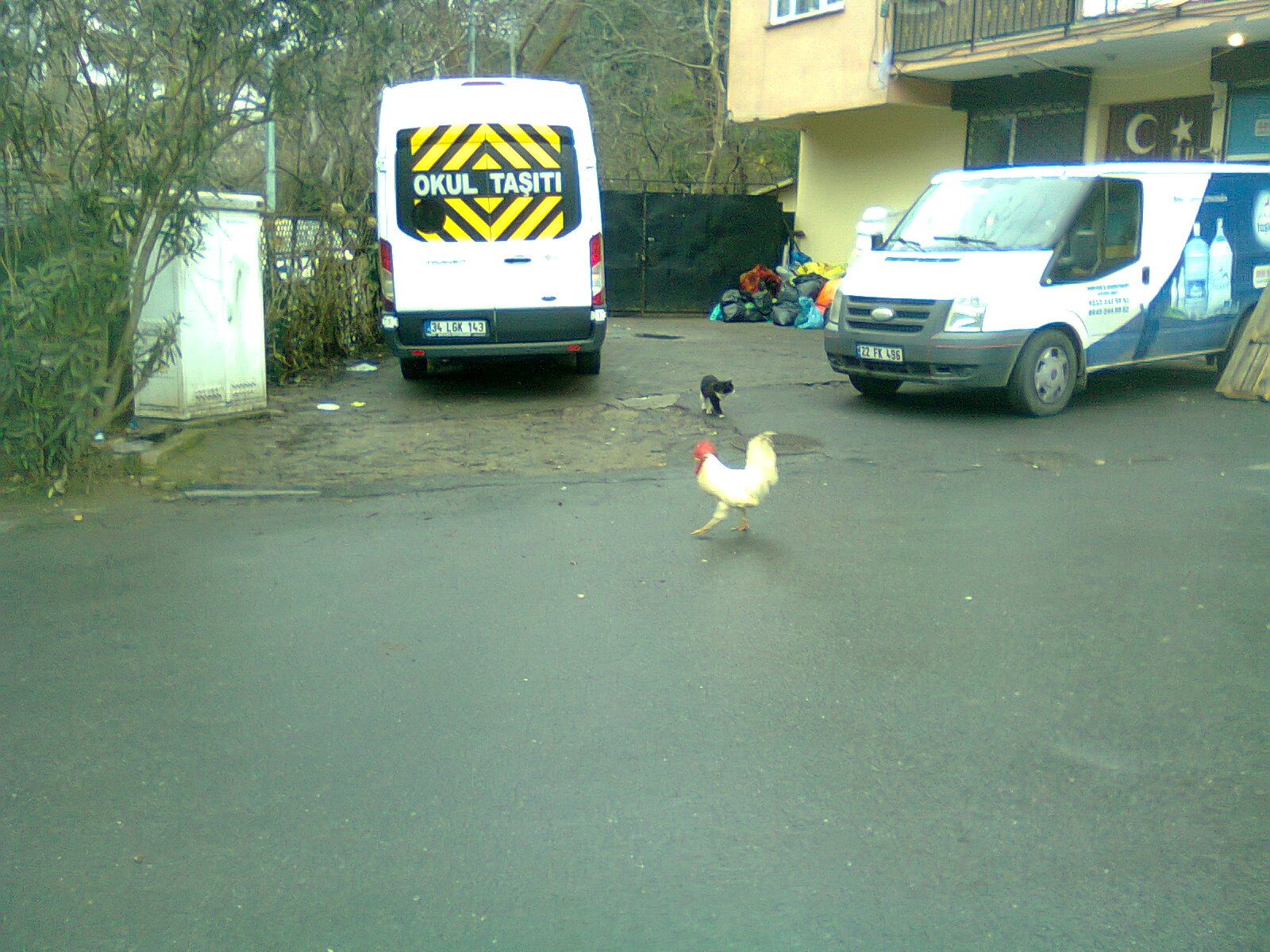
Street scene: a rooster walks down the road while, on his right side, a cat faces him. A minibus, car, and building are in the background, along with some greenery
Cock and cat on a village street
near a stream channelled between concrete walls
Tarabya, Sarıyer, Istanbul
Wednesday, January 11, 2023

Continue reading

Biological History

Sailboats and sun, seen through a mist and reflected in calm water
Tarabya Marina, Sarıyer, Istanbul
January 1, 2023

“As is the generation of leaves, so is that of humanity.” Glaucus says that to Diomedes in the Iliad, when the two warriors meet on the battlefield, and Diomedes wants to know whether he is facing man or god.

Humans are multitudinous and ephemeral, like the folia of trees, says Glaucus; why should his own tree be of interest to anybody else? It’s a pro forma question, perhaps, since Glaucus does proceed to describe his family.

Continue reading

On Homer’s Iliad Book III

Trunks of three mature trees on concrete wharf; strait beyond
Yeniköy (Νιχώρι) on the Bosphorus
Sarıyer, Istanbul, December 11, 2022
The Paphlagonians must have passed by here
on their way to join the Trojans
as they did according to Iliad II.851–5
as mentioned in the Wikipedia article “Cytorus
created by me in 2010

In Book III of the Iliad, we learn about Menelaus, Paris, Hector, Helen, and Priam. Having learned about Agamemnon, Achilles, and Patroclus in the first two books, now we know all of the players in the following summary of the epic.

Continue reading

Miracles

This is inspired by Charlotte Brontë’s Villette. After reading this 1853 novel a second time in the summer of 2018, I put some passages I liked into a LaTeX file. I added some commentary and came up with a document more than 90 A5 pages long. I recently reread it and was reminded how much I had enjoyed the novel. I thought some of my commentary could be adapted to stand alone as a blog post – this one.

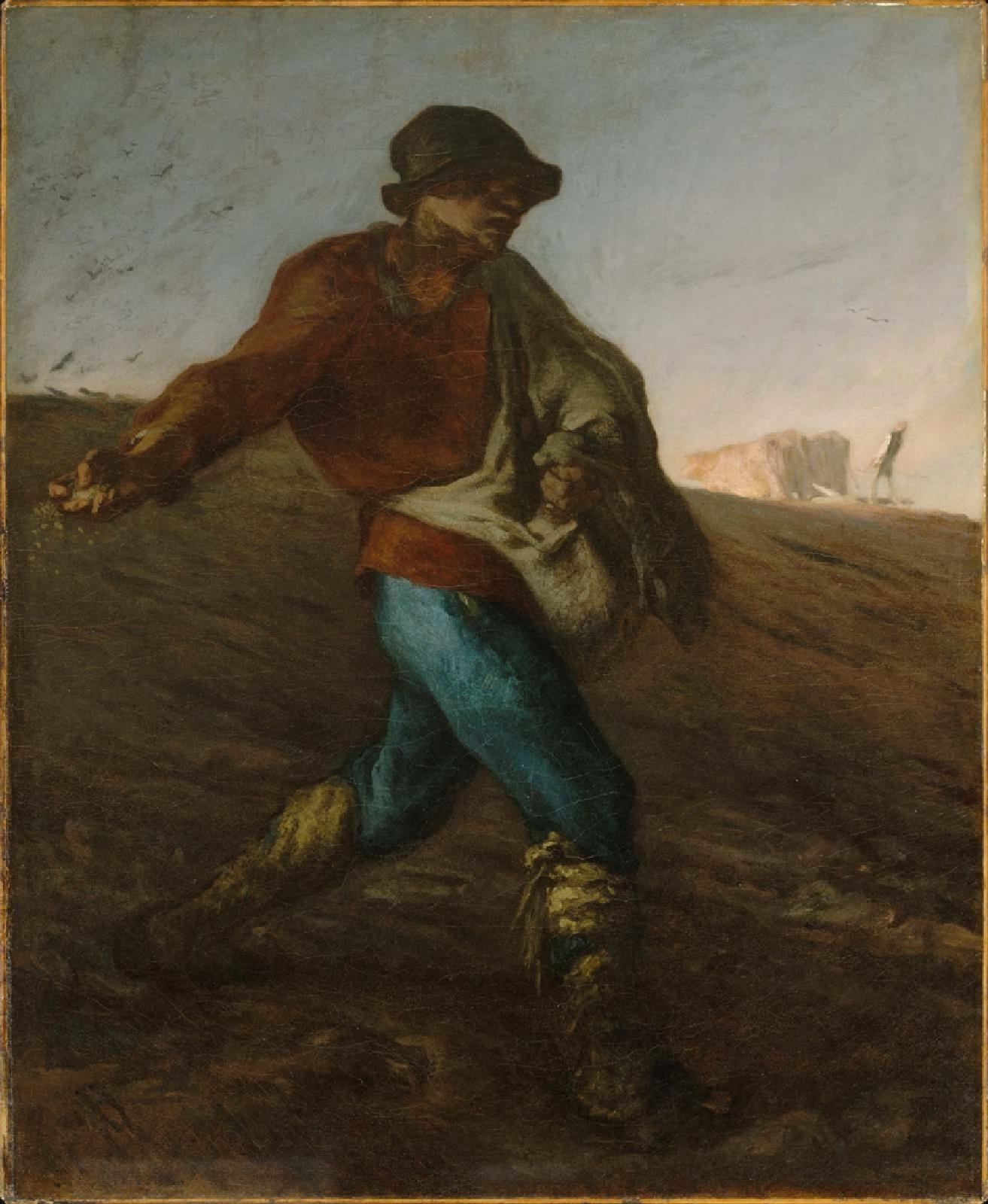
Man in a field, sack over left shoulder, casts seeds with his right hand
The Sower,” 1850
Jean-François Millet (French, 1814–1875)
Museum of Fine Arts, Boston

Continue reading

Creativity

In the Platonic dialogues, Socrates frequently mentions τέχνη (technê), which is art in the archaic sense: skill or craft. The concern of this post is how one develops a skill, and what it means to have one in the first place.

Books quoted or mentioned in the text, by Midgley, Simone Weil, Thoreau, Amy Mandelker (on Tolstoy), Oliver Byrne (on Euclid), Wittgenstein, Arendt, and Caroline Alexander (on Homer)

Continue reading

Plato and Christianity

Index to this series

This post uses work of Hannah Arendt, Augustine, R. G. Collingwood, Tom Holland, Somerset Maugham, and Ved Mehta.

Elevated highway, way above city streets

Ortaköy, December 27, 2021

In the first post of this series, I gave some reasons to read the Republic, and one of them was the problem of how our political leaders were not always the best. Plato had not solved that problem, since we still had it; but that meant nobody else had solved it either. Plato had at least taught us that people with great worldly power could nonetheless be more miserable than their subjects. In the Republic, Plato has Socrates teach that lesson

  • to Thrasymachus, in the latter part of Book I;
  • to Glaucon, who concludes at the end of Book IV that if having an unhealthy body is bad, having a vicious soul is worse;
  • in Book IX, with the account of the tyrant;
  • with the Myth of Er in Book X.

Continue reading