Category Archives: Collingwood

Concerning the philosopher R. G. Collingwood (1889–1943). Many if not most of my posts concern Collingwood somehow, so this category may not be of much use. See Articles on Collingwood for some articles by other persons

On Being Given to Know

  1. What if we could upload books to our brains?
  2. What if a machine could tell us what was true?

We may speculate, and it is interesting that we do speculate, because I think the questions do not ultimately make sense – not the sense that seems to be intended anyway, whereby something can be got for nothing.

Trees, clearings, and houses in the foreground; mountains receding into the background; clouds above
View from Şavşat

Continue reading

On Causation

Causation seems commonly to be understood as a physical concept, like being a fossil. The paleontologist seeks the one right answer to the question of when a particular dinosaur bone became part of the fossil record; likewise readers of international news seem to think there is one right answer to the question of whether Donald Trump or Ali Khamenei caused the shooting down of Ukraine International Airlines Flight 752 on January 8, 2020.

There is not one right answer. If you are Trump, you caused 176 civilian deaths by attacking the Iranians and provoking their response. If you are Mitch McConnell, you caused the deaths by inhibiting the removal of Trump from office. If you are Khamenei, you did it by meeting Trump’s fire with fire.

Being a cause does not mean you deserve condemnation or praise: that is another matter.

Continue reading

NL I: “Body and Mind” Again

Index to this series

“We are beginning an inquiry into civilization,” writes Collingwood, “and the revolt against it which is the most conspicuous thing going on at the present time.” The time is the early 1940s.

Human tourists photographing sculptured supine blue ape with chrome testicles outside the Intercontinental Hotel, Prague Continue reading

Piety

The post below is a way to record a passage in the Euthyphro where Socrates says something true and important about mathematics.

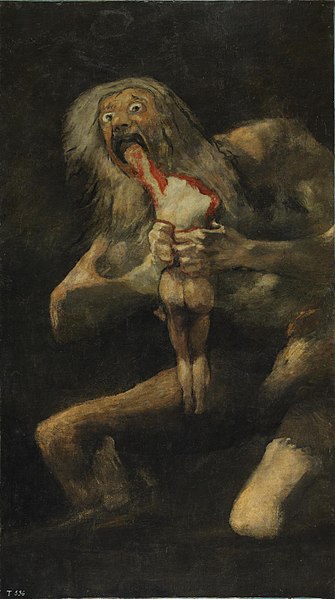
Crude depiction of bug-eyed figure grasping the torso of, and putting into his mouth the arm of, a smaller figure
Goya, [Cronus] Devouring His Son
(see below)

The passage is on a list of Platonic passages that I recently found, having written it in a notebook on May 23, 2018. The other passages are in the Republic; here they are, for the record, with some indication of why they are worth noting (translations are Shorey’s, originally from 1930 and 1935 in the old Loeb edition):

Continue reading

NL XLV: The Germans

Index to this series

At the end of Collingwood’s New Leviathan (1942), we reach a chapter whose theme is that of my more recent articles on grammar.

By August Macke – The Yorck Project (2002) 10.000 Meisterwerke der Malerei (DVD-ROM), distributed by DIRECTMEDIA Publishing GmbH. ISBN: 3936122202., Public Domain, Link

As history, Collingwood’s last chapter is difficult, for the reasons that trouble Herbert Read at the beginning of his Concise History of Modern Painting (revised 1968, augmented 1974). Read opens his first chapter with a passage from Collingwood’s Speculum Mentis (1924):

Continue reading

NL XLIV: The Turks

Index to this series

The last part of Collingwood’s New Leviathan (Oxford, 1942) is “Barbarism.” The first chapter of the part is “What Barbarism Is”; the remaining chapters describe examples of barbarism in turn. The fourth and last example is the one that Britain is fighting as Collingwood writes.

Sun behind mosque on cover of The Ottoman Centuries (Lord Kinross, a.k.a. Patrick Balfour) Continue reading

Antitheses

This is an attempt at a dialectical understanding of freedom and responsibility, punishment and forgiveness, things like that. My text is a part of the Gospel, though I attribute no special supernatural power to this. I shall refer also to the Dialogues of Plato.

NL XLIII: The Second Barbarism: The ‘Albigensian Heresy’

Index to this series

Summary. Suppose your society has certain rites and customs, perceived as essential to its functioning. When some persons among you reject those rites and customs, what are you going to do? Persecution would be the normal response of a society that aimed to preserve itself. In the example to be considered here, the society is medieval Christendom, where

  • buildings called churches were customarily the abode of friendly spirits, and
  • the rite of swearing an oath was a sign of special commitment.

Oaths and churches were rejected by persons called Paulicians, or Bogomils, or Albigensians. Their beliefs were Manichaean. These persons were persecuted so successfully that we do not understand them very well. Therefore we must leave open the question of whether they were barbarists.

Here I am going to review, among other things,

  • what it means to fight barbarism;
  • the response to German bombardment described in Goodbye, Mr. Chips;
  • what Jesus Christ says about swearing;
  • how the United States accommodates various beliefs (as by allowing affirming instead of swearing, or allowing Muslims to swear on a Quran);
  • the threat of a lying President;
  • the threat of ignoring climate change;
  • the etymology of heresy;
  • the discussion of mythos and logos in Pirsig.

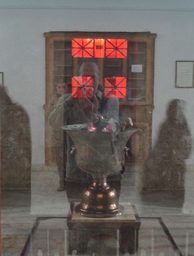
Fire temple, Yazd, Iran, September 2012. See “Duty to Nature

Continue reading

NL XLII: The First Barbarism: The Saracens

Index to this series

Executive summary: The barbarians who overran the Western Roman Empire were not barbarists in Collingwood’s technical sense. However, “in the seventh century a movement inspired by hostility towards everything Roman … and everything Christian, flared up on the south-eastern frontier of the Roman world” (42. 22). This movement was therefore barbarist. Failing to conquer Europe, either from the east at Constantinople, or from the west at Tours, the movement settled down and ceased being barbarist—by the account in Chapter XLII, “The First Barbarism: The Saracens,” and later, in Collingwood’s New Leviathan. I check this account against more recent sources; it is barbarist to think that the “movement” in question, or indeed any movement, must always be barbarist; I look at the “civilization” of the British Empire as portrayed in a story of Maugham, and I compare a character of the story to Collingwood.


Collingwood’s historical account of barbarisms is a minefield, if one wishes not to sound like a barbarist oneself. The four examples will be

  1. the Saracens,
  2. the “Albigensian Heresy” (or the Bogomils),
  3. the Turks, and
  4. the Germans.

The very formula “the X”—definite article followed by national or quasi-national adjective—this has a barbaric use in branding a people with indelible features. A retort then is “not all X,” as in “not all men.” Collingwood issues such a proviso himself:

45. 68. Please observe, Reader, that I am not talking about all Germans. I do not say that all Germans are liars. I know of some who are not; those heroes, for example, who continue in spite of everything the Nazis can do to run their secret wireless station and keep on printing Das Wahre Deutschland.

Das wahre Deutschland, from a Swiss antiquarian bookshop, Antiquariat Peter Petrej

Continue reading

NL XLI: What Barbarism Is

Index to this series

Civilization being agreement, barbarism has no chance in the long run (41. 67):

41. 76. For barbarism implies not only a quarrel between any barbarist and any civilized man; it also implies a quarrel between anyone barbarist and any other; and that any state of harmony between them is merely this quarrel suspended.

The barbarist is somebody “who imitates the conditions of an uncivilized world” (41. 53); but an actual attempt to bring about those conditions will need cooperation, and this will be a step towards civility. Here perhaps we should distinguish cooperation from the kind of coerced organization seen in a fascist state. Specific examples will be considered in the later chapters of Part IV of the New Leviathan. We are now considering “What Barbarism Is,” in general terms.

Continue reading