Category Archives: Philosophy

On The Human Condition of Hannah Arendt 1

Here begins a series based on the 1958 book by Hannah Arendt (1906–75) called The Human Condition. The publisher classifies it as philosophy and political science. I sense a kind of similarity with a book that I have devoted many blog posts to: The New Leviathan (1942) of R. G. Collingwood (1889–1943).

Collingwood wrote about European civilization as a war threatened to end it. Arendt managed to escape that war, and she went on to write about civilization in her own way in The Human Condition. Today, February 24, 2022, a new war for territory in Europe begins.

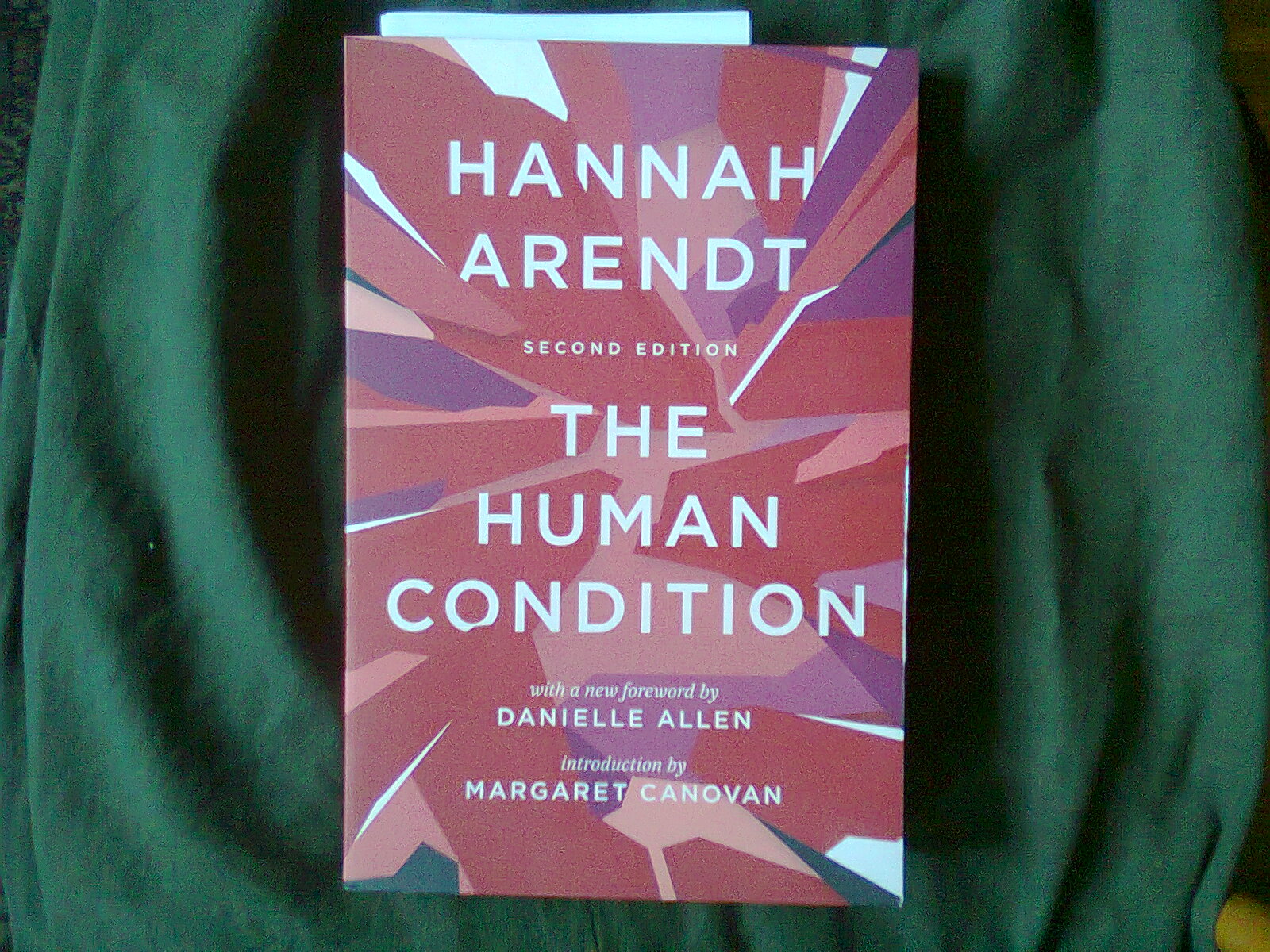
Red-themed cover of The Human Condition against dull green cloth

Continue reading

The Society of Mathematics

Mannequin in front of summation formula

This post concerns the Association for Mathematical Research, or AMR. A number of people are upset by its existence. I am not exactly one of them, but am suspicious, mainly because I do not know why a new organization would be needed, when we already have

The Twitter account of the AMR is dated to April, 2021. The website of the AMR supplies a list of founding members, but no account of when, how, or why they became founders. The site has a brief mission statement:

THE MISSION of the AMR is to SUPPORT MATHEMATICAL RESEARCH and SCHOLARSHIP

Are those other organizations not doing a good job? Continue reading

Plato and Christianity

Index to this series

This post uses work of Hannah Arendt, Augustine, R. G. Collingwood, Tom Holland, Somerset Maugham, and Ved Mehta.

Elevated highway, way above city streets

Ortaköy, December 27, 2021

In the first post of this series, I gave some reasons to read the Republic, and one of them was the problem of how our political leaders were not always the best. Plato had not solved that problem, since we still had it; but that meant nobody else had solved it either. Plato had at least taught us that people with great worldly power could nonetheless be more miserable than their subjects. In the Republic, Plato has Socrates teach that lesson

  • to Thrasymachus, in the latter part of Book I;
  • to Glaucon, who concludes at the end of Book IV that if having an unhealthy body is bad, having a vicious soul is worse;
  • in Book IX, with the account of the tyrant;
  • with the Myth of Er in Book X.

Continue reading

On Reading Plato’s Republic

Index to this series

In adolescence, when I started visiting art museums in Washington for my own pleasure, I would visit also the museum shops, hoping to be able to take home a souvenir. Eventually, my own memories were enough to take home.

That is what I remember observing about myself, perhaps around the time when my body stopped growing taller. That time may be used to demarcate adulthood, although in kindergarten, it had made no sense to me that our bodies could ever stop growing.

Cycad with seeds
Cycads outside Selenium Twins
in the valley above Ihlamur Kasırları
on the way to Beşiktaş
December 27, 2021

I have not been to a museum since the advent of Covid-19, but I often want a souvenir when I am reading now. The souvenir may be in the form of pencil marks in a book, or pen marks in a magazine, or various interventions in an electronic file. To be able to make such interventions, I save webpages, usually with a browser’s print function or with Print Friendly.

I may also respond to what I read by writing blog posts. This is why I now have eighteen of those on Plato’s Republic: one for each of the fourteen parts in which the dialogue was divided for an online discussion, and four more for when I had an abundance of ideas.

Where has all of that left me?

Continue reading

On Plato’s Republic, 14

Index to this series

In the tenth and final book of Plato’s Republic (Stephanus 595–621), with the help of Glaucon, Socrates does three things:

  1. Confirm and strengthen the ban on imitative poetry carried out in Book III.
  2. Prove the immortality of the soul.
  3. Tell the Myth of Er about how best to make use of that immortality.

Engraving of head and torso of man at sea. Bearded, he holds a bunch of plants to his right jaw as he looks over his left shoulder towards a net on land. A sort of fish tail is behind him or part of him
Bernard Picart
Glaucus Turned into a Sea-God, 1731
Continue reading

On Plato’s Republic, 13

Index to this series

We reviewed the five kinds of polity and soul in Book VIII of Plato’s Republic, but we didn’t get to the tyrannical soul. We take that up now in Book IX (Stephanus 571–92). We also make three arguments for why the tyrant has the least pleasant life. Finally, in order to pursuade Thrasymachus that indeed injustice is never profitable, we introduce a new chimerical image of the soul.

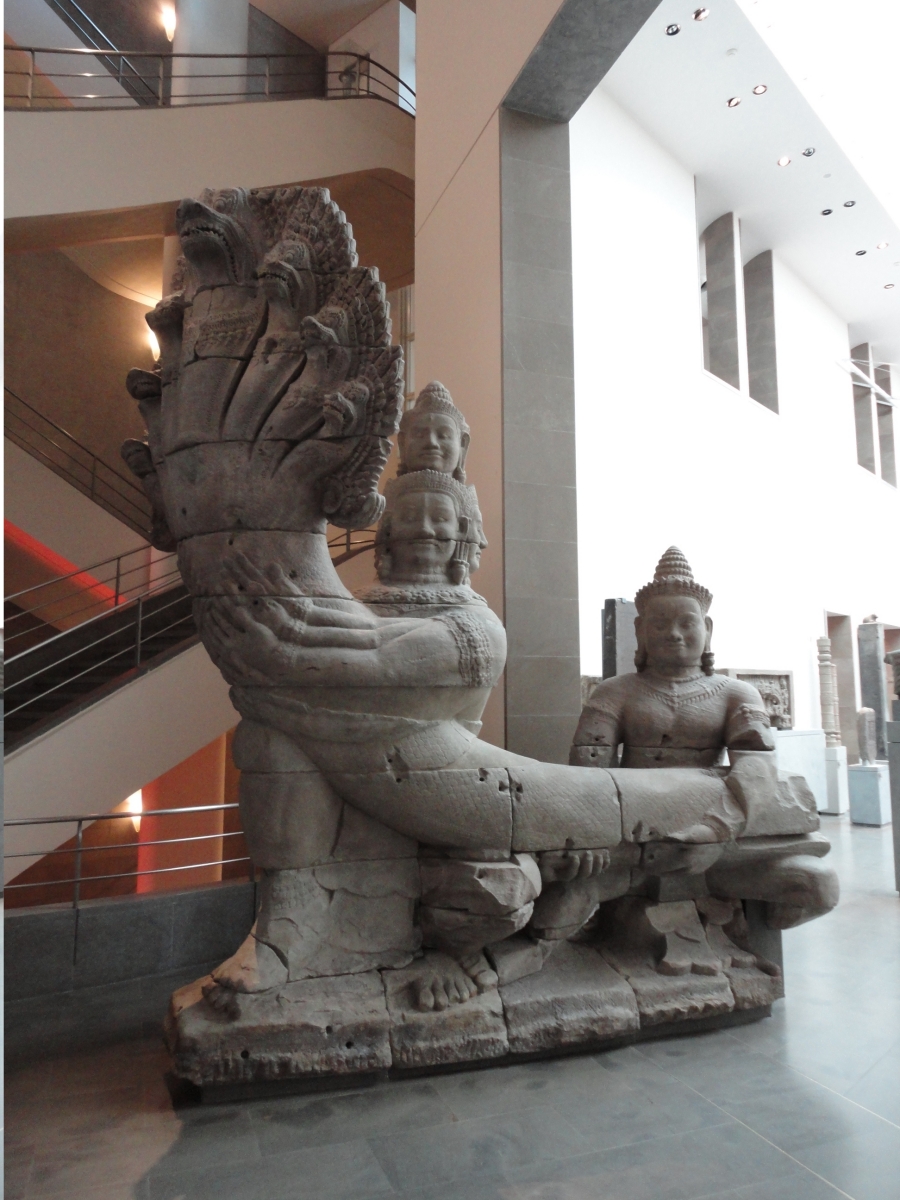
Many-headed man and and another man hold a many-headed serpent
« Chaussée des géants »
Cambodge, Preah Khan, Angkor (province de Siem Reap)
fin du 12e siècle – début du 13e siècle
Musée Guimet, Paris
June 4, 2011

Continue reading

Imagination

When Harry Potter and the Philosopher’s Stone came out in the UK on June 26, 1997, the author was almost thirty-two. I myself had been that age since March. The seventh Harry Potter book came out ten years later. Though I do not remember when I heard that the series had become a sensation, I know I wondered if one day I would see for myself what made the books so popular.

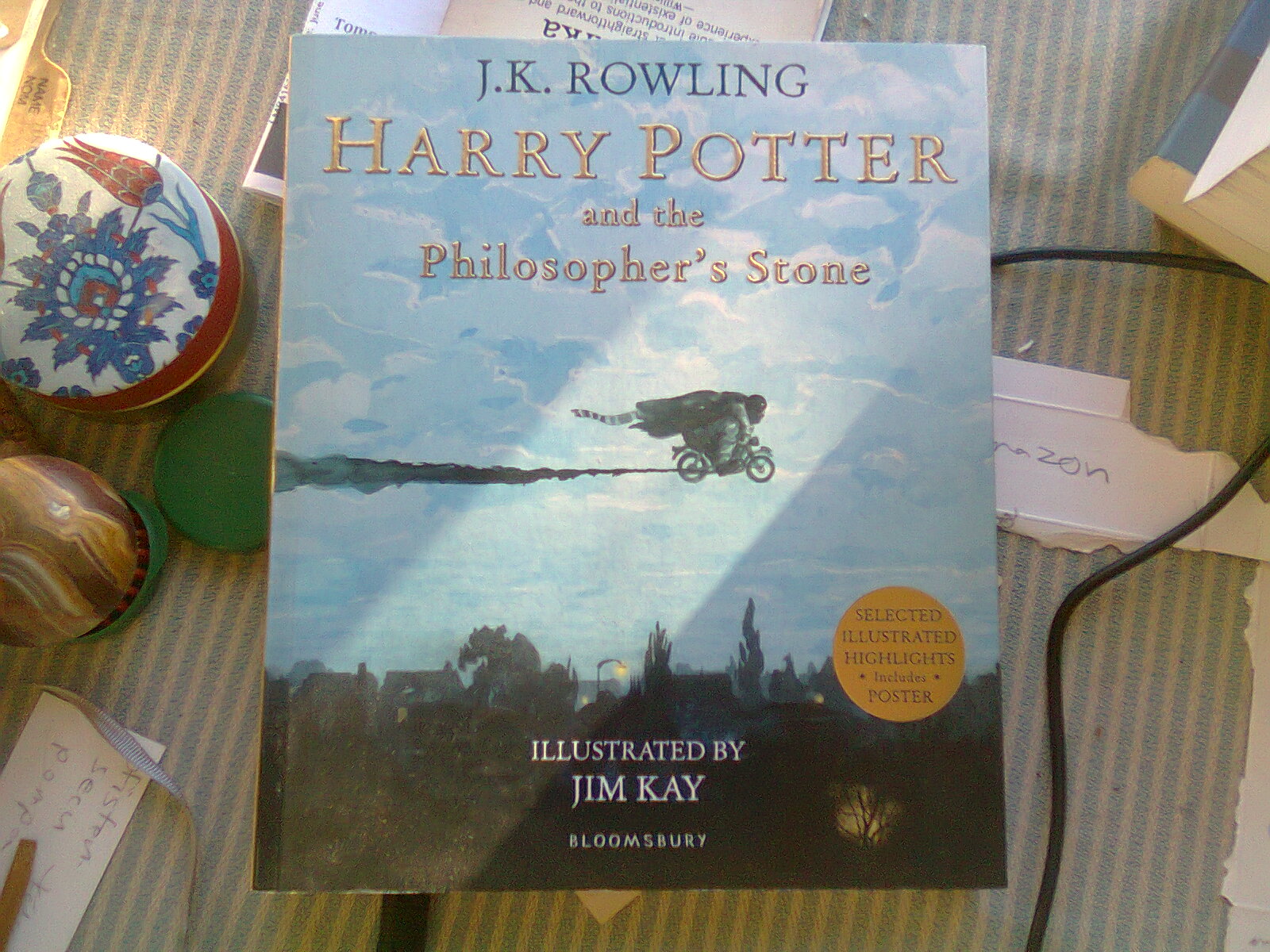
Harry Potter and the Philosopher’s Stone, on a cluttered table

Now I have read the first two books in the series, in part because their author has become popular as a figure of hatred for people who adored her books as children.

Continue reading

On Plato’s Republic, 12

Index to this series

We have completed the long detour of the Three Waves. In Book VIII of Plato’s Republic (Stephanus 543–69c), we return to the degeneration of the polity and the soul.

Rooster facing the sun at the top of a stairway
Freely ranging rooster
Çetin Emeç Park, Beşiktaş, Ιstanbul
November 22, 2021
Born in 1935, journalist Çetin Emeç was assassinated in 1990

Continue reading

Figs

This is about figs, because the opening of “The Sixth Elegy” of the Duino Elegies of Rainer Maria Rilke is about them, and I turn out to live among them.

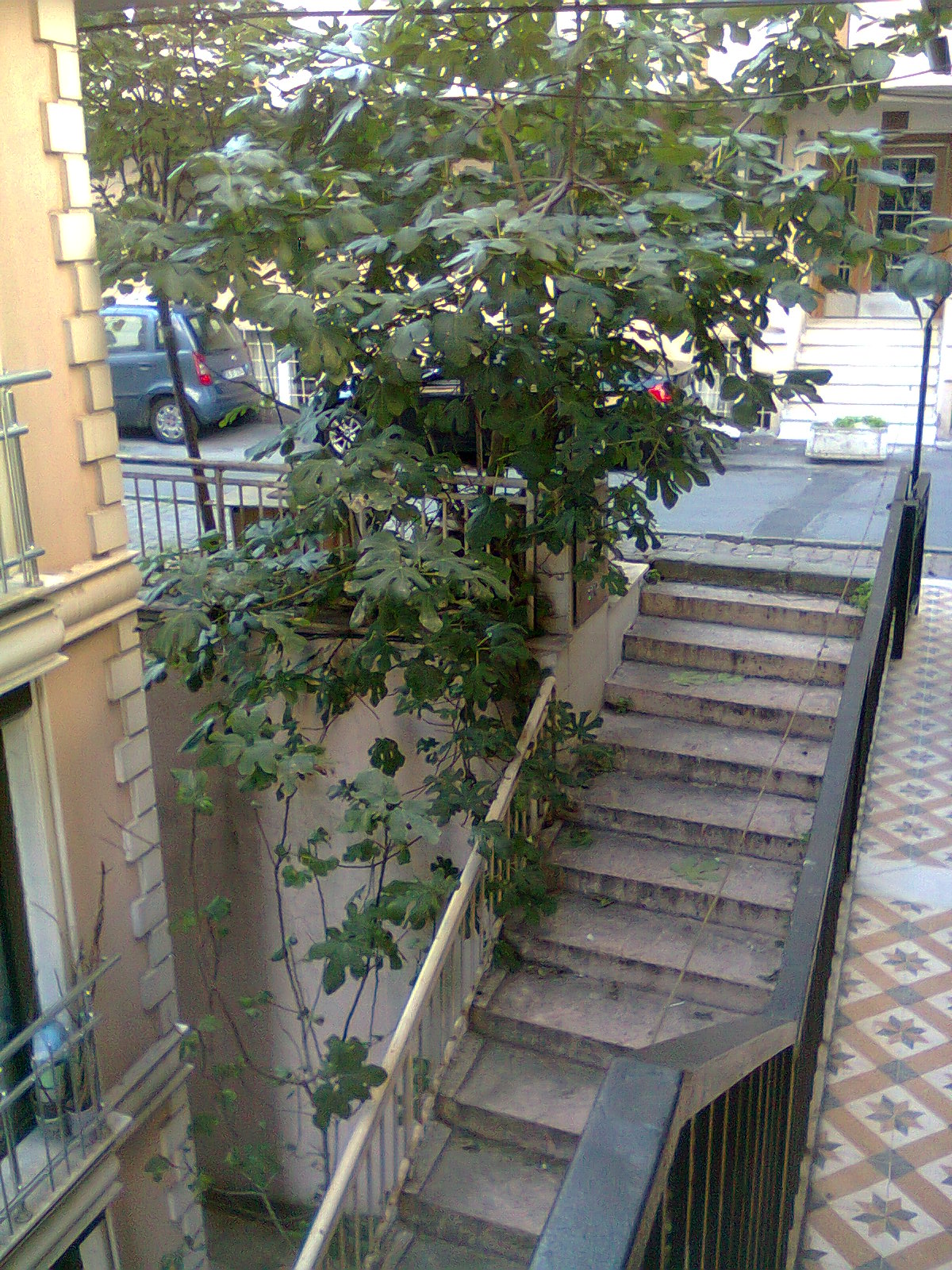
Fig trees growing like weeds on Ayşecik Sokağı
Fulya, Şişli
November 15, 2021

Continue reading

On Plato’s Republic, 11

Index to this series

  • In the fair city of Callipolis (527c), students who pass their exams will become philosophers at the age of fifty (540a).

  • Callipolis itself will come to be, once philosophers seize power in an existing city and throw out everybody over the age of ten (540e).

  • This is all said in play (536c), and play is what children must be allowed to do, since (536e)

    the free man ought not to learn any study slavishly. Forced labors performed by the body don’t make the body any worse, but no forced study abides in a soul.

Distorted images in a garden
Dan Graham (b. 1942)
For Gordon Bunshaft
Hirshhorn Museum and Sculpture Garden
Washington DC
July 17, 2013

Continue reading