Category Archives: Philosophy

Parenthood and Sex

Each of us has two biological parents. In my case, those parents are not my real parents, namely the ones who raised me. Nonetheless, according to the theory that everybody seems to accept, including myself, each of us has grown up from a zygote, which was formed by the union of two gametes. Moreover, one of those gametes was an egg cell; the other, a sperm cell. The gametes came from gonads: an ovary and testis, respectively. Ovaries are possessed by females of our species; testes, by males. Being female or male is called sex.

We are also distinguished, when children, as being boys or girls. Boys grow up to be men; girls, women.

It is usually assumed that men are male and women are female. Some of us may insist that this is always so, by definition of the words in question. In that case, I will argue,

  • the definitions can admit of exceptions, at least in principle;
  • an exception cannot be granted, merely at the request of the person who asks for it.

Continue reading

On Homer’s Iliad Book I

In Book I of the Iliad, Achilles restrains an impulse to run a sword through Agamemnon.

That may be the greatest act in the whole epic. I say so, having recently completed a reading of Njal’s Saga, which features a lot of impulsive killing. Now I am embarking on the Iliad again, a book at a time. Here I take up Book I, some comparisons with the saga, and some connections with Plato, Augustine, and Collingwood.

I wrote here about Homer’s epic, book by book, between April, 2017, and September, 2019. I was reading Chapman’s Elizabethan translation. In my account of Book I from then, there are details that do not otherwise stand out to me now, when

  • I am reading mainly Murray’s translation in the Loeb Classical Library, and
  • comparisons with Njal’s Saga are in mind.

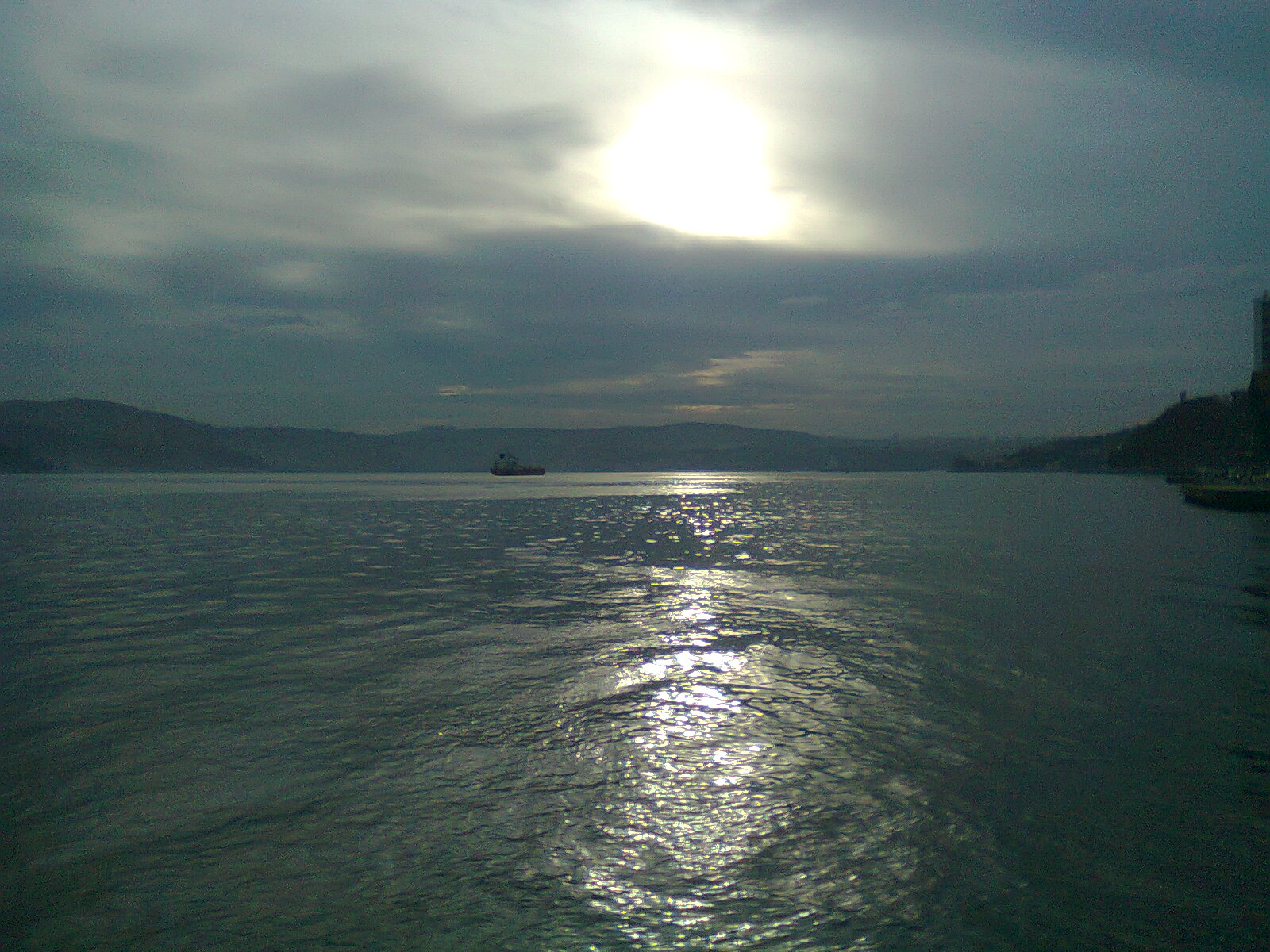
Bench on concrete wharf, looking out across a bay to the hills beyond; coast guard vessel in view
Sarıyer, Istanbul (European side)
Loeb Iliad, volume I
November 25, 2022

Continue reading

The Ideal

The noun “idea” came to English in the sixteenth century, via Latin, from Plato’s ἰδέα: so the dictionaries tell me. An older version, “idee,” came from the French idée. The adjective “ideal” came via the French idéal from the Latin ideālis, but this seems to have been a native coinage, derived from no Greek term. Leo Strauss corroborates this in a passage that I quoted in “Nature”: “ ‘ideal’ is not a Platonic term.” Nonetheless, in translations of the Republic that are still in print, Benjamin Jowett and Paul Shorey use the word “ideal.” This may blur the distinction between two activities:

  • Making something, such as a meal or a bookshelf, according to a recipe or plan.
  • Creating something brand-new.

I looked at the first creation myth of Genesis in my previous post, whose title quoted the Bible on God’s judgment of what he had created: “It Was Good.” The goodness of the world, I suggested, did not lie in its fitting a plan, since a plan would have had to be spoken into existence, and this is just how the world itself came to be.

I don’t know about God, but if we have a basis for calling something good, we might call this basis an ideal. However, I also don’t know whether this is what Plato actually has in mind when his translators use the term “ideal.”

Bookshelves on one wall, window on another
Hacıosman, Tarabya, Sarıyer, İstanbul
November 12, 2022

Continue reading

Sacrifice and Simulation

Executive summary. An experiment has been performed to detect whether we are living in a simulation. The experiment is to tell Abraham to sacrifice his son. Whatever he does, he breaks a law. Thus there is more to the world than can be understood by natural science.

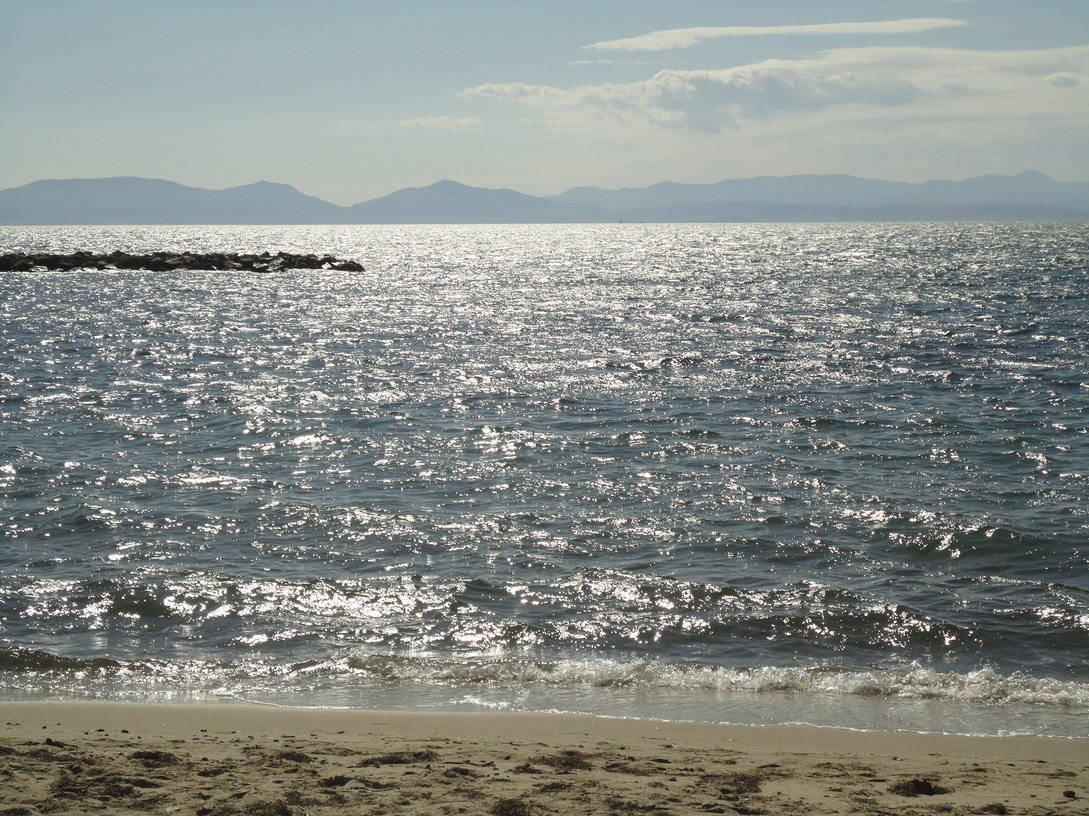
Beach, sparkling sea, mountains, clouds, sky
Altınova, Ayvalık, Balıkesir, Türkiye
Looking towards Lesbos, Greece
September 20, 2022

Continue reading

Ways of Thinking

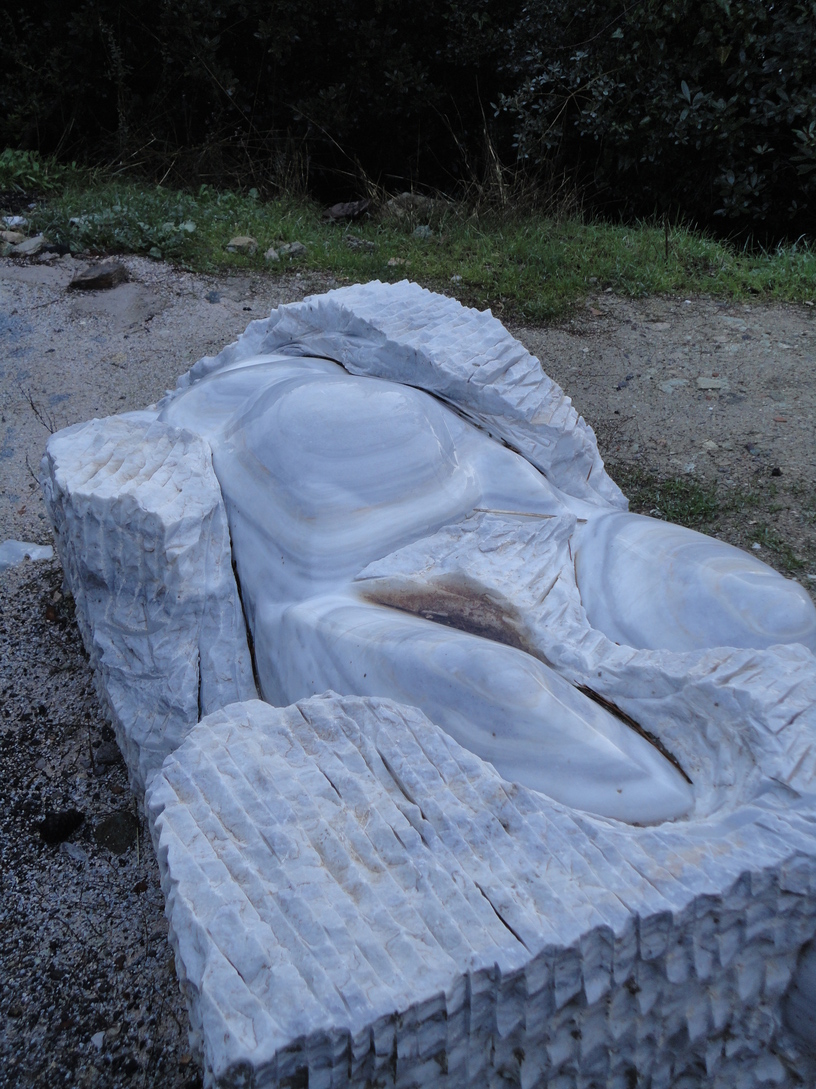
This is a report from five years ago on an art exhibit in Istanbul called “Doublethink.” I had an amusing encounter with one of the artists, and I had a conversation with the curator, who like George Orwell had attended Eton College. I wrote my report in three emails, given here with their timestamps. Because I mention some sculptures at the Nesin Mathematics Village, I have added the best photographs that I could find of them among the pictures that I have taken at the Village. Unfortunately I don’t seem to have documented the sculptures as such.


January 21, 2016
See “Nesin Matematik Köyü, Ocak (January) 2016

Continue reading

Miracles

This is inspired by Charlotte Brontë’s Villette. After reading this 1853 novel a second time in the summer of 2018, I put some passages I liked into a LaTeX file. I added some commentary and came up with a document more than 90 A5 pages long. I recently reread it and was reminded how much I had enjoyed the novel. I thought some of my commentary could be adapted to stand alone as a blog post – this one.

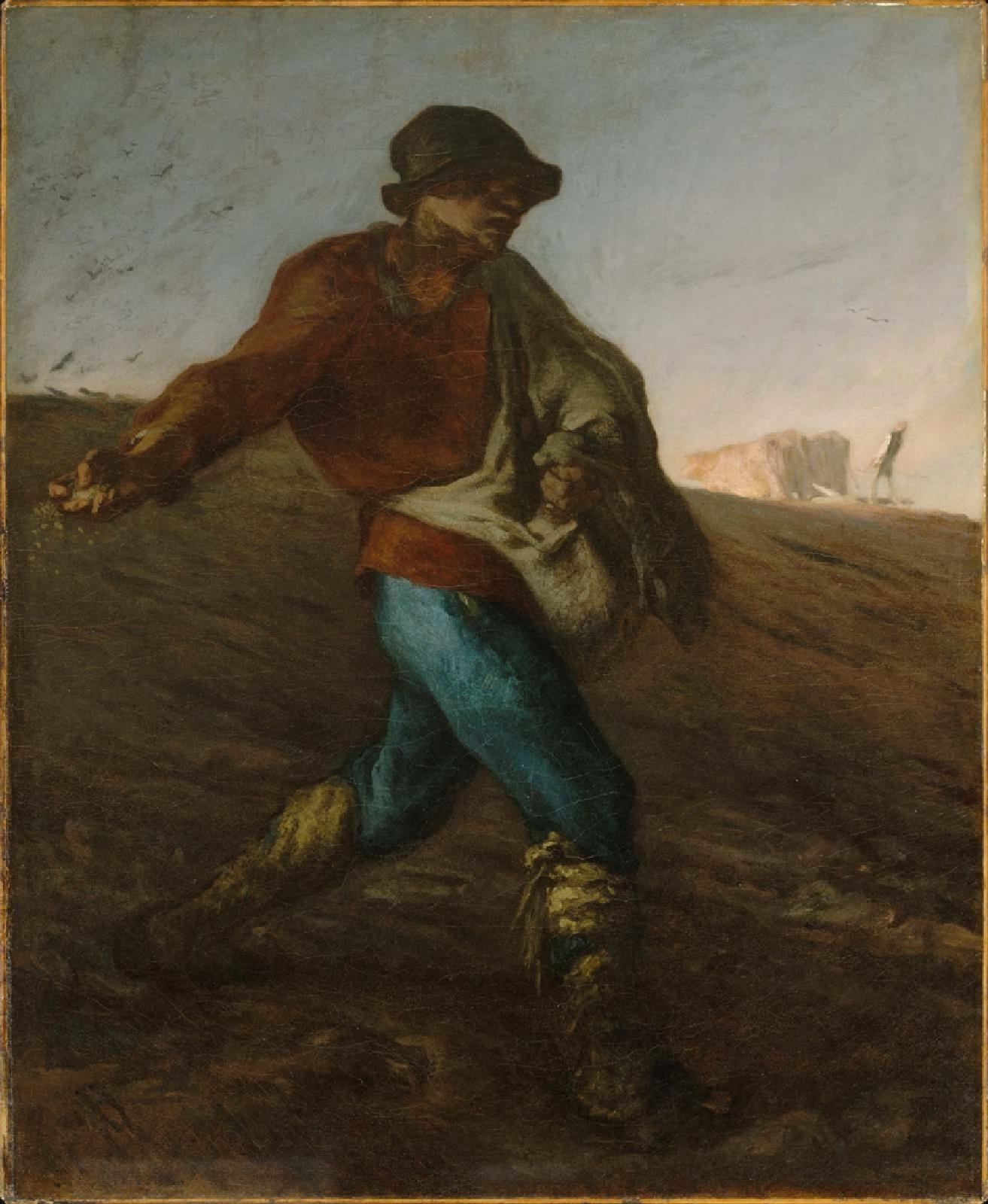
Man in a field, sack over left shoulder, casts seeds with his right hand
The Sower,” 1850
Jean-François Millet (French, 1814–1875)
Museum of Fine Arts, Boston

Continue reading

Charles Bell’s Axiomatic Drama

Here is an annotated transcription of a 1981 manuscript by Charles Greenleaf Bell (1916–2010) called “The Axiomatic Drama of Classical Physics.” A theme is what Heraclitus observed, as in fragment B49a of Diels, LXXXI of Bywater, and D65a of Laks and Most:

We step and we do not step into the same rivers,
we are and we are not.

ποταμοῖς τοῖς αὐτοῖς ἐμβαίνομέν τε καὶ οὐκ ἐμβαίνομεν,
εἶμέν τε καὶ οὐκ εἶμεν.

Bell reviews the mathematics, and the thought behind it, of

  1. free fall,
  2. the pendulum,
  3. the Carnot heat engine.

In a postlude called “The Uses of Paradox,” Bell notes:

Forty-five years ago I decided that when reason drives a sheer impasse into an activity which in fact goes on, we have to think of the polar cleavage as both real and unreal.

I like that reference to “an activity which in fact goes on.” In youth it may be hard to recognize that there are activities that go on. We do things then, but that they will get anywhere may be no more than a dream. In any case, Bell himself goes on:

… that is a job as huge and demanding as Aristotle’s, and for me at 70, just begun.

“Look,” my friends say, “Bell’s been doing the same thing since he was 25. About that time he had a vision of Paradox as paradise, and he’s been stuck there ever since.”

Bell’s picture next to Aristotle’s Physics
The back of Bell’s Five Chambered Heart with
the front of the OCT of Aristotle’s Physics

Continue reading

Creativity

In the Platonic dialogues, Socrates frequently mentions τέχνη (technê), which is art in the archaic sense: skill or craft. The concern of this post is how one develops a skill, and what it means to have one in the first place.

Books quoted or mentioned in the text, by Midgley, Simone Weil, Thoreau, Amy Mandelker (on Tolstoy), Oliver Byrne (on Euclid), Wittgenstein, Arendt, and Caroline Alexander (on Homer)

Continue reading

On The Human Condition of Hannah Arendt 10

Index to this series

CHAPTER V Action [3]

We come to the end of Arendt’s chapter on action. Action has two components:

  1. Getting it started (ἄρχειν).
  2. Keeping it going (πράττειν).

Anybody can do the first, but then the second is out of his (or her) exclusive control. This is a problem. You can try to avoid the problem, either by making other people your slaves, or by being a Stoic. You can also just recognize that the problem can be mitigated by the actions of promising and forgiving.

Picnic table among trees
Yıldız Parkı, April 16, 2022
Where I did some of the next reading

Continue reading

On The Human Condition of Hannah Arendt 9

Index to this series

CHAPTER V Action [2]

It can be a challenge to read Hannah Arendt. At the end of the first paragraph of the present reading, she says,

Power is actualized only where word and deed have not parted company, where words are not empty and deeds not brutal, where words are not used to veil intentions but to disclose reali­ties, and deeds are not used to violate and destroy but to establish relations and create new realities.

If these words are themselves not empty, what are they full of? “To establish relations and create new realities” would seem to be just what George W. Bush and Vladimir Putin have tried to do in Iraq and Ukraine, even as their words are empty and deeds brutal.

I do grant, having done the next reading too, that the end of this chapter on action is very interesting.

Picnic table under the sun in the midst of of flowering groundcover and budding trees
Yıldız Parkı, April 9, 2022
Where I did some of the next reading

In the present reading, I detect the continuation of themes from last time:

  • theoreticians make things up to explain away what they do not want to recognize;
  • what they do not want to recognize is that we are capable of action.

Continue reading