Category Archives: Philosophy

On The Human Condition of Hannah Arendt 8

Index to this series

CHAPTER V Action [1]

We shall have three readings of the chapter on action.

All sorrows can be borne if you put them into a story or tell a story about them.

Isak Dinesen

A theme of this reading is that our life is a story, but we are not the author.

Nam in omni actione principaliter intenditur ab agente, sive necessitate naturae sive voluntarie agat, propriam similitudinem explicare; unde fit quod omne agens, in quantum huiusmodi, delectatur, quia, cum omme quod est appetat suum esse, ac in agendo agentis esse modammodo amplietur, sequitur de neces­sitate delectatio. … Nihil igitur agit nisi tale existens quale patiens fieri debet.

(For in every action what is primarily intended by the doer, whether he acts from natural necessity or out of free will, is the disclosure of his own image. Hence it comes about that every doer, in so far as he does, takes delight in doing; since everything that is desires its own being, and since in action the being of the doer is somehow intensified, delight necessarily follows. … Thus, nothing acts unless [by acting] it makes patent its latent self.)

Dante

Arendt will reiterate what Dante says.

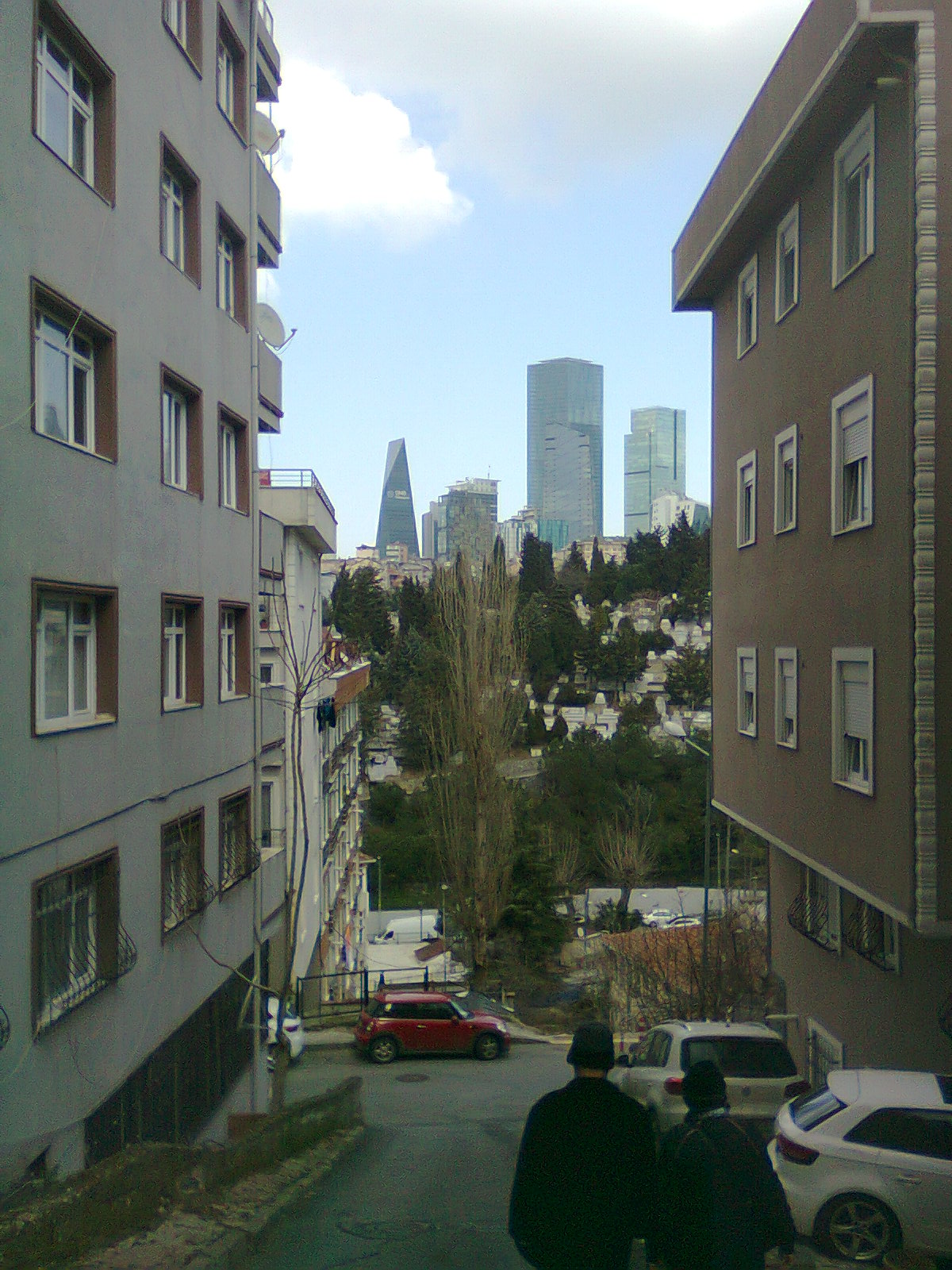
Two figures walk between buildings towards a hillside of graves, with skyscapers beyond
Zincirlikuyu Mezarlığı
March 26, 2022

Continue reading

On The Human Condition of Hannah Arendt 7

Index to this series

CHAPTER IV Work [2]

With a second reading, of §§ 22 and 23, we finish now Arendt’s chapter on work. This time I haven’t got a lot of comments between the paragraphs.

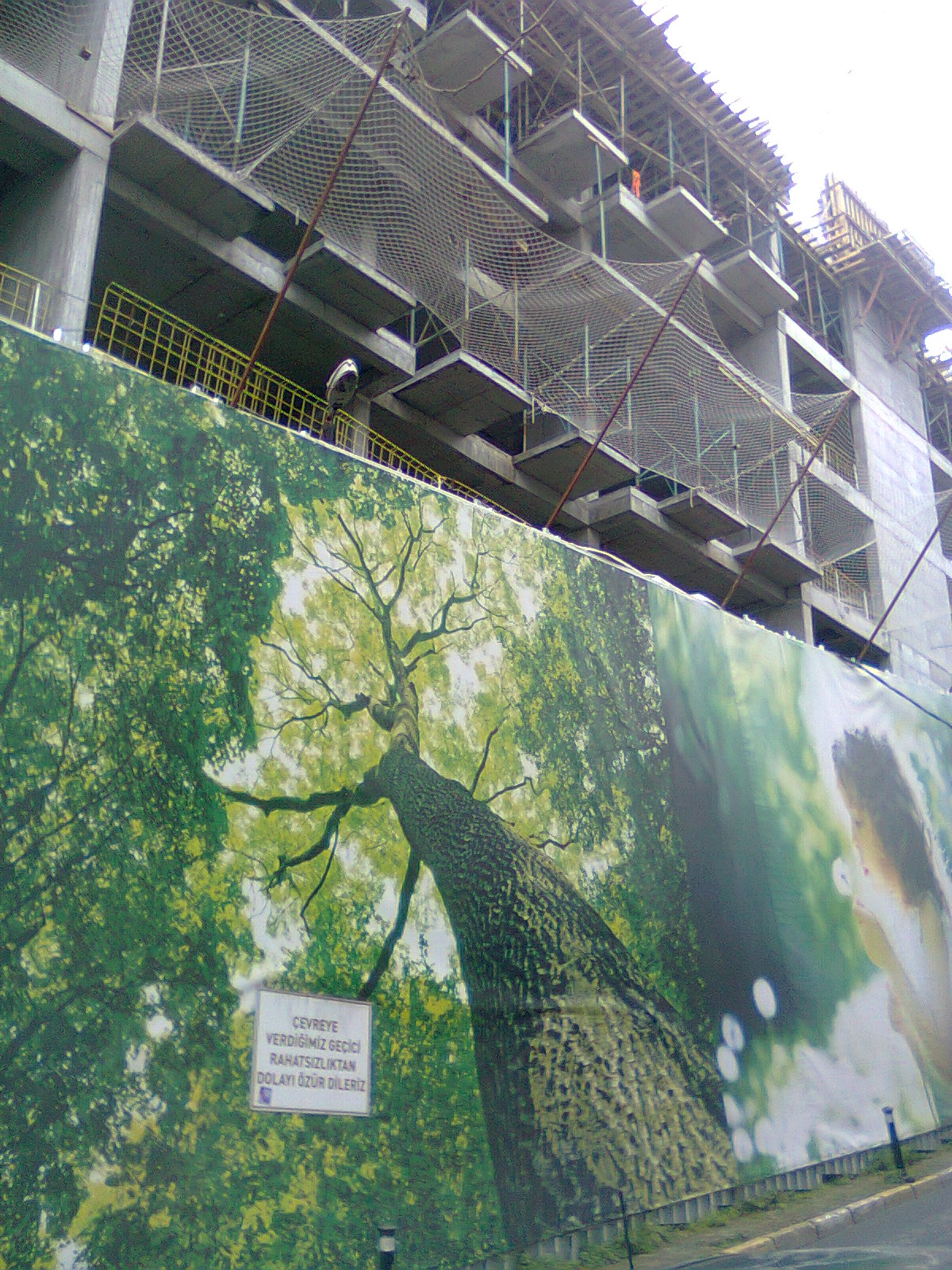
High-rise under construction, the base hidden behind the image of a tree
Nişantaşı, where there used to be trees
February 28, 2022

In the previous post, I could have noted at the top how, in ¶ 20.8, Arendt paradoxically distinguishes between the automatic and the mechanical. Today we might use either word for activity without passion or thought. However, etymologically speaking at least, if something is mechanical, that means we can work on it; but the automatic goes its own way. I investigated this in my notes last time, in part because I had already done so, at least regarding the automatic, in the post named for the goddess Automatia.

Continue reading

On The Human Condition of Hannah Arendt 6

Index to this series

CHAPTER IV Work [1]

In The Human Condition, we have passed now from the chapter on labor to the chapter on work. The two subjects are inseparable in practice, since for example the ongoing process of labor uses tools that are made by work. The main issue now is that, as steam power has been replaced by electricity, our tools have become machines. No longer does the worker go to work with his (or her) tools, but the work comes to the worker on a conveyor belt. That belt has its own rhythm. This is not a problem for the human quâ laborer, basically since labor is rhythmic anyway. It is a problem for the worker and his (or her) products. Products now conform to the limitations of the machine, rather than to the standards of the human.

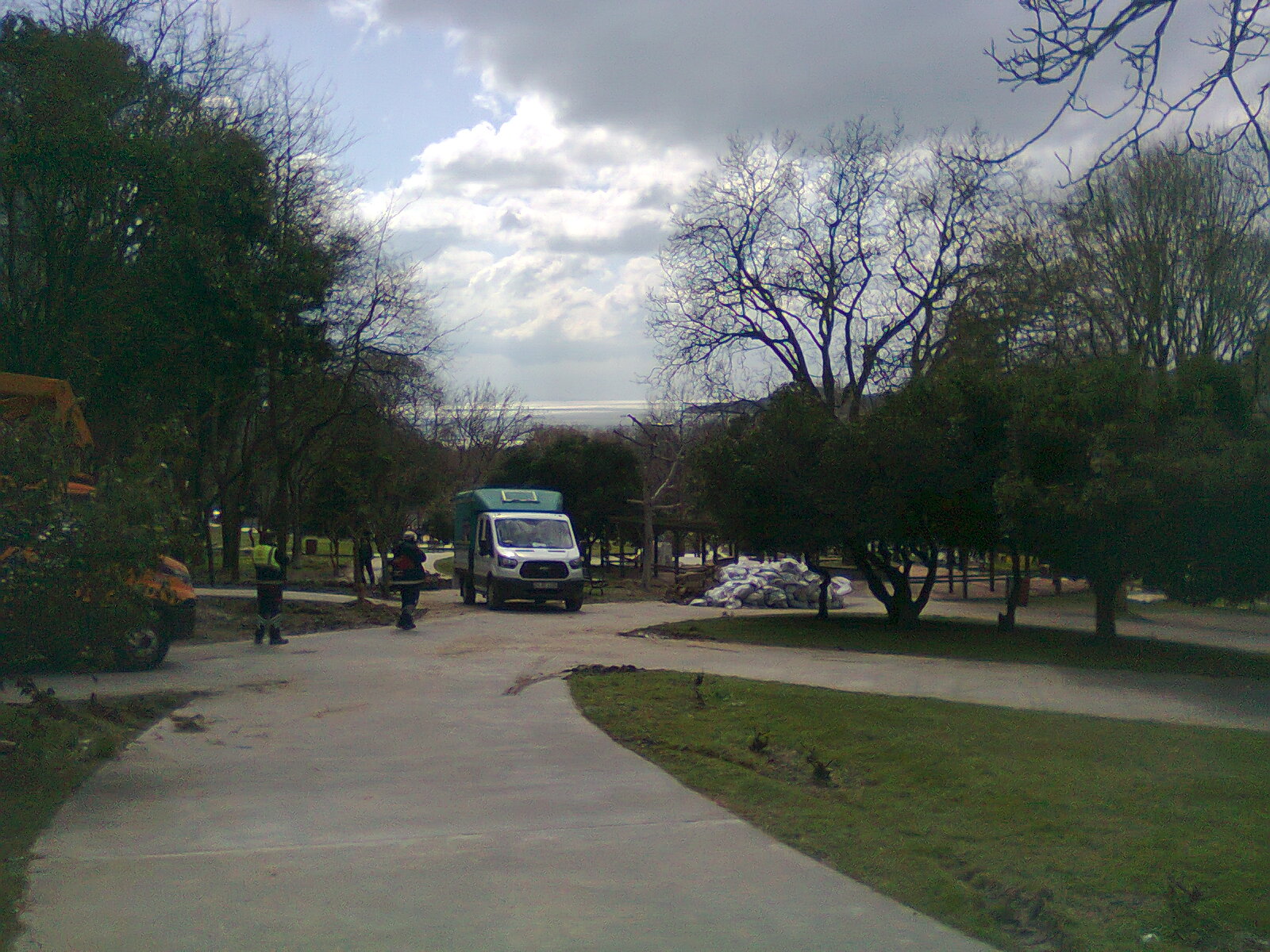
Municipal workers, a truck, and bags of earth, the sea visible over the trees
Landscaping in Yahya Kemal Parkı, Beşiktaş:
labor or work?

Continue reading

On The Human Condition of Hannah Arendt 5

Index to this series

CHAPTER III Labor [2]

This is a rich reading, hard to summarize, though one might expect it to be easy, since we are now finishing one of the core chapters. Perhaps the main point, brought out in the final section, is that a consumer society is not the paradise it is supposed to be.

Graffiti: BİZ GEZİCİYİZ SİZ GİDİCİ! KALDIRAÇ #1MAYIS
Graffiti on Şoför Sokağı, “Chauffeur Street,” in the heights of Beşiktaş, March 12, 2022.

In Turkish, any professional driver is a chauffeur; his passengers (rarely her passengers) could be a busload of schoolchildren.

Gezmek is to walk around, gitmek is to go; the gezici and the gidici are those who do these things, or that which does them: the itinerant and the temporary. Thus the painted words Biz geziciyiz siz gidici say we are the former, and you the latter. But Gezi Park is also the locus of the 2013 protests, which I think were provoked in part by the banning of celebrations of May Day, 1 Mayıs. So the slogan would seem to mean, “We are the people you heard from in Gezi Park; you are on your way out.”

Continue reading

On The Human Condition of Hannah Arendt 4

Index to this series

CHAPTER III Labor [1]

With our fourth reading, we enter the “three central chapters” of The Human Condition, for Arendt’s systematic “discussion of labor, work, and action.” We shall be here through the ninth reading. Some questions raised now will no doubt be answered later.


Ramiz Ağa Çeşmesi (fountain) & Şenlik Dede Camii (mosque)
Beşiktaş, 2022.02.28

A general concern of mine is the abstractness of the discussion. What has it to do with us? Can I say that I know what labor is, because I bake bread and mop the kitchen floor, or because I once worked on a farm, or because I used to know how to fix whatever might go wrong on my bicycle? Can Arendt say such things, and does it matter? She has a moving passage towards the end of the present reading:

There is no lasting hap­piness outside the prescribed cycle of painful exhaustion and pleas­urable regeneration, and whatever throws this cycle out of balance … ruins the elemental happiness that comes from being alive.

Continue reading

On The Human Condition of Hannah Arendt 3

Index to this series

CHAPTER II The Public and the Private Realm [2]

Contents:

The first three sections of the chapter were the previous reading.

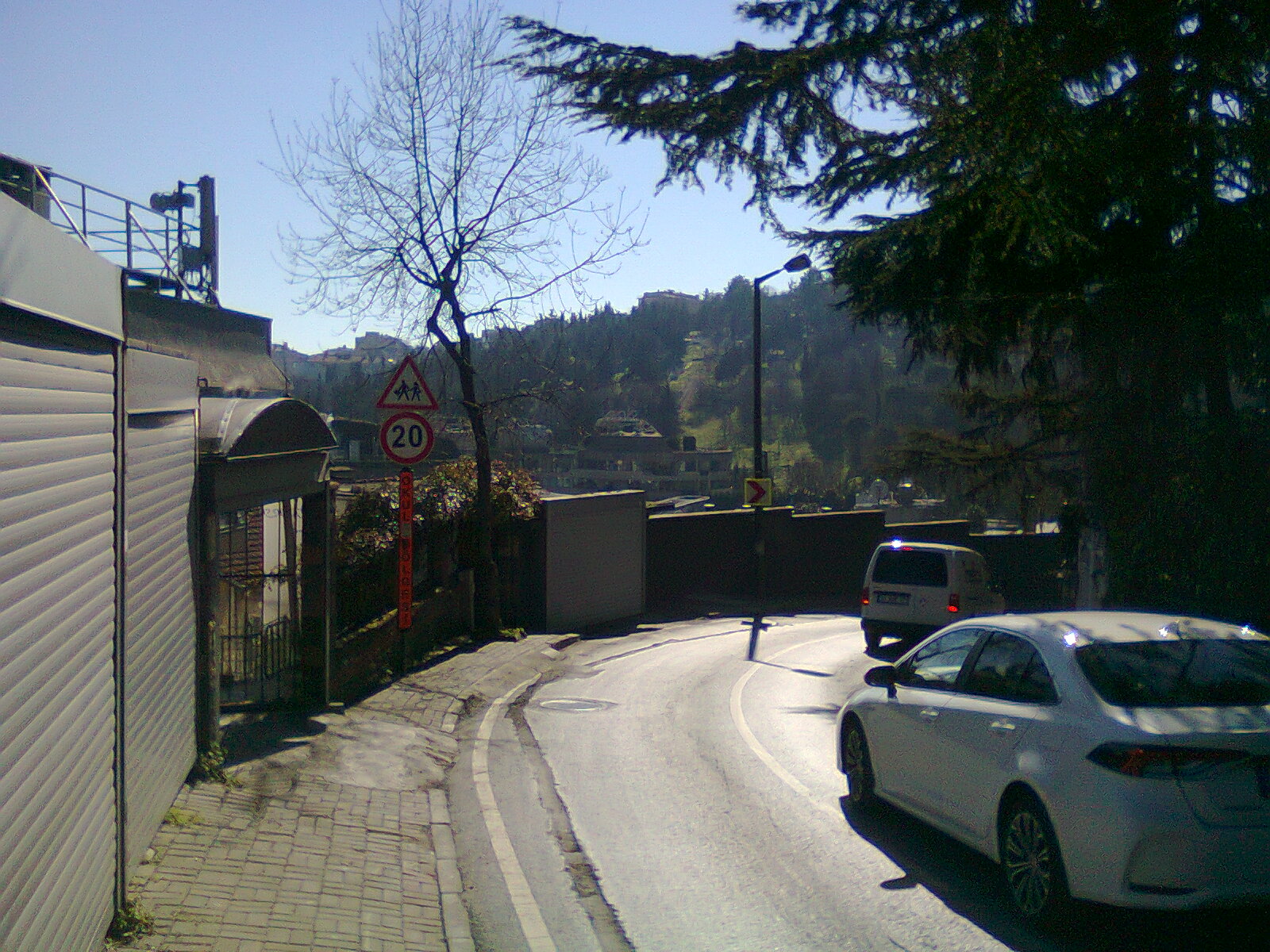
Road scene: Two lanes, narrow sidewalk, then garage doors and walls; but beyond, a green hillside

The descent to Ortaköy
February 12, 2022

Key words

Public, private, intimate, real, relevant, wisdom, goodness, love.

I am not sure what use such a list is, but there it is. “Relevant” is used a number of times, and I do not really know why.

Questions

Autocracy

Arendt published The Origins of Totalitarianism in 1951. Just from what we have read in The Human Condition though, what can she tell us about the autocrat?

Continue reading

On The Human Condition of Hannah Arendt 2

Index to this series

CHAPTER II The Public and the Private Realm [1]

Contents

There are four more sections in the chapter, and these constitute the next reading: 7 the public realm: the common; 8 the private realm: property; 9 the social and the private; 10 the location of human activities.

Graffiti: “Now or never” and “Oku” (that is, “Read”) on a wall by a street with a parked car; skyscrapers in the distance

Beşiktaş, February 15, 2022
Oku = “Read” (second-person singular imperative)

History and law

A significant passage in this reading lies on page 42 (¶ 6.9):

… the significance of a historical period shows itself only in the few events that illuminate it. The application of the law of large num­bers and long periods to politics or history signifies nothing less than the wilful obliteration of their very subject matter.

My post “Law and History” took up something like this argument. Continue reading

On The Human Condition of Hannah Arendt 1

Here begins a series based on the 1958 book by Hannah Arendt (1906–75) called The Human Condition. The publisher classifies it as philosophy and political science. I sense a kind of similarity with a book that I have devoted many blog posts to: The New Leviathan (1942) of R. G. Collingwood (1889–1943).

Collingwood wrote about European civilization as a war threatened to end it. Arendt managed to escape that war, and she went on to write about civilization in her own way in The Human Condition. Today, February 24, 2022, a new war for territory in Europe begins.

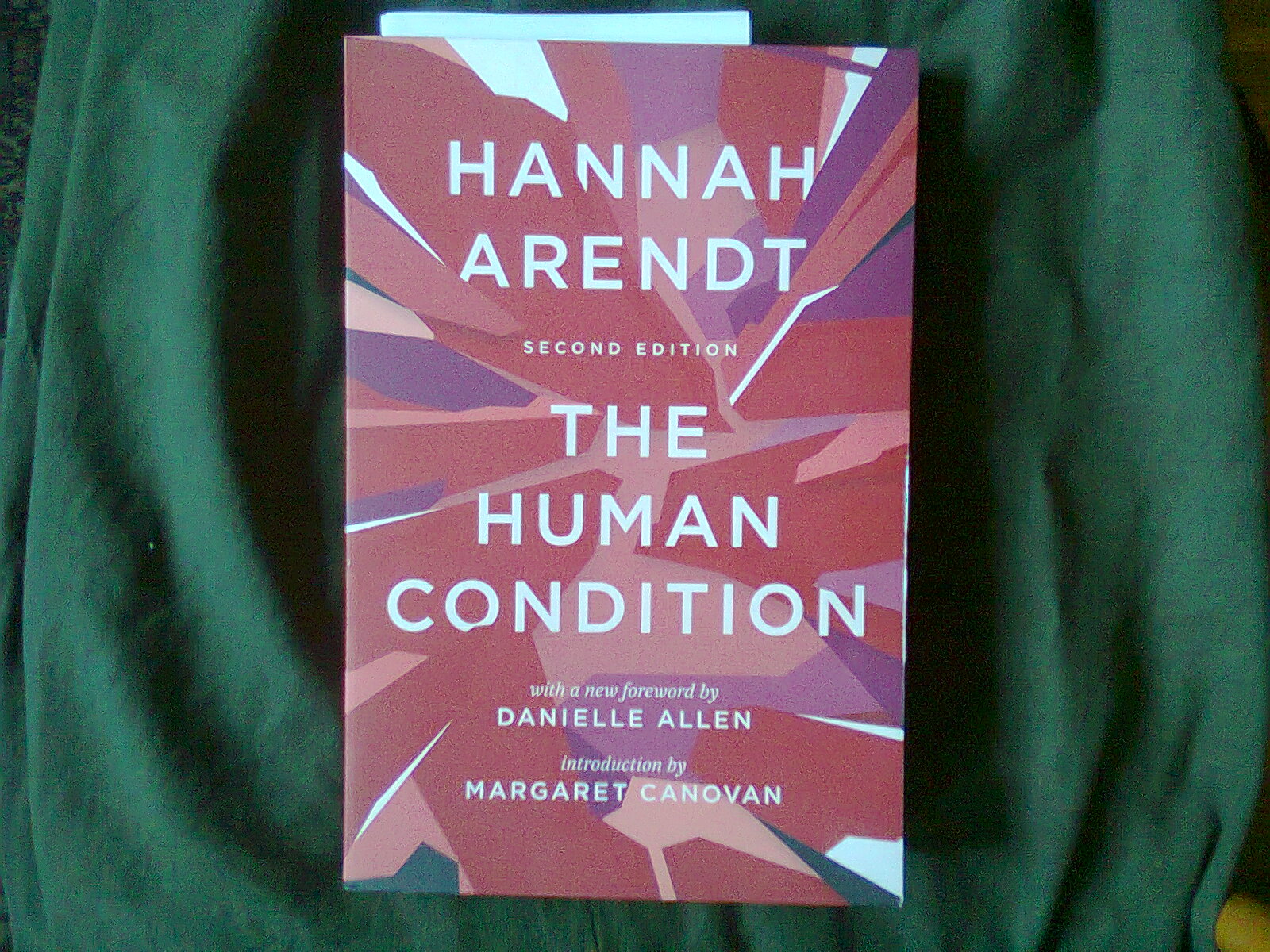
Red-themed cover of The Human Condition against dull green cloth

Continue reading

The Society of Mathematics

Mannequin in front of summation formula

This post concerns the Association for Mathematical Research, or AMR. A number of people are upset by its existence. I am not exactly one of them, but am suspicious, mainly because I do not know why a new organization would be needed, when we already have

The Twitter account of the AMR is dated to April, 2021. The website of the AMR supplies a list of founding members, but no account of when, how, or why they became founders. The site has a brief mission statement:

THE MISSION of the AMR is to SUPPORT MATHEMATICAL RESEARCH and SCHOLARSHIP

Are those other organizations not doing a good job? Continue reading

Plato and Christianity

Index to this series

This post uses work of Hannah Arendt, Augustine, R. G. Collingwood, Tom Holland, Somerset Maugham, and Ved Mehta.

Elevated highway, way above city streets

Ortaköy, December 27, 2021

In the first post of this series, I gave some reasons to read the Republic, and one of them was the problem of how our political leaders were not always the best. Plato had not solved that problem, since we still had it; but that meant nobody else had solved it either. Plato had at least taught us that people with great worldly power could nonetheless be more miserable than their subjects. In the Republic, Plato has Socrates teach that lesson

  • to Thrasymachus, in the latter part of Book I;
  • to Glaucon, who concludes at the end of Book IV that if having an unhealthy body is bad, having a vicious soul is worse;
  • in Book IX, with the account of the tyrant;
  • with the Myth of Er in Book X.

Continue reading