At the end of Book XVI of the Iliad, Hector
- pulled his spear from the body of Patroclus,
- took off in pursuit of Automedon, his victim’s charioteer, who was being drawn by Achilles’s immortal horses.
At the end of Book XVI of the Iliad, Hector
An editor of the Iliad might remove Book XIII, as I said last time; however, the book has
The strike can fail through the prowess of scabs. Poseidon encourages crossing the picket line. In Book XIV,
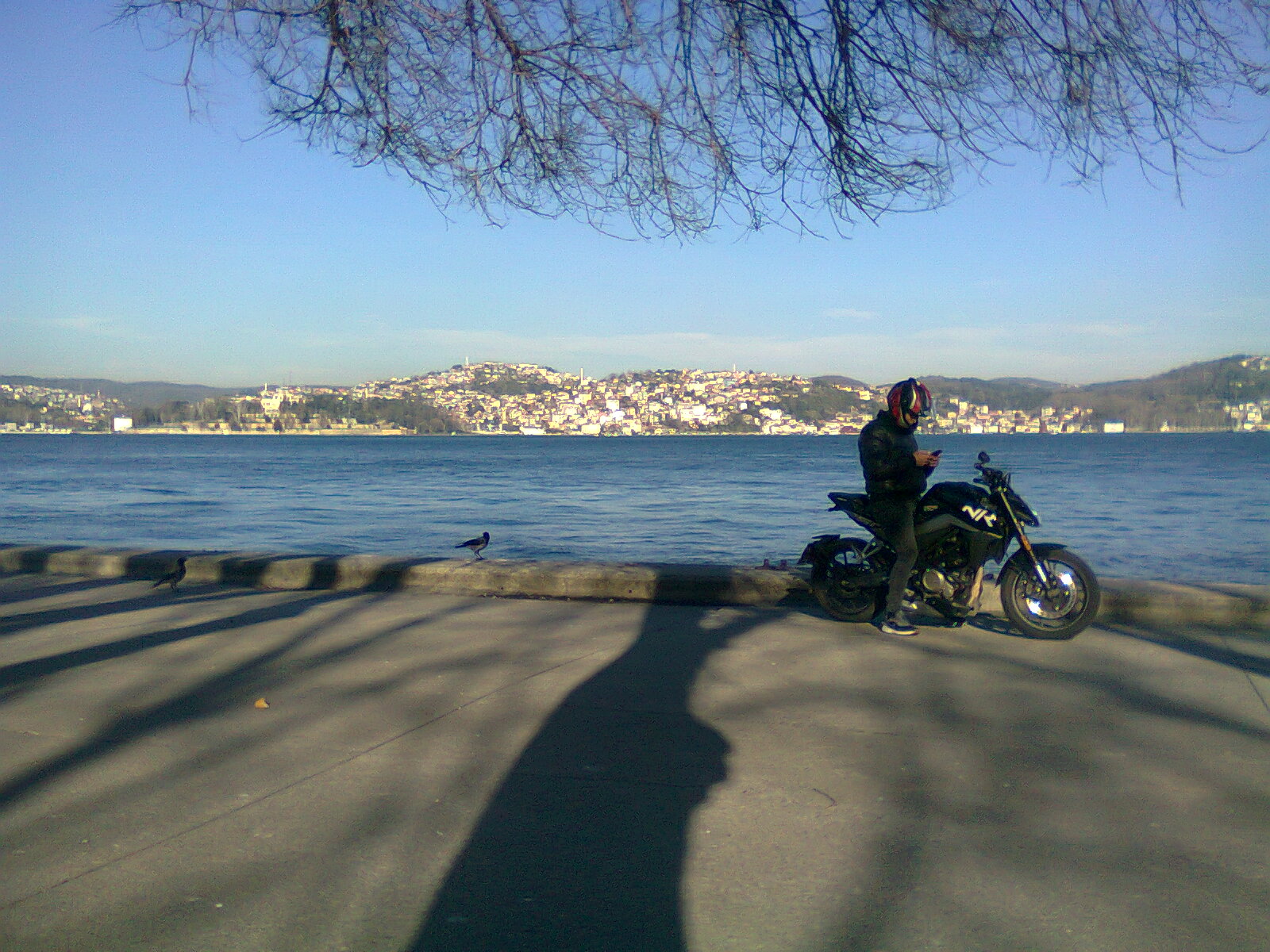
Yeniköy (Νεοχώριον), Sarıyer, Istanbul
Tuesday afternoon, February 21, 2023
On the day recounted in Book VIII of the Iliad,
I wrote a fuller summary in 2017. Because I was reading it, I also talked about Huysmans, Against Nature, and the belief of the main character that the prose poem could
contain within its small compass, like beef essence, the power of a novel, while eliminating its tedious analyses and superfluous descriptions.
Now I shall find reason to bring up Herodotus, Plato, Aristotle, Thoreau, and Freud, and especially William James and Collingwood on the subject of emotion.
Each of us has two biological parents. In my case, those parents are not my real parents, namely the ones who raised me. Nonetheless, according to the theory that everybody seems to accept, including myself, each of us has grown up from a zygote, which was formed by the union of two gametes. Moreover, one of those gametes was an egg cell; the other, a sperm cell. The gametes came from gonads: an ovary and testis, respectively. Ovaries are possessed by females of our species; testes, by males. Being female or male is called sex.
We are also distinguished, when children, as being boys or girls. Boys grow up to be men; girls, women.
It is usually assumed that men are male and women are female. Some of us may insist that this is always so, by definition of the words in question. In that case, I will argue,
In Book I of the Iliad, Achilles restrains an impulse to run a sword through Agamemnon.
That may be the greatest act in the whole epic. I say so, having recently completed a reading of Njal’s Saga, which features a lot of impulsive killing. Now I am embarking on the Iliad again, a book at a time. Here I take up Book I, some comparisons with the saga, and some connections with Plato, Augustine, and Collingwood.
I wrote here about Homer’s epic, book by book, between April, 2017, and September, 2019. I was reading Chapman’s Elizabethan translation. In my account of Book I from then, there are details that do not otherwise stand out to me now, when
The noun “idea” came to English in the sixteenth century, via Latin, from Plato’s ἰδέα: so the dictionaries tell me. An older version, “idee,” came from the French idée. The adjective “ideal” came via the French idéal from the Latin ideālis, but this seems to have been a native coinage, derived from no Greek term. Leo Strauss corroborates this in a passage that I quoted in “Nature”: “ ‘ideal’ is not a Platonic term.” Nonetheless, in translations of the Republic that are still in print, Benjamin Jowett and Paul Shorey use the word “ideal.” This may blur the distinction between two activities:
I looked at the first creation myth of Genesis in my previous post, whose title quoted the Bible on God’s judgment of what he had created: “It Was Good.” The goodness of the world, I suggested, did not lie in its fitting a plan, since a plan would have had to be spoken into existence, and this is just how the world itself came to be.
I don’t know about God, but if we have a basis for calling something good, we might call this basis an ideal. However, I also don’t know whether this is what Plato actually has in mind when his translators use the term “ideal.”
Executive summary. An experiment has been performed to detect whether we are living in a simulation. The experiment is to tell Abraham to sacrifice his son. Whatever he does, he breaks a law. Thus there is more to the world than can be understood by natural science.
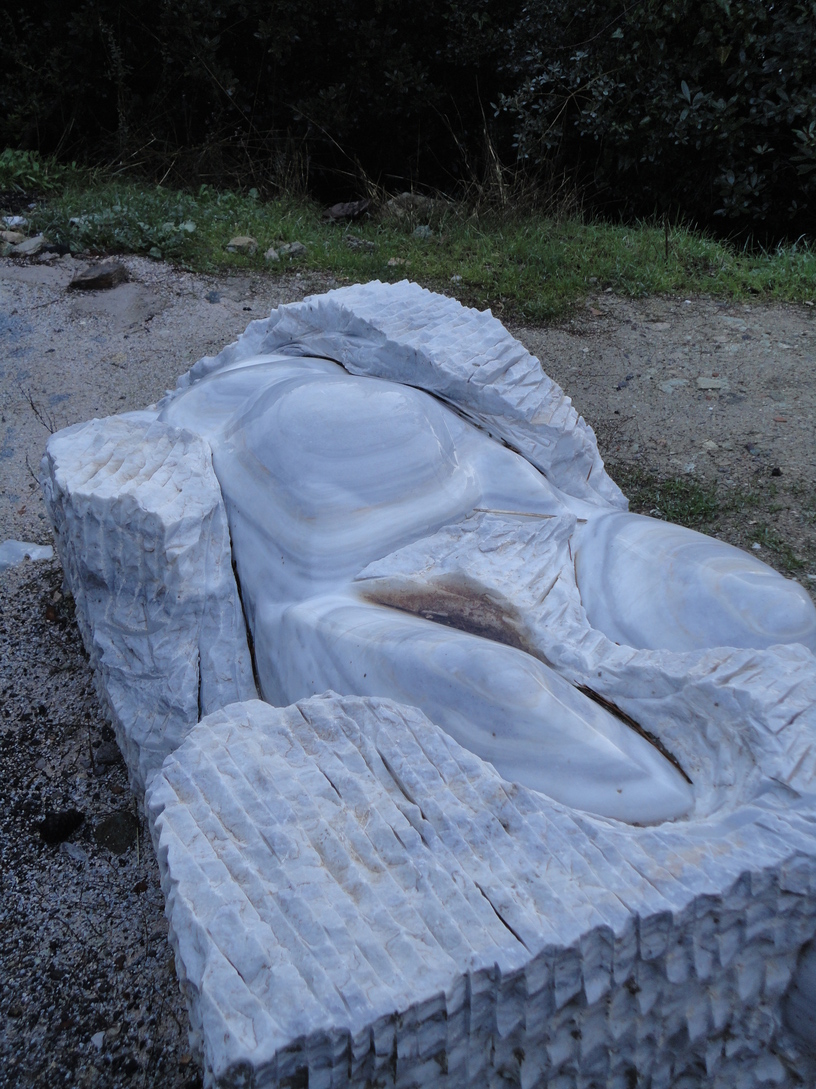
This is a report from five years ago on an art exhibit in Istanbul called “Doublethink.” I had an amusing encounter with one of the artists, and I had a conversation with the curator, who like George Orwell had attended Eton College. I wrote my report in three emails, given here with their timestamps. Because I mention some sculptures at the Nesin Mathematics Village, I have added the best photographs that I could find of them among the pictures that I have taken at the Village. Unfortunately I don’t seem to have documented the sculptures as such.

January 21, 2016
See “Nesin Matematik Köyü, Ocak (January) 2016”
This is inspired by Charlotte Brontë’s Villette. After reading this 1853 novel a second time in the summer of 2018, I put some passages I liked into a LaTeX file. I added some commentary and came up with a document more than 90 A5 pages long. I recently reread it and was reminded how much I had enjoyed the novel. I thought some of my commentary could be adapted to stand alone as a blog post – this one.

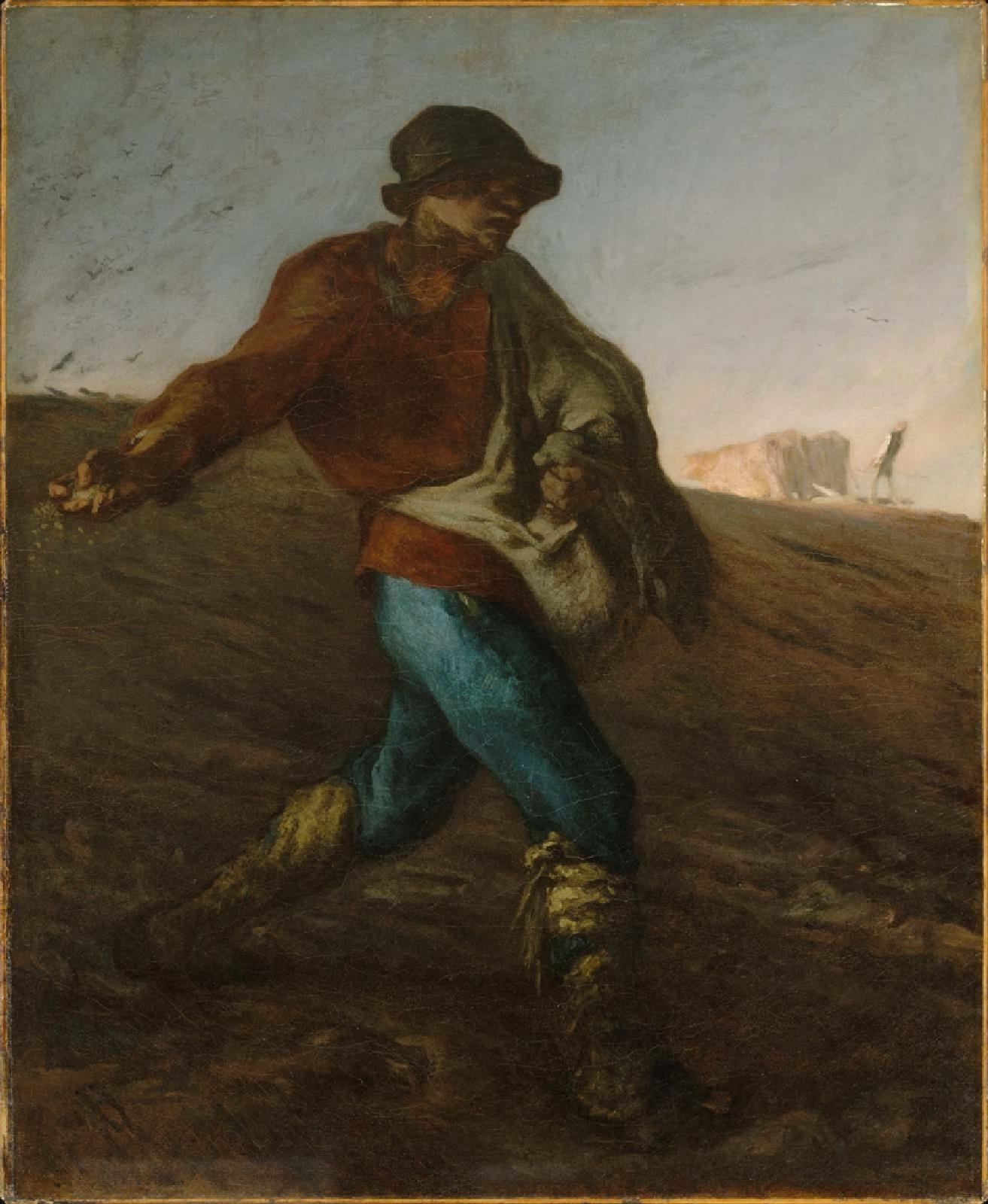
“The Sower,” 1850
Jean-François Millet (French, 1814–1875)
Museum of Fine Arts, Boston