Category Archives: New Leviathan

Effectiveness

Preface

First posted May 17, 2018, this essay concerns Eugene Wigner’s 1960 article “The Unreasonable Effectiveness of Mathematics in the Natural Sciences.” I wrote a lot, which I now propose to summarize by section. (The meditations also continue in the next article.)

  • Some things are miraculous. Among Wigner’s examples are

    • that mathematics is possible at all, and
    • that “regularities” in the physical world can be discovered, as by Galileo and Newton.

    For Wigner, we should be grateful for the undeserved gift of a mathematial formulation of the laws of physics. This makes no sense theologically – and here I agree with the character Larry Darrell in Somerset Maugham’s novel The Razor’s Edge. Wigner’s idea that our mathematical reasoning power has been brought to perfection makes no sense to me either.

  • Everything is miraculous. Here I agree with Collingwood in Religion and Philosophy. A miracle cannot be the breaking of a natural law, since such a thing cannot be broken. A great artist like Beethoven follows no rules in the first place, or makes them up as he goes along; and he is like God in this way.

  • Natural law. That it cannot be broken is part of the very concept of natural law. Quantum phenomena and the theory of relativity have not in fact been brought under a single law; for Wigner, it may not be possible.

  • Mystery. Not only can we not define miracles, but (as we should have observed in the first place) we cannot even say when they happen. If like Wigner we call something miraculous, this means it cleanses our own doors of perception, in the sense of William Blake.

  • Definitions. In his treatment of miracle in Religion and Philosophy, Collingwood shows the futility of trying to define a term when you are not sure how to use it. He makes this futility explicit in The Principles of Art. If we are going to think about the use of mathematics in natural science, this means we ought to be mathematician, natural scientist, and philosopher; and not just “natural scientist,” but physicist and biologist, since if mathematics is effective in physics, it would seem to be ineffective in biology.

  • Being a philosopher. We are all philosophers, in the sense that Maugham describes in the story “Appearance and Reality,” if only we think. All thought is for the sake of action. This does not mean that thought occurs separately from an action and is to be judged by the action. We may value “pure” thought, such as doing mathematics or making music or living the contemplative life of a monk. This however moves me to a give a thought to the disaster of contemporary politics.

  • Philosophizing about science. For present purposes, compart­ment­al­ization of knowledge is a problem. So is the dominance of analytic philosophy, for suggesting (as one cited person seems to think) that big problems can be broken into little ones and solved independently. In mathematics, students should learn their right to question somebody else’s solutions to problems. In philosophy, the problems themselves will be our own. Philosophy as such cannot decide what the problems of physics or biology are, though it may help to understand the “absolute presuppositions” that underlie the problems. Philosophers quâ metaphysicians cannot determine once for all what the general structure of the universe is. This does not mean they should do “experimental philosophy,” taking opinion polls about supposedly philosophical questions. What matters is not what people say, but what they mean and are trying to mean. As Collingwood observes, metaphysics is an historical science.

For more on the last points, see a more recent article, “Re-enactment.” (This Preface added June 3, 2018.)


I am writing from the Math Village, and here I happen to have read that Abraham Lincoln kept no known diary as such, but noted his thoughts on loose slips of paper. Admired because he “could simply sit down and write another of his eloquent public letters,”

Lincoln demurred. “I had it nearly all in there,” he said, pointing to an open desk drawer. “It was in disconnected thoughts, which I had jotted down from time to time on separate scraps of paper.” This was how he worked, the president explained. It was on such scraps of paper, accumulating over the years into a diaristic density, that Lincoln saved and assembled what he described to the visitor as his “best thoughts on the subject.”

Thus Ronald C. White, “Notes to Self,” Harper’s, February 2018. My own notes to self are normally in bound notebooks, and perhaps later in blog articles such as the present one, which is inspired by the 1960 article called “The Unreasonable Effectiveness of Mathematics in the Natural Sciences,” by Eugene Wigner.

Papers on a table with a view of trees and a distant hill between stone columns

Continue reading

The Tree of Life

My two recent courses at the Nesin Mathematics Village had a common theme. I want to describe the theme here, as simply as I can—I mean, by using as little technical knowledge of mathematics as I can. But I shall talk also about related poetry and philosophy, of T. S. Eliot and R. G. Collingwood respectively.


An elaborate binary tree, with spirals

Continue reading

NL XXV: The Three Laws of Politics

Index to this series

Executive summary (added September 11, 2018): The the three laws of politics are that (1) within the body politic, there is a ruling class, which is a society proper; (2) the ruling class can take in members from the ruled class; (3) the ruled and ruling classes will resemble one another, so that e.g. rulers of slaves will become slavish themselves. I compare such laws with physical laws, as discussed by Einstein; but on this subject, a look ahead to Chapter XXXI, “Classical Physics and Classical Politics,” would be in order. Meanwhile, by the Second Law, the body politic, or its ruling class, can be a permanent society; Nazi claims about the youth or senility of different states are bogus. There are further gradations within the ruling and ruled classes, according to strength of will; a weak will can be strengthened by another person’s stronger will through induction.


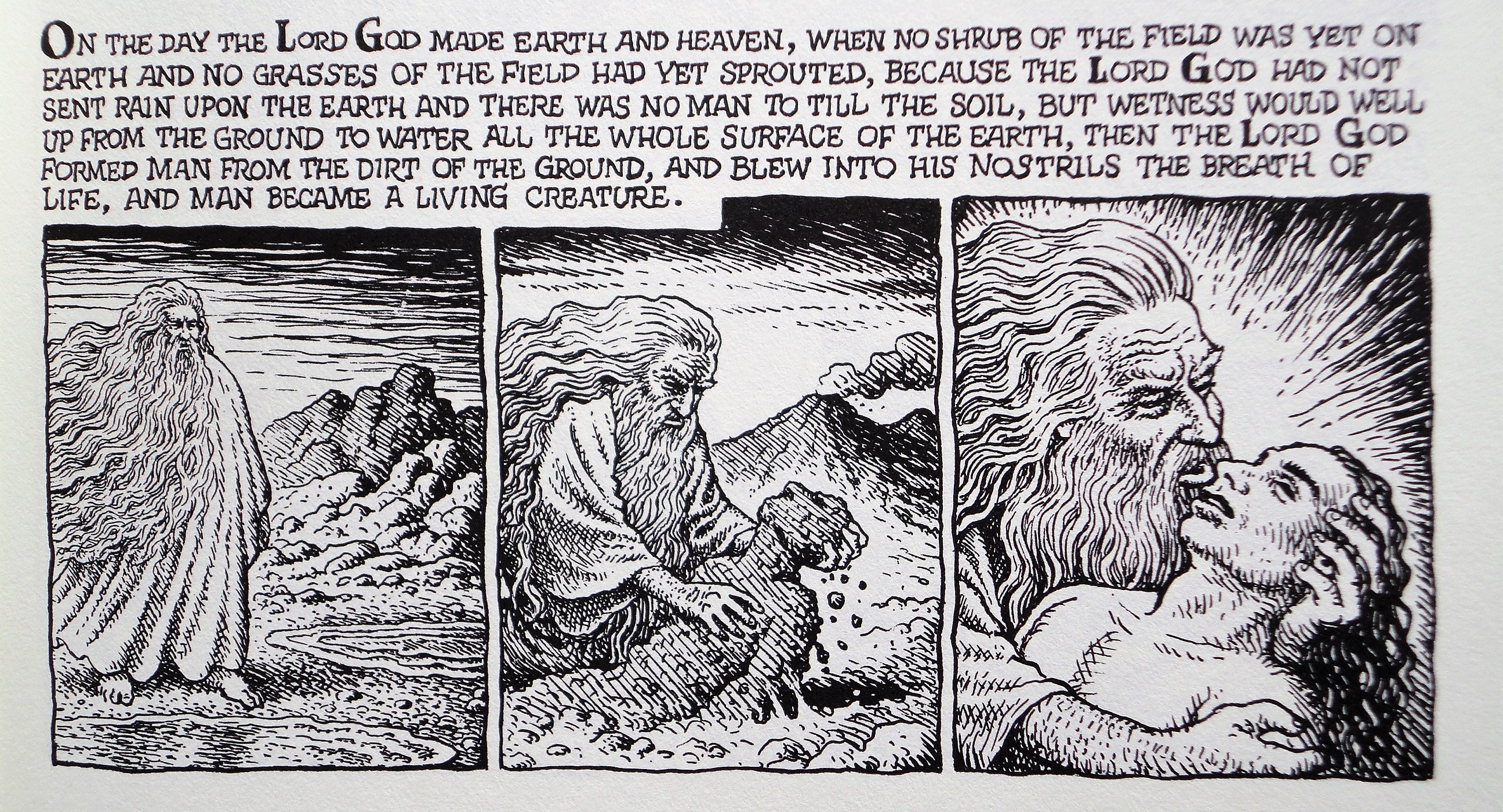
A pervading theme of the New Leviathan is freedom of will. Whether we actually have it is only a pseudo-problem (13. 17). Some persons have been fooled into thinking it a problem, perhaps by the misleading myth that free will is a divine gift, like life itself, breathed into our nostrils when, in Genesis 2:7, God forms us of the dust of the ground. As Collingwood observes at the end of Chapter XXIII, “The Family As a Society,” we are born neither free nor in chains. We have to grow up. Growing up is becoming free.

The Book of Genesis Illustrated by Robert Crumb (New York: Norton, 2009)

Continue reading

On Chapman’s Homer’s Iliad, Book IX

Index to this series | Text of Chapman’s Homer’s Iliad

Note added August 25; edited and augmented, August 27; 2024: In my view, the key events of the Iliad are Achilles’s holding back from

  1. killing Agamemnon in Book I;
  2. fighting on Agamemnon’s side in Book IX.

The latter case of self-restraint may be a disaster for Achilles, not to mention Patroclus and the other Greeks who die as a result; but it is also somehow a result of the former case. Not killing on impulse is probably a good thing; otherwise you have the situation of Njal’s Saga, which I took up in writing “On Homer’s Iliad Book I” (November 29, 2022).

Continue reading

NL XXIV: The Body Politic, Social and Non-Social

Index to this series

Executive summary (added September 11, 2018): The subject of political theory is the kind of community called a body politic. For the Ancients, this is a society, composed of, for example, the citizens of Athens, excluding women, children, slaves, and foreigners. In medieval times, all human beings in the community compose a body politic, which is thus non-social, though having within it the societies called estates; sovereigns rule by force (e.g. by the bribery called the granting of liberties), but may in turn be ruled, as is the husband, sovereign of the wife. For Hobbes, a sovereign can also rule by authority. An eristic argument would insist that only one of these accounts of the body politic is correct; but the world is in the flux described by Heraclitus, and the way to come to terms with it is not eristic, but dialectic, as described in the Meno of Plato.


Dialectic is the way to come to terms with a world of constant change. On the internet in particular, too many persons engage in eristic, staking out a position like the Greeks at Troy, who built a wall around their ships on the shore and tried to defend it against all comers.

Dogs stake out their positions in the shade,
2017.09.14

In the argument of the New Leviathan, we pass from the family to the state, which Collingwood calls the body politic. This is what political theory must give a scientific account of (24. 1). We consider three phases of political theory:

  1. ancient,
  2. medieval, and
  3. modern.

Continue reading

NL XXIII: The Family As a Society

Index to this series

Executive summary (added September 11, 2018):

1.
The society at the nucleus of the family is temporary, ending with the death of one of the two members.
2.
The family has a life-cycle, with three phases: (1) before children; (2) after children, but before they have free will; (3) after the children have free will.
3.
The community consisting of husband and wife is now a society. It was not a society when a marriage was arranged by the groom or the groom’s father and the father of the bride. The non-social aspect of a marriage survives in the custom of formally “giving away” the bride.
4.
If today a bride and groom do not quite recognize themselves as forming a society, they may come to do so in time.
5.
Contraception helps clarify that a marriage is normally for the sake of having children.
6.
In order to grow up and leave the nursery, the child must be educated. The work of this is both the child’s and its teachers’. Parents must also allow the child to leave the nursery and join their society.
7.
There are three possible needs, and they are distinct: (1) to have a baby, (2) to have a child, (3) to have a grown-up child.
8.
Any of those three needs is fulfilled by an act of will; there is no parental “instinct”—not a scientific term anyway, though it is used popularly for an appetite or desire.
9.
Born without free will, we are not born in chains either, since this would mean suppression of a will that didn’t exist.

The last chapter was called “The Family As a Mixed Community,” because the family consists of both a society and a non-social part, called the nursery. Now we are looking at “The Family As a Society.” We are not in contradiction, but are in the flux that Heraclitus observed in all existence (24. 62). The inmates of the nursery normally grow and join the society of their parents: the family as a whole is a society in this sense.

Altınova bazaar, Wednesday, September 13, 2017

Continue reading

NL XXII: The Family As a Mixed Community

Index to this series

Executive summary (added September 10, 2018): The family is a mixed community, consisting of a society and a non-social community. Usually the society is a married couple; if they have children, these constitute the nursery, which is the non-social part of the family. The children need an ordered, regular life. They grow up and leave the nursery; the parents may replenish it.


This chapter and the next concern the family, which like most communities is a mixed community (22. 11): part of it is a non-social community, but some part of it is a society proper (22. 1), this being, again, as in Chapter XX especially, a community constituted as an act of will on the part of its members.

Continue reading

On Chapman’s Homer’s Iliad, Book VI

Index to this series | Text of Chapman’s Homer’s Iliad

Book VI of the Iliad may illustrate or test what I have also been reading, whose second title is Man, Society, Civilization and Barbarism. For the Greeks, the Trojan war is a fight for civilization, against the barbarism of stealing the wife of the man who has played host to you. In Book VI is the great exemplar of civilization: the meeting of Diomedes with Glaucus. Discovering that the grandfather of his Trojan enemy had once been a guest of his own grandfather, Diomedes urges that he and Glaucus must exchange gifts, be friends, and avoid meeting on the battlefield; and Glaucus agrees.


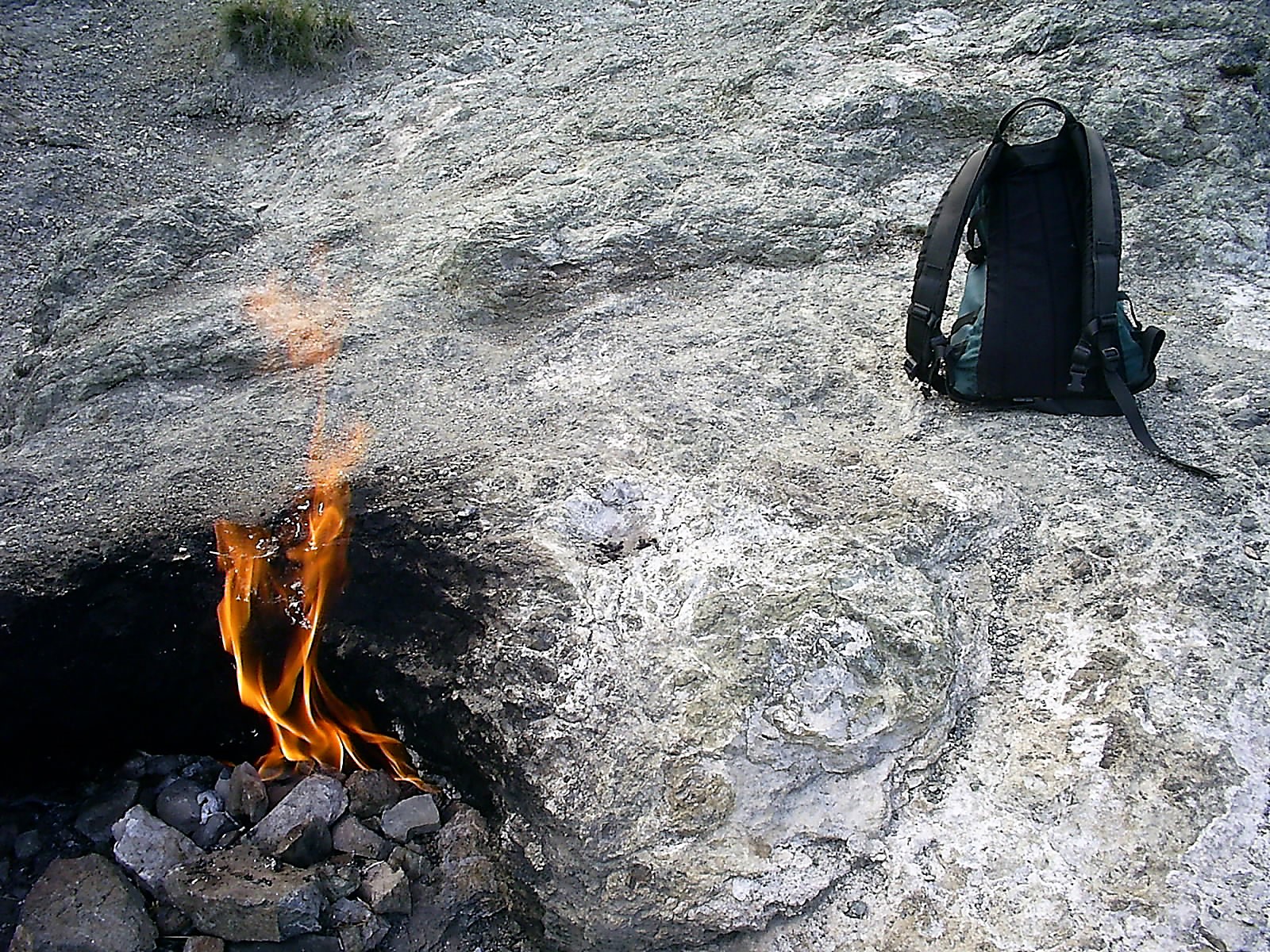
One flame of the Chimera, with my backpack, 2009

Continue reading

NL XXI: Society as Joint Will

Index to this series

Executive summary (added September 10, 2018):

1.
I cannot say “I will” without recognizing the possibility of joining with others to say “we will.”
2.
A social consciousness consists of (1) a precise idea of one’s place in a society and (2) a vague sense of the society as a whole. The latter sense may be incorrect, having been foolishly accepted on the word of an authority.
3.
Properly understood, ruling, of itself and perhaps of a non-social community, may be all that a society does. It is the responsibility of the members alone.
4.
To form a society means (1) to form social relations and (2) to do this for some purpose. To focus on (1) yields the idea of a universal society—which cannot actually exist, despite foolish hopes for the League of Nations.
5.
The universal society cannot exist, because we produce a society by transforming an earlier community, and some trace of this must remain.
6.
Members of a society are equal, (1) in having the freedom to join and (2) in just being members. A society may create an inequality, as by delegating authority. There may be natural inequalities, not produced by the society itself; society may compensate for them, turn them into assets, or even depend on them, as in the case of initiative.
7.
Rule by force (in a non-social community) may be by rewards and punishments, that is, objects of desire and fear. These may be promised or threatened fraudulently. One who grows too accustomed to exerting force may lose freedom of will.
8.
Societies institute criminal law to mitigate members’ losses of freedom of will.
9.
Societies can be temporary or permanent.

Continue reading

NL XX: Society and Community

Index to this series

Executive summary (added September 9, 2018): Henceforth we are concerned with communities, namely “societies” of human beings (or beings with at least the potential for free agency). Indeed, the whole of Part II is “an inquiry into communities” (1. 15). A society, also called a partnership, is a community formed by common agreement among its members, each with each, for some purpose: this relaxes the original, more specific requirements of Roman law. Members of any community share something; members of a society share a social consciousness. Any community is established and maintained by rule: immanent rule if the community is a society, otherwise transeunt rule. Practically speaking, the ruler of others must also rule him- or herself. Rule of a non-social community is by force: this is moral force, an irresistable emotion within the person being ruled, excited by somebody who is mentally stronger in any of various ways.


A society is an act of will: it emerges and persists because its members will that it do so. We said this in the previous chapter; we say it now in more detail. In particular, we impose on a society no such further requirement of economic interest as Roman lawyers (apparently) did.

Continue reading